DbcultAccessing Vault...
6.7/10
Senior Film Conservator
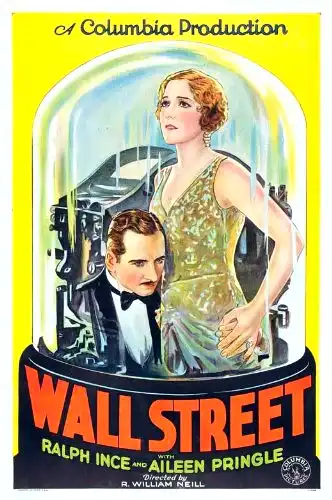
A definitive 6.7/10 rating for a film that redefined the boundaries of cult cinema. Wall Street remains a cornerstone of transgressive art.
Wall Street, the 1929 film, isn't exactly a lost classic, but it's definitely a curiosity for anyone interested in early talkies and the drama of the era. If you're into historical cinema or just want to see how these big business sagas played out before the Hays Code really dug in, you might find something here. Folks looking for fast-paced thrills or subtle character studies? Probably best to skip this one. It's a snapshot, more than a sweeping epic.
Right from the start, you get a feel for Ralph Ince as Roller McCray. He’s meant to be this tough-as-nails steelworker who just *gets things done*. His early scenes, where he’s literally forging metal, try to establish him as a man of action. Then he's suddenly a tycoon. It's a quick jump, almost like the film goes, 'Yep, he's rich now, move on!' There isn't much build-up, just a sudden shift in status.
Ince plays McCray with a kind of blunt force. He's not suave. He just kinda stomps into a room and expects things to happen. His business methods are more hinted at than explicitly shown, but they lead to Philip Strange's character, a rival, taking his own life. That moment, though brief, sets up all the drama. It’s handled with a certain starkness that feels… efficient for the time, I guess.
Then we meet Aileen Pringle as the widow. Her motivation for revenge is clear, very clear. She teams up with Sam De Grasse, who plays the former business partner, and they hatch this plan. You can almost feel the gears turning in their heads, plotting. It's all very dramatic, in that old-school way where everyone telegraphs their intentions.
The pacing of the film, as you might expect from 1929, can feel a bit sluggish in parts. There are these long takes, especially during conversations, where the camera just sits there. It lets you soak in the early sound recording, which itself is a bit of a marvel for the time. Sometimes the audio sounds a little distant, like you’re listening through a tin can. 🗣️
Where the movie really finds its footing, or at least a different kind of heart, is with Freddie Burke Frederick, the young son. This kid, he’s just *there*, innocent, oblivious to the grown-up schemes. His scenes with McCray are surprisingly sweet. You can see McCray, this hard businessman, soften around him. It’s not a subtle transformation, mind you, but it’s effective.
One scene that stuck with me is when McCray is playing with the boy. It feels less like acting and more like a genuine interaction between an adult and a child. It really makes you wonder if that was just Freddie being a natural kid, melting Ince's stern demeanor. It's a little beacon of warmth in a movie otherwise focused on dollars and revenge. ✨
The whole revenge plot, while driving the story, takes a back seat to this unexpected bond. It’s interesting how a child's presence can completely shift a narrative, even in a film almost a century old. The dialogue, too, sometimes feels a bit… formal. Like people are reading lines rather than speaking. But again, it’s 1929. They were figuring things out.
There's a lot of focus on the idea of 'Wall Street' itself, but it’s more of a concept than a lived-in place. You don't get the hustle and bustle you might expect from later films. It's mostly offices and dramatic pronouncements about money. The visual style is quite straightforward. No fancy camera work, mostly just functional shots to get the story across. 🏢
You can see glimpses of societal attitudes from the period, especially around wealth and ambition. The film doesn't exactly condemn McCray outright for his ruthlessness, but it does suggest there are consequences. And that a little bit of human connection can change things. It's a familiar theme, but presented with that early talkie charm.
The ending ties things up pretty neatly, maybe a little too neatly. It sort of says, 'Okay, that's enough drama for today.' It doesn't leave you with too much to chew on, but it offers a sense of closure. For a film that’s almost 95 years old, it’s a decent watch if you approach it with the right mindset. Not a masterpiece, but a solid piece of film history. Just don't expect it to move at a modern pace.
Did I mention the occasional dramatic pause? Oh, they loved those. Lots of pauses. And the clothes! Everyone looks so buttoned-up, even when they're angry. It's quite something. Overall, it's a peek into a different cinematic world.

IMDb —
1924
Community
Log in to comment.