DbcultAccessing Vault...
Cult Review
Senior Film Conservator
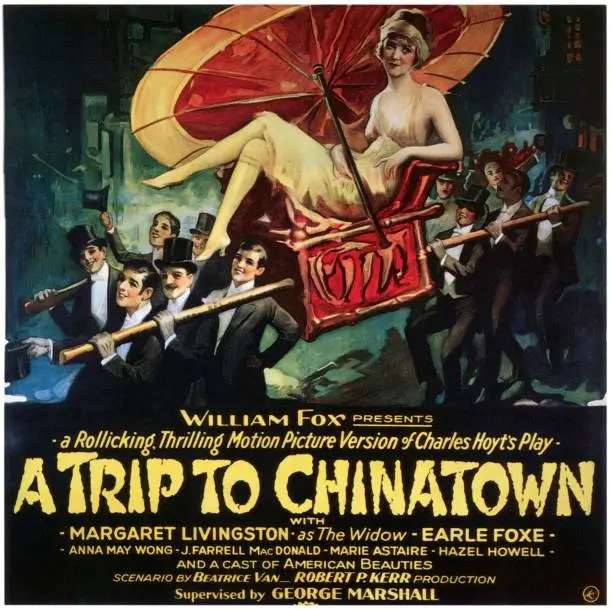
Is A Trip to Chinatown worth watching in the modern era? Short answer: Yes, but primarily as a fascinating specimen of 1920s farce rather than as a profound piece of cinema. It is a film for those who appreciate the physical comedy of the silent era and the historical evolution of the 'urban adventure' trope, but it is certainly not for those who demand a nuanced or culturally deep exploration of its titular setting.
The film serves as a bridge between the vaudeville-style stage plays of the late 19th century and the sophisticated screwball comedies that would follow a decade later. While it lacks the rhythmic perfection of a Buster Keaton feature, it possesses a frantic, nervous energy that mirrors the internal state of its protagonist. It is a movie about the liberation found in a death sentence, a theme that is handled with a surprising lack of sentimentality.
1) This film works because it leans heavily into the 'vitality as medicine' trope, allowing Charles Farrell to break away from his usual romantic lead persona to play a twitchy, high-strung neurotic with genuine comedic flair.
2) This film fails because it treats its namesake location, Chinatown, as a mere aesthetic backdrop for a conventional widow-chasing plot rather than engaging with the actual environment in a meaningful way.
3) You should watch it if you are a student of early 20th-century stage-to-screen adaptations or if you want to see a very young Anna May Wong in one of her early, albeit brief, appearances.
The character of Welland Strong is a classic archetype that was remarkably popular in the 1920s—a decade obsessed with both 'modern' medicine and the 'nerve' diseases of the wealthy. Strong is introduced not as a hero, but as a victim of his own imagination. The opening scenes are cluttered with medical paraphernalia, creating a sense of domestic entrapment. When he receives his 'six months to live' notice, the camera captures a moment of dark realization that quickly turns into a manic desire for experience.
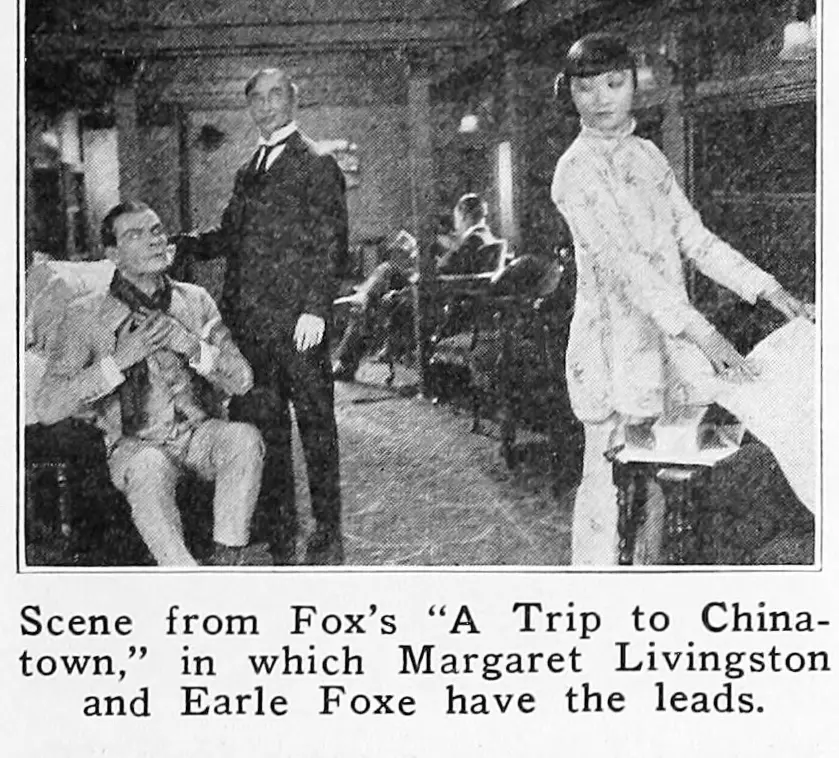
This setup is remarkably similar to the stakes found in The Miracle of Life, though the tone here is decidedly more irreverent. Strong’s diagnosis isn't a tragedy; it’s a hall pass. It allows him to leave his sheltered life and enter the 'real world,' which in this film is represented by the chaotic, moving space of a Pullman train car. The transition from the static bedroom to the vibrating train is the film's first major tonal shift, and it is executed with a sense of kinetic excitement that still feels fresh today.
The middle act of the film takes place almost entirely on a train, a favorite setting for silent comedies because of the inherent physical limitations and the opportunity for 'wrong door' humor. Here, Strong runs afoul of a jealous bridegroom. The misunderstanding—that Strong is making advances on the man's wife—is a standard trope, but the execution is elevated by the claustrophobia of the train setting. Every time Strong tries to mind his own business, the swaying of the train or a misplaced piece of luggage throws him back into the path of the enraged husband.
Compared to the more refined physical comedy in Mighty Like a Moose, the humor in A Trip to Chinatown is broader and more reliant on facial expressions of terror. Charles Farrell, who would later become a massive star in romantic dramas, shows a surprising aptitude for this kind of 'scared-stiff' acting. His lanky frame is used effectively to convey a man who is physically uncomfortable in his own skin, which makes his eventual 'cure' through romance all the more visually satisfying.
For a film titled A Trip to Chinatown, the actual San Francisco segment feels surprisingly brief and secondary to the character drama. It functions more as a 'destination' in the metaphorical sense—a place where the rules of Strong’s old life no longer apply. When he finally arrives, the film adopts a travelogue quality, showcasing the lanterns and architecture of the district. However, the plot quickly narrows its focus back to Strong’s pursuit of a widow.
It is here that we see the legendary Anna May Wong. Even in a minor role, her screen presence is undeniable. She provides a sense of grounded reality that the rest of the film’s caricatures lack. The film’s version of Chinatown is a sanitized, romanticized version of the real place, much like how Frou Frou romanticizes its own social settings. It’s a missed opportunity for a deeper look at the culture, but as a piece of 1926 entertainment, it serves its purpose of providing 'exotic' flair for a Western audience.
The cinematography by the uncredited camera team is functional but occasionally inspired, particularly during the train sequences where the use of light through windows creates a sense of constant movement. The pacing, however, is where the film struggles. The transition from the train to the city feels abrupt, and the resolution of the 'six months to live' plot point is handled with a wave of the hand that might frustrate modern viewers looking for a more cohesive narrative arc.
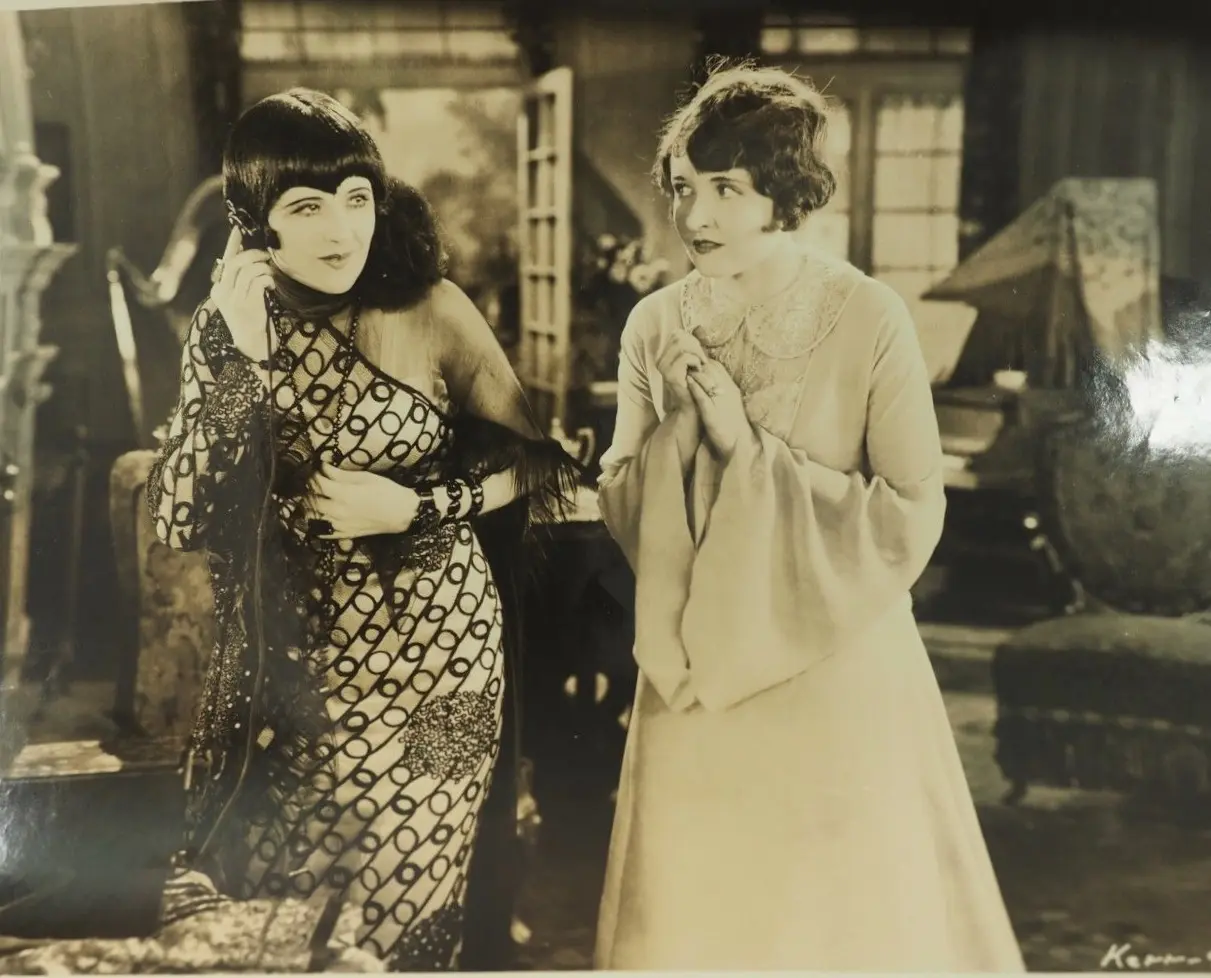
The writing, credited to Beatrice Van and based on Charles Hale Hoyt’s play, retains much of its theatrical DNA. The dialogue intertitles are punchy and often self-aware, mocking Strong’s self-diagnosis. It lacks the visual storytelling sophistication of something like Captain Swift, but it makes up for it with sheer enthusiasm. The film doesn't want you to think; it wants you to feel the same rush of blood that 'cures' Welland Strong.
Short answer: Yes, it is worth watching if you are interested in the history of silent comedy or the early career of Charles Farrell. It is a light, breezy experience that clocks in at a brisk pace. However, do not expect a deep exploration of San Francisco's history or a high-stakes drama. It is a farce, pure and simple.
The film is a perfect example of how the silent era could take a dark premise—a man dying of a terminal illness—and turn it into a reason for a slapstick chase. It works. But it’s flawed. The cultural depictions are dated, and the plot is thin, but the central performance carries it through the rougher patches.
Pros:
Cons:
A Trip to Chinatown is a delightful, if somewhat shallow, relic of the silent era. It is a film that prioritizes movement over meaning, which is both its greatest strength and its most significant weakness. While it doesn't reach the heights of the era's greatest comedies, it provides a charming glimpse into the 1920s' obsession with health, travel, and the transformative power of a good scare. It is a reminder that sometimes, the best medicine isn't found in a bottle, but in a chaotic trip to a city you've never seen with a woman you've just met. It’s a bit of nonsense, but it’s very well-executed nonsense.
"The film is a testament to the idea that in 1926, the only thing more dangerous than a terminal illness was a jealous husband on a moving train."
If you enjoyed this look at a forgotten gem, you might also find interest in the tonal shifts of My Girl Suzanne or the domestic comedy found in A One Cylinder Love Riot. Each of these films captures a different facet of the 1920s' unique comedic sensibility, a time when the world was moving fast and the movies were trying their best to keep up.
IMDb —
1916
Community
Log in to comment.