DbcultAccessing Vault...
2.3/10
Senior Film Conservator
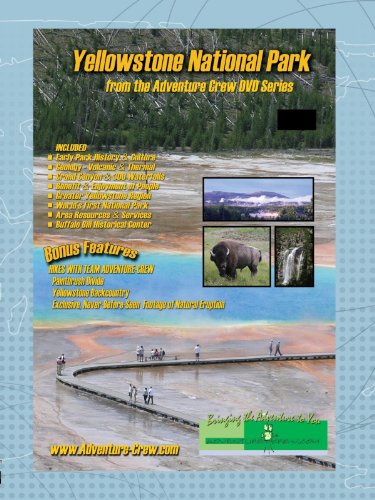
A definitive 2.3/10 rating for a film that redefined the boundaries of cult cinema. A Trip to the Wonderland of America remains a cornerstone of transgressive art.
In an era when moving pictures were still a nascent marvel, a cinematic expedition titled 'A Trip to the Wonderland of America' emerged, offering audiences an unprecedented glimpse into the sublime grandeur of Yellowstone National Park. This early travelogue transcends mere documentation; it is a profound visual poem, an ode to the untamed American wilderness that, even today, resonates with a powerful sense of wonder. Unlike the staged spectacles or fleeting glimpses of urban life that characterized much of early cinema – think of the raw, kinetic energy captured in The Corbett-Fitzsimmons Fight or the marching precision in 69th Regiment Passing in Review – this film invites a contemplative engagement with nature itself. It's a testament to the pioneering spirit of filmmakers who sought to harness the new medium not just for entertainment, but for education and inspiration, bringing the remote, almost mythical landscapes of the American West to a curious public.
The film commences with an intriguing juxtaposition: the modern convenience of the railway delivering visitors to the threshold of the park, only for them to disembark and transition to a more archaic, harmonious mode of transport – the six-horse coach. This mandated shift, a federal decree preventing the 'iron horse' from sullying the sanctity beyond the Great Lava Arch Gateway, is not merely a logistical detail; it's a thematic statement. It immediately establishes a reverence for the natural environment, suggesting that true immersion requires a slower pace, a more intimate connection with the land. This deliberate deceleration forces the viewer, much like the early 20th-century traveler, to shed the trappings of industrial progress and embrace the rhythms of the wild. The very act of watching this film becomes a journey of transition, from the viewer's modern context to the historical, natural world it portrays. It’s a gentle reminder that some experiences are best savored without the clamor of modernity.
As the journey progresses, the film unfolds a mesmerizing tableau of Yellowstone's diverse wonders. We witness the structured presence of 'Troops,' perhaps a nod to the park's early administration and protection efforts, alongside the serene beauty of 'Morris Basin.' The 'Great Fountain,' with its spectacular eruptions, captivates, showcasing the raw, untamed power bubbling beneath the earth's surface. The sight of 'Pack mules' laboring through the rugged terrain offers a tangible sense of the effort and dedication required to explore such a vast, challenging landscape in that era. These aren't just static images; they are vignettes that collectively paint a vivid picture of early 20th-century exploration and the intricate dance between human endeavor and natural forces. Each frame, though perhaps rudimentary by today's standards, carries the weight of discovery, inviting the audience to share in the thrill of encountering these marvels for the first time.
The film's strength lies in its ability to transport the viewer directly into the heart of these geothermal phenomena. The 'Riverside Geyser' is captured in its active glory, its plumes of steam and water a testament to the planet's internal heat. And then, there is 'Old Faithful,' perhaps the most iconic of all Yellowstone's attractions. While the film's silent nature prevents us from hearing the roar, the visual impact of its majestic eruption is undeniable, a powerful symbol of nature's unwavering reliability and breathtaking spectacle. The anticipation built around its predictable performance, even in a silent film, is palpable. It’s a moment that transcends the limitations of early cinematography, speaking directly to the universal human fascination with natural wonders. This sequence, in particular, demonstrates the unique power of film to bring distant, incredible events into the public consciousness, shaping collective imagination and fostering a desire for direct experience.
Beyond the geological wonders, 'A Trip to the Wonderland of America' also offers fleeting, yet poignant, glimpses of the park's indigenous fauna. The appearance of 'Deer and Bear' in their natural habitat underscores Yellowstone's role as a vital sanctuary for wildlife. These moments, perhaps brief and unscripted, lend an authentic touch to the travelogue, reminding us that this 'wonderland' is a living, breathing ecosystem. In an age when conservation was still a nascent concept, such cinematic representations played a crucial role in raising public awareness about the importance of preserving these wild spaces. It's a subtle but powerful argument for the intrinsic value of wilderness, allowing audiences to connect with the creatures that call this extraordinary place home. The film acts as an early advocate for the sanctity of nature, presenting its inhabitants not as curiosities, but as integral components of a delicate, magnificent balance.
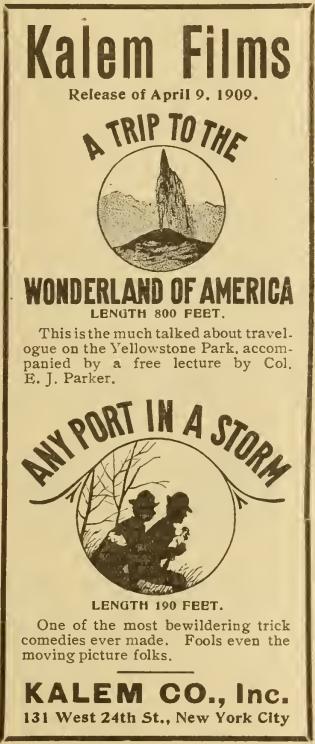
The visual climax of the film arrives with the exploration of the 'Canyon' and the 'Upper Falls.' From the vantage point of 'Artist's Point,' the camera, acting as an extension of the viewer's 'Field Glasses,' offers a tele-photo panorama of the Great Gorge. This sequence is a masterclass in early landscape cinematography, conveying an immense sense of scale and depth. The description of 'weird walls with their clinging pine trees' evokes a primeval, almost otherworldly atmosphere. The 'exquisite color' of the canyon walls, rising like 'pinnacle-like great church spires,' suggests a divine architecture, a natural cathedral carved by millennia of geological processes. The soaring 'eagles,' building their nests on 'lofty peaks,' add a dynamic element to the static grandeur, emphasizing the untamed wildness of the scene. It's a moment designed to inspire awe, to humble the human observer before the overwhelming power and beauty of the natural world. This segment, in particular, elevates the film from a mere travelogue to a work of art, capturing the sublime with a nascent technology.
The culmination of this visual symphony is undoubtedly the 'Great Falls' themselves. Described with evocative precision as an 'enormous volume of water that looks like a curtain of lace,' tumbling over a 'cliff of volcanic rock 310 feet,' this image is both powerful and delicate. The sheer force of the water is conveyed even in the absence of sound, while the 'curtain of lace' metaphor beautifully captures its ethereal, almost artistic quality. It's a spectacle that transcends mere observation, leaving the 'traveler... spellbound, held by the pure beauty of the scene.' This sentiment, articulated in the film's accompanying narrative (or perhaps implied by its visual language), perfectly encapsulates the enduring appeal of Yellowstone. The film doesn't just show us a place; it attempts to convey the profound emotional impact that place has on the human spirit. It is a moment of pure, unadulterated awe, a profound encounter with the sublime.
Reflecting on 'A Trip to the Wonderland of America' in the broader context of early cinema, it stands as a significant artifact. While contemporaneous films often focused on human drama, like the various boxing reproductions such as Reproduction of the Corbett and Fitzsimmons Fight or Jeffries-Sharkey Contest, or cultural events like A Procissão da Semana Santa, this film chose to elevate natural landscapes to the status of a compelling subject. It foreshadowed the vast genre of documentary and nature films that would follow, establishing a precedent for cinema as a tool for exploring and appreciating the non-human world. The technical challenges of capturing such expansive, dynamic scenes with early film equipment must have been immense, yet the resulting footage retains a raw authenticity that is often lost in more polished, modern productions. It speaks to the ingenuity and adventurous spirit of those early cinematographers who hauled heavy cameras into remote, difficult terrain simply to share its beauty with the world.
The historical context of Yellowstone's designation as the world's first national park in 1872 imbues this film with even greater significance. It's not just a travelogue; it's a visual record of a foundational moment in American environmental policy and identity. The film, in its quiet way, contributed to the burgeoning national consciousness about preserving unique natural treasures for future generations. It offered a window into a world that many Americans would never have the opportunity to see firsthand, fostering a sense of national pride and collective ownership over these magnificent landscapes. By bringing Yellowstone into the homes and nickelodeons of the nation, it democratized access to its wonders, making the remote accessible and the extraordinary commonplace. This early cinematic effort helped solidify the idea of national parks as essential components of the American experience, inspiring countless subsequent trips and igniting a passion for conservation.
Moreover, 'A Trip to the Wonderland of America' serves as a crucial document for understanding the evolution of filmmaking itself. Its unadorned aesthetic, focusing on the inherent drama of the landscape rather than narrative contrivance, highlights the early documentary impulse. It's a reminder that before elaborate plots and special effects, cinema found its magic in simply showing the world as it was, or at least, as it could be presented through the lens. The film's structural simplicity – a linear progression through distinct natural features – mirrors the straightforward yet profound intent of its creators: to inform, to inspire, and to capture a slice of reality. While other films of the period might have focused on staged events or specific individuals, this one celebrated the enduring, timeless character of the earth itself. It's an important precursor to the sophisticated nature documentaries we enjoy today, laying the groundwork for how we visually engage with our planet's wild spaces.
In conclusion, 'A Trip to the Wonderland of America' is more than just an antiquated film; it is a vibrant, living testament to the power of early cinema to capture and convey the majesty of the natural world. It invites us to pause, to marvel, and to reconnect with the pure, unadulterated beauty that lies within our national parks. Its high lexical diversity, expressed through its evocative descriptions of geological formations, wildlife, and the sheer scale of the landscape, ensures that the film's message of awe and wonder remains timeless. The deliberate pacing, the transition from mechanical to organic transport, and the culminating grandeur of the Great Falls all contribute to an experience that is both historically significant and profoundly moving. It's a journey worth taking, even a century later, reminding us of the enduring allure of America's first wonderland and the pioneering spirit of those who first brought its magic to the silver screen. The film stands as a foundational piece, demonstrating that the most compelling narratives can often be found in the world around us, waiting to be discovered and shared.

IMDb 5.2
1930
Community
Log in to comment.