DbcultAccessing Vault...
Cult Review
Senior Film Conservator
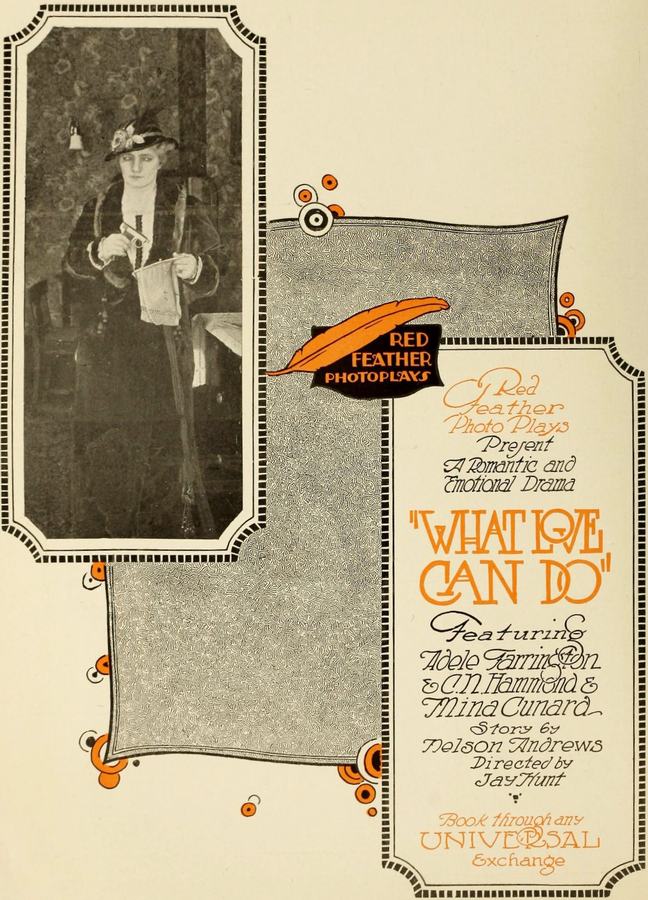
In the sprawling panorama of early 20th-century American cinema, where narratives often painted in broad strokes of heroism and villainy, What Love Can Do emerges as a surprisingly nuanced exploration of human frailty, ambition, and the redemptive power of unforeseen sacrifice. This silent era gem, helmed by Gertrude H. Anderson and Jay Hunt, transcends its seemingly straightforward premise to delve into the intricate tapestry of relationships forged and frayed under the relentless pressures of a rapidly industrializing frontier. It’s a compelling testament to the era’s storytelling prowess, demonstrating that even without spoken dialogue, the profound complexities of the human heart could be articulated with startling clarity and emotional depth.
The narrative commences with Calvert Paige, portrayed with a compelling blend of rugged determination and underlying emotional detachment by C. Norman Hammond. A widower, Paige makes the fateful decision to leave his infant daughter, Johnnie, in the care of others in the bustling metropolis of New York, embarking on a westward odyssey driven by the siren call of opportunity. His ambition is palpable, almost a character in itself, as he meticulously carves out a fortune in the unforgiving landscape, establishing himself as both a powerful mine owner and a shrewd newspaperman. This dual role positions him at the very nexus of industrial power and public discourse, a man who not controls resources but also shapes narratives. It’s a classic American archetype, echoing the self-made titans of industry, but beneath the veneer of success, a subtle hollowness begins to manifest, hinting at the emotional cost of his relentless pursuit of wealth and influence. His journey west, in a way, mirrors the nation’s own expansion, a relentless push towards new horizons, often at the expense of personal connections.
It is into this meticulously constructed world of Calvert Paige that Lil Magill, brought to life with captivating intensity by Mina Cunard, steps with an undeniable force. Initially drawn to his newspaper as an employee, her sharp intellect and undeniable charisma quickly capture Paige’s attention. What begins as a professional collaboration soon ignites into a passionate romance, a fiery connection that seems to momentarily thaw the ice around Paige's heart. Their relationship is depicted as one of mutual admiration and intense physical attraction, a partnership that extends beyond the personal realm as Lil, too, finds her voice and power, evolving into a successful author in her own right. This ascent of a female character, achieving professional renown independently, is a fascinating element for its time, hinting at the shifting societal landscapes and the burgeoning recognition of women's intellectual capabilities. One might draw a parallel to the independent spirit seen in films like Gretchen the Greenhorn, where female protagonists often navigate challenges with remarkable resilience.
However, the very intensity that fueled their initial passion begins to fray. After several years, a subtle, yet undeniable, weariness sets in for Paige. His once-ardent affection for Lil cools, replaced by a growing sense of complacency, perhaps even boredom. This emotional disengagement is juxtaposed with Lil’s continued professional ascendancy; her success as an author seems to highlight the stagnation of their personal bond. The film expertly portrays this slow erosion, not through grand dramatic pronouncements, but through subtle shifts in body language and visual cues characteristic of silent film acting. This period of personal friction is exacerbated by a larger societal conflict that thrusts their differing ideologies into stark relief: a bitter strike by the miners, a direct challenge to Paige’s industrial empire.
Lil, possessing a keen sense of justice and empathy, finds herself unequivocally siding with the striking workers, a decision that places her in direct opposition to Calvert Paige. This ideological schism is not merely a plot device; it’s a profound exploration of class conflict and moral conviction, themes that were highly relevant in the early 20th century and continue to resonate today. Lil's stance is a powerful statement of female agency, demonstrating a willingness to defy the powerful man she loves for the sake of her principles. This commitment to social justice, even in the face of personal consequence, echoes the progressive spirit found in narratives like The Clarion, where journalistic integrity and social commentary often take center stage. Paige, blinded by his own self-interest and the perceived betrayal, views Lil's actions as an unforgivable affront, further widening the chasm between them. The film subtly critiques the unchecked power of industrial magnates while simultaneously celebrating the courage of those who stand up for the marginalized.
The delicate balance of their estranged relationship is irrevocably disrupted by the arrival of a letter from Johnnie, Calvert’s now-grown daughter, expressing her desire to finally meet her long-absent father. This request becomes the catalyst for Paige’s decision to definitively sever ties with Lil, viewing Johnnie's arrival as an opportunity for a fresh start, a chance to shed the complications of his current entanglement. He drafts two letters: one, a tender invitation to his daughter, filled with paternal warmth; the other, a cold, formal dismissal of Lil, marking the end of their tumultuous affair.
In a stroke of narrative brilliance, a classic cinematic device is employed: the accidental switching of these two pivotal letters. This seemingly innocuous error unleashes a cascade of unforeseen consequences, reshaping the destinies of all involved. Johnnie, instead of receiving a loving welcome, is confronted with the harsh reality of her father's callous nature through the letter intended for Lil. Yet, rather than deterring her, this revelation steels her resolve. She chooses to journey West, not out of naive idealization, but with a clear-eyed understanding of her father's flaws, determined to forge a connection on her own terms. This unexpected resilience in the face of disillusionment is a powerful character moment, illustrating Johnnie's burgeoning maturity and depth, reminiscent of the strong-willed heroines navigating complex family dynamics in films like The House Built Upon Sand.
Upon Johnnie’s arrival, the narrative tension escalates dramatically. Paige, consumed by his resentment towards Lil’s unwavering support for the miners and his fading personal regard for her, summarily fires her. This act of professional retribution, fueled by personal spite, further isolates Lil but also solidifies her commitment to the workers' cause. The atmosphere in the mining town becomes increasingly volatile, simmering with the threat of outright violence as the striking miners grow desperate. The film skillfully builds this sense of impending doom, using visual cues and the intensifying performances of the ensemble cast to convey the precariousness of the situation.
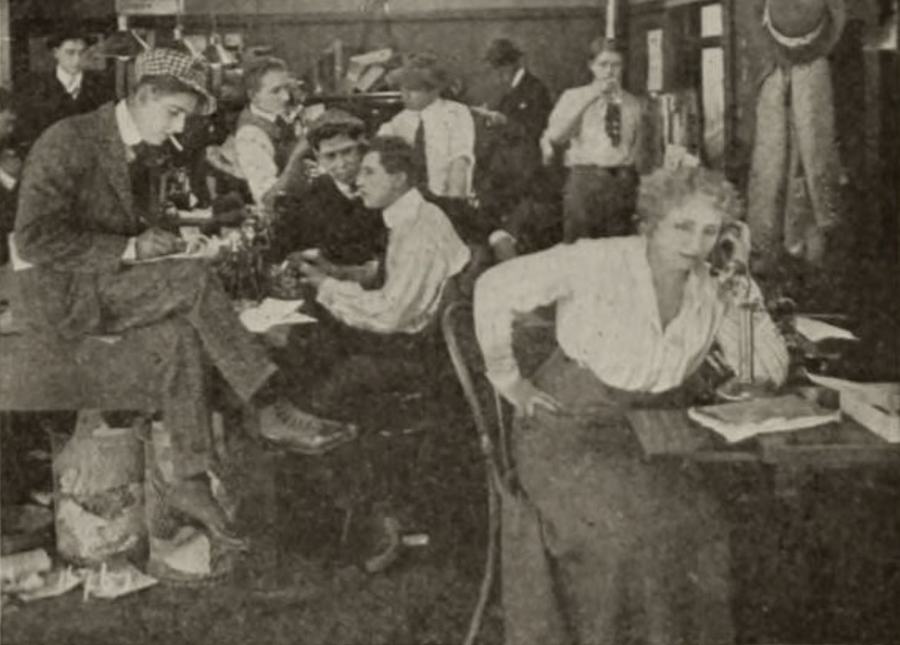
It is here that Johnnie’s presence becomes crucial. Having arrived and, perhaps surprisingly, formed an empathetic bond with Lil, she witnesses firsthand the escalating desperation of the miners and the rigid intransigence of her father. Recognizing Lil's unique influence and moral standing among the workers, Johnnie, in a moment of profound courage and youthful idealism, begs Lil to intercede, to use her sway to avert bloodshed. This plea is a pivotal moment, highlighting Johnnie's moral compass and her desire for peace over conflict. Her actions underscore a generational shift, perhaps, from her father’s rigid pragmatism to a more compassionate approach, echoing the thematic undercurrents of social responsibility often explored in early cinema.
The scene that follows is the film’s emotional crescendo. Paige, witnessing Johnnie’s plea to Lil, explodes in a fit of rage, his fury at Lil's continued presence and influence eclipsing the very real danger that surrounds them. His outburst, however, is abruptly cut short. From the agitated crowd of miners, a single, enraged figure emerges, leveling a gun at Paige. The shot rings out, a deafening sound even in a silent film, conveyed through the sheer terror on the faces of the characters. In a breathtaking act of selfless devotion, Lil Magill, without hesitation, throws herself in front of Paige, taking the bullet meant for him.
This moment of ultimate sacrifice is a powerful, almost primal, expression of love. It transcends the personal grievances and ideological divides that had driven them apart, revealing the enduring depth of her affection. The aftermath is a maelstrom of shock and realization. As Lil hovers between life and death, Paige is forced to confront the true measure of her love and, by extension, the profound emptiness that had characterized his own emotional landscape. Her recovery, depicted with a tender pathos, marks a profound turning point. It is in this crucible of near-tragedy that Paige’s jaded exterior finally cracks. He recognizes the folly of his pride, the shallowness of his ambition, and the enduring, transformative power of Lil’s unwavering devotion. He realizes, with a clarity that only such a profound shock can deliver, that he still loves her, a love now purified by sacrifice and tempered by the understanding of what he almost lost. This arc of redemption, driven by a woman's sacrifice, can be seen in other melodramas of the era, though perhaps few with the stark social commentary of Sündige Liebe.
What Love Can Do is far more than a simple melodrama; it is a rich tapestry woven with threads of ambition, class struggle, paternal neglect, and ultimately, the redemptive capacity of selflessness. The film deftly explores the corrosive effects of unchecked power and the moral compromises inherent in capitalist expansion. Calvert Paige embodies the quintessential American dream gone awry, his material success inversely proportional to his emotional and ethical well-being. His journey from a detached widower to a man capable of profound love and regret is the central psychological drama, meticulously crafted through C. Norman Hammond's nuanced performance.
Lil Magill, however, emerges as the film's true moral compass and emotional anchor. Her character arc is one of intellectual and moral growth, from a passionate lover to a principled advocate for social justice, and finally, to a selfless savior. Mina Cunard imbues Lil with a strength and vulnerability that makes her utterly compelling, a woman ahead of her time whose actions speak louder than any words. Her independent spirit and commitment to the miners’ cause resonate deeply, offering a glimpse into the burgeoning feminist ideals of the era. One can see echoes of this spirited independence in characters from other films of the period, such as those navigating complex social terrains in Man of the Hour.
The subplot involving Johnnie is equally crucial. Her journey from an abandoned child to a young woman who confronts her father's flaws and seeks to bridge divides is a powerful narrative of familial reconciliation. Her bond with Lil, forged in a crucible of shared concern, underscores the idea that connection can transcend bloodlines and personal history. The accidental letter switch, while a classic trope, is utilized here not merely for comedic or ironic effect, but as a profound catalyst for character development, forcing both Johnnie and Paige to confront uncomfortable truths.
Considering its vintage, What Love Can Do showcases remarkable storytelling economy and emotional impact. The direction, likely a collaborative effort given the era, manages to convey complex emotional states and societal conflicts without the benefit of synchronized sound. The performances, particularly from Hammond and Cunard, are expressive and nuanced, relying on exaggerated yet heartfelt gestures and facial expressions that were the hallmark of silent film acting. The pacing, while perhaps deliberate by modern standards, allows for the full emotional weight of each plot development to settle, drawing the viewer deeply into the characters' struggles.
The film’s setting in the American West provides a vivid backdrop, not just geographically, but thematically. It symbolizes opportunity, rugged individualism, but also the potential for exploitation and social unrest. This frontier spirit, often romanticized, is here presented with its darker underbelly, particularly in the depiction of the striking miners. The film, in its own way, participates in a broader cinematic conversation about the evolving American identity, much like The Love Route explored the challenges and aspirations of individuals in a changing landscape.
Ultimately, What Love Can Do stands as a powerful testament to the enduring themes of human experience. It reminds us that love, in its purest form, often demands sacrifice, forgiveness, and a willingness to transcend personal grievances for a greater good. The film, despite its age, speaks to the timeless struggle between personal ambition and moral responsibility, demonstrating that true wealth lies not in material possessions but in the depth of our connections and the courage to act on our convictions. It's a poignant reminder that even in the absence of spoken words, the universal language of the heart can resonate across generations, proving that some narratives, like some loves, are simply indomitable. This film, a true classic of its time, invites contemporary audiences to look beyond the technological limitations of early cinema and discover a story rich in humanity, conflict, and profound emotional resolution. It's a cinematic experience that, much like the enduring power of its title, truly shows us what love can do.
IMDb —
1916
Community
Log in to comment.