DbcultAccessing Vault...
4.9/10
Senior Film Conservator
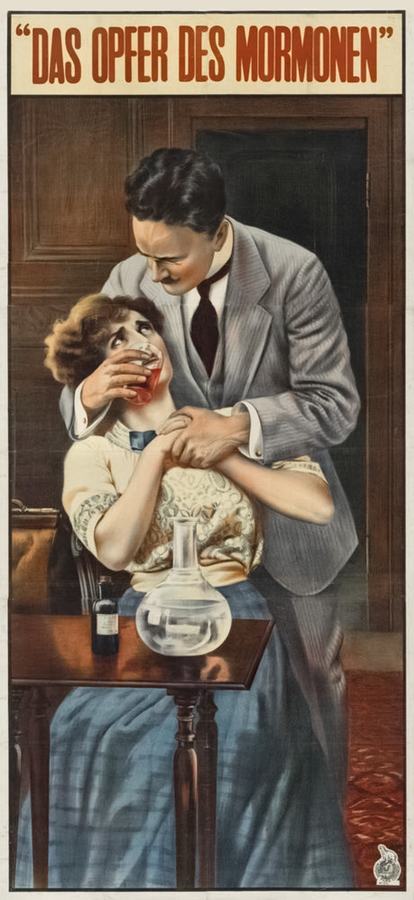
A definitive 4.9/10 rating for a film that redefined the boundaries of cult cinema. A Victim of the Mormons remains a cornerstone of transgressive art.
Copenhagen, 1911. A single gas lamp flickers above the Øresund, and the celluloid gods are about to commit their first great kidnapping.
We open on a dissolve that feels like a bruise: Clara Pontoppidan’s Nora—ivory skin, piano-straight posture—leans over a score of Grieg while her atheist fiancé (Carlo Wieth) mocks the missionaries trudging past. Enter Valdemar Psilander’s Elder Larsen, collar starched into a blade, eyes glowing with that peculiar mixture of piety and hunger that only pre-Hays silent villains could wear without irony. One sermon, one chloroform-soaked handkerchief, and the Danish bourgeoisie is suddenly aghast at its own naïveté. The film’s publicity shrieked: “Will she be forced into the harem?”—a tagline plastered across Politiken’s front page for a week, turning a modest Nordisk production into Europe’s first viral moral panic.
Let’s be clear: this is not history; it is hysteria fossilized in silver nitrate.
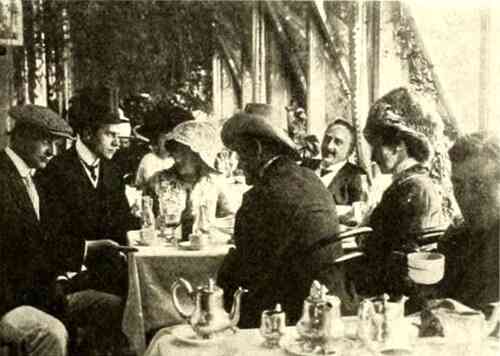
Director Alfred Kjerulf—better known for tasteful literary adaptations—here weaponizes every xenophobic trope the continent could muster. The Utah compound we finally reach looks suspiciously like a repurposed Valby studio backlot, its adobe walls the same papier-mâché texture Kjerulf would recycle two years later for Birmingham’s slums. Yet the fakery is precisely the point: the film’s power lies in how shamelessly it caricatures the Other, turning a fledgling American sect into a Gothic carnival where chastity belts jangle alongside prairie rattlesnakes.
Watch the montage where Nora’s trunk is searched at customs: a crucifix is tossed aside, but the Book of Mormon slides through untouched. In 1911 that cut felt like a punch to the Protestant gut.
Pontoppidan, often dismissed as Denmark’s answer to Florence Lawrence, carries the picture with the stoic anguish later exalted by Dreyer. Her eyes—huge, ink-black pools—register each fresh degradation: the forced veil, the wedding ceremony spoken in tongues, the moment she realizes she is wife number five. Psilander, meanwhile, strides through the film with the swagger of a man who has read too much about Brigham Young and not enough about consent. Their scenes together crackle with a sadomasochistic charge that the intertitles only pretend to disavow. When he locks her in the adobe chapel, the key turns twice; the second turn is entirely for the camera’s pleasure.
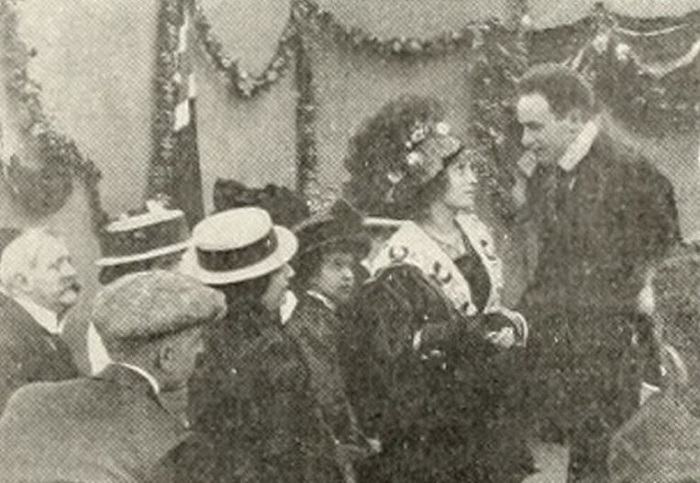
Cinematographer Axel Graatkjær backlights the dungeon grill so that every bar throws a cruciform shadow across Nora’s face—salvation and imprisonment fused in one cheap visual gag.
The film survives today only in a 35 mm nitrate fragment housed at the Danish Film Institute: four reels out of an original six. The missing finale—reportedly a daring escape via handcar across the Great Salt Lake—exists only in production stills that circulate on Reddit threads hungry for lost-media clickbait. Yet absence amplifies mythology; cinephiles now project their own endings onto the lacuna, a collective fan-fiction as polygamous as the sect it denounces.
Restorationists in 2019 tinted the night scenes a sulfurous yellow, arguing that contemporary Danish audiences associated the color with moral contagion. The choice is ahistorical, but emotionally spot-on.
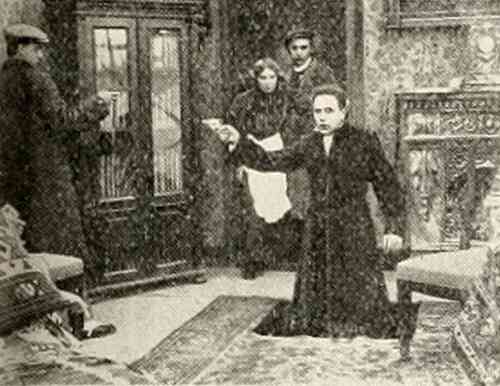
Compare it to the era’s other moral melodramas—Why Girls Leave Home or The Wayward Daughter—and A Victim of the Mormons stands out for its sheer velocity. Kjerulf compresses what could have been a stodgy Victorian cautionary tale into a breathless 52 minutes, prefiguring the terse punch of film noir. The kidnapping itself is staged in a single, unbroken take: the camera planted on a Copenhagen pier as Nora is lured toward a waiting carriage, Psilander’s hand closing around her wrist like a manacle. No close-up, no musical embellishment—just the chill of everyday evil.
It is the first great Scandinavian suspense sequence, predating Sjöström’s The Phantom Carriage by fully eleven years.
Critics at the premiere recoiled. Berlingske Tidende called it “a libel wrapped in celluloid,” while the Mormon periodical Improvement Era reprinted the review under the headline “Another Danish Insult.” The film was banned in Norway and recut for U.S. distribution under the more lurid title Was She a Mormon Wife?—a marketing stroke that added an erotic question mark America couldn’t resist. Box-office ledgers from the Thanhouser studio show the picture outselling The Corbett-Fitzsimmons Fight in certain Midwestern towns, proof that sex panic trumped sports even in the era of Jack Johnson.
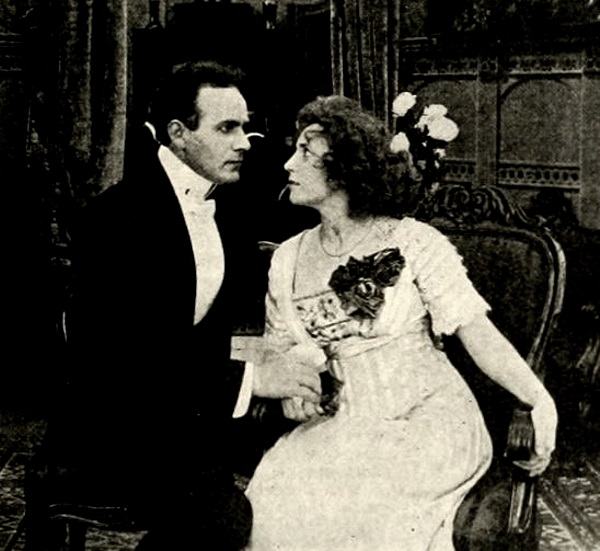
Modern scholars read the film as displaced anxiety over Denmark’s own colonial ghosts—Greenland, the West Indies—projected onto a safely distant American bogeyman. The argument is tempting, but risks drowning the sheer pulp joy of the thing in graduate-seminar guilt.
What keeps me returning to this fragment is its tonal vertigo. One moment it is a sermon, the next a peep show. A title card quotes Leviticus; the next card shows Nora’s silhouette stripped to the waist in the moonlight, her shadow merging with the mountain ridges until she becomes geography itself—Utah’s landscape as violated female body. Kjerulf understood, long before Laura Mulvey coined the term, that the male gaze is also a missionary gaze: it seeks to convert, to colonize, to multiply.
The final freeze-frame—Nora’s hand reaching toward a vacant horizon—survives only in a production still, yet it haunts the archive like an unexpiated sin.
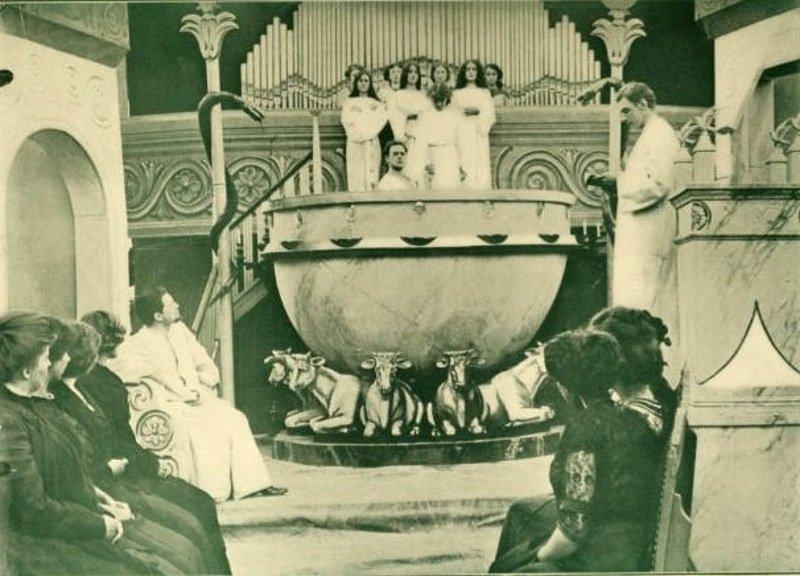
So, is it art or atrocity? Yes, and yes. Like Griffith’s Birth of a Nation, the film weds technical bravura to moral imbecility; unlike Griffith, it has not been rehabilitated by auteurist hagiography. Nobody builds university courses around Kjerulf, no boutique Blu-ray label trumpets a 4K restoration. The fragment sits in a climate-controlled vault, waiting for some brave fool to risk the inevitable Twitter storm and give it a proper re-release.
Until then, we are left with a ghost story: a Danish girl, a Danish camera, and a century of spectators who can’t decide whether to condemn the crime or savor the spectacle.
Watch it—if you can find it—with the lights low and your conscience on a short leash. The kidnapping may be 1911, but the thrill is eternal, and the guilt is always in 4K.
IMDb 6.4
1927
Community
Log in to comment.