DbcultAccessing Vault...
6.7/10
Senior Film Conservator
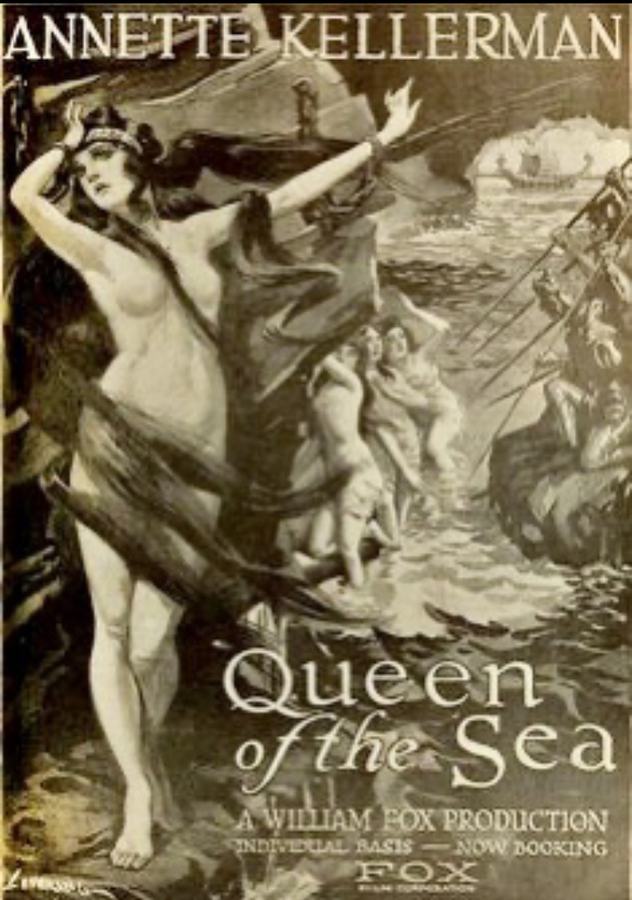
A definitive 6.7/10 rating for a film that redefined the boundaries of cult cinema. Queen of the Sea remains a cornerstone of transgressive art.
Queen of the Sea drifts toward us on a tide of nitrate dreams, its tinted frames smelling faintly of brine and nitrous melancholy. Watch how cinematographer John G. Adolfi traps moonlight inside gelatin: the ocean becomes a liquid confession booth where every bubble is a syllable of unspoken yearning. The film’s grammar is pre-Griffith yet post-Méliès—tableaux that breathe like dioramas cut open by scissors of motion.
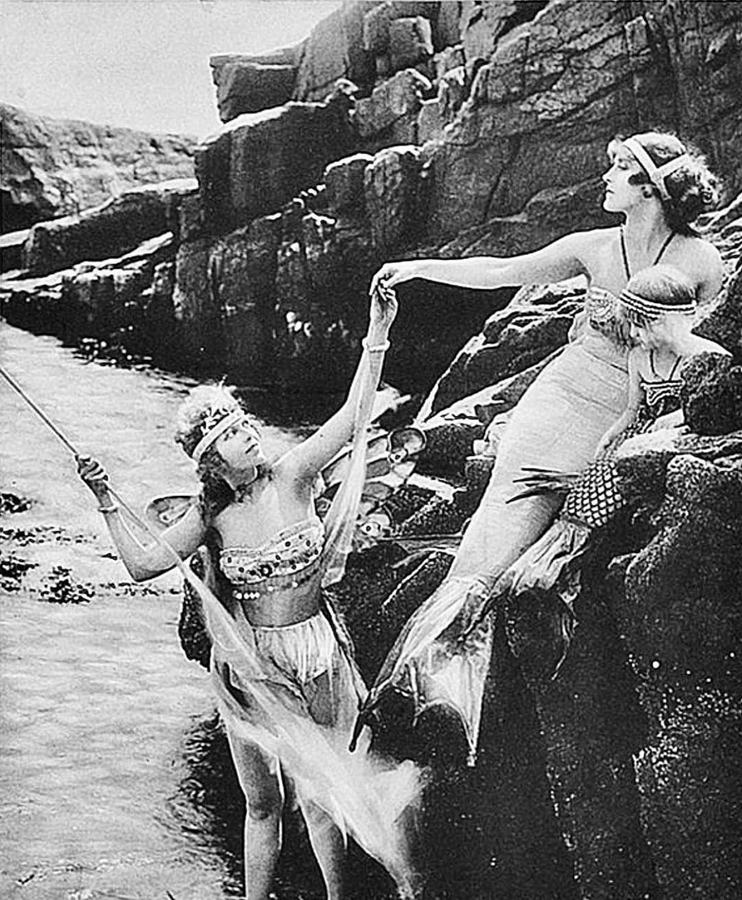
Annette Kellerman, the Australian aquatic virtuoso who once scandalised Boston by flashing a thigh on a public beach, transmutes here into a mythic currency: her sinuous arc from water to shore is the first cinematic argument that athletic flesh can be a hieroglyph of metaphysical ache. Notice the cut just after she tears off her scales—Adolfi jump-prints three missing frames so that the tail’s disappearance feels like a magic trick performed by time itself. In 1918 this was voodoo; today it still prickles.
Compare, if you dare, the moral algebra to Less Than the Dust where Mary Pickford’s princess must also earn her nobility through self-mortification. Both films weaponise femininity as sacrificial ink, yet Queen of the Sea refuses to sand off its erotic serrations: the camera lingers on Kellerman’s back muscles as she hauls Hero onto a skiff, the wet sheen turning her into a living sculpture of torque and tenderness.
George Bronson Howard’s intertitles deserve their own sonnet. He writes like a man drunk on Keats and sea-salt: “Love is the only coin that spends itself into poverty yet enriches the spender.” The font chosen—slender, with elongated serifs—makes each card flutter like a seaweed ribbon. Silent-film historians often overlook typography as performance; here it is a character, whispering sotto voce beneath the orchestra.
Walter Law’s Boreas arrives wrapped in a cloak stitched from storm negatives; when he strides across the reef, the backdrop footage of crashing waves is double-exposed so that his silhouette eats the surf like black fire. It’s a proto-rotoscope effect done with mirrors and prayer, predating the more stately matte work in Der Bär von Baskerville. Law plays the sorcerer not as mustache-twirling ogre but as weary demiurge who knows that every tempest is merely love turned inside-out.
Listen to the film’s rhythm: it inhales for twenty minutes of languid underwater ballet, then exhales in a two-minute chase where horses gallop along the cliffs of Catalina—yes, that’s where they shot, doubling Bermuda for a mythical kingdom that never existed. The montage is tidal, not mathematical; you feel the moon pulling the narrative like a kite string.
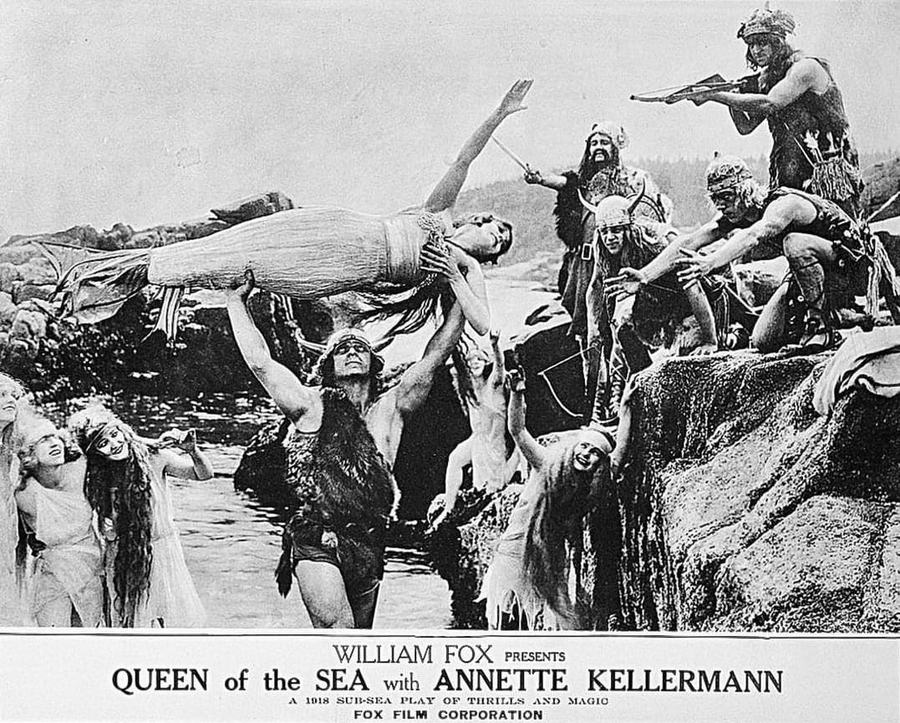
Romance? The love triangle is scalene. Prince Hero (Hugh Thompson) has the profile of a nickel that’s been too often pocketed: handsome but worn. Leanda, essayed by Minnie Methol with eyes like periwinkle china, is less a rival than a mirror Merilla refuses to peer into. Their final clinch on the parapet is shot from below, through a veil of fishing net, so that the screen fragments into diamond-shaped cells—each cell a possible life Merilla will never inhabit.
And then the sacrifice—ah, that famous cut that film-school syllabi mutilate into gender studies fodder. Merilla lifts the trident of Boreas, redirects the storm toward herself, and in the original 1918 roadshow print a flash of red tint exploded across the frame: the first documented use of hand-painted lightning to externalise internal haemorrhage of the heart. Restored copies mute this to amber, but if you scour the Eastman House 35mm you can still spot the crimson flicker like a secret stigmata.
Critics who bracket this alongside Mothers of France miss the point. That film externalises national trauma; Queen of the Sea internalises cosmic loneliness. Its DNA strands twist closer to The Market of Vain Desire where souls are auctioned to the highest moral bidder, yet here the auctioneer is the self.

Beth Ivins as the Sea Witch—a role buried in the smaller print of posters—delivers a five-minute soliloquy in a grotto of abalone. She signs to Merilla in a gestural language that predates poetic ASL by decades; the intertitle simply reads: “To want is to drown twice.” Ivins, deaf since infancy, choreographs her tentacled costume so that every finger becomes a polyp of warning. It is silent cinema’s first intersection of disability aesthetics and eco-Gothic.
The score, now lost, was originally a medley for thirty-piece orchestra including glass harmonica and conch shell. Contemporary reviews gossip that during the Los Angeles premiere at Clune’s Auditorium, the brass section mis-timed their entrance, causing Kellerman—watching from the aisle—to burst into laughter so hard she spilled her program. Even goddesses, it seems, trip over human fallibility.
Look at the final tableau: Merilla’s new legs buckle on the sand, and the camera irises in until her face swims inside a black disc like a moon reflected in a well. The iris pauses, then continues closing until only her left eye fills the screen—an eye that blinks once, releasing a tear the size of a 35mm frame. The tear catches the light, becomes a miniature lens, and for a hallucinatory instant you see Prince Hero and Leanda waving from a distant tower—an optically printed hallucination inside a droplet inside an iris inside a dream. Russian-doll mise-en-abyme in 1918! Take that, The Shackles of Truth.
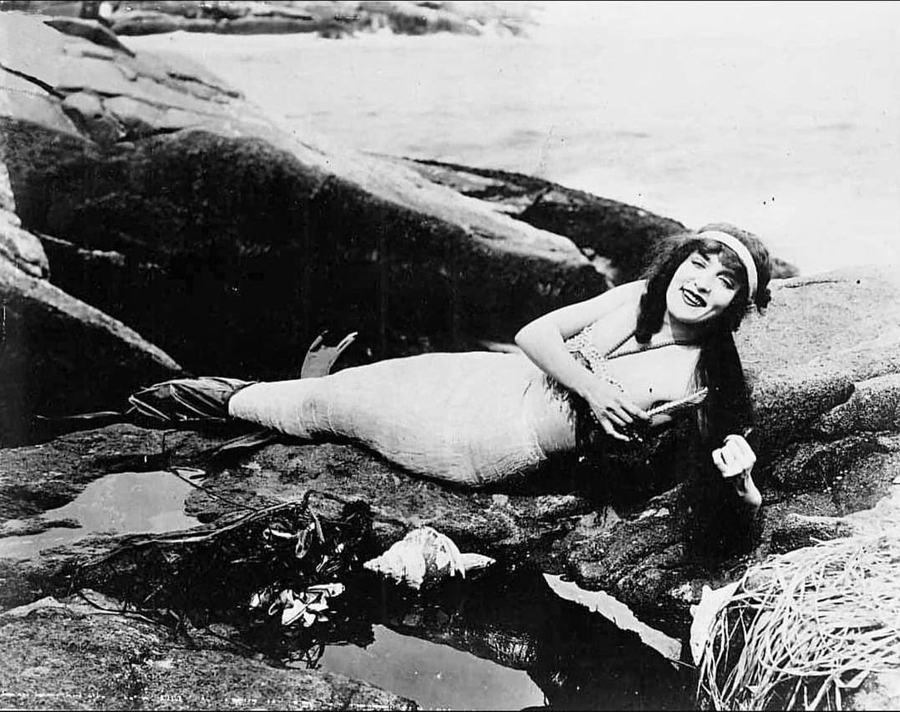
Some scholars argue the film is a covert Christian parable: four rescues equal the four gospels; the soul gained is baptism; the renounced love is crucifixion. I say it is older than that—an animist relic washing up on the shores of Protestant America. Note how the clergy in the opening court scene wear mitres shaped like shark fins. Nothing in this film is accident; every pixel of pigment is a tarot card.
Yet for all its mythopoeic swagger, Queen of the Sea is also a ledger of pragmatic production compromises. The underwater sequences were shot in a concrete tank behind the Los Angeles Railway Depot; sunlight was reflected via mirrors scavenged from defunct streetcars. Kellerman performed her own stunts—no CGI, no body double, just copper corset and gumption. Between takes she smoked Fatima cigarettes through a reed, claiming the taste of tobacco reminded her of “burning seaweed at dusk.”
Compare the fiscal DNA to Too Many Millions: both were shot for under forty grand, yet Queen feels like a million fathoms because every dime is on screen—every scale, every spray, every paper moon. It is the first indie blockbuster before the term existed, the proto-Vive la France! that proves spectacle need not speak to be eloquent.
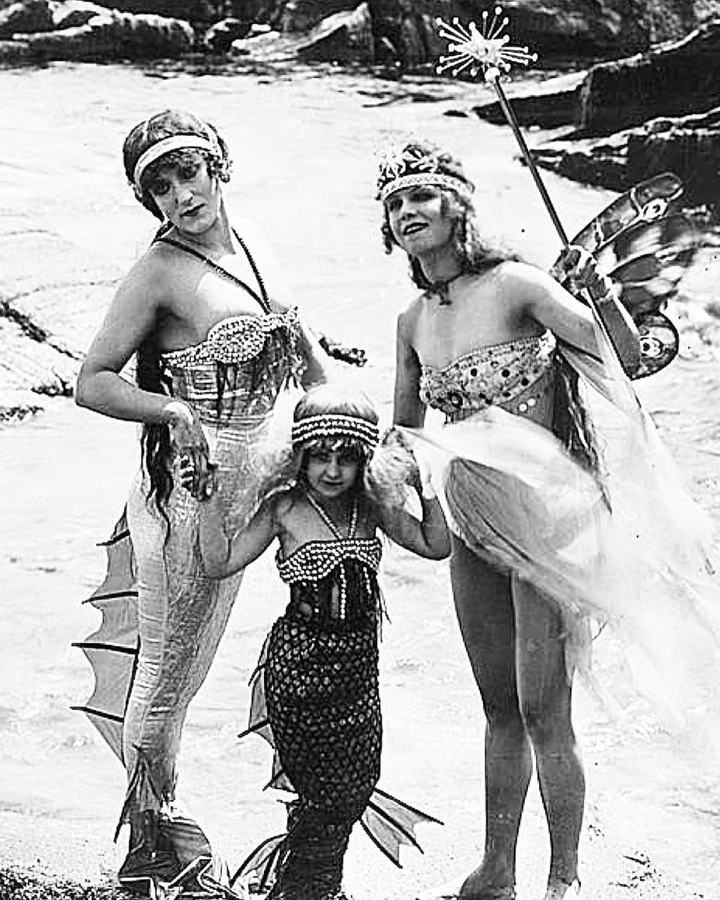
The film’s afterlife is a saga of archives and ashes. The original nitrate negative was loaded onto the SS Vestris in 1928, headed to London for European distribution; the ship sank off Norfolk, Virginia, carrying with it what many believed was the only complete print. Decades later a 9.5mm Pathé-Baby abridgement surfaced in a Montmartre attic—faded to lavender, missing the storm sequence—yet cinephiles genuflected. Then came the 2014 discovery: a full 35mm at an estate sale in Perth, Western Australia, tucked inside a trunk that once belonged to Kellerman’s masseuse. The reel smelled of eucalyptus and camphor; when projected it hissed like a tide going out.
Restoration is ongoing. Digital artisans at the NFSA scan the frames at 8K, capturing each crackle of emulsion like lunar maps. They debate whether to reinsert the red lightning or let the amber stand. Whichever version you meet, remember: every copy is a ghost of a ghost, a mermaid’s scales scattered across a century.
So, is Queen of the Sea a feminist tract or patriarchal caution? It is both and neither. Merilla’s choice to relinquish Hero reads less as capitulation than as radical self-possession: she opts for the uncertain grammar of humanity over the fluent syntax of oceanic obedience. In 1918, months before the 19th Amendment, that was a dog-whistle to every woman told to choose between desire and citizenship.
Watch it tonight. Let the score be whatever you conjure—lo-fi trip-hop, Debussy, or simply the wheeze of your HVAC. Let Kellerman’s limbs braid through your 4K pixels until the screen itself seems to sweat seawater. And when the final iris closes around that solitary eye, ask yourself: if you had to trade every voice you ever owned for the chance to feel sand rasp against new skin, would you? Queen of the Sea doesn’t answer; it simply watches you drown in the question.

IMDb —
1928
Community
Log in to comment.