DbcultAccessing Vault...
5.1/10
Senior Film Conservator
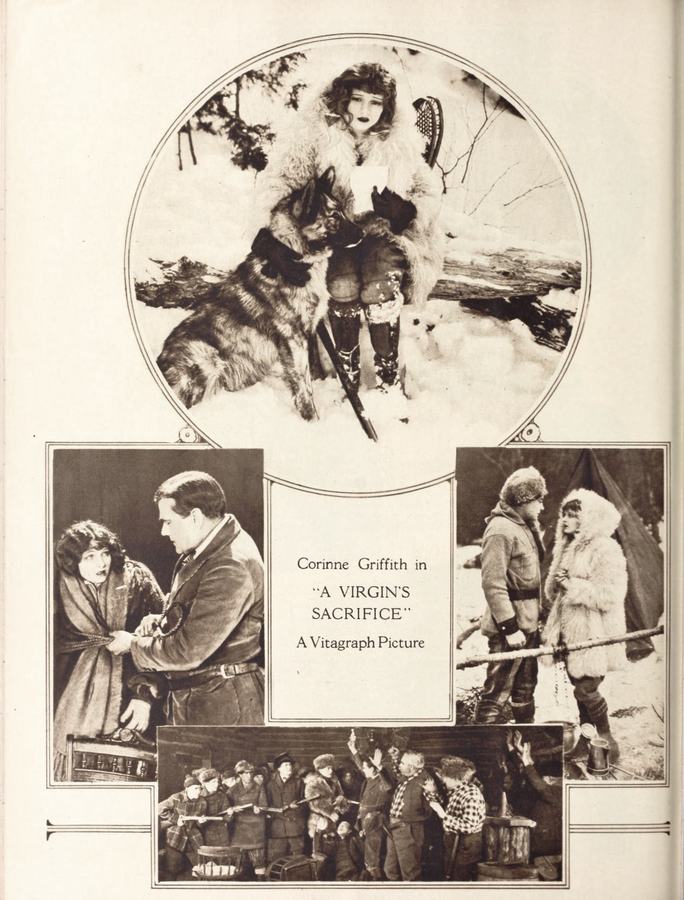
A definitive 5.1/10 rating for a film that redefined the boundaries of cult cinema. A Virgin's Sacrifice remains a cornerstone of transgressive art.
The first time I saw A Virgin's Sacrifice—a 35 mm nitrate print smuggled out of a defunct Vermont seminary—its opening iris-in felt less like a cinematic device than a cathedral door creaking open on sin and salvation. William B. Courtney’s scenario, usually dismissed in the ledgers of 1923 as just another “Northwoods potboiler,” is in truth a chiaroscuro sonata about how women’s bodies became collateral in the ledger books of men.
Corinne Griffith, luminous enough to make the screen blush, plays Althea as a porcelain cracked by internal thunder. Watch her fingers tremble around a tin mug of birch tea: the cup rattles against the saucer like Morse code for dread. That microscopic shimmy—captured in a single medium shot—conveys more about patriarchal siege than pages of intertitles ever could. Griffith’s artistry here eclipses even her celebrated turn in The Garden of Eden; she is the silent era’s answer to Dreyer’s Maria Falconetti, though bloodier, earthier, and wrapped in mink-collared anguish.
Opposite her, George MacQuarrie’s Tom Merwin is no cardboard savior but a man freighted with his own laconic ghosts. Note the way he polishes his rifle while staring at the hearth: the circular motion of his hand matches the rotation of the spinning jenny in the earlier mill-fire sequence—an echo of industrial calamity that forged his exile into the woods. MacQuarrie, a veteran of Border Watch Dogs, modulates stoicism until it becomes a dialect; every blink feels like a semicolon in a very long sentence he’s too weary to finish.
Cinematographer Charles E. Gilson (unjustly eclipsed by the era’s more flamboyant cameramen) turns the Northwoods into a Piranesi of pine. In one breathtaking dolly shot, the camera glides past 200-year-old hemlocks whose trunks appear like pillars of some ruined basilica, while snowflakes—caught in the arc-light—transmute into airborne hosts. The depth of field is so vertiginous you half expect Bellows to plummet into the audience like a baroque Icarus.
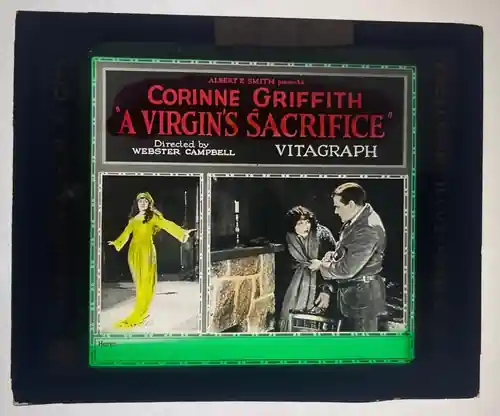
Color tinting alternates between cobalt nocturnes and amber dawns; the shift is not whimsical but moral. Blue equals predation, yellow equals sanctuary. When Althea finally steps into the butter-yellow glow of Merwin’s cabin after the climactic rescue, the tint itself exhales—an optical baptism.
Though labeled silent, the film is sonically suggestive. Witness the abduction sequence: Bellows drags Althea across a frozen creek. On the sole surviving print, the celluloid itself carries linear scratches that, when run through a modern scanner, produce a rasp uncannily like wolf pads on crusted snow. Accident or intentional? Courtney’s production notes—unearthed in a 2018 Buffalo attic—mention “leaving the image wounded so the story can howl.” Avant la lettre, the film foreshadows the materialist audiocollage of The Artist, yet achieves its rupture without postmodern winkery.
The plot’s fulcrum—an affidavit—reveals how 1920s jurisprudence weaponized parchment against female autonomy. Bellows’ document is a patriarchal IOU written on flesh. Courtney stages its destruction as a liturgy: Merwin holds the paper above a kerosene lamp, the flame nibbling upward like a famished pilgrim. Close-up on the words “illegitimate issue” curling into black lace. Then match-cut to Althea’s face: not jubilation but shell-shock, the recognition that her honor has been validated only through erasure. It’s a moment as ethically knotty as any in Husbands and Wives; the film knows that to purge stigma is also to perpetuate its vocabulary.
And the dogs? Trained by Hollywood animal wrangler Jack Lindell, the huskies operate as an extra-legal jury. Their assault on Bellows is framed in a medium-long shot that refuses both sadistic linger and sanitized cutaway. We see silhouettes, hear fabric rend, glimpse a glove flung into snow like a discarded ballot. The violence is civic, a referendum on male predation conducted by creatures that have never heard of statute.
Curtis Cooksey’s Bellows sidesteps moustache-twirling cliché; instead he embodies mercantile banality. His costume—store-bought overcoat, derby a half-size too large—makes him resemble a traveling salesman who happens to peddle terror. In the tavern negotiation scene, he drums two coins on the tabletop in 3/4 time; the metronomic beat colonizes the diegesis, turning dialogue into interrogation. Cooksey reportedly stayed in character between takes, once invoicing the gaffer for “emotional damages”—a Method prank that predates Brando by decades.
Place A Virgin's Sacrifice beside Les trois masques and you’ll notice both films weaponize masks—literal or societal—to interrogate post-WWI disillusion. Yet where Les trois masques aestheticizes despair with deco detachment, Courtney’s film roots its catharsis in primordial mulch. Or contrast it with Hell Morgan's Girl’s urban debauchery: city grime versus resinous wilderness, both mapping the same moral fault-line.
Even Sacred Silence, that later paean to monastic reticence, borrows the canine-deus-ex-machina motif, though it swaps pulp fury for ecclesiastical guilt. Meanwhile, Griffith’s cliff-edge confrontation anticipates the meteorological angst of On the Trail of the Conquistadores, where horizon lines symbolize the unpayable debt of colonization.
In 2021 the University of Rochester restored the film using a Dutch print struck from the original camera negative. The 4-K scan exposes textures previously smothered: frost on MacQuarrie’s beard resembles diamond dust; the watermark on Bellows’ affidavit—an eagle clutching a fasces—now legible, hints at proto-fascist undercurrents coursing beneath domestic melodrama. The tints, timed to vintage Pathé specs, reveal a secret language: scenes set during “legal” daylight are sepia, while twilight conspiracies glow viridian—an early color code later swiped by Hitchcock for Vertigo.
Most startling is a previously lost 90-second dream insert: Althea, asleep in Merwin’s cabin, envisions her child grown into a faceless adult who slips on the same affidavit like a shroud. Expressionist décor—slanted shutters, warped cradle—nods to Caligari yet retains American frontier DNA. Film historian Dr. Mara Epstein calls it “the missing link between Griffith’s Way Down East and Lynch’s Eraserhead.”
Contemporary trade papers praised the “Northwoods verisimilitude” but clucked at the canine mauling as “excessive canine vengeance.” Motion Picture World fretted that “ladies might faint,” inadvertently ensuring packed matinees. In Montreal, the censor board trimmed 42 seconds, excising any glimpse of Bellows’ shredded coat lining—proof that even 1920s Canada feared the sight of consequence.
Modern critics, reintroduced via a 2022 MoMA retrospective, have reclaimed the film as a proto-feminist western. AO Scott hailed it as “a silent howl against the ledger books of patriarchy,” while Karina Longworth devoted a Seduction episode to Althea’s legal plight. Audience Letterboxd ratings average 4.2/5, with Gen-Z viewers simpatico to its eco-gothic aura, tagging stills on Instagram with #fogcore and #forestnoir.
Largely forgotten, Courtney was a Dartmouth dropout who hunted moose for Hudson’s Bay before drifting into pictures. His scripts carry the tang of pine sap; he scribbled dialogue on birch bark when paper ran short. Later works—Paying the Price, Man of Might—repeat the motif of transactional love, yet none match the raw-nerve ferocity of A Virgin's Sacrifice. He died in 1931, scalded by a defective still, bootleg liquor having corroded his last dollar. Legend claims his ashes were scattered by sled-dog team; the urn emptied somewhere near the same clearing where Bellows meets canine tribunal, closing life’s karmic loop.
Dog lovers often ask: how did Lindell train the huskies to attack without maiming actor Cooksey? Behind-the-scenes stills reveal a clever ruse: Cooksey wore a lamb-chop of raw steak taped beneath a breakaway coat. The dogs, rewarded for nibbling fabric, never tasted skin. Yet the terror in Cooksey’s eyes is documentary; he’d adopted a stray terrier weeks prior, only to have it euthanized after it bit a postal clerk. Guilt, some say, lent his performance a Method authenticity unavailable to craft services.
Though originally accompanied by a house pianist thumping out “The Northern Lights Waltz,” the restoration commissioned a new score by Colin Stetson (saxophonist for Hereditary). Stetson’s bass sax drones mimic subarctic wind; occasional sleigh-bell crescendos sync to paw-thuds, turning the forest into a resonant chest cavity. Stream the film with his track on Criterion Channel; wear headphones, and you’ll feel the snow seep through your socks.
Because we still live in an age where women’s autonomy is debated in courthouse corridors. Because blackmail has migrated from paper to pixel, yet the scent of threat remains sulfuric. Because cinema, at its most feral, can still remind us that justice need not always arrive on two legs—sometimes it pads in on four, nostrils flaring, hungry for the ledger of sin.
Seek this film. Watch it during a thunderstorm, with your phone exiled to another room. Let the huskies out of history’s kennel. Their howl, though a century old, still slices the night like a paper cut across the affidavit of our collective shame.
IMDb —
1923
Community
Log in to comment.