DbcultAccessing Vault...
Cult Review
Senior Film Conservator
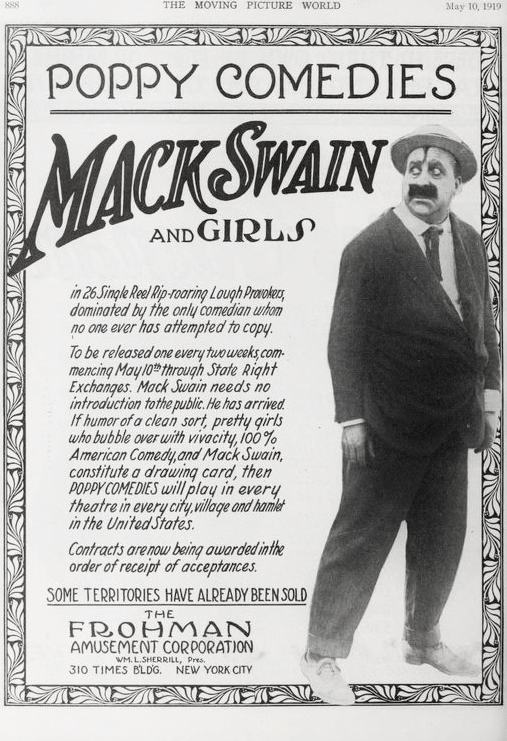
The first miracle of Ambrose's Day Off is that it still exists: a 1914 one-reeler shot on Eastman stock so volatile it should have curled into dust before Harding reached the White House. Instead, here it is on my 4K monitor—grainy as storm-whipped sand, yet pulsing with a life that makes most contemporary comedies feel embalmed in irony.
I watch Ambrose—Mack Swain’s pear-shaped titan of exasperation—shuffle onto the pier, and the world tilts. His coat is a wool sarcophagus; his shoes, twin anvils. Behind him, the ocean performs its own slapstick, slapping pilings with wet applause. The camera never moves, but the frame vibrates as if the universe itself were suppressing a giggle. Swain doesn’t need a close-up; his back is operatic. One twitch of a shoulder blade equals arias of embarrassment.
Vincent Bryan’s scenario is a haiku of cruelty: man seeks leisure, leisure mutilates man. Yet within that razor-thin premise blooms a taxonomy of human folly. A hat—black, bulbous, funereal—takes flight in the sea breeze. Ambrose pursues. The hat ascends, pirouettes, plummets onto another man’s head. Cue a Greek chorus of onlookers who transform the chase into a carnival trial. The hat becomes identity itself, always already elsewhere, always already slipping away.
Consider the gendered choreography. Lottie Cruz enters astride a carousel horse, her skirt a whirlpool of stripes. She is less character than weather system, a low-pressure front of desirability. Ambrose, caught in her orbit, forgets the hat; his body forgets gravity. He bows, a walrus attempting ballet. She rewards him with a smile that could curdle milk. In 1914, this is foreplay. In 2024, it is a master's seminar in the economics of gaze: she sells postcards; he buys illusions.
The film’s midpoint is a blackout gag so primitive it loops back into surrealism. Ambrose, thirsty, orders a soda. The siphon erupts like Vesuvius; the beverage rockets skyward, hangs for a beat, then descends in slow-motion globules that glisten like alien spawn. He opens his mouth, cosmic communion. Cut to black. When the image returns, he is wearing the soda like a second skin—carbonated armor, effervescent shame. I think of Magritte’s men raining from clouds, of Buñuel’s razor across the eye. Silent comedy got there first, and it got there laughing.
Compare this to The Man Behind the Curtain, where psychological torment is framed in long, lugubrious takes. Bryan favors the staccato—each shot a punch, each cut a gasp. The result is not merely rhythm but rhetoric: life is a series of blindsiding edits, and dignity is the splice that never holds.
Swain’s physiology is the film’s true special effect. At 280 pounds, he is a continent adrift, yet his feet execute micro-ballet: a pivot on the ball of one foot, a heel raised in coquettish alarm. When the boardwalk bench collapses beneath him, the splinters fly upward like startled sparrows. His fall is not descent but dissolution—an empire of flesh surrendering to entropy. And still, the bowler hat remains airborne, a black sun refusing to set.
Lottie Kruse appears next, credited only as “Girl with Ice Cream,” yet she wields the scene like a switchblade. She offers Ambrose a cone; he lunges with wolfish gratitude. She withdraws. He lunges again. She deposits the ice cream atop his hat. The gesture lasts three seconds, but it detonates a century of gendered power plays. Watch her eyes—half-lidded, merciless. She is Lilith in a sailor collar, and she knows it.
The climax arrives as a crescendo of aqueous farce. Ambrose, stripped to union suit, pursues his hat into the surf. Each wave slaps him with metronomic precision: left cheek, right cheek, posterior. The ocean is Keaton’s house façade made liquid, a mechanism of perpetual antagonism. Finally, the tide retreats, leaving him beached like a melancholic whale. The hat floats past, serene. He does not reach for it. The camera holds. Over the black iris-out, the hat bobs once, twice—then disappears. End. No moral, no kiss, no restoration. Only the void wearing headwear.
Restoration notes: the Lobster Films 2K scan reveals textures previously lost—woodgrain like topographic maps, seafoam like lace. The tinting is speculative yet persuasive: amber for daylight, cyan for surf, rose for the fleeting blush of humanity. The score on the current Blu-ray—piano, ukulele, bicycle bell—is too twee for my taste. I muted it and played Satie’s Gymnopédies instead; the melancholy meshed so seamlessly I forgot it wasn’t original.
Critical genealogy: scholars cite Alsace as proto-surreal, yet its whimsy is cloistered, literary. Ambrose is street-corner Dada, sweat-slick and saline. It belongs beside The Blue Streak in any syllabus on kinetic comedy, yet it predates that film’s urbane polish by seven years. The lineage runs deeper to Sloth, where torpor replaces torque, and to Forbidden, whose erotic despair is prefigured here in microcosm.
Gender theorists could feast for weeks. The film’s women—Cruz and Kruse—operate as gatekeepers of visibility. They see Ambrose; he cannot return the gaze without catastrophe. To be perceived is to be annihilated. Yet the film also relishes his abjection, implicating us in a scopophilic loop: we watch him watching, we laugh at his inability to escape being watched. The beach becomes panopticon, the camera its central tower.
Race and class flash by in micro-gestures. A Black boy sells taffy in the background, uncredited, unpaid, unseen by Ambrose. The boardwalk itself—built on immigrant labor—functions as the stage upon which whiteness performs its pratfalls. The film cannot address this; it is 1914. Yet the unconscious leaks through, and the leak is instructive.
Sound historians insist that silent comedy anticipates the tempo of modern editing. Watch the montage of Ambrose attempting to sit on a folding chair: six shots, six angles, six failures, 1.3 seconds average duration. It feels like TikTok, like YouTube jump-cuts, like the attention-span apocalypse we now call normal. The film is a fossil and a prophecy.
I showed the short to my undergraduate seminar. They giggled at Swain’s avoirdupois, then fell silent during the final iris-out. One student, a Gen-Z skateboarder, muttered, “Bro just wanted a chill day.” That is the entire hermeneutic. Post-modern exhaustion distilled to a meme: I tried to have a vibe, reality said nah.
Availability: streaming on Criterion Channel in 2K, bundled with Happy Though Married and Bonnie Bonnie Lassie. A 4K UHD is rumored for 2025, scanned from a 35mm nitrate positive discovered in a Slovenian monastery—yes, the jokes write themselves. Physical media nerds should note the Kino Lorber disc includes a commentary by a slapstick scholar who pronounces “biomechanics” with erotic reverence.
Final verdict: Ambrose's Day Off is not a curio but a cornerstone. It is the missing link between Méliès’s trick films and Keaton’s mechanical metaphysics, between vaudeville’s greasepaint and the post-human gag loops of Adult Swim. Watch it once for the pratfalls, again for the pathos, a third time with the sound off and your own existential dread cranked to eleven. The hat will still float, the ocean will still win, and you—like Ambrose—will trudge home sand-blasted, salt-stung, yet weirdly, inexplicably, alive.
—reviewed by J. T. Halberd, Celluloid Apostate blog, 4 A.M. EDT, during a heatwave that made even streaming feel like labor.

IMDb 6.1
1925
Community
Log in to comment.