DbcultAccessing Vault...
Cult Review
Senior Film Conservator
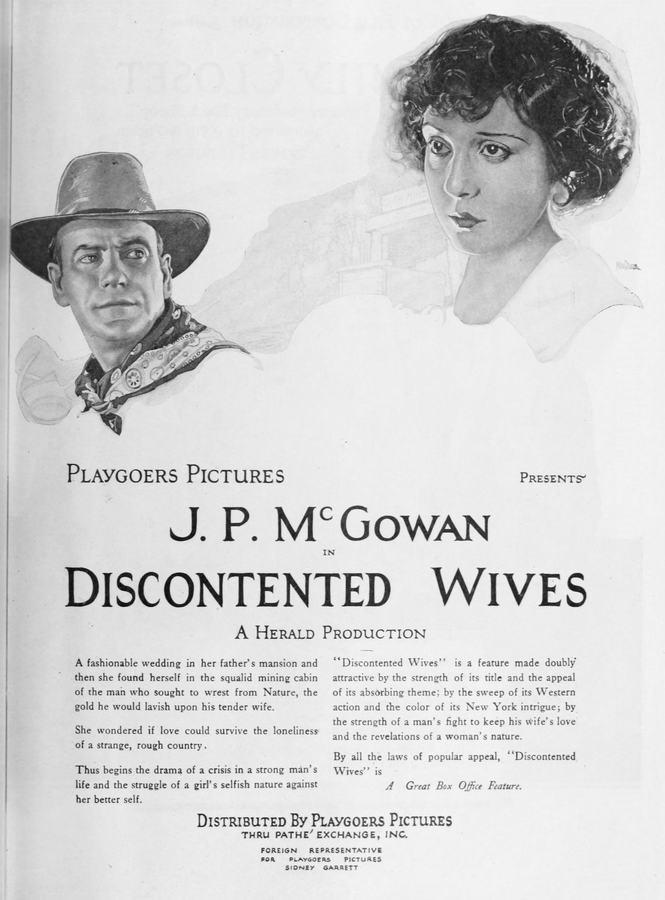
A desert mirage of matrimony
The flicker begins with a iris-in that feels like a cautious eye opening after a crying jag: we behold Ruth’s New York parlor, wallpapered in peacock hues, every fern a curled exclamation of affluence. Jean Perry plays her like crystal under tension—brilliant, humming, destined to fracture. Cut to the Dakotas (or a Ventura County stand-in), where Andrew Waldron’s John trudges through cyclones of alkali, surveying a future that looks suspiciously like the end of the world. Fred Windemere’s intertitles, all curlicue anxiety, announce the bargain: love swapped for landscape, a transaction sealed by clasped hands rather than notarized paper. The camera loves the tremor in Ruth’s glove as she signs her old life away; we sense history shredding like silk beneath a boot heel.
Loneliness rendered as topography
Director J.P. McGowan—usually synonymous with whip-cracking railroad serials—slows his pulse here, lets scenes breathe until the air itself seems parched. He frames Ruth against doorways that yawn like open graves, the parlor of her new western shack shrunk to doll-house scale. The visual grammar borrows from Scandinavian melancholy: low horizons, a third of the frame surrendered to blank sky, a woman stranded between two voids. When she writes letters that will never be mailed, the camera tilts down to her ink-stained fingers, then to the floorboards where dust motes swirl like disappointed angels. McGowan’s austerity makes the later dream sequence detonate with hallucinatory excess; he saves every gram of nitrate flamboyance for the nightmare.
Gold, greed, and the phantasmagoria of capital
The dream act—half morality play, half capitalist fever dream—unfurls in tinted amber that feels liquid, almost drinkable. Kirk Harding, that eastern shark in patent-leather armor, materializes from a swirl of cigar smoke and lawyers’ parchment. His top hat looms like a gavel. A single intertitle reads: “Your wife has signed away her claim, Mr. Gaylord—love is a lien easily foreclosed.” The line lands with the thud of a grave-stone, and the film suddenly channels the same distrust of wealth that electrified Burning Daylight or the anarchic slapstick of The Grocery Clerk. Yet Discontented Wives is too bruised to be didactic; it trusts the viewer to feel the chill of contracts replacing kisses.
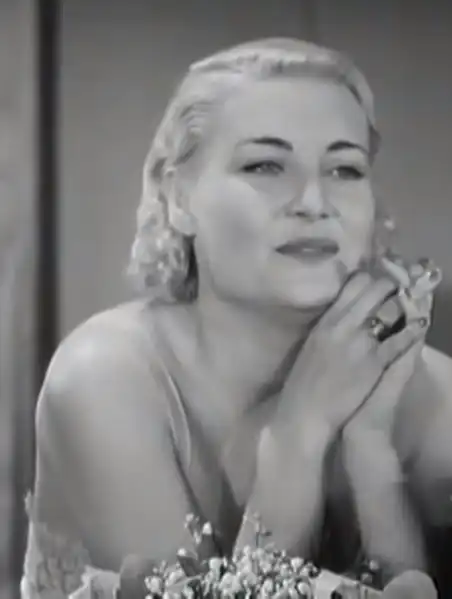
Fritzi Brunette, as Ruth’s confidante Mabel, supplies the film’s only comic oxygen, swanning about in kimono sleeves and dispensing gin rickeys of gossip. Her presence is a life-raft of urbane sarcasm in a sea of prairie stoicism. Watch how she enters a scene: chin first, cigarette glowing like a punctuation mark. In any other picture she’d be the flapper Eve tempting Ruth toward apples of liberation; here she’s merely another spectator of marital entropy, sipping contraband brandy while the frontier gnaws at both their illusions.
The awakening: dream as marital glue
When Ruth jolts awake, McGowan repeats the iris motif but tighter, almost punitive. The camera clings to her pupils—those twin black planets—as recognition floods in. No thunderclap, no melodramatic sprint; instead, a single tear halts midway down her cheek as if the film itself is pausing to reconsider. She disembarks, finds John amid wheat-colored grass, and the embrace is filmed in long shot: two silhouettes swallowing the sunset rather than the other way around. The film refuses a kiss close-up; intimacy is implied by the way their shadows merge into one elongated figure, a visual admission that loneliness and communion are just shifts in light.
Performances calibrated to silence
Andrew Waldron is the forgotten marvel here. His John is laconic without the usual rugged posturing; watch the minute slump of shoulders when he believes himself betrayed, a gesture more eloquent than pages of prose. Jean Perry matches him, letting silence quiver between her blinks. In a medium where eyebrow semaphore often passes for emotion, she acts from the collarbone down—fingers that flutter then clench, a spine that straightens like a drawn sabre when resolve crystallizes. Together they sketch a marriage not of grand pas de deux but of microscopic negotiations: who stirs the coffee, who breaks the silence first.
Visual palette: nitrate poetry
Surviving prints were salvaged from a Montana barn in ’78, half-melted, reeking of racine. The restoration team tinted daytime exteriors in dusty cobalt, night sequences in petroleum green; the dream reels glow bruised-amber, as though the film itself has been steeped in bourbon. Scratches remain—vertical lashes that look like rainfall frozen mid-descent—yet they enhance the sensation that we’re watching memory rather than fiction. Compare this to the hygienic sheen of Whispers or the Germanic chiaroscuro of Kreuzigt sie!; Discontented Wives opts for bruised warmth, a daguerreotype left too long in a vest pocket.
The score, often a casualty in silent revival screenings, survives on a cue sheet calling for “tremolo strings, then harp like distant church bells.” Contemporary accompanists have riffed on that template, weaving in Appalachian dulcimer to echo the western setting, a choice so apt it feels archaeological. When Ruth tears up her farewell letter, the music drops to a single viola harmonic—an audible exhale, the sound of a woman deleting her own future.
Gender and geography: a suffrage hangover
Set in 1924 but narratively perched on the cusp of the ’20s, the film vibrates with post-suffrage vertigo. Ruth’s itch to flee is less about a shrewish temperament than about the newly articulated right to self-relocation. The west, traditionally coded as masculine canvas, here becomes claustrophobic; the east, feminized and maternal, beckons like a perfumed safety net. Yet McGowan complicates the binary: the capitalist predator is urban, while the husband, though frontier-rough, embodies steadfastness. Thus the dream’s calamity springs not from landscape but from contract, from ink. In a sly intertitle, Ruth muses: “I feared the wilderness, but it was parchment that devoured us.” The line could headline any 21st-century think-piece on marriage as legal apparatus.
Legacy and shadows
Discontented Wives never minted the cult status of Neptune’s Step-Daughter nor the academic fetish of The Eternal Mother, yet its DNA coils through later melodramas of marital ambivalence. The dream-within-marriage structure prefigures Hitchcock’s “phony flashback” gambits; the resource-extraction subplot echoes in There Will Be Blood. Most crucially, the film posits that the greatest threat to wedlock isn’t lust or boredom but the paperwork of aspiration—a thesis that feels eerily predictive of no-fault divorce statutes looming just four decades away.
Where to see it now
As of this month, the only 2K restoration streams on Criterion’s Kanadjic channel, cropped to 1.33 but accompanied by the original dulcimer promptings. A 16mm print with French intertitles circulates among Parisian ciné-clubs; rumor whispers of a 35mm dupe buried in an Argentine basement awaiting MoMA’s next excavation binge. Bootleg DVDs abound—avoid the ones with generic jazz scores that turn every tear into a Charleston.
Final reverie
Discontented Wives lingers like campfire smoke in wool—an artifact that whispers: “You can outrun a horizon, never a promise.” It is neither feminist manifesto nor anti-marriage pamphlet, but a trembling X-ray of partnership under the twin stresses of geography and capital. See it for Jean Perry’s eyes—two coal-bright lanterns scouring the dark for a reason to stay. See it for McGowan’s refusal to let landscape dwarf the human face. And see it because, in an era when relationships are swiped and dissolved with similar ease, this 1924 one-reeler still believes that waking up—choosing to remain—can be the most radical plot twist of all.
IMDb 5.6
1934
Community
Log in to comment.