DbcultAccessing Vault...
Cult Review
Senior Film Conservator
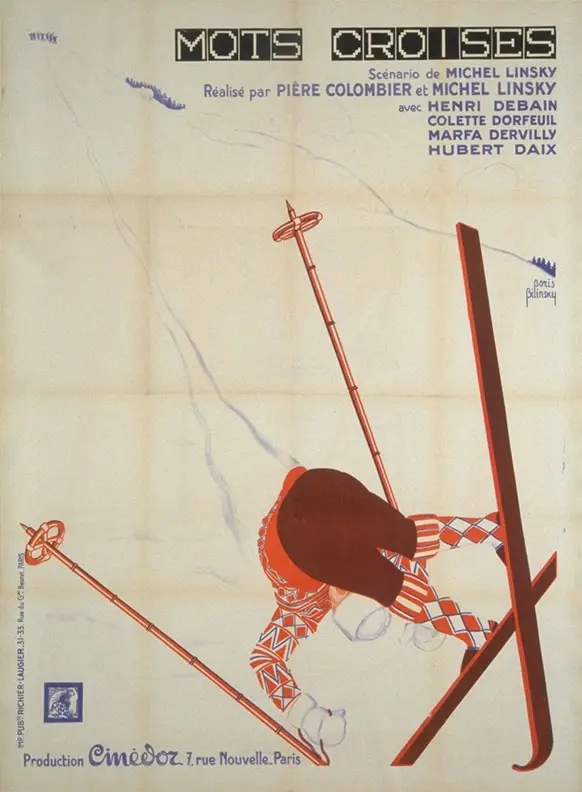
Is Mots croisés worth your time in the modern era? Short answer: yes, but primarily as a fascinating sociological artifact rather than a laugh-out-loud comedy.
This film is essential viewing for those who appreciate the subtle evolution of French silent cinema, but it is certainly not for anyone who requires the fast-paced slapstick of Keaton or Chaplin.
1) This film works because it captures a hyper-specific cultural moment—the 1920s crossword craze—with a level of satirical precision that feels remarkably modern.
2) This film fails because its central gimmick is stretched thin, leading to a middle act that feels as repetitive as a difficult Sunday puzzle.
3) You should watch it if you are a student of early 20th-century social dynamics or a fan of Henri Debain’s nuanced physical performance.
In 1926, the crossword puzzle was more than a hobby; it was a societal disruption. Michel Linsky’s script for Mots croisés understands this perfectly. Unlike the heavy emotional weight found in German Expressionist works like Hintertreppe, this film opts for a lighter, almost ethereal touch.
The film opens with a sequence that sets the tone for the entire runtime. We see a household paralyzed by a single missing word. The way Pierre Colombier directs this scene is masterful. He uses close-ups of furrowed brows and tapping fingers to create a sense of tension that mimics a high-stakes thriller, only to reveal the 'threat' is a four-letter word for a flightless bird.
It works. But it’s flawed. The humor is derived from the absurdity of the characters' priorities. For instance, when Marfa d'Hervilly ignores a romantic overture because she is stuck on a clue, the irony is thick. It’s a biting commentary on how modern distractions—even then—distanced us from human connection.
Henri Debain brings a level of sophisticated charm that was rare in the mid-20s. His performance isn't built on the exaggerated gestures common in films like Panthea. Instead, Debain uses his eyes. He conveys a sense of intellectual exhaustion that perfectly mirrors the 'puzzle-brain' of the era.
Marfa d'Hervilly provides the perfect foil. Her energy is more frantic, representing the obsessive side of the fad. In one specific scene, she accidentally uses a crossword clue to answer a question about her marriage. It’s a moment of brilliant writing by Linsky that highlights the linguistic takeover of their reality.
The supporting cast, including Colette Darfeuil, adds layers of social complexity. They aren't just characters; they are archetypes of a bored aristocracy looking for meaning in the back of a newspaper. This ensemble approach reminds me of the character-driven tension in Livets konflikter, though with significantly less gloom.
Visually, Mots croisés is surprisingly inventive. The directors use superimpositions to show the crossword grids floating over the characters' heads. This visual representation of thought was cutting-edge for 1926. It transforms the screen into a mental map, allowing the audience to see the 'clutter' of the characters' minds.
The lighting is generally high-key, fitting for a comedy of manners. However, there are moments of shadow work that hint at the darker side of obsession. When the characters are deep in thought, the lighting shifts, isolating them in a way that feels reminiscent of the psychological isolation in The Recoil.
The pacing, however, is where the film stumbles. While the initial setup is brisk, the second act lingers too long on individual puzzles. There is a sequence involving a dinner party where the 'joke' of everyone being distracted by a puzzle is repeated four times. By the fourth time, the impact is lost. It’s a classic case of a director falling in love with a concept at the expense of the audience's patience.
If you are looking for a film that provides a window into the French soul between the wars, the answer is a resounding yes. Mots croisés captures the transition from the frantic energy of the early 20s to the more settled, yet distracted, atmosphere of the late 20s. It’s a film about people who have everything and yet are desperately searching for a 'word' to fill the void.
However, if you are looking for a comedy that stands up to the structural perfection of modern screenwriting, you might find it wanting. The stakes are undeniably low. Unlike the high-adventure stakes of The Pony Express, the 'danger' here is merely social embarrassment. This makes the film feel somewhat slight in the grander scheme of cinema history.
Pros:
Cons:
When compared to other films of the era, such as Blue Blood and Red, Mots croisés feels much more intellectually grounded. It’s not interested in the 'rough-and-tumble' of American genre films. Instead, it shares a DNA with films like In the Bishop's Carriage, where social standing and the perception of intelligence are the primary currencies.
There is also a strange kinship with Circus Days, despite the wildly different settings. Both films deal with characters who are trapped within a specific lifestyle, performing for an audience (or each other) while trying to maintain their sanity. In Mots croisés, the 'circus' is the social circle, and the 'performance' is the mastery of the puzzle.
Mots croisés is a clever, if somewhat thin, exploration of how a simple game can reflect the complexities of the human heart. It’s not a masterpiece, but it is a masterclass in how to turn a contemporary fad into a narrative engine. The film succeeds in making the audience feel the frustration and triumph of the characters, even if the puzzles themselves are long forgotten.
The direction by Colombier and Linsky shows a clear understanding of the medium’s potential to visualize internal thought processes. While it doesn't reach the poetic heights of The End of the Road, it offers a refreshing alternative to the melodrama of the time. It is a cynical, witty, and visually engaging piece of work that deserves a spot in the conversation about early French comedy.
"A film that proves the most dangerous thing in a marriage isn't another person—it's a 7-letter word for 'distraction'."
Ultimately, Mots croisés is a win for those who like their cinema with a bit of intellectual grit. It’s a film that asks us: what are we ignoring while we try to find the right words? A century later, as we stare into our own digital 'grids,' that question feels more relevant than ever. It’s a minor work, perhaps, but one that rings with an uncomfortable, hilarious truth.
IMDb —
1922
Community
Log in to comment.