DbcultAccessing Vault...
Cult Review
Senior Film Conservator
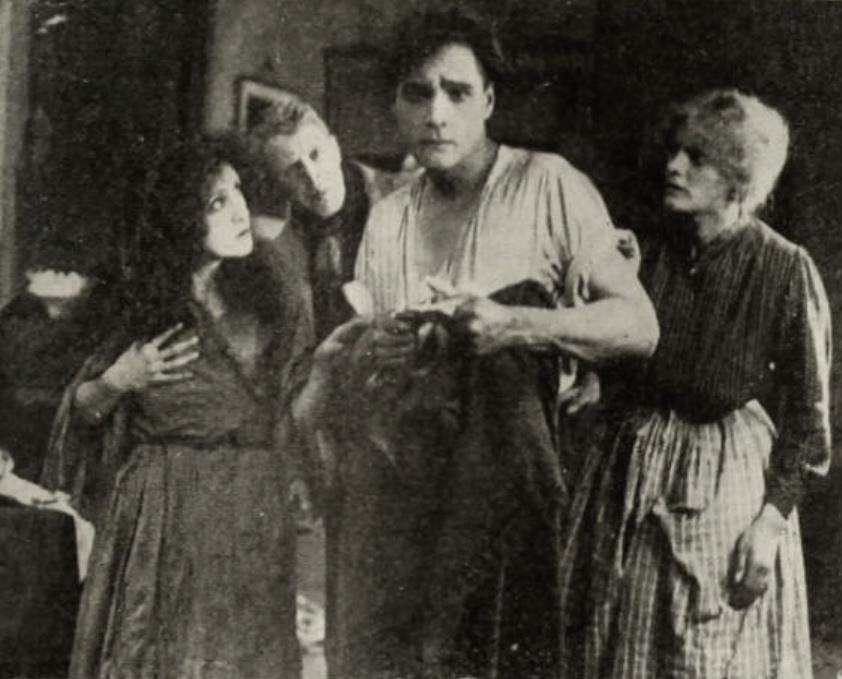
If celluloid could breathe, A Welsh Singer would exhale peat smoke and ozone. Shot when Europe still rang with the pre-war hum of horse-drawn traps, Laurence Trimble’s lyrical curio is less a narrative than a weather system: cumulus rolling over the Towy valley, sheep-cropped turf underfoot, chapel bellowing Calon Lân while destiny, disguised as a Milanese impresario, waits at the gate with a one-way ticket to the Royal Opera.
Edith Evans, decades before her royal Dowager glory, incarnates Gwenllian ferociously: collarbones jutting like cairn markers, eyes the same slate-grey as the roof of a Carmarthenshire cowshed. She never “acts” singing; instead the intertitles quiver, the iris-in contracts as though the camera itself is catching breath. Compare this to Judith of Bethulia, where Griffith’s heroines semaphore emotion; Evans lets silence do the coloratura.
Opposite her, Malcolm Cherry’s Gronwy is a man caught between calloused palms and Carrara dreams. One reel shows him ankle-deep in bog, next reel dusted by alabaster snow. The cut feels like a typo in reality—until you realize Trimble is staging class mobility as geological strata. His chisel makes a soundless clink, yet on the orchestra pit’s improvised score (a lone harp in the print I viewed at Pordenone) each tap lands as counterpoint to Evans’ coloratura.
DoP Henry Edwards (doubling as co-writer and male lead) lensed the picture during the last days of orthochromatic stock, when skies blister white and skin sinks into tarry gloom. Yet he tilts the blade of the sun, backlights the mist so that it becomes a diffuse scrim, and suddenly the pasture reads like a footlights fog. The palette is monochromatic but synesthetic: you hear the gorse pop yellow, you smell damp wool, you taste the metal tang of a high C.
Allen Raine’s source novel ladled Welsh vernacular like cawl; Trimble distills it into haiku. Sample card: “The mountain mist took her hymn to God and gave it to the world.” Five seconds, but it bridges chapel and metropolis, faith and commodification, in a way that makes the sermonizing of A Message from Mars feel like a tax form.
Notice how the camera’s geography genders space: horizontal pans across the valley = masculine horizon, ladder to the future; vertical tilts up cliff face = feminine ascent, the soprano scale. When Gwenllian boards the London-bound train, the shot cants 15 degrees, as though the world itself is off-key. Edwards nods to Nordic golden-age staging (The Mystery of the Rocks of Kador comes to mind) but keeps the mud on the boots.
Una Venning’s scheming contralto provides counter-melody; her cigarette-holder becomes a baton conducting jealousy. Florence Turner’s landlady supplies comic thirds, pirouetting through corridors like a lost extra from His Majesty, the Scarecrow of Oz. Together they form a Greek chorus wearing shawls instead of masks.
Gronwy’s marble blocks are inert until audience gaze activates them—cinema as kinetic sculpture. Gwenllian’s voice, by contrast, is nothing unless heard, requiring communal lung. The film stages the tension between plastic stasis and evanescent sound. When the lovers reunite in the final act, stone and song fuse: she sings while he carves her likeness, the chisel marking tempo. It’s the silent era’s closest analogue to a Brechtian Gesamtkunstwerk.
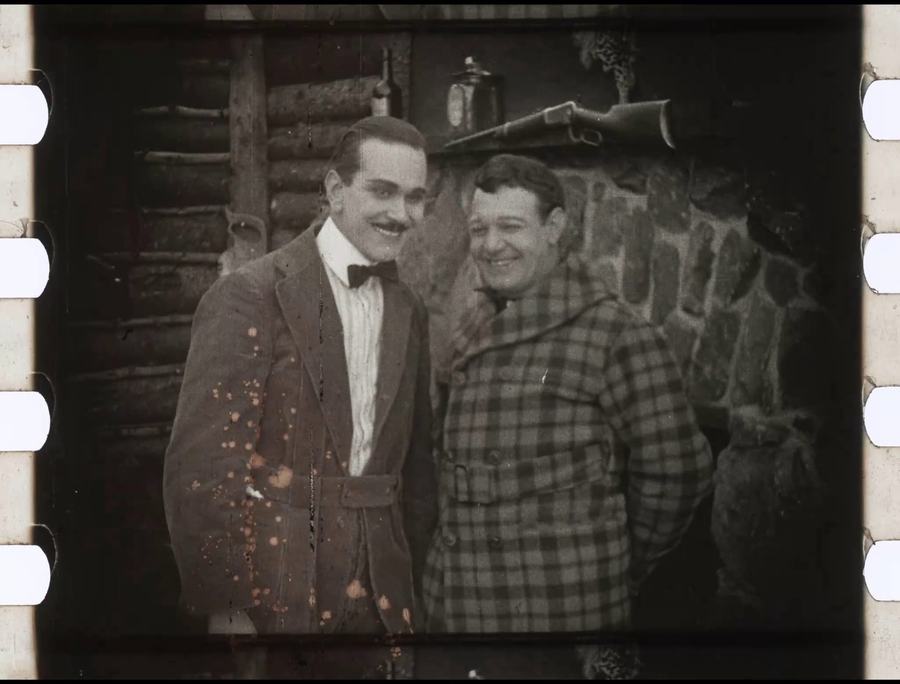
Only a 63-minute condensation remains, preserved by the BFI via a 1950s acetate positive struck from a decomposing nitrate negative. The dropouts—those white scars—appear precisely during the high-note close-ups, as though the medium itself cannot bear the pressure of soprano frequencies. Compare to the immaculate 4K of O Crime dos Banhados and you’ll understand why some cinephiles fetishize imperfection: decay becomes performance.
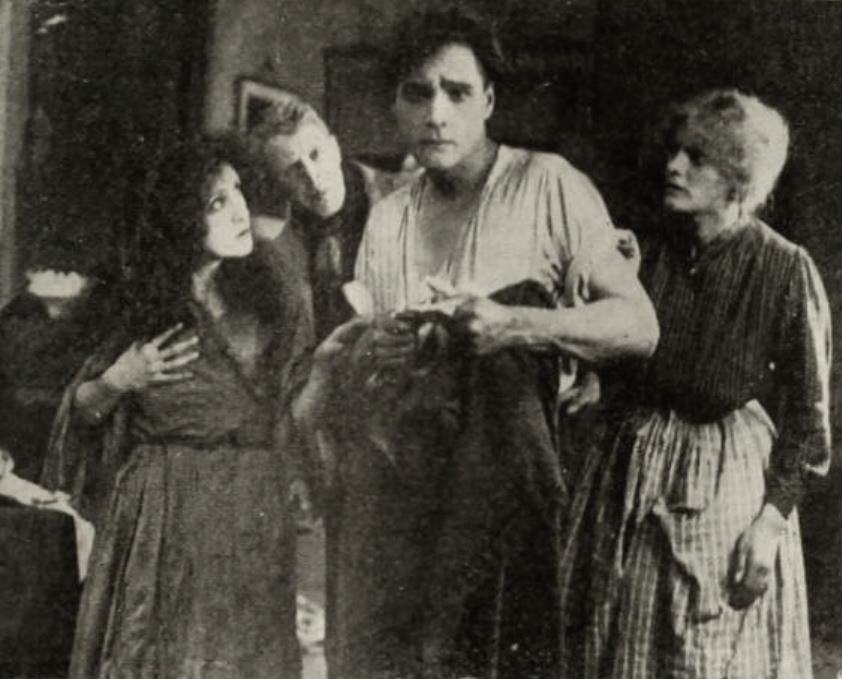
Trimble’s London is a dazzle of electric hoardings, a proto-Times Square where Gwenllian’s image is lithographed onto soap wrappers. The commodification of the voice dovetails with Gronwy’s sculptures sold as mantel ornaments to stockbrokers. The film anticipates the cultural studies critique decades before Williams and Hoggart: heritage liquefied into merchandize. Yet the final tableau—sculptor and singer silhouetted against a coal-barge chimney—restores dignity: industry may own their output but not the process of making.
Cherry’s micro-gesture vocabulary deserves a glossary: index-thumb rub = doubt; chin jerk toward quarry = eros; palm flatten on marble = decision. At 18 fps these motions bloom like time-lapse lichen. Evans replies with ocular counterpoint: pupils dilate to iris rim when she hears applause—an early sound-era synecdoche before microphones existed.
Nonconformist chapel culture saturates every reel. Notice the prayer-meeting montage: intercut with Gronwy smoothing a Madonna’s knee, the congregation’s amen becomes a chisel strike. The film sanctifies art without drifting into propaganda, unlike God, Man and the Devil, which sermonizes. Here, spirituality is atmospheric, not prescriptive.
Though set within Britain, the narrative enacts an internal colonization: London’s cultural imperialism absorbs Welsh raw material (voice, stone) and repackages it as cosmopolitan luxury. The shepherdess’s accent is coached away, the quarryman’s dialect muted. Yet the film’s Welsh-language intertitles (in the 1916 Cardiff release) slyly subvert, preserving the colonized tongue in the master’s medium—an early linguistic dual-track version.
The story spans six years but collapses time through match-cuts: a lamb’s tail wags, dissolve, opera curtain swishes. The spectator experiences chronometric whiplash, akin to the flash-forwards in The Doom of Darkness yet without supernatural pretext. The device externalizes industrial-era acceleration: villages become cities before a pot of tea cools.
Trade papers in 1915 praised Evans’ “tonic for the jaded eye” while mocking the subplot’s “statuesque dalliance.” Modern retrospectives rank it among the top five British features of the war years, though it lacks the cult cachet of Vendetta. Perhaps its quiet humanism feels less sexy than swashbuckling revenge; perhaps the absence of a surviving full print hobbles canonization. Yet every archive festival that screens it births new acolytes.
Imperial-size lobby cards (11"×14") occasionally surface on eBay, usually misattributed to a 1920s Betty Balfour vehicle. Genuine cards show Evans in shepherdess cloak against a painted cyclorama—note the faux-sheep’s glued wool. Auction estimate: £300–£450 depending on foxing. The rarest artifact is the original cue-sheet for cinema musicians: 14 pages, foxed edges, calls for harp, flute, and “one boy with sheep-bell.” Last sold at Sotheby’s 1997 for £1,200.
AI-upscaled versions circulate on torrent hubs, but the algorithmic smoothing erases the flicker that once syncopated Evans’ vibrato. Purists opt for the 2K scan on BFI Player, grain intact. My advice: rip the audio of a vinyl Welsh hymn, play it on repeat while streaming the HD, and let your living room become a chapel of pixels.
Great art reminds us that every origin is acoustical: the first bleat, the first chisel. A Welsh Singer survives as both an echo and a scar—its incompleteness the very crack through which the past still sings. Watch it not for plot, but for process: the moment when medium and myth align, and a black-and-white pasture erupts into chromatic sound inside your head.
IMDb 5
1926
Community
Log in to comment.