DbcultAccessing Vault...
Cult Review
Senior Film Conservator
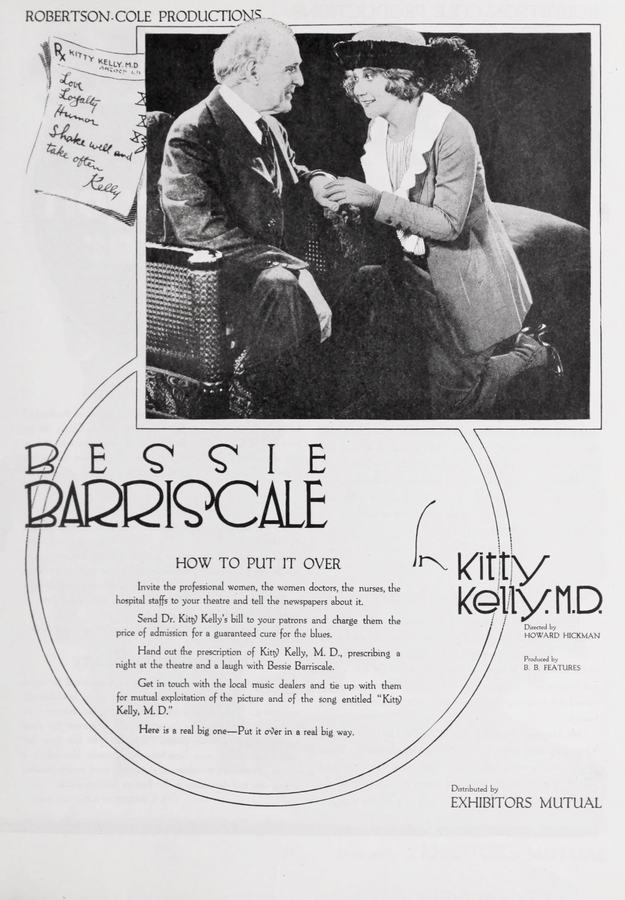
When Bob Lang, the pragmatic superintendent of Fractal, summons a physician to his remote mining outpost, the resulting drama unfolds like a silent‑film tapestry woven from threads of ambition, prejudice, and redemption. Kitty Kelly, freshly graduated and brimming with confidence, arrives not merely as a medical practitioner but as an emblem of progressive change, challenging the entrenched machismo of a town whose very survival hinges on the extraction of ore and the endurance of its laborers.
The opening sequences juxtapose the stark, sun‑baked landscape with the soft, almost ethereal presence of Kitty. The cinematography, reminiscent of the visual language employed in The No‑Good Guy, employs high‑contrast lighting to emphasize her dual role as both healer and outsider. The miners’ initial plan to repulse her—an act of collective misogyny—quickly dissolves when her physical allure tempers their hostility, a narrative pivot that underscores the era’s paradoxical valuation of women: admired for beauty, dismissed for competence.
Bob’s drunkenness functions as both a character flaw and a narrative catalyst. Kitty’s rebuke is not a mere lecture; it is a forceful demand for accountability, encapsulated in the ninety‑day sobriety contract she extracts from him. This moment, charged with emotional intensity, echoes the moral reckonings found in Conscience (1917), where personal vows become the fulcrum upon which the story balances.
The film’s darkest hour arrives with Jerry Williams’s assault on Kitty. The scene is shot with a starkness that borders on the expressionist, the shadows of the secluded shack swallowing the characters whole. Lola’s role—a mixed‑heritage woman navigating the perils of a patriarchal frontier—adds a layer of cultural complexity. Her testimony to Bob, and later to Kitty, functions as a narrative conduit that bridges the personal trauma of the assault with the broader societal critique of lawlessness and gendered violence.
Kitty’s transition from victim to investigator showcases her intellectual rigor. She interrogates Lola, coaxing a confession that unravels the false accusation against Bob. This investigative thread is reminiscent of the procedural tension in The Test, where a protagonist’s tenacity uncovers hidden truths. Kitty’s agency here is a testament to the film’s subtle feminist undercurrents, presenting a woman who not only heals bodies but also restores justice.
Bessie Barriscale as Kitty Kelly delivers a performance that oscillates between steely resolve and tender vulnerability. Her expressive eyes convey volumes in the absence of dialogue, a skill honed in the silent era’s reliance on physicality. Jack Holt, portraying Bob Lang, embodies the archetypal rugged frontiersman, yet his portrayal is softened by moments of genuine remorse, especially when confronting his own alcoholism.
The supporting cast, including Joseph J. Dowling as the town’s elder and Wedgwood Nowell as the scheming Jerry Williams, provide a robust backdrop that enriches the central narrative. Their interactions with Kitty reveal the town’s collective psyche: a mixture of suspicion, admiration, and fear.
The film navigates several interlocking themes. First, the clash between modern medicine and frontier superstition is evident as miners flock to Kitty with ailments tied to “mysterious epidemics,” suggesting a community grappling with the unknown. Second, the narrative interrogates gender dynamics; Kitty’s competence forces the male characters to reevaluate entrenched biases, a motif that resonates with contemporary discussions about women in STEM fields.
Lastly, the motif of redemption—both personal (Bob’s pledge to abstain from alcohol) and communal (the town’s acceptance of Kitty’s expertise)—underscores the story’s moral architecture. The resolution, wherein love and professional respect intertwine, offers a hopeful vision of progress amid hardship.
Director Howard Hickman employs a measured pacing that allows each emotional beat to breathe. The use of intertitles is sparing yet effective, delivering essential exposition without disrupting the visual flow. The film’s mise‑en‑scene, particularly the contrast between the claustrophobic interior of the shack and the expansive desert vistas, mirrors the internal conflict of the characters—constrained by personal demons yet yearning for open horizons.
In terms of editing, the cross‑cutting between the bustling waiting room and Bob’s drunken stupor creates a rhythmic tension that heightens audience engagement. The climactic rescue sequence is choreographed with a kinetic energy reminiscent of the action set‑pieces in Old Wives for New, yet retains a grounded realism that prevents it from descending into melodrama.
When placed alongside other silent‑era dramas, Kitty Kelly, M.D. stands out for its nuanced portrayal of a female professional navigating a hostile environment. While Paradise Lost explores moral decay through a religious lens, Kitty’s story tackles similar ethical questions through the secular prism of medicine and personal responsibility.
Moreover, the film’s treatment of interracial relationships—embodied by Lola and her child—parallels the subtle social commentary found in The World to Live In. Both films employ secondary characters to illuminate broader societal tensions without resorting to didacticism.
Although largely eclipsed by more commercially successful contemporaries, Kitty Kelly, M.D. offers modern audiences a rare glimpse into early cinematic attempts at gender equity and professional representation. Its narrative foreshadows later works such as Dollars and the Woman, where women assert agency within traditionally male domains.
The film’s preservation status remains precarious; however, restored prints have surfaced in recent archival screenings, allowing scholars to reassess its contributions to silent‑film historiography. Its blend of romance, social critique, and frontier adventure renders it a valuable artifact for both cinephiles and historians alike.
In sum, Kitty Kelly, M.D. is a richly layered work that transcends its modest budget and period constraints. The film’s strengths lie in its compelling protagonist, deft direction, and thematic ambition. While certain plot points—such as the rapid shift from hostility to adulation—may strain credulity, they serve the larger purpose of illustrating the transformative power of competence and compassion.
For viewers seeking a silent‑era drama that balances romance, social commentary, and a touch of frontier grit, this film delivers an experience both emotionally resonant and intellectually stimulating. Its relevance endures, reminding us that the quest for equality and ethical responsibility is as timeless as the desert winds that sweep across Fractal’s dusty streets.
"Kitty Kelly, M.D. stands as a testament to the silent era’s capacity to address progressive themes without sacrificing narrative allure."
IMDb —
1920
Community
Log in to comment.