DbcultAccessing Vault...
6.9/10
Senior Film Conservator
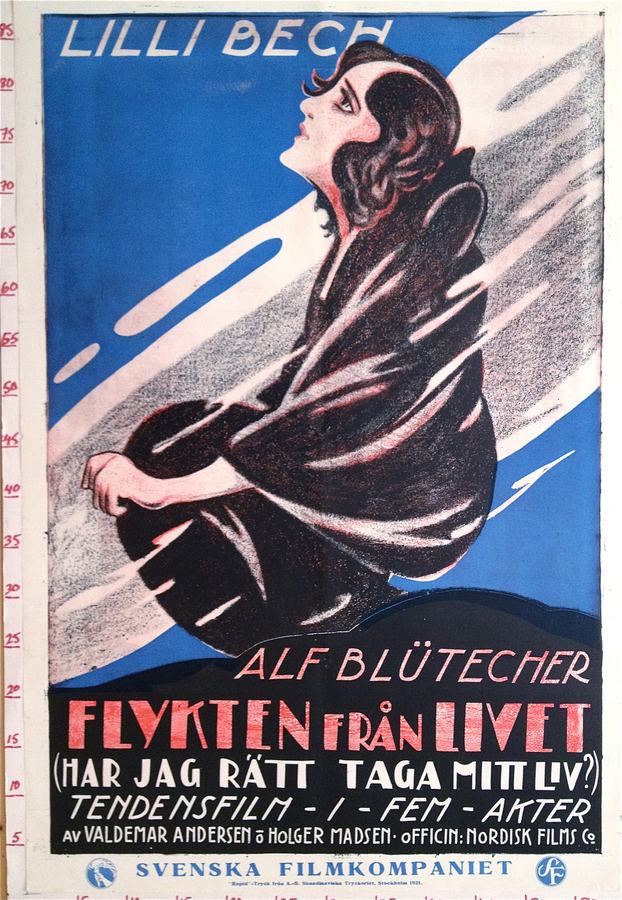
A definitive 6.9/10 rating for a film that redefined the boundaries of cult cinema. Har jeg Ret til at tage mit eget Liv? remains a cornerstone of transgressive art.
Cinema’s first quarter-century abounds with flappers, slapstick anarchists, and epic Intolerance, yet Danish auteur Holger-Madsen hurls a grenade of icy realism into the gilt auditorium with Har jeg Ret til at tage mit eget Liv?—a title that lunges off the intertitle card and fastens its fingers around the viewer’s larynx. The film, literally Do I Have the Right to Take My Own Life?, refuses the moral grandstanding of later suicide melodramas; instead it documents the slow fiscal asphyxiation of a middle-class clan as methodically as a coroner's inquest. Where American silents of the same year flirt with Roaring-Twenties optimism, this 1917 chamber piece wallows in the chill Scandinavian economics of shame, debt, and oxygen-starved hope.
Shot largely in Copenhagen’s actual tenements, cinematographer Axel Boesen trades Expressionist obliques for merciless verticals: doorframes become balance sheets, ceilings press downward like overdue notices. Interior scenes are lit with single kerosene lamps, placing faces half in umber, half in Stygian black—an ethical chiaroscuro that predates German Kammerspielfilm by four years. When Poul Berg first contemplates the forged investment contract, Madsen cuts to an insert of his trembling thumb sealing wax; the crimson droplet congeals into a miniature guillotine blade, foreshadowing the rope that will later replace the pen.
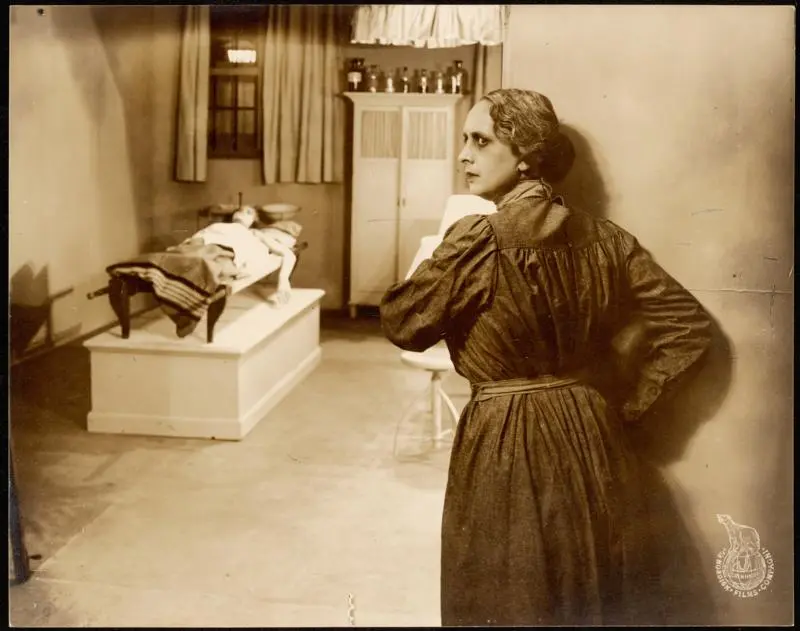
The suicide sequence itself is a master-class in negative space. No swelling organ chord à la Outcast, no silhouetted leap from cliff as in The Silent Man. Madsen keeps the camera stationary at landing-level: feet dangling into the upper third of the frame, a chair toppled like a careless equation, the rope’s taut line bisecting the composition like a balance-beam upon which morality teeters. The absence of close-up denies voyeuristic catharsis; we are left eavesdropping on a household appliance that happens to extinguish a soul.
Danish theater doyenne Clara Schønfeld incarnates Ketty Berg with a bone-deep exhaustion that no cosmetic powder can mask. Watch the micro-moment when, after signing Poul’s death certificate, she presses the fountain pen’s nib to her lip—ink blooms like a black carnation, a reminder that signatures both legal and nuptial can be lethal. Schønfeld’s body language mutates across reels: early scenes show shoulders squared in bourgeois pride; by midpoint her clavicles jut like snapped umbrella ribs; in the finale she stands stooped yet electrically upright, a woman who has learned to carry grief as others haul market baskets.
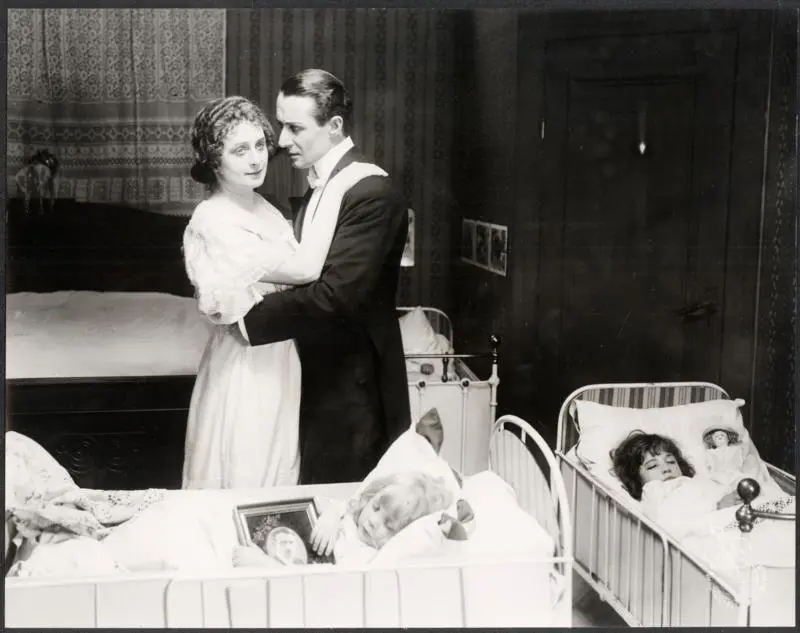
Contrast this with the widows populating Rose of the Alley or The Misleading Lady, who find redemption through remarriage or sudden inheritance. Ketty’s universe operates on harder calculus: every potential spouse either demands subservience or arrives as destitute as she. The film’s middle act—often missing in incomplete prints—depicts her queuing outside the cigar-rolling factory at Nyhavn before dawn. Madsen cross-cuts these vigils with shots of the canal’s herring boats unloading silver hauls, underscoring capitalism’s cruel arithmetic: fish sell, humans wait.
Silent cinema seldom granted children psychological interiority; they functioned as plot ballast or sentimental props. Madsen, collaborating with social-reformer Valdemar Andersen, inverts the trope. The Berg offspring embody three divergent coping vectors: the adolescent son (Aage Hertel) internalizes patriarchal failure, bullying younger dock-rats to reclaim a vestige of dominance; the dreamy daughter (Lili Beck) escapes into paper-doll theatrics, her malnourished hallucinations rendered via double-exposure silhouettes that prefigure Das Rätsel von Bangalor’s mystical superimpositions; the toddler, played by Gudrun Bruun Stephensen, wordlessly hoards crusts beneath the cot—an embryonic capitalist in survival mode.
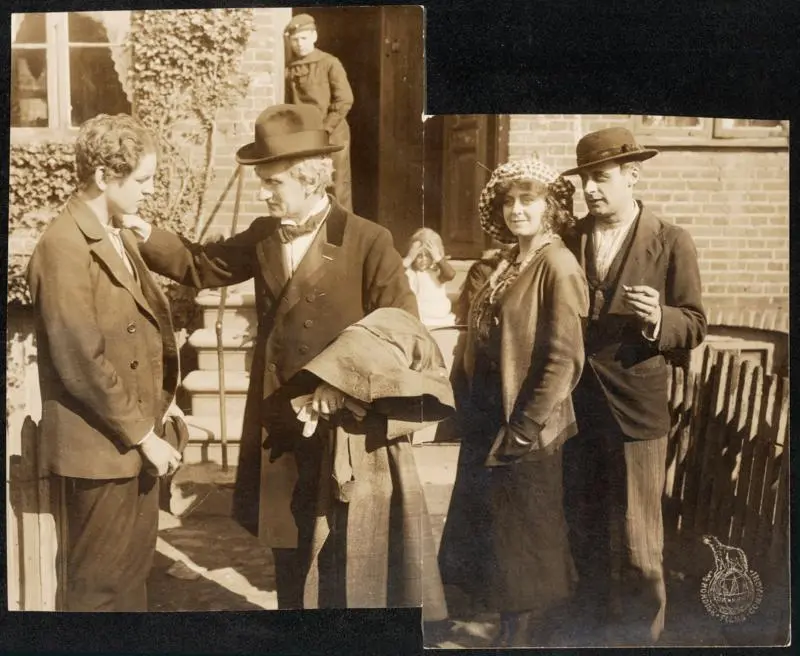
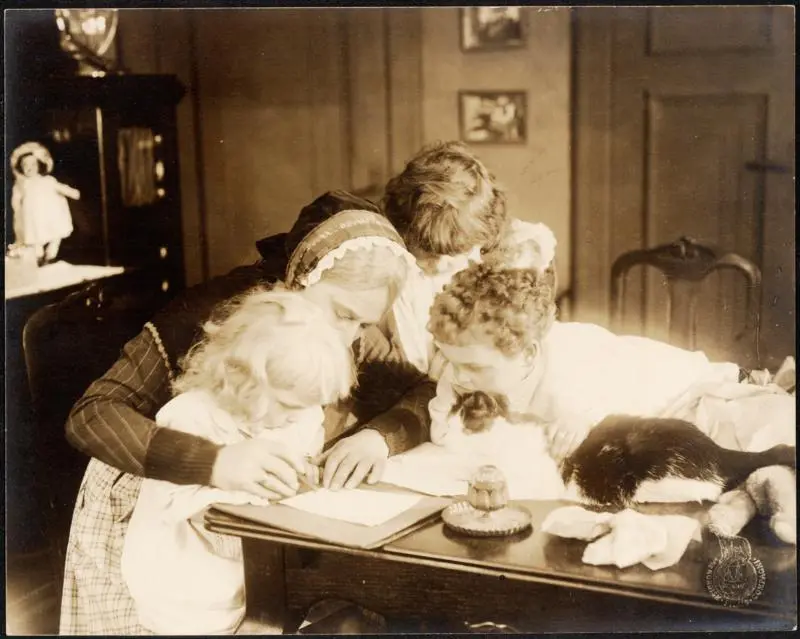
A harrowing sequence excised by some Scandinavian censors shows the eldest pawning Poul’s riding boots, then spending the coin on a single cream puff which he refuses to share. The camera lingers on children’s pupils dilating in mirror-neuron hunger—an indictment of inherited trauma more ferocious than any intertitle could articulate. When the boy is finally apprehended for petty theft, the policeman’s baton thuds not on flesh but on the soundtrack’s absolute silence, a percussive void more chilling than screams.
While contemporaneous American titles like Behind the Mask flirt with flapper emancipation, Denmark in 1917 offered women the vote yet precious few payrolls. Madsen’s film channels this contradiction through Ketty’s successive employments: governess (fired when the master’s wandering hands exceed curriculum), seamstress (paid per button, a rate slower than arthritic joints), and ultimately wet-nurse to a bourgeois matron whose own breasts are too aristocratic to lactate. The latter role culminates in a devastating tableau: Ketty suckles a stranger’s infant while her own youngest, parked on a cold stoop, gnaws a rag soaked in chicory. The intertitle reads: "Nature’s dividends know no bankruptcy courts."
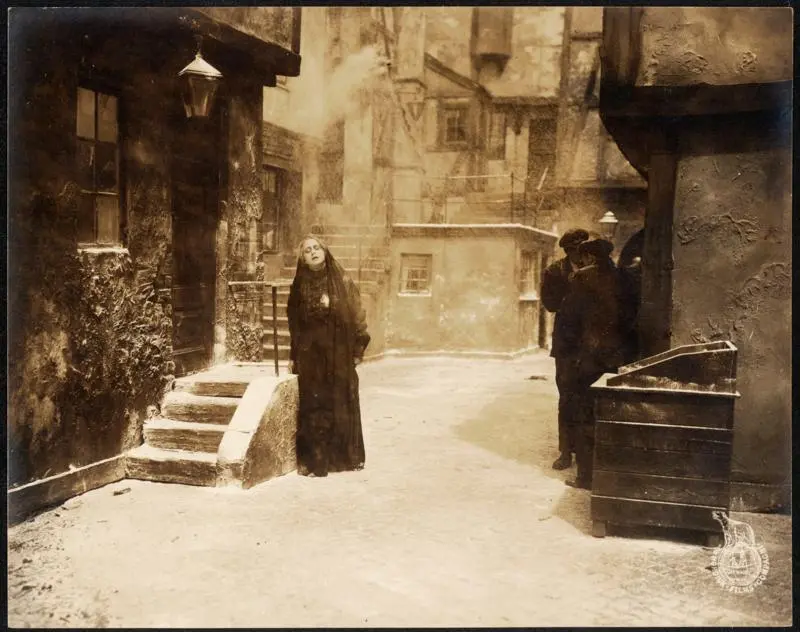
Such gendered exploitation links the film to La Broyeuse de Coeur, yet where French diva Musidora aestheticizes agony with baroque gestures, Schønfeld practices a minimalist credo: her cheekbones articulate injustice more eloquently than fists. Observe the moment she receives her first wage—five kroner in coins counted out like rosary beads—her pupils slide sideways, calculating bread, rent, shoe leather, while her mouth forms the ghost of a smile that dies stillborn.
Though released without synchronized score, surviving promptbooks indicate Madsen intended specific auditory juxtapositions: street organ outside the window during Poul’s suicide (life’s banality persists), distant ship horn when Ketty contemplates drowning her children, church bells at film’s terminus ironically overlaying the cemetery. Modern restorations often impose maudlin strings, yet the most devastating screenings remain those accompanied only by projector’s mechanical heartbeats and the auditorium’s collective respiration—an aural void echoing the family’s emptied rooms.
Cinephiles seeking thematic cousins might glance at Hendes ungdomsforelskelse, yet that film cushions heartbreak within pastoral nostalgia. Conversely, Madsen’s urban claustrophobia anticipates Italian neorealism by three decades: children scavenge for cigarette butts on cobblestones prefiguring Bicycle Thieves, while Ketty’s trudge across bridge-spanning cranes heralds La Terra Trema. Even The Profiteers—another 1917 indictment of speculative capital—retreats into sentimental restitution, whereas Madsen denies such opiate. His closing shot of Ketty’s silhouette against an overcast fjord offers neither crucifix nor sunrise, only meteorological indifference.
For decades the film survived only in a 16mm abbreviation reissued by Copenhagen’s Phønix circuit for church-hall morality seminars. Then, in 2018, the Danish Film Institute unearthed a 35mm nitrate at the estate of a defunct temperance society, complete with Swedish censor stamps and handwritten cue-marks. Digital 4K scanning revealed previously invisible details: a frayed collar stitch, the reflection of an eviction notice in a teapot’s convex belly. Yet even pristine pixels cannot mend the third-act gap where two reels were cannibalized for WWI propaganda shorts. Archivologists bridge the lacuna with surviving continuity photographs, intertitles from the Nationaltidende review, and a color chart indicating Ketty’s final blouse was dyed sepia—not mourning black—signaling resignation rather than defeat.
Modern guidelines admonish filmmakers against glamorizing self-destruction, yet Madsen’s 1917 treatment remains safely outside sensationalism. Poul’s corpse is never prettified; the tongue protrudes, the bowels release—a biological candor later sanitized by Hollywood’s Valley of the Dolls trope. Crucially, the narrative refuses to blame a single scapegoat: not the predatory investor, not patriarchal hubris, not even Lutheran shame. Responsibility diffuses across systemic faultlines—credit markets, gendered wage gaps, charitable paternalism—rendering the film disturbingly contemporary amid today’s gig-economy precarity.
Holger-Madsen, doubling as lead actor, embodies Poul Berg with the brittle bonhomie of a salesman whose jokes arrive a half-second too late, the laughter masking terror of insolvency. Watch his pupils oscillate between ledger columns and children’s portraits, as if arithmetic and affection were antiphonal choirs. In tavern scenes preceding his demise, he drums fingers to a silent ragtime only he hears—a metronome counting down to extinction. Conversely, Carl Worm as the predatory financier never twirls a villainous mustache; instead he radiates banal courtesy, the more chilling because he believes himself benefactor. When he proposes the fatal investment, his smile reveals a gold molar—capital’s glinting guarantee.
A century after its premiere, Denmark boasts cradle-to-grave social supports, yet Har jeg Ret til at tage mit eget Liv? resurfaces in university syllabi on neoliberal precarity. Students recognize Ketty’s gig-economy mirror: Uber drivers pawning phones, adjunct professors donating plasma. The film’s refusal of closure feels prophetic in an era when mental-health hotlines replace structural reform. When Ketty’s silhouette dissolves into the fjord’s monochrome horizon, viewers confront the uncomfortable truth that survival itself can constitute a form of slow dying—an insight as bracing now as it was in the winter of 1917.
Approach this film not as antique curiosity but as emotional ordinance. You will emerge raw, suspicious of credit scores, vigilant against the polite vocabulary of venture capital. Yet you will also carry an unexpected afterglow: the certainty that art can stalk capital’s abstractions and return with blood under its fingernails. Stream it when midnight feels too merciful, when life’s arithmetic seems rigged. Let Clara Schønfeld’s lacquer-cracked eyes remind you that ledger ink and arterial blood share the same viscosity, and that every economic policy is, at root, a referendum on who deserves to breathe.
Verdict: Masterpiece—imperfect, indispensable, and still hemorrhaging relevance.
IMDb —
1919
Community
Log in to comment.