DbcultAccessing Vault...
Cult Review
Senior Film Conservator
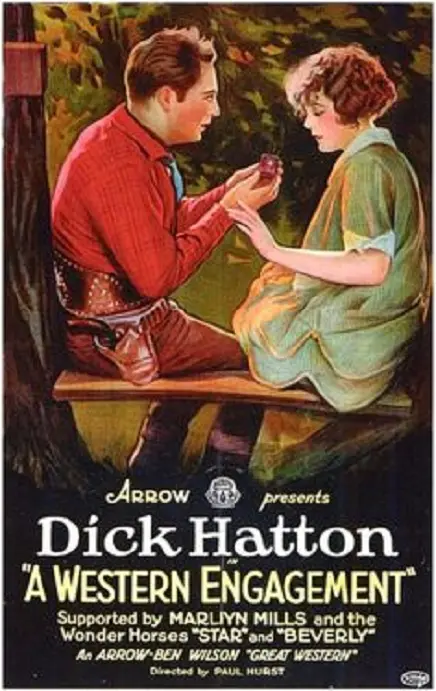
Is A Western Engagement worth watching today? Short answer: yes, for specific audiences, but it demands patience. If you're a devotee of early Western cinema and appreciate its raw, unpolished charm, then saddle up; otherwise, you might find its deliberate pace and silent-era conventions a considerable challenge.
This film is unequivocally for those who cherish cinematic history, particularly the foundational myths of the American West as depicted in its nascent years. It is decidedly not for viewers seeking fast-paced action, complex character arcs, or the polished production values of contemporary filmmaking.
The silent Western, an often-underestimated genre, offered an unfiltered glimpse into America's foundational narratives, shaping national identity with its tales of rugged individualism, justice, and the untamed frontier. A Western Engagement, while not a household name, is a fascinating artifact from this era, a testament to the genre's power before sound irrevocably changed the landscape.
It's easy to dismiss these films as relics, but to do so is to miss the foundational grammar of cinematic storytelling they established. They operated on visual cues, broad gestures, and the power of landscape, communicating emotion and narrative through a language now largely forgotten by mainstream audiences.
This film works because it distills the essence of the early Western: a clear conflict, a virtuous hero, a damsel in distress, and the vast, beautiful, yet unforgiving backdrop of the American frontier. Its simplicity is its strength.
This film fails because its narrative, by modern standards, is rudimentary, its character development shallow, and its technical limitations occasionally hinder full immersion. It requires a significant suspension of contemporary cinematic expectations.
You should watch it if you are a film historian, a silent film enthusiast, or someone deeply interested in the evolution of the Western genre. It serves as a valuable historical document, showcasing the tropes and styles that would define decades of filmmaking.
The plot of A Western Engagement is, by design, straightforward, adhering closely to the conventions of its time. Dick Hatton’s character, a lone rancher named Buck Dawson, drifts into a small frontier town just as the local land shark, Silas Kincaid, is tightening his grip on the ranch of the spirited Mary Beth Miller, played by Marilyn Mills. Her ranch, a vital water source, is the target of Kincaid's ruthless expansion.
The story quickly establishes Kincaid’s villainy, with scenes depicting his henchmen harassing Mary Beth and her meager ranch hands. One particularly effective sequence involves Kincaid’s men attempting to stampede Mary Beth’s small herd, only for Buck Dawson to ride in on his trusty steed, Beverly, to skillfully avert disaster. This moment, though brief, establishes Dawson’s quiet competence and heroic disposition.
What the narrative lacks in intricate twists, it makes up for in its earnest portrayal of good versus evil. The stakes are clear: Mary Beth's home, her independence, and eventually, her heart. The 'engagement' of the title isn't just romantic; it's an engagement with the land, a commitment to a way of life under threat. The film manages to convey this without excessive exposition, relying heavily on visual storytelling and the expressive power of its actors.
While some might find this simplicity to be a weakness, I argue it’s a deliberate choice, reflecting the directness of frontier life. There are no moral ambiguities here, just stark choices and clear consequences. It’s a foundational myth, not a nuanced character study, and it executes that role with commendable clarity.
Dick Hatton, a prolific but often unsung hero of silent Westerns, embodies the archetype of the strong, silent cowboy. His performance as Buck Dawson is characterized by a quiet intensity, his expressions conveying more through subtle shifts of his brow or the firmness of his jaw than any dialogue ever could. In a climactic showdown where he confronts Kincaid, Hatton doesn't need words; his unwavering gaze and deliberate movements speak volumes, commanding the screen with an understated authority.
He’s not a flashy performer, but his authenticity is palpable. You believe he’s spent a lifetime in the saddle, battling the elements and injustice. His chemistry with Marilyn Mills, though communicated through gestures and longing looks rather than spoken endearments, is surprisingly effective. It’s a slow burn, a mutual respect that deepens into affection, mirroring the gradual taming of the West itself.
Marilyn Mills, as Mary Beth Miller, brings a much-needed vivacity to the proceedings. She is not a passive damsel but a woman of agency, fighting tooth and nail for her inheritance. Her spirited refusal to yield to Kincaid’s threats, particularly in a scene where she defiantly rides her horse, Star, through Kincaid’s property, showcases her resolve. Mills' performance is a balance of vulnerability and grit, making her character relatable and admirable.
Her expressions, often exaggerated for the silent screen, are nevertheless effective in conveying fear, anger, and eventually, burgeoning hope and affection. She successfully grounds the romantic element of the film, making the eventual 'engagement' feel earned rather than simply inevitable. The dynamic between her and Hatton is the emotional core, a quiet promise in a world of loud threats.
Perhaps the true, unconventional stars of A Western Engagement are Beverly the Horse and Star the Horse. These animals are not merely props; they are active participants in the drama. Beverly, Hatton’s mount, displays an almost preternatural intelligence in action sequences, anticipating commands and executing daring feats. Star, Mills’s horse, often mirrors her owner’s spirited nature, adding a layer of authenticity and excitement to the chase scenes.
Their contributions are essential to the film's success, reminding us of the profound bond between humans and animals on the frontier. The silent era, in particular, often highlighted the intelligence and bravery of horses, and this film is a fine example of that tradition.
The direction, while uncredited, demonstrates a clear understanding of the Western genre’s visual language. The film relies heavily on sweeping wide shots of the landscape, emphasizing the isolation and grandeur of the West. These vistas, though often grainy due to the age of the print, still convey a sense of awe. The camera frequently positions characters against vast horizons, making them seem small yet resilient against nature's might.
Close-ups are used sparingly but effectively, often to punctuate emotional moments or reveal character resolve, such as a tight shot on Hatton’s determined face just before he rides into danger. The action sequences, while not as frenetic as modern blockbusters, are competently staged. A particular chase scene involving Buck Dawson pursuing Kincaid’s men through a narrow canyon is surprisingly dynamic, showcasing practical stunts that still impress.
The cinematography, though limited by the technology of the era, captures the stark beauty of the setting. Sunlight glinting off dusty trails, dramatic shadows cast by towering rock formations – these elements contribute significantly to the film’s atmosphere. It’s a raw, unvarnished aesthetic that, for me, feels more authentic than many overly stylized modern Westerns. The limitations force a focus on composition and natural light that can be quite beautiful.
The pacing of A Western Engagement is deliberate, a slow burn that allows the audience to soak in the atmosphere and the unfolding drama. This might be challenging for contemporary viewers accustomed to rapid-fire editing and constant plot propulsion. However, for those willing to adjust, the unhurried rhythm allows for a deeper appreciation of the visual storytelling.
The tone oscillates between earnest drama and moments of genuine tension. There's a palpable sense of threat from Kincaid, but it's balanced by the developing tenderness between Buck and Mary Beth. The film maintains a classic heroic tone, where justice, though delayed, is ultimately served. It’s a comforting, almost nostalgic, narrative structure that eschews cynicism for clear moral lines.
One could argue that the film could benefit from tighter editing in certain sequences, particularly some of the transitional shots of riders crossing the landscape. Yet, even these moments contribute to the epic scope, reminding us of the vast distances traversed in the Old West. It works. But it’s flawed.
Yes, if you have a genuine interest in silent cinema or the historical roots of the Western genre. It's a valuable viewing experience for those who appreciate the foundational storytelling techniques and the raw charm of early filmmaking. It offers a window into a bygone era of cinematic expression. It's not for everyone, but for its niche audience, it provides significant rewards.
What truly sets A Western Engagement apart, and indeed many films of its vintage, is its unapologetic earnestness. There’s a directness in its emotional appeal that modern, self-aware cinema often shies away from. It doesn't wink at the audience; it simply presents its story with conviction. This sincerity, for me, is a powerful draw, a refreshing antidote to the often cynical or ironic tones prevalent in much of today's entertainment.
Consider its place alongside other silent Westerns, such as With Hoops of Steel or Anything Once. While those might feature more elaborate stunts or broader comedic elements, A Western Engagement grounds itself in a more intimate, character-driven (for its time) romantic narrative. It’s less about grand spectacle and more about the personal struggle for land and love. This focus on the 'engagement' aspect, both literal and metaphorical, provides a unique lens through which to view the genre.
I firmly believe its rudimentary charm is its greatest asset, a direct counterpoint to modern cinema's over-reliance on spectacle. It forces you to engage with the fundamentals of storytelling and performance. The film, in its quiet way, argues for the enduring power of simple virtues and the rugged beauty of a landscape that shaped a nation. It's not a masterpiece, but it's an honest piece of filmmaking.
A Western Engagement is an important, if not widely celebrated, piece of cinematic history. It offers a genuine glimpse into the early days of the Western genre, showcasing the talents of Dick Hatton and Marilyn Mills in a straightforward tale of frontier romance and resilience. While its slow pace and silent-era conventions will undoubtedly test the patience of some, those with an appreciation for historical cinema will find much to admire.
It's a film that demands a specific kind of viewership – one willing to look beyond modern expectations and embrace the foundational artistry of a bygone era. For that audience, it’s a rewarding experience, a quiet echo of the untamed spirit of the West. It earns its place as a fascinating curio, a reminder of where cinematic storytelling began.
IMDb 4.9
1911
Community
Log in to comment.