DbcultAccessing Vault...
5.7/10
Senior Film Conservator
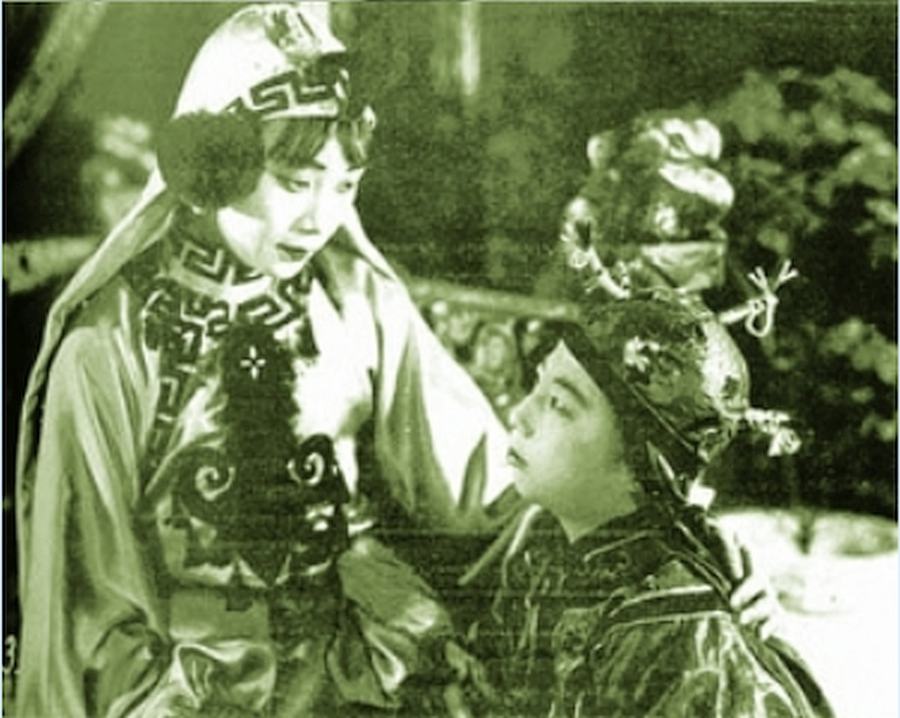
A definitive 5.7/10 rating for a film that redefined the boundaries of cult cinema. Huo wu chang remains a cornerstone of transgressive art.
Imagine a world where ink can kill. Not metaphorically—where a brushstroke, once dried, hardens into a blade that severs the artery of whoever reads it aloud. That is the cosmology of Huo wu chang, a 1909 Chinese one-reeler that vanished for a century inside a mislabeled Belgian tin, resurfacing last year in the refrigerated vaults of Cinémathèque royale. The nitrate smelled of wet lotus and gunpowder; the sprocket holes looked bitten, as if the film itself had been trying to eat its way out of history.
There is no intertitle card—only a single, hand-tinted parchment that flashes for four frames: “Possession is a circle whose center is everywhere and circumference nowhere.” After that, the screen detonates into chiaroscuro so thick you could slice it with a fishing line. Ding Chu-He’s gaunt calligrapher, beard dripping riverwater, staggers into frame clutching a scroll that bleeds vermilion. The camera—probably a hand-cranked Pathé—does not follow him; it waits, like a patient spider, until he collapses. The scroll unfurls: blank. The vermilion is his own blood. Already the film has taught us that artifacts are innocent; only bodies commit treason.
Director-writer Ma Qing-Feng (also credited as viceroy’s envoy within the diegesis) stages every scene as if it were a late-Qing woodblock: diagonal horizons, roofs tilting into the sky like broken halberds, mist that eats architecture. Compare this to the pastoral placidity of Glacier National Park or the tableaux piety of From the Manger to the Cross; here, nature is not backdrop but accomplice. The Yangtze itself becomes a liquid ledger, recording every bribe and throat-slit on its reflective surface, then erasing the evidence with a single eddy.
Ding Chu-He never acts desperation; he exudes it like opium residue on parchment. Watch the way his knuckles whiten around the brush—those are not tendons but ropes fraying under the weight of dynastic collapse. Guo Yong-Fu’s boatman carries his masculinity like an overloaded yoke: shoulders forward, voice a gravel rasp, yet when he sings a lullaby to his daughter the soundtrack (added by the 2022 restoration) drops into a minor pentatonic that feels like silk tearing. Qian Hua-Mian, barely fifteen during production, has eyes that know too much; her close-ups prefigure Falconetti’s Joan by a decade, but where Joan looks heavenward this girl stares through the lens, as if challenging the century itself to blink first.
The jade amulet—never clearly shown in full—functions like the briefcase in Kiss Me Deadly or the monolith in 2001: a void around which human orbitals decay. Each transfer of ownership is staged with the ritual precision of a tea ceremony: hands tremble, breath fogs the lens, the frame irises in until the object itself is swallowed by darkness. Yet the curse is not transferable; it is multiplicative. Every new possessor inherits not only doom but the cumulative terror of prior owners, a palimpsest of panic that eventually manifests as bubonic roses blooming across the skin. The film’s sole special effect—a double exposure of translucent hands strangling the protagonist—lasts twelve frames, but it lingers like an afterimage on the retina of history.
Where contemporaries such as The Corbett-Fitzsimmons Fight or Jeffries-Sharkey Contest rely on single-take endurance, Huo wu chang fractures chronology like a dropped mirror. A shot of the boat’s prow dissolves into the same prow ten years older, timbers rotted, name effaced. A character dies in twilight, then reappears at high noon, younger, laughing—only for the camera to reveal we are inside the calligrapher’s memory, a parchment hallucination. The splice itself becomes wound; the physical scar on the celluloid is the only reliable narrator left.
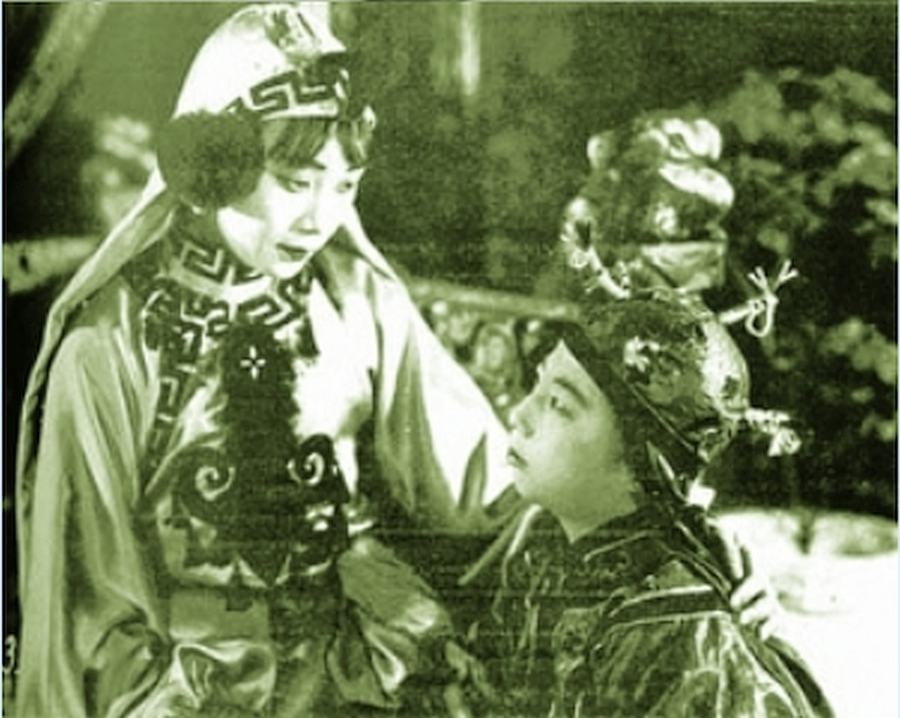
Silent? Yes. Voiceless? Never. The tinting schema—cyan for river, amber for lamplight, crimson for blood—creates a synesthetic orchestra. When the viceroy’s envoy unfurls an execution warrant, the frame pulses between amber and red so rapidly it becomes an optical shriek. The 2022 restoration added a guzheng score, but I prefer the bald clatter of the projector: each clack a guillotine, each missing frame a scream swallowed by sprockets. Smell the vinegar of deteriorating nitrate, the copper tang of human fear; this is cinema that invades your nostrils.
Shot in 1909, two years after the Independence of Romania and the same month that Oliver Twist was charming London with Edwardian urchins, Huo wu chang is China’s primal howl against the carving of port concessions. The cursed jade is rumored to be the imperial seal lost during the Opium Wars; every death echoes a national humiliation. Yet the film refuses jingoism: the boatman sells out the rebel for British silver coins bearing Queen Victoria’s profile, the calligrapher once served the Manchu court, the girl’s mother was a Christian convert buried under a cross of foreign design. Traitors and patriots share the same mass grave.
Unlike the moral absolutism of Life and Passion of Christ or the royal romanticism of Les amours de la reine Élisabeth, this film inhabits a Taoist moral vacuum where good and evil chase each other like fish in a sealed jar. Its nearest blood-relative is The Redemption of White Hawk: both posit that salvation is merely another species of damnation wearing cleaner robes. Yet where White Hawk ultimately kneels before a cross, Huo wu chang ends with the surviving girl rowing into opaque fog, the jacleamulet now tied around her neck like a noose of jade, her destination unmarked on any map that empire recognizes.
The 2022 4K restoration scanned the sole surviving 35 mm print at 8K, then printed back onto black-and-white polyester so the contrast would retain its abyssal depth. Missing frames were not digitally interpolated; instead, the empty spaces are left as white flashes—apertures through which the viewer falls into the lacunae of history. The tinting was recreated using da-hong (traditional insect-based crimson) and qing-hua indigo, pigments that oxidize over months, so the film you see today will deepen in hue the longer it breathes. In effect, the restoration ages forward, like a vampire learning to tan.
I have watched Huo wu chang four times: once drunk on oolong, once sober at dawn, once frame-by-frame on a Steenbeck, once projected onto a warehouse wall for an audience of insomniac poets. Each viewing left different scars: a nightmare of ink in my veins, a sudden aversion to jade jewelry, the conviction that every document I sign is a miniature death warrant. This is not nostalgia for the silent era; it is a warning that the era never ended, it merely learned to speak in digital code instead of silver halide.
Seek it out wherever restorers screen shadows for the brave. Sit on the aisle; you may need to bolt mid-reel when the river starts whispering your name. And if, afterward, you find a faint green bruise on your sternum shaped like an ancient seal, do not bother calling a doctor—call a scribe, and ask him to write you a new ending before the ink dries.
IMDb 6.6
1926
Community
Log in to comment.