DbcultAccessing Vault...
5.9/10
Senior Film Conservator
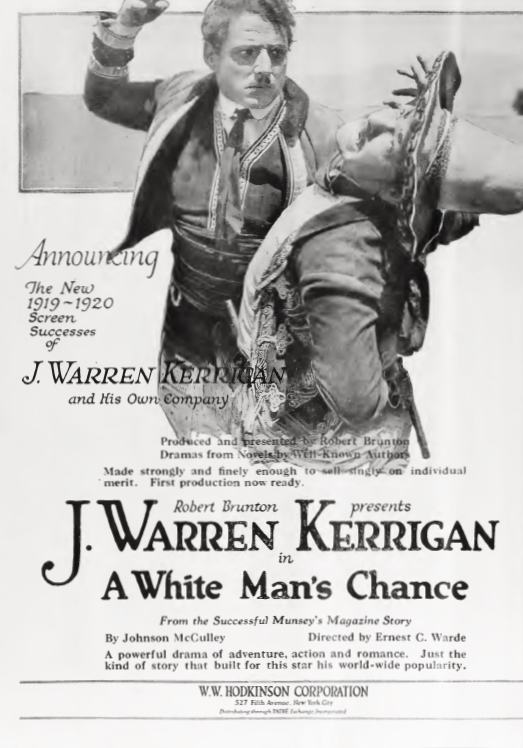
A definitive 5.9/10 rating for a film that redefined the boundaries of cult cinema. A White Man's Chance remains a cornerstone of transgressive art.
In the annals of early cinema, where narrative often relied on bold strokes and clear moral delineations, A White Man's Chance emerges as a compelling artifact. This 1914 production, penned by Johnston McCulley and Clifford Howard, unfurls a tale rich with intrigue, mistaken identity, and the timeless struggle between honor and deceit. It’s a fascinating glimpse into the nascent storytelling techniques of the silent era, demonstrating a sophisticated understanding of character motivation and plot escalation, even as it navigates the cultural sensitivities of its time with a lens that is undeniably a product of its epoch.
At its core, the film introduces us to Donald Joseph Blenhorn, portrayed with nuanced restraint by Howard Davies. Blenhorn is not your archetypal hero from the outset; he is a junior member of a distinguished Boston law firm, a man of intellect rather than overt action. His journey begins not with a grand adventure but with a delicate legal mandate: to vet Hugh Hankins, the fiancé of Dorothy Charlton, whose substantial inheritance is contingent upon the firm’s approval. This premise, a blend of legal procedural and romantic suspense, immediately sets a unique stage. Blenhorn's initial task is one of observation, analysis, a cerebral endeavor that quickly morphs into something far more visceral.
His foray into Mexico is marked by a deliberate act of theatricality. Shedding his conventional American identity, Blenhorn adopts the persona of “Don Jose,” a Mexican aristocrat and rancher. This masquerade is not merely a plot device; it serves as a potent commentary on the malleability of identity and the power of perception. By immersing himself in a foreign culture, Blenhorn gains access to a world that would otherwise remain closed, allowing him to observe Hankins without the filter of pretense. This kind of identity-shifting narrative was a popular trope, reminiscent of other films like The Path Forbidden, where characters often grappled with their true selves versus their assumed roles in society. The transformation is complete, from the crisp suits of Boston to the rugged, yet refined, attire of a Mexican rancher, symbolizing Blenhorn's mental and physical transition into a realm of unknown dangers and moral complexities.
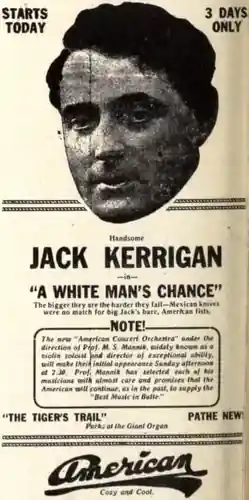
The purpose of Blenhorn's elaborate deception is, of course, Hugh Hankins. The film meticulously paints Hankins as a figure of profound moral bankruptcy. Blenhorn’s undercover work quickly exposes Hankins as a cad and a coward, a man utterly undeserving of Dorothy Charlton's affections or her inheritance. This revelation is crucial; it justifies Blenhorn’s actions and establishes the stakes of the narrative. Hankins represents the antithesis of the silent film hero – not merely flawed, but fundamentally rotten. His character serves as a necessary antagonist, a foil against which Blenhorn's burgeoning heroism can be measured. The audience is left with no doubt as to Hankins’ true, ignoble character, making Blenhorn's subsequent actions all the more righteous.
The plot, however, transcends a simple romantic entanglement. It takes a sharp, dramatic turn into the realm of mistaken identity and violent consequence. Blenhorn finds himself embroiled in a fierce altercation with Juan Lopez, a local figure whose motivations are perhaps less clear-cut than Hankins', but whose actions plunge Blenhorn into grave peril. In a tragic accident, Lopez, aiming to dispatch Blenhorn, mistakenly kills the village storekeeper. This single, devastating event irrevocably alters the course of Blenhorn’s mission, transforming him from a discreet investigator into a hunted fugitive.
Lopez, cunning and opportunistic, seizes upon the chaos to pin the blame for the murder squarely on Blenhorn. This act of scapegoating ignites the fury of the local populace, leading to a visceral depiction of mob justice. A vengeful crowd descends upon Blenhorn's ranch, a stark illustration of how quickly misunderstanding and prejudice can escalate into violent retribution. The tension here is palpable, a testament to the directorial skill in conveying raw emotion and imminent danger without dialogue. This mob sequence is particularly effective, showcasing the raw power of collective anger and the precariousness of justice when facts are obscured.
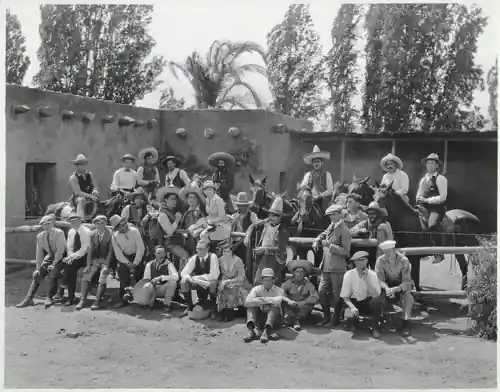
Blenhorn's escape from the enraged mob is a pivotal moment, marking his transition from passive observer to active protagonist. It's a classic hero's journey element, where the protagonist must overcome seemingly insurmountable odds through wit, courage, and sheer force of will. This sequence likely provided some of the most thrilling moments for audiences of the era, relying on visual storytelling to convey speed, danger, and desperation. One might draw parallels to the high-octane escapes seen in adventure serials of the time, such as The Scarlet Runner, which similarly emphasized daring feats and narrow escapes.
The climax sees Blenhorn not only evade capture but also ingeniously re-establish his true identity. This reveal is crucial; it's the moment the masquerade ends, and the true hero emerges from the shadow of Don Jose. With his identity restored, Blenhorn is able to unequivocally expose Hankins' true, despicable character to Dorothy and the firm. This act of revelation is deeply satisfying, bringing a sense of order and justice back to a narrative that had veered into chaos. The film culminates in Blenhorn winning Dorothy's love, a romantic payoff that feels earned through his courage, integrity, and willingness to confront danger for the sake of truth.
The cast, featuring names like Howard Davies, Lillian Walker, and J. Warren Kerrigan, delivers performances typical of the silent era—expressive, often melodramatic, yet undeniably effective in conveying emotion without spoken dialogue. Davies, as Blenhorn, manages to portray both the quiet intelligence of the lawyer and the daring resolve of the adventurer. Lillian Walker, as Dorothy Charlton, embodies the damsel in distress who ultimately recognizes and rewards true heroism. The challenge for silent actors was immense, relying solely on facial expressions, body language, and intertitles to communicate complex inner lives and plot developments. The directorial choices, while uncredited in the provided details, undoubtedly played a crucial role in orchestrating these performances and the film's overall pacing. The use of close-ups to emphasize emotional states, wide shots to establish settings, and rapid cutting during action sequences would have been vital tools in the filmmaker's arsenal.
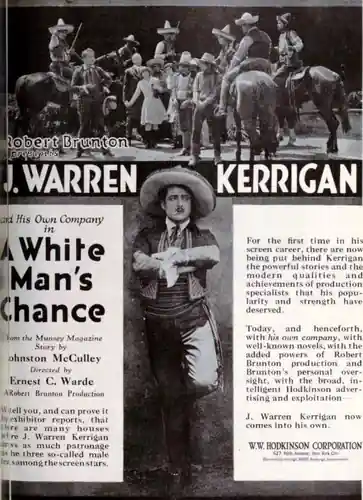
A White Man's Chance, despite its somewhat problematic title reflecting the colonial attitudes prevalent at the time, offers a rich tapestry of themes. Identity, justice, heroism, and the clash of cultures are all explored within its relatively short runtime. The film's depiction of Mexico, while likely romanticized or stereotypical by modern standards, provides a vibrant backdrop for the drama. It's important to view such historical artifacts through the lens of their creation, understanding them as reflections of societal norms and narrative conventions of the early 20th century. While the title itself might raise contemporary eyebrows, the narrative attempts to celebrate individual courage and moral rectitude against a backdrop of perceived foreign danger.
The story's emphasis on a 'white man' coming to 'rescue' a situation in a foreign land is a common trope of early adventure fiction and cinema. However, within the confines of its own narrative, Blenhorn's 'chance' is less about racial superiority and more about the opportunity for an ordinary man to rise to extraordinary circumstances, to prove his mettle and moral fiber in a crucible of danger. His journey is one of self-discovery as much as it is of exposing another's perfidy.
In comparison to its contemporaries, A White Man's Chance stands as a robust example of dramatic narrative from the silent era. While it may not possess the epic scope of a D.W. Griffith masterpiece, it demonstrates a tight, engaging plot that moves with purpose. Its themes of disguise and the unmasking of villainy resonate with other films of the period that explored moral dilemmas and societal expectations. For instance, the intricate web of deceit and revelation could be seen as a precursor to more complex thrillers, much like how films such as The Steel King's Last Wish navigated corporate intrigue, albeit in a different setting. The romantic pursuit against a backdrop of danger is a universal theme, here given a distinct early 20th-century flavor.
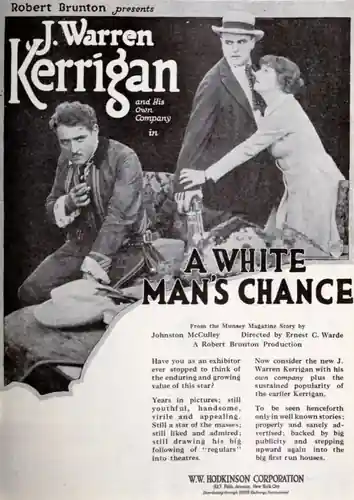
The film's exploration of justice, particularly the dangers of mob rule, is a theme that recurs throughout cinematic history. It highlights the fragility of individual rights when confronted with collective hysteria, a powerful message conveyed purely through visual narrative. The resolution, where truth ultimately prevails and the hero is vindicated, offers a reassuring, if somewhat idealistic, view of justice. This adherence to a clear moral compass was a hallmark of much early cinema, providing audiences with escapism and a reinforcing of traditional values.
Ultimately, A White Man's Chance is more than just a historical curiosity; it's a testament to the enduring power of storytelling. It showcases how early filmmakers, with limited technological means, could craft compelling narratives that captivated audiences. The film's blend of adventure, romance, and moral drama, executed through the expressive artistry of silent cinema, makes it a valuable piece for understanding the evolution of the medium. It reminds us that even over a century ago, the core elements of engaging cinema—strong characters, escalating conflict, and a satisfying resolution—were already well understood and expertly deployed. Its legacy is not just as a silent film, but as a vibrant piece of cinematic heritage, speaking volumes without uttering a single word, inviting viewers to appreciate the artistry and narrative ingenuity of an era long past.
For those fascinated by the intricate dance of identity, the perils of deceit, and the triumph of the human spirit against adversity, A White Man's Chance offers a profoundly engaging experience. It's a reminder of cinema's foundational role in capturing and reflecting the intricate tapestry of human experience, even when filtered through the distinct cultural and technical lenses of its specific time.

IMDb —
1924
Community
Log in to comment.