DbcultAccessing Vault...
6/10
Senior Film Conservator
A definitive 6/10 rating for a film that redefined the boundaries of cult cinema. The Fast Set remains a cornerstone of transgressive art.
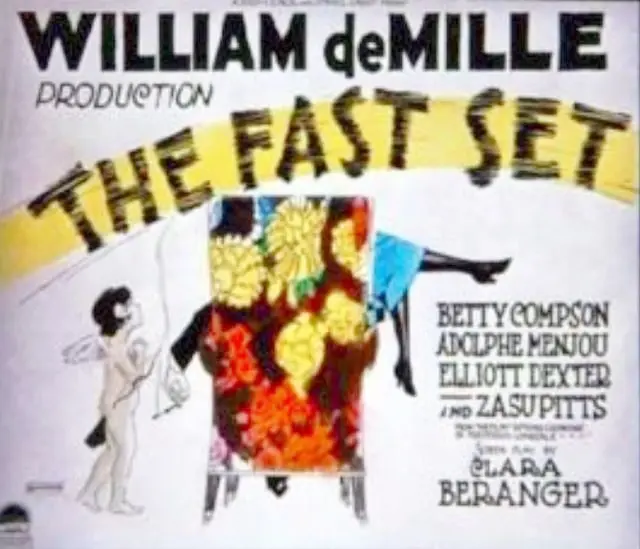
Cinema in 1924 was a medium grappling with its own burgeoning sophistication. It was the year that gave us the visceral, earth-shattering realism of Greed, yet it also found space for the sophisticated, drawing-room cynicism of The Fast Set. Directed by William de Mille—often the more contemplative, psychologically astute brother of the more flamboyant Cecil—this film is an adaptation of Frederick Lonsdale’s play 'Spring Cleaning.' It remains a fascinating artifact of Jazz Age anxieties, dissecting the friction between Victorian stoicism and the reckless hedonism of the post-war generation.
To discuss The Fast Set without centering on Adolphe Menjou would be a critical dereliction of duty. Menjou, with his perfectly waxed mustache and an eyebrow that could convey more nuance than a five-page monologue, plays Ernest Steele. Steele is not a villain in the melodramatic sense; he is a social parasite who thrives in the cracks of crumbling marriages. Unlike the overt antagonists in The Man Unconquerable, Steele operates through a veneer of empathy. He 'sympathizes' with Margaret Sones (Betty Compson), casting himself as the only man capable of appreciating her vibrancy while her husband, Richard (Elliott Dexter), remains buried in his manuscripts.
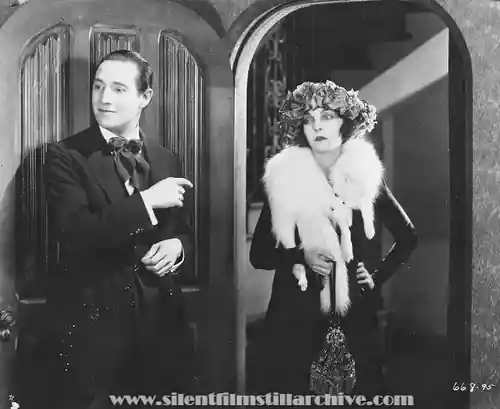
Menjou’s performance is a masterclass in the 'dandy' archetype. He represents the very essence of the 'fast set'—a group that values wit over wisdom and pleasure over purpose. In the context of 1924, this was a radical depiction of masculinity, one that stood in stark contrast to the rugged heroes found in films like The Storm. Here, the battlefield is the dinner table, and the weapon is the double entendre.
The narrative pivot of The Fast Set is one of the most audacious sequences in silent cinema. Richard Sones, pushed to the brink by his wife's obsession with her vacuous circle, decides to 'clean' his house. He doesn't resort to the physical brawling common in Trigger Fingers; instead, he employs a social mirror. By bringing Mona (Zasu Pitts), a woman of the streets, to one of Margaret’s high-society dinners, he forces the 'amateurs' to confront a 'professional.'
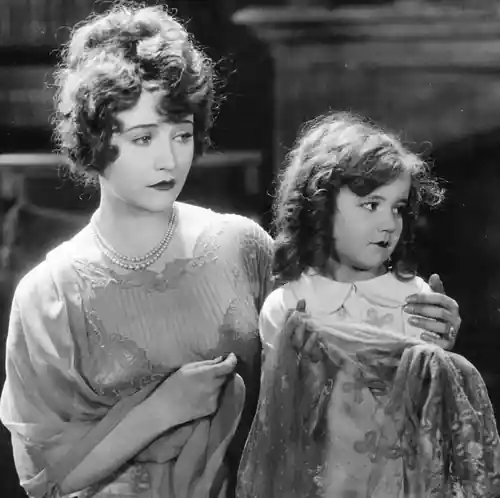
Zasu Pitts, often relegated to comedic roles, brings a haunting, weary dignity to Mona. Her presence in the room acts as a chemical reagent, exposing the base metals of the socialites' characters. Richard’s declaration—that Mona is merely a professional doing what the other women in the room do for sport—is a scathing indictment of the era's transactional nature of romance. It echoes the thematic weight of The Other Man's Wife, but with a sharper, more intellectual edge. The visual storytelling here is sublime; de Mille uses tight framing to emphasize the claustrophobia of the dinner party, making the viewer feel the palpable discomfort of the guests.
At its core, the film explores the terrifying fragility of the modern union. Margaret is not portrayed as a simple adulteress, but as a woman adrift in a world where the old anchors of domesticity have been severed. Betty Compson imbues Margaret with a restless energy that feels remarkably contemporary. She is a woman seeking validation in a vacuum. Her attraction to Steele is not born of love, but of a desire to be seen, a theme that resonates deeply in our own age of curated social identities.
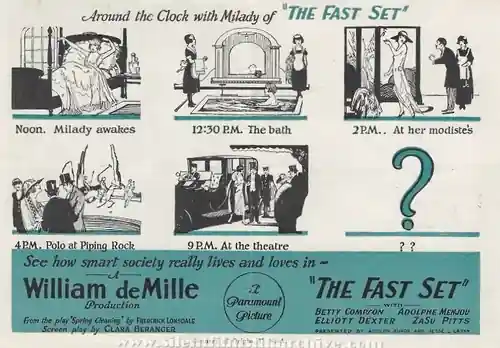
When Margaret decides to seek a divorce, the film takes an unexpected turn into the psychology of the 'other man.' Steele, the consummate flirt, is suddenly faced with the prospect of actual responsibility. His subsequent terror is both pathetic and illuminating. He thrives on the pursuit, but the reality of a committed relationship is anathema to his sybaritic lifestyle. His role in reconciling the Soneses is not an act of altruism, but a desperate maneuver to regain his own freedom. It is a cynical, yet honest, resolution that avoids the saccharine endings of contemporary dramas like As a Man Sows.
Technically, The Fast Set is a marvel of restrained direction. While Cecil B. DeMille was busy with the grandiosity of 'The Ten Commandments,' William was perfecting the art of the 'interior' film. The lighting in the library scenes—soft, focused, and scholarly—contrasts sharply with the harsh, flat, and garish lighting of the party sequences. This visual dichotomy reinforces the film’s central conflict between the contemplative life and the performative one.
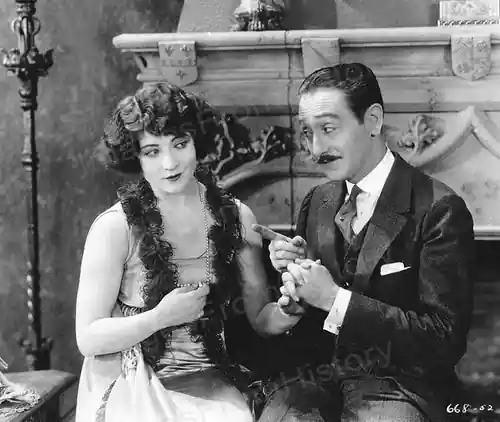
The editing, handled with a rhythmic precision, allows the social tension to simmer before it boils over. In many ways, it shares the narrative DNA with European imports like Der Leibeigene, focusing on the power dynamics within a closed social system. The use of intertitles is minimal, allowing the actors’ physiognomy to carry the emotional weight. This was a peak period for silent film acting, where the absence of sound forced a deeper reliance on the subtle choreography of the body.
When placed alongside other 1924 releases, The Fast Set stands out for its lack of moralizing. While Whom the Gods Would Destroy dealt in grand historical themes, and The Deemster leaned into heavy melodrama, de Mille’s film remains grounded in a psychological realism that feels startlingly mature. It doesn't condemn Margaret for her boredom; it simply illustrates the hollowness of the cure she has chosen.
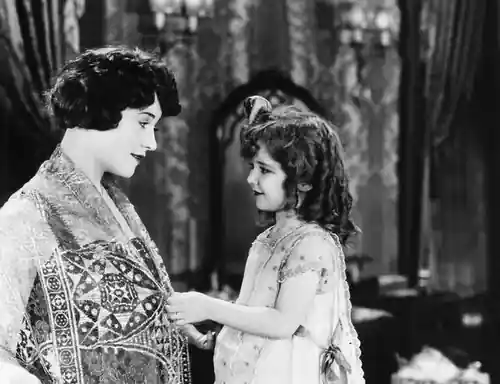
Furthermore, the film’s exploration of the 'underworld' connection—via Mona—predates the grittiness of later pre-Code talkies. It shares a certain DNA with Drama na okhote in its willingness to look at the darker, more transactional side of human relationships. The film avoids the easy path of a 'happily ever after,' suggesting instead that while the Soneses may have reconciled, the scars of their social experimentation remain. This is not a film about a return to innocence, but a weary acceptance of experience.
In the grand tapestry of 1920s cinema, The Fast Set is a thread of pure, dark silk. It is a film that demands to be viewed not just as a historical curiosity, but as a biting social satire that remains relevant. The 'fast set' of 1924 has merely been replaced by the 'influencers' of today, yet the core human needs—for genuine connection, for intellectual stimulation, and for a sense of purpose—remain unchanged.
William de Mille created a work that is both a product of its time and a timeless critique of human vanity. Between the stellar performances of Menjou and Compson, and the sharp-witted script from Clara Beranger and Frederick Lonsdale, The Fast Set remains a high-water mark for the sophisticated silent drama. It is a 'spring cleaning' of the soul that every cinephile should witness.
Recommended Further Viewing:
IMDb —
1922
Community
Log in to comment.