DbcultAccessing Vault...
Cult Review
Senior Film Conservator
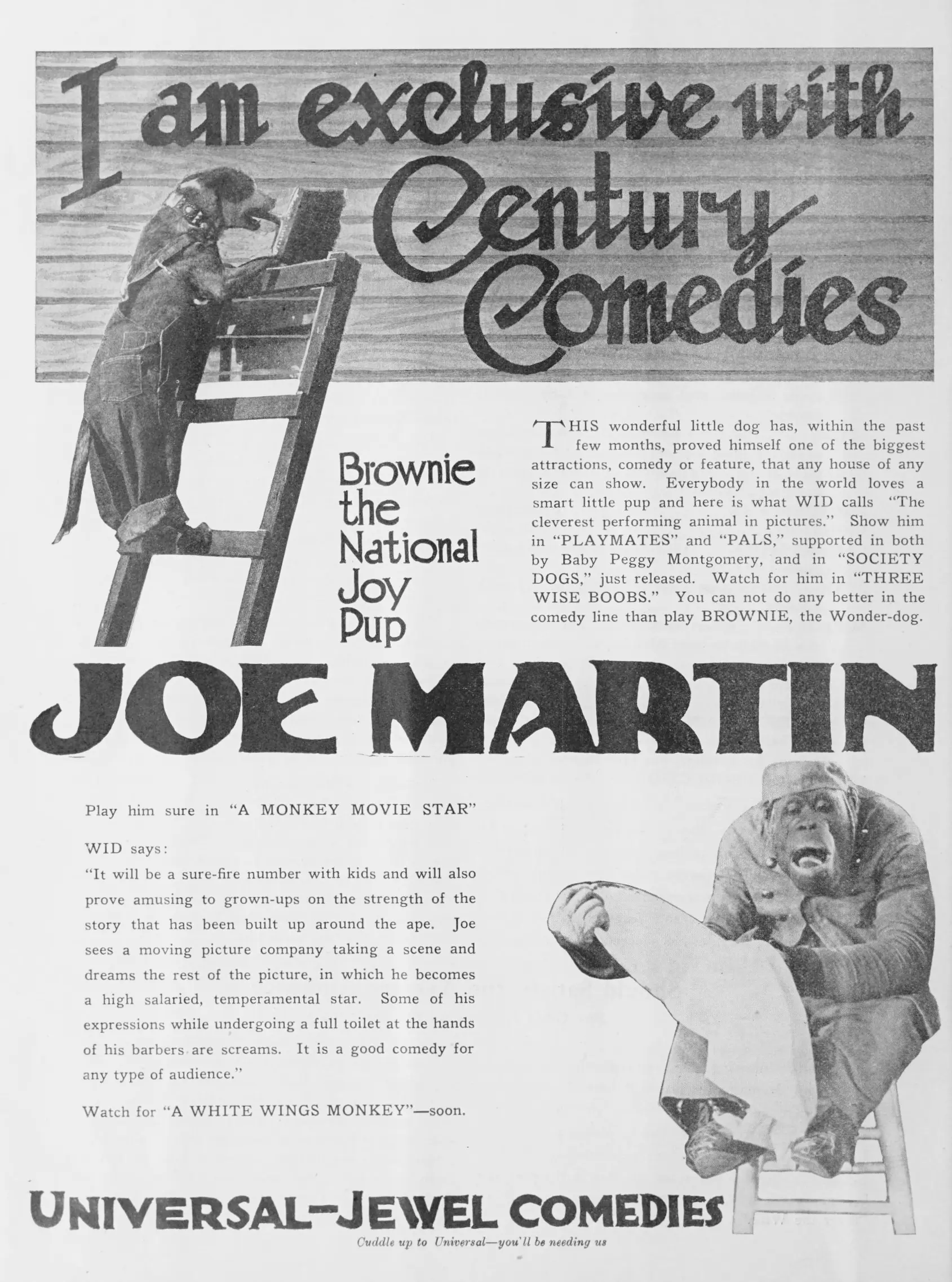
Stepping back into the formative years of cinematic storytelling, Harry Burns' A White Wing Monkey emerges not merely as a film, but as a fascinating cultural artifact, a vibrant snapshot of the moral imperatives and narrative conventions that captivated audiences of the early 20th century. This particular gem, featuring the redoubtable Joe Martin, distills the essence of nascent heroism into a series of vignettes that, while seemingly disparate, coalesce into a singular, compelling portrait of selfless intervention. It's a testament to the era's straightforward yet potent dramaturgical approach, where virtue was unambiguous and valor shone with an almost blinding clarity.
Joe Martin, the central figure in this cinematic tapestry, isn't presented with complex psychological motivations or a tortured past. Instead, he embodies the pure, unadulterated archetype of the 'angel of mercy,' a man whose very existence seems serendipitously aligned with moments of dire need. This isn't the brooding, conflicted hero of later eras, nor the morally ambiguous protagonist wrestling with internal demons that we might see in, say, The Devil's Double. Martin is, rather, a force of nature, a benevolent whirlwind whose path intersects with the vulnerable and the wronged, offering succor and salvation without hesitation. His actions are less about personal glory and more about the inherent righteousness of his being, a stark contrast to the often cynical portrayals of human nature that would come to dominate subsequent cinematic landscapes.
The film opens with an act of quiet restitution, a seemingly mundane yet profoundly significant gesture: the restoration of stolen money. In an age grappling with rapid industrialization and shifting social structures, themes of financial integrity and the sanctity of property resonated deeply. Martin's immediate impulse to right this wrong speaks volumes about the societal values Harry Burns sought to champion. It’s a narrative beat that echoes the moral quandaries explored in films like Tainted Money, where the corrupting influence of ill-gotten gains often forms the crux of the drama. But where Tainted Money might delve into the insidious effects of such wealth, A White Wing Monkey positions Martin as the swift, decisive antidote, a figure who purifies the tainted stream before it can spread its poison. This initial act establishes his character not as a detective, but as a moral compass, instinctively pointing towards justice.
The narrative then pivots dramatically, escalating the stakes from financial recovery to the preservation of innocent life. The scene of an infant being cast from its carriage down a steep incline is a masterstroke of early melodrama, designed to elicit a visceral reaction from the audience. It's a moment of sheer, heart-stopping terror, a tableau of vulnerability meeting relentless gravity. Here, Joe Martin's intervention is not merely heroic; it borders on the miraculous. His ability to intercept the plummeting child, defying the physics of the moment, positions him as almost superhuman. This kind of dramatic rescue was a staple of early cinema, designed to showcase the power of good against overwhelming odds, much like the perilous situations depicted in The West~Bound Limited, albeit in a different context of mechanical and human failure. The immediacy of the threat and the swiftness of Martin's response underscore his unique role as a guardian, a figure who appears precisely when all hope seems lost.
However, it is the climactic sequence, where Martin saves another child from the jaws of lions, that truly elevates A White Wing Monkey into the realm of the extraordinary, perhaps even the sublime absurd. This is a moment of pure, unadulterated spectacle, a testament to the nascent film industry's desire to push boundaries and capture the audience's imagination with increasingly daring feats. The sheer audacity of pitting a lone individual against apex predators to protect an innocent child is a powerful, almost mythological image. It transforms Martin from a mere rescuer into a veritable dragon-slayer, a modern-day Perseus confronting a beast. While the practicalities of filming such a scene in 1912 might invite a chuckle from contemporary viewers, its symbolic resonance is undeniable. It speaks to a primal fear and a primal desire for a champion to rise when faced with overwhelming, untamed danger. This grand, theatrical
IMDb 5.5
1931
Community
Log in to comment.