DbcultAccessing Vault...
Cult Review
Senior Film Conservator
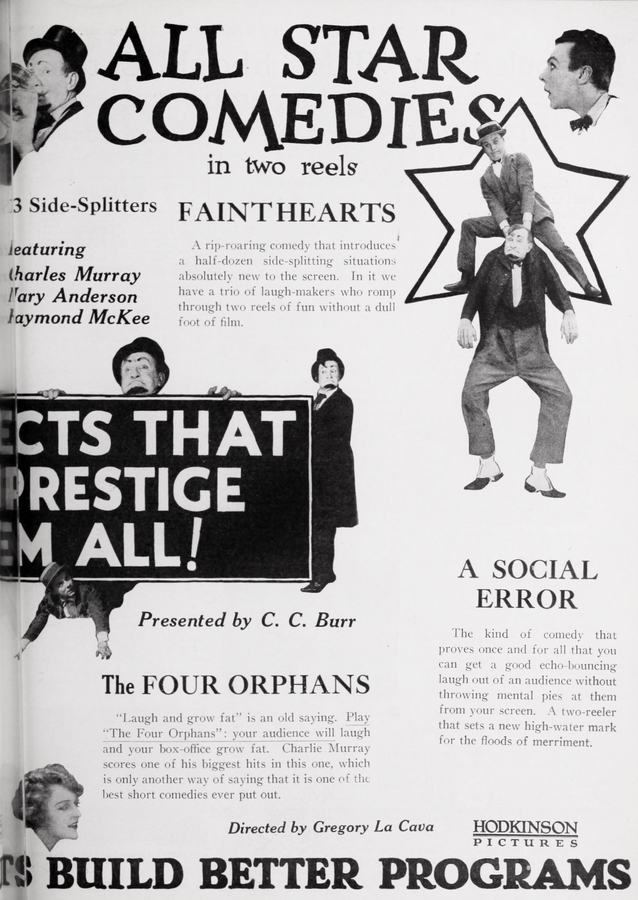
The silent era of cinema, often erroneously dismissed as a mere larval stage for the talkies, possessed a unique, kinetic grammar that contemporary audiences frequently overlook. Within this pantheon of physical storytelling, Faint Hearts emerges as a fascinating specimen of the 'bashful suitor' subgenre. It is a film that thrives not on the grandiosity of spectacle found in epics like Danton, but on the excruciatingly intimate tension of social awkwardness. Raymond McKee, an actor whose face served as a malleable canvas for every shade of human insecurity, delivers a performance that is both pathetic and profoundly relatable.
The narrative scaffolding of Faint Hearts is deceptively simple, yet its execution reveals a sophisticated understanding of situational irony. The core conflict—a man seeking a blessing but receiving a beating—is a classic trope that finds echoes in other comedic ventures of the period, such as The Close Shave. However, where other films might lean into the absurdity of the chase, Faint Hearts anchors its comedy in the psychological terror of the 'Father Figure.' Charles Murray, as the Judge, embodies an almost terrifying authority. He is not merely a parent; he is the Law personified. This elevates the protagonist's quest from a mere romantic hurdle to a confrontation with the state itself.
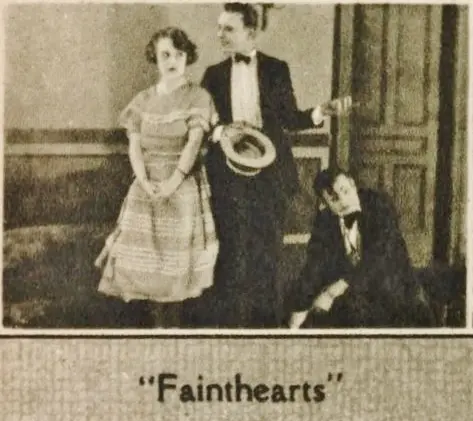
The brilliance of the screenplay lies in its economy of motion. Every gesture McKee makes, every nervous adjustment of his tie, is misinterpreted by the Judge as the twitch of a concealed weapon or the shifty movements of a criminal. This creates a claustrophobic atmosphere that is rarely seen in comedies of this vintage. While Hurry West utilized the vast, open spaces of the frontier to generate its laughs, Faint Hearts traps its characters in the wood-paneled purgatory of a judge's study, forcing the humor to boil over within the confines of domesticity.
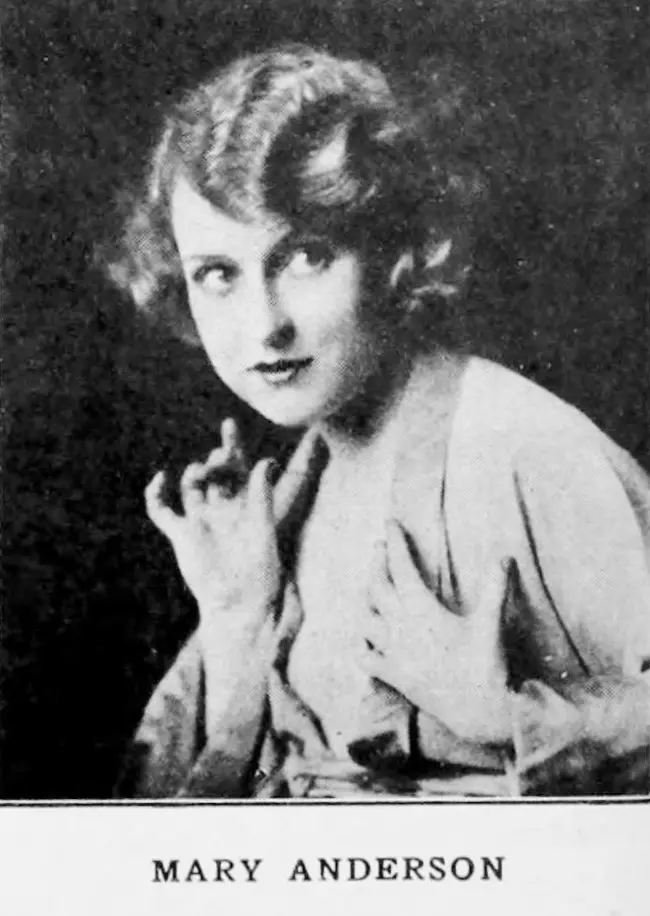
Mary Anderson, playing the object of affection, provides the necessary emotional ballast to the film's frenetic energy. While the role of the daughter in these farces can often be reduced to a mere trophy, Anderson injects a sense of quiet desperation into her performance. She is caught between her father's tyrannical protectionism and her suitor's paralyzing timidity. Her performance contrasts sharply with the more histrionic turns seen in The Loves of Letty, opting instead for a subtle, emotive range that communicates the stakes of the situation without a single intertitle.
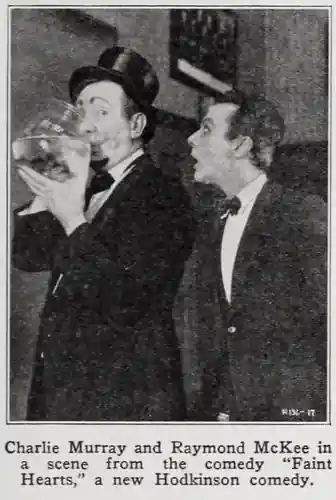
Charles Murray’s portrayal of the Judge is a masterclass in the 'slow burn.' His face, a craggy landscape of judicial skepticism, serves as the perfect foil to McKee’s jittery enthusiasm. When Murray finally erupts, the transition from suspicion to full-blown defensive aggression is choreographed with the precision of a ballet. This level of physical control is reminiscent of the disciplined performances in The Second in Command, though here it is directed toward comedic ends rather than military drama.
To truly appreciate the craftsmanship of Faint Hearts, one must view it through the lens of its contemporaries. It lacks the dark, expressionistic undertones of Wahnsinn, yet it shares a similar preoccupation with the fragility of the human psyche when under pressure. Where Stay Down East deals with the moral complexities of rural life, Faint Hearts is a quintessentially urban comedy, dealing with the anxieties of social hierarchy and professional status. The Judge’s fear—that his past rulings have come back to haunt him—is a remarkably modern anxiety, one that would not feel out of place in a contemporary thriller.
Furthermore, the film’s pacing is a marvel. Unlike the somewhat languid progression of Lorraine of the Timberlands, Faint Hearts moves with a relentless velocity. Once the central misunderstanding is established, the film refuses to let the audience breathe. It is a snowball rolling down a hill of judicial robes and romantic flowers. This kineticism is what separates a great silent short from a mediocre one; the ability to sustain a single joke and escalate it until it reaches a crescendo of chaos.
The set design of the Judge's house is worth noting. It is a space designed to intimidate. High ceilings, heavy drapes, and an oversized desk create an environment where a 'bashful suitor' would naturally feel diminished. This visual storytelling does much of the heavy lifting. We see our protagonist shrinking in his chair, dwarfed by the symbols of authority that surround him. This use of space to mirror internal states is a hallmark of high-quality silent cinema, a technique also utilized effectively in Cappy Ricks to establish corporate dominance.
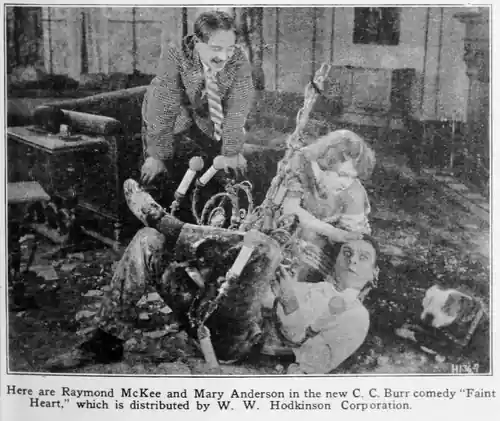
The cinematography, though limited by the technology of the mid-1920s, uses lighting to great effect. The shadows in the Judge’s study cast long, ominous shapes, reinforcing the Judge’s paranoia that a 'revenge seeker' is lurking in every corner. This play with light and shadow adds a layer of depth that elevates the film above standard slapstick fare like Ma Hoggan's New Boarder, suggesting a more sophisticated directorial hand at work.
Raymond McKee’s character in Faint Hearts is a precursor to the everyman protagonists we see in later decades. He is the ancestor of the Woody Allen archetype—the intellectual, hyper-aware, yet physically incompetent male. This characterization was a radical departure from the rugged heroism seen in films like Outlawed or the stoic duty portrayed in Honor Bound. By centering a story on a man whose primary trait is his lack of courage, the film taps into a universal human truth: the sheer terror of asking for what we want.
The film also touches upon the theme of social perception. The suitor is 'pretty smooth' in his own mind, perhaps imagining himself as a character from Pretty Smooth, but the reality is far more jarring. His attempts at grace are seen as clumsiness; his attempts at sincerity are seen as deceit. This gap between self-perception and external reality is the wellspring of all great comedy, and Faint Hearts drinks deeply from it. It reminds us that we are all, at some point, the misunderstood protagonist of our own lives, desperately trying to communicate our intentions to a world that is predisposed to see the worst in us.
One cannot discuss this film without mentioning the editing. In silent comedy, the 'cut' is as important as the 'gag.' The timing between the Judge’s realization and the suitor’s reaction is edited with surgical precision. If the reaction shot is held for even a second too long, the humor dissipates. Faint Hearts maintains a rhythm that is almost musical, a quality it shares with the best works of the era, such as Jack Straw. This rhythmic editing ensures that the escalating tension never feels forced, but rather like a natural consequence of the characters' conflicting motivations.
Even when compared to more somber works like The Sacred Flame, the technical proficiency of Faint Hearts is evident. It does not rely on the inherent drama of its premise to carry the weight; instead, it uses the tools of cinema—framing, lighting, and editing—to construct a comedic experience that is greater than the sum of its parts. It is a testament to the fact that even the most 'bashful' of films can leave a lasting impression if they are crafted with care and a deep understanding of the human condition.
Ultimately, Faint Hearts is more than just a relic of a bygone era. It is a vibrant, breathing piece of art that captures the eternal struggle between the individual and authority, between love and fear. It stands as a reminder that while the technology of cinema may change, the fundamental mechanics of a good laugh—and a good story—remain remarkably constant. Whether you are a scholar of the silent era or a casual viewer looking for a glimpse into the past, this film offers a rewarding, hilarious, and surprisingly poignant journey into the heart of human fallibility.
IMDb 6.4
1926
Community
Log in to comment.