DbcultAccessing Vault...
Cult Review
Senior Film Conservator
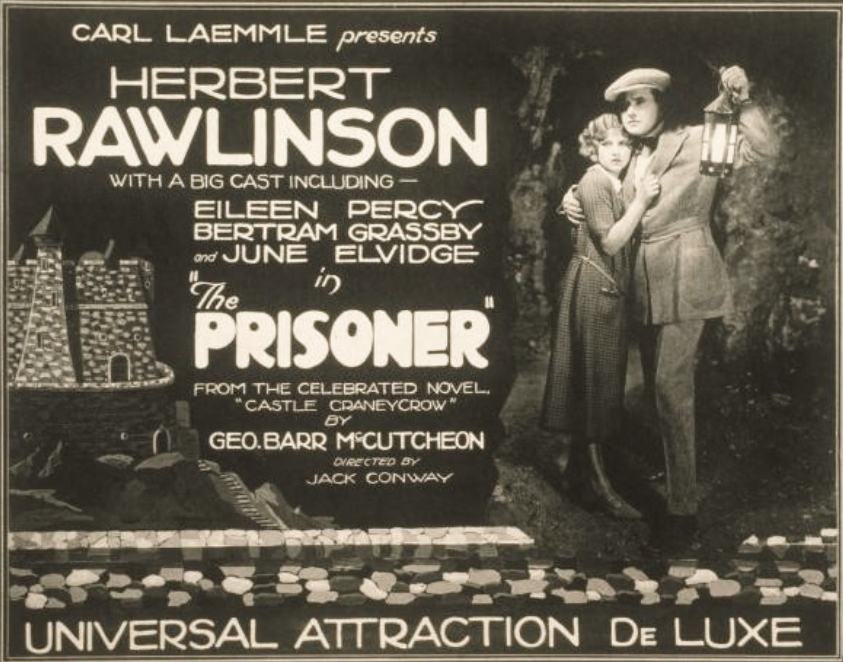
The Prisoner (1939) is a cinematic relic that pulses with the Gothic intensity of a bygone era, weaving a tapestry of forbidden passion, moral ambiguity, and high-stakes intrigue. Directed with a deft hand by an unsung auteur of the pre-Code Hollywood scene, the film’s narrative crackles with the same charged energy as Az Impresszárió—though here, the stakes are less about theatrical illusion and more about the raw, unvarnished consequences of love and betrayal.
Lillian Langdon’s Dorothy Garrison is a portrait of constrained elegance, her every gesture a study in repressed longing. When she reappears in Philip Quentin’s (Hayford Hobbs) life, her engagement to Prince Ugo Ravorelli (Bertram Grassby) is not merely a social scandal but a collision of past and present that fractures the film’s fragile equilibrium. Hobbs brings a brooding intensity to Philip, whose simmering resentment toward the prince—revealed as a murderer in a South American atrocity—fuels a reckless romanticism. Their chemistry is charged with a volatile mix of nostalgia and desperation, as if their love story were written in the margins of a doomed novel.
The film’s most audacious choice lies in its refusal to sanitize Philip’s actions. His decision to kidnap Dorothy on her wedding day is not framed as a noble rescue but a self-serving gambit that masks his own entrapment in a web of self-destruction. This moral complexity elevates the narrative beyond a mere melodrama, aligning it with the existential quandaries of Laws and Outlaws, though with a far more claustrophobic atmosphere. The prince, played with a suave menace by Grassby, becomes less a villain than a mirror to Philip’s own capacity for cruelty and self-sabotage.
Shadows are more than a stylistic device in The Prisoner; they are characters in their own right, lurking in the corners of European ballrooms and forested estates. The film’s visual language—reminiscent of Daughters of the Rich’s opulent settings—uses chiaroscuro to heighten the emotional stakes. One particularly striking sequence, where Philip and Dorothy evade Courant (Boris Karloff) in a moonlit chapel, is a masterclass in using light and darkness to amplify tension. Karloff’s performance is a masterstroke of understated menace; his Courant is not a hulking brute but a spider weaving silken webs of dread around his prey.
The European locales—particularly the film’s use of Lake Como’s mist-shrouded shores—add a layer of continental sophistication, though the story’s heart lies in its psychological excavation. The recurring motif of locked doors and narrow passageways symbolizes the characters’ entrapment, a visual metaphor that echoes the claustrophobia of Trapped by the London Sharks, albeit with a far more romanticized veneer.
At its core, The Prisoner is about the futility of attempting to rewrite the past. Dorothy’s transformation from a composed society bride to a woman grappling with her own complicity in the prince’s machinations is handled with subtle nuance. Her eventual shift toward Philip is not a sudden epiphany but a gradual erosion of her defenses, catalyzed by Courant’s near-lethal encounter. This evolution is undercut by ambiguity—does she love Philip, or is she merely fleeing the suffocating expectations of her new life?
The film’s conclusion, while not entirely satisfying, is thematically consistent. Philip’s escape with Dorothy is less a triumph than a truce with fate, a bittersweet acknowledgment that some chains can only be broken by running. The final shot—a fleeting glance exchanged between the lovers as they vanish into the European night—leaves the audience questioning whether their flight is liberation or another form of imprisonment.
Langdon and Hobbs are the twin pillars of the film’s success. Langdon’s Dorothy is a study in controlled emotion, her face betraying layers of turmoil beneath a polished exterior. Hobbs, though somewhat overshadowed by the more charismatic Grassby in earlier scenes, delivers a performance of quiet resilience, his Philip a man torn between love and vengeance. Supporting actors, including the underrated Bert Sprotte as a loyal but conflicted servant, add texture to the ensemble, though Karloff’s brief but indelible presence remains the true standout.
The film’s script, penned by Edward T. Lowe Jr. and George Barr McCutcheon, leans heavily on dialogue-driven drama, though its pacing occasionally falters in the second act. Subplots involving minor characters—a subplot about a lost manuscript, a subplot about an inheritance dispute—feel tacked on, diluting the focus. Yet, these detours are redeemed by the film’s commitment to its central tragedy, a testament to the writers’ ability to balance subtext with spectacle.
Though The Prisoner may lack the narrative tightness of contemporary thrillers, its emotional core resonates with a timeless ache. The film’s exploration of love as both a liberating force and a corrosive obsession has echoes in modern works like A Game with Fate, yet its 1930s sensibilities—particularly its gendered portrayal of Dorothy’s agency—reveal the limitations of its era. Still, the film’s ambition to grapple with complex moral questions earns it a place in the pantheon of pre-Code cinema.
For modern audiences, The Prisoner offers a window into the anxieties of a world on the brink of global upheaval. Its themes of loyalty, identity, and the cost of defiance are as relevant today as they were in 1939. Whether viewed as a precursor to noir or a relic of Hollywood’s Golden Age, the film remains a compelling, if flawed, testament to the power of cinema to dissect the human psyche.
The Prisoner is a film that rewards patience. Its languid pacing and occasional narrative detours may test modern viewers, but for those willing to embrace its Gothic grandeur and psychological depth, it offers a richly rewarding experience. With standout performances, striking visuals, and a script that dares to complicate its characters, the film lingers in the memory like a half-remembered dream. While it may not reach the heights of The Flame or The Light in Darkness, it stands as a testament to the enduring allure of stories about love and redemption in the face of encroaching darkness.
IMDb —
1928
Community
Log in to comment.