DbcultAccessing Vault...
Cult Review
Senior Film Conservator
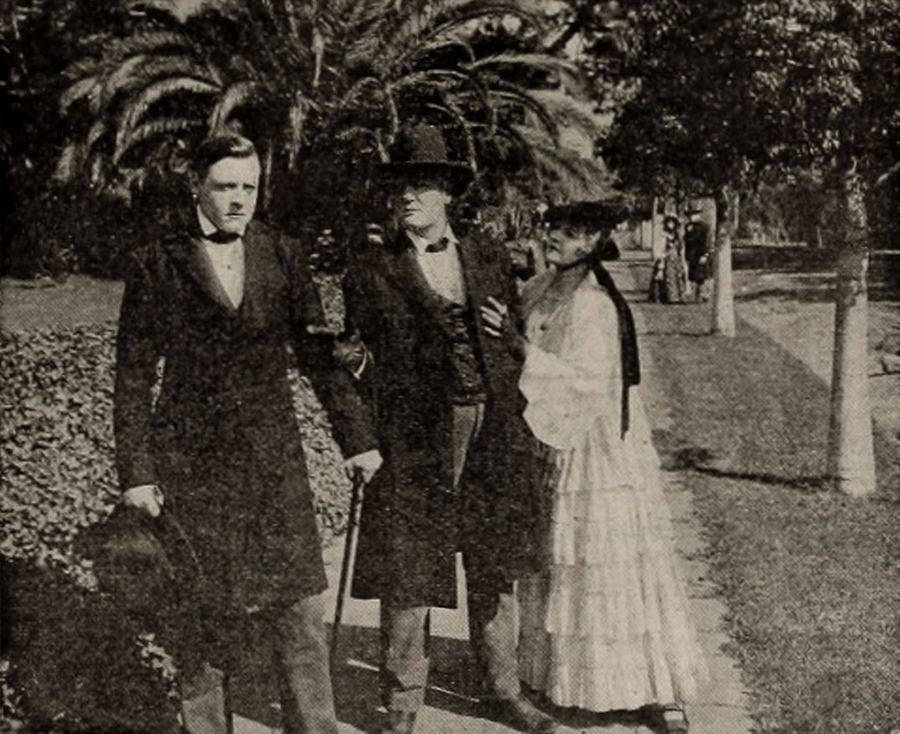
In the nascent years of American cinema, specifically the mid-1910s, the medium was grappling with its own potential for psychological depth. The Other Side of the Door, released in 1916, stands as a formidable example of the era’s fascination with the duality of the human spirit and the corruptive influence of the urban underworld. Set against the backdrop of an opulent yet treacherous San Francisco, this film serves as a precursor to the noir sensibilities that would define the genre decades later. It is a work of high-stakes morality, where the architecture of the city—its grand halls and its shadowy gambling dens—reflects the internal architecture of its protagonist, John Montgomery.
Harold Lockwood, a matinee idol of his time, brings a palpable vulnerability to the role of John Montgomery. Unlike the more stoic heroes found in contemporary works like The Romance of the Utah Pioneers, Lockwood’s Montgomery is defined by his malleability. He is the classic "lamb to be shorn," a figure of privilege whose inherent generosity is weaponized against him. The film meticulously tracks his descent, beginning with the chance encounter with Ellie Fenwick—a moment of crystalline purity that makes his subsequent fall all the more agonizing.
The introduction of Willie Felton and Martin Rood provides the narrative with its predatory engine. Rood, portrayed with a chilling calculation by Dick La Reno, represents the parasitic elements of the city that feed on the bored and the wealthy. The gambling sequences are not merely plot points; they are visual metaphors for the loss of agency. As Montgomery is fleeced of his fortune and lured into bogus mining deals, the film mirrors the thematic weight found in The Primrose Path, where the initial steps toward vice are paved with seemingly innocuous invitations.
The emotional core of the film resides in the tension between Carlotta Valencia and Ellie Fenwick. Carlotta, played with a smoldering intensity by May Allison (who, interestingly, often played the ingenue but here finds a role of significant complexity), is far from a one-dimensional femme fatale. While she is Rood’s mistress, her affection for Montgomery is presented as her first brush with genuine humanity. This complicates the moral landscape significantly. When Montgomery defends her against the "evil stories" circulating in high society, he isn't just being naive; he is recognizing a kindred spirit trapped in a different kind of cage.
In contrast, Ellie Fenwick (Josephine Humphreys) represents the idealized Victorian virtue, yet she is granted more agency than the typical silent film heroine. Her internal struggle—the conflict between her love for Montgomery and her duty to the law—is the film's most compelling psychological thread. This struggle is reminiscent of the moral dilemmas posed in The Deep Purple, where the protagonist must navigate a world that demands the sacrifice of personal happiness for the sake of social order.
The pivotal scene—the shooting of Martin Rood—is a masterclass in silent film suspense. The visual of the proprietor falling through the swinging doors of the bar-room, followed by Montgomery holding a smoking revolver, is an indelible image. It is here that the film’s title, The Other Side of the Door, takes on its most literal and metaphorical meaning. The door is the threshold between the public persona and the private crime, between the life Montgomery was meant to lead and the fugitive existence he is forced into.
The subsequent legal drama, where Ellie is forced to testify as the state's chief witness, elevates the stakes from a simple crime thriller to a tragedy of Shakespearean proportions. The pressure exerted on her by District Attorney Dingley and her father highlights the patriarchal structures of the era, where a woman’s testimony was often weaponized against her own interests. This dynamic of forced witnessing and the resultant guilt can be seen in other contemporary works like The Conspiracy, though here it is handled with a more intimate, domestic focus.
When comparing this film to its peers, one notices a distinct lack of the melodrama that often plagued 1910s cinema. For instance, The Gilded Spider deals with similar themes of entrapment, but The Other Side of the Door maintains a more grounded, almost naturalistic approach to its characters' motivations. The "Mexican rescue" sequence, while seemingly a concession to the action-hungry audiences of 1916, is integrated into the plot as an extension of Carlotta’s desperation and power. It mirrors the high-stakes escapes found in European imports like Atlantis or the atmospheric tension of De lefvande dödas klubb.
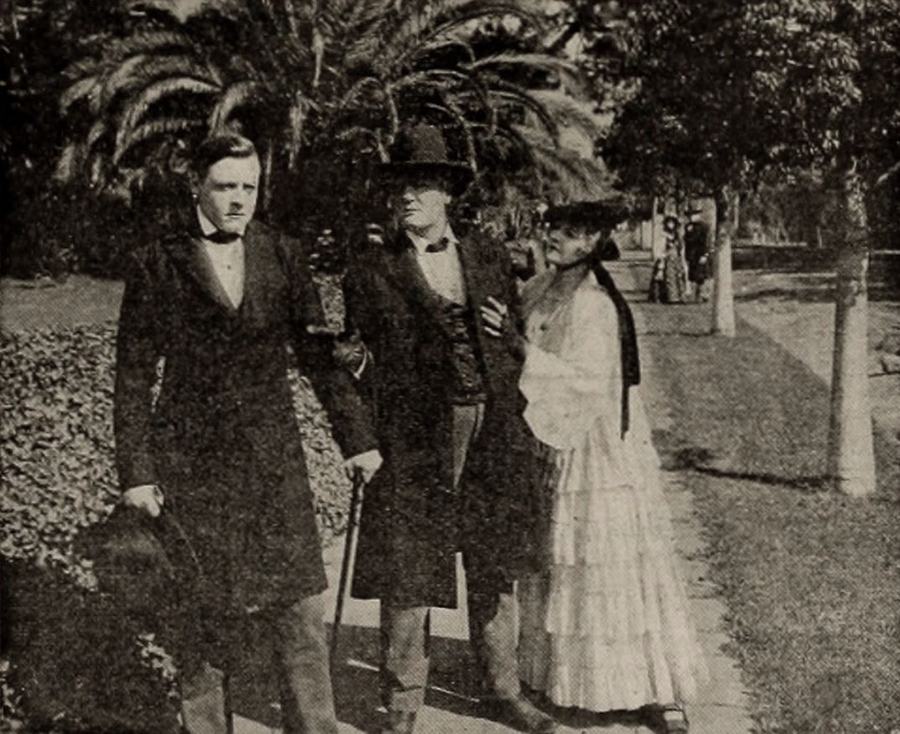
Furthermore, the film’s exploration of a woman’s corruptive yet redemptive love echoes the themes of The Love Tyrant. However, Carlotta’s ultimate sacrifice—her suicide and confession—elevates her character beyond the trope of the "fallen woman." She becomes the ultimate arbiter of justice, a role usually reserved for the male lead or the state itself. This subversion is what keeps the film relevant to modern viewers.
Director Fred J. Balshofer, alongside writers Clifford Howard and Lucia Chamberlain, demonstrates a keen eye for the textures of San Francisco. The contrast between the sun-drenched markets where Ellie shops and the subterranean gloom of Rood’s establishment is visually striking. The use of light and shadow to denote moral states is sophisticated for the time, predating the German Expressionist influence that would later define Hollywood cinematography. The pacing, too, is remarkably modern, eschewing the stagey longueurs of many 1915-1916 productions like Gretna Green.
The inclusion of characters like Perez, Carlotta’s servant, adds a layer of class and ethnic complexity that was often overlooked in the era's more homogeneous narratives. His corroboration of the truth in the final act is not just a plot device but a validation of the marginalized voices that populate the "other side" of society's door. This level of detail is what distinguishes this film from more straightforward melodramas such as What Happened at 22.
The climax, set in Carlotta’s house, is steeped in a gothic atmosphere. The discovery of Carlotta sitting erect in her chair, dead by her own hand, is a haunting tableau. It is a moment of profound silence within a silent film. Her written confession is the key that unlocks Montgomery’s cage, both literally and figuratively. The heroism attributed to Montgomery for shielding her—a fact revealed by Perez—recontextualizes his previous actions not as cowardice or guilt, but as a misguided yet noble gallantry.
This resolution avoids the easy moralizing found in Jewel, opting instead for a bittersweet conclusion where redemption is bought with the currency of a life. The final image of Montgomery and Ellie starting anew is earned through a gauntlet of psychological and social trials. It is a testament to the film's narrative strength that this happy ending feels like a hard-won peace rather than a scripted necessity.
While films like El drama del 15 de Octubre or Den sorte Varieté explored the darker impulses of the human condition across the globe, The Other Side of the Door remains a uniquely American artifact of its time. It captures a transitioning society, caught between the rigid moral codes of the 19th century and the burgeoning complexities of the 20th. It is a film that demands to be seen not just as a historical curiosity, but as a vibrant, breathing piece of storytelling.
In the grand tapestry of silent cinema, Lockwood and Allison’s collaboration here stands as a high-water mark for the American Film Manufacturing Company (Flying "A"). The film’s ability to weave together themes of class, gender, and justice into a cohesive and visually arresting narrative ensures its place in the pantheon of early cinematic achievements. Like the protagonist himself, the film has survived the fleecing of time, emerging as a work of inherent nobility and enduring power. Even when compared to the whimsical nature of Pufi - Hogyan lett ünnepelt hös egy jámbor pesti férjböl? or the starkness of Fången på Karlstens fästning, this San Franciscan tale holds its own through sheer emotional resonance and directorial flair.
IMDb —
1924
Community
Log in to comment.