DbcultAccessing Vault...
Cult Review
Senior Film Conservator
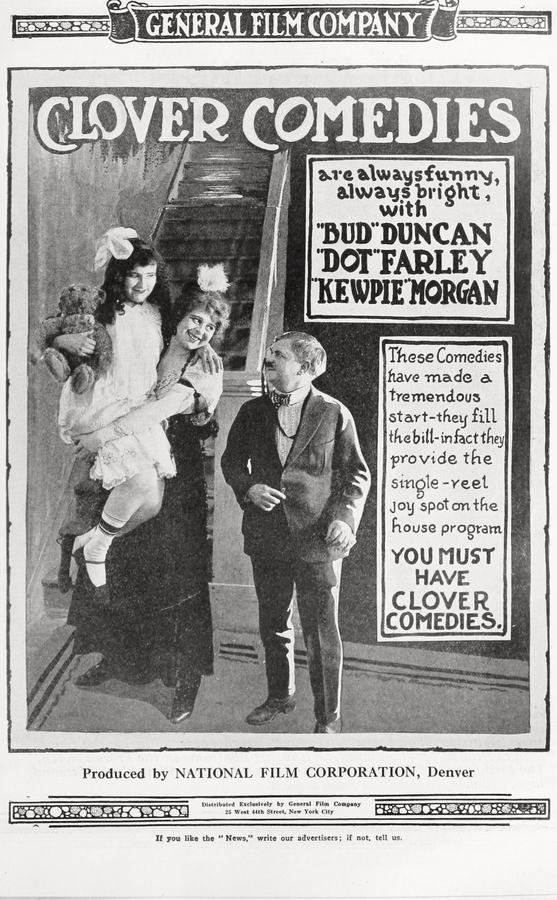
Stepping back into the nascent days of cinematic storytelling, one occasionally stumbles upon a gem like 'A Widow's Camouflage' (a-widows-camouflage), a film whose narrative ingenuity and spirited performances, even if glimpsed through the haze of time, speak volumes about the era's burgeoning artistry. This isn't merely a quaint relic; it's a vibrant testament to the silent film's capacity for intricate plotting and nuanced characterizations, often achieved with an economy of expression that modern cinema could well learn from. The very title hints at a complexity that belies its early production date, promising a narrative woven with threads of deception and societal maneuvering. It forces us to consider the often-overlooked sophistication lurking beneath the surface of what many might dismiss as simplistic entertainment from a bygone age. The film’s intrinsic value lies not just in its historical context but in its compelling exploration of human ingenuity under duress, a theme as resonant today as it was a century ago.
At its core, 'A Widow's Camouflage' presents a compelling portrait of resilience, centering on Mrs. Beatrice Vance, a character whose plight – sudden widowhood compounded by financial precarity – would typically relegate a woman to a passive role in many narratives of the period. Yet, Bea, as she's affectionately known, refuses to be a victim of circumstance. Instead, she becomes an architect of her own destiny, albeit through an elaborate ruse. Her decision to invent a wealthy, reclusive second husband is a stroke of narrative genius, providing both comedic fodder and a keen insight into the limited avenues available to women seeking autonomy in that era. This is not the passive suffering seen in more melodramatic fare, but an active, almost subversive agency. The film deftly juggles the precariousness of her situation with the inherent humor of maintaining such a grand illusion. It's a high-stakes game of charades, where the slightest misstep could lead to social ostracization and financial ruin. The script, even in its visual form, must have been meticulously crafted to ensure the escalating absurdity never completely overshadowed the underlying tension. This balance is crucial for a film that seeks to be both entertaining and subtly profound, a tightrope walk that 'A Widow's Camouflage' manages with remarkable grace.
The construction of this fictional spouse and his equally imaginary retinue is where the film truly shines, transforming domestic necessity into a grand theatrical production. Bea's resourcefulness in enlisting local eccentrics, particularly the inimitable Bud Duncan and the mercurial Kewpie Morgan, to play these roles adds layers of delightful chaos. Duncan, with his characteristic physical comedy and expressive mugging, would undoubtedly have brought a bombastic energy to his portrayal, perhaps as the 'wealthy husband's' gruff but ultimately pliable valet or a pompous, silent partner. Morgan, known for his diminutive stature and often mischievous roles, could have been cast as anything from a peculiar butler to a 'secret' child from a previous marriage, adding an unpredictable element to Bea's carefully constructed world. Their improvisational prowess, a hallmark of many silent era performers, would have been vital in bringing these supporting caricatures to life, providing the necessary foils for Bea's increasingly desperate attempts to maintain control. This ensemble dynamic elevates the film beyond a simple narrative of deception, turning it into a study of performance itself, both on and off the screen. It is reminiscent of the intricate social deceptions found in later, more celebrated works, but here, it possesses an endearing, almost innocent charm that makes the audience root for the audacious widow.
The cast of 'A Widow's Camouflage' is a fascinating cross-section of silent era talent, each bringing their unique brand of expressive artistry to the fore. Bud Duncan, a prolific actor known for his comedic timing and distinctive mustache, would have been a pivotal force in the film's lighter moments. His ability to convey complex emotions and comedic beats without a single spoken word was a testament to his stagecraft and understanding of the burgeoning cinematic medium. Imagine his exaggerated gestures and contorted expressions as he attempts to embody an entirely fabricated persona, constantly on the verge of breaking character. This provides a delightful contrast to the more subtle anxieties Bea herself must face. Duncan's presence alone suggests a film that embraces the physical comedy inherent in its premise, using his familiar persona to ground the more fantastical elements of the plot. His work often leaned into slapstick, but with a nuanced understanding of character, ensuring his actions served the narrative rather than merely providing isolated gags. This commitment to character, even in comedic roles, is what distinguishes truly great silent performers.
Dot Farley, on the other hand, likely played the archetypal busybody, the suspicious neighbor or relative whose keen observation skills constantly threaten to expose Bea's intricate scheme. Farley was celebrated for her ability to embody strong, often formidable female characters, sometimes comedic, sometimes villainous, but always with a commanding presence. Her piercing gaze and pursed lips would have been perfectly suited to the role of the neighborhood's moral arbiter, a constant shadow of judgment hanging over Bea's audacious plan. The tension generated by Farley's character would have been palpable, a brilliant counterpoint to the comedic escapades of Duncan and Morgan. Her performance would have provided the necessary stakes, making the audience genuinely concerned for Bea's fate. One can almost picture her peering through curtains, gathering snippets of information, and constructing her own theory of Bea's 'misdeeds,' a delicious antagonist whose very presence elevates the dramatic tension. This dynamic interplay between the protagonist's ingenuity and the antagonist's relentless skepticism forms the backbone of many a compelling narrative, and Farley’s talent would have ensured this was delivered with maximum impact.
Kewpie Morgan, known for his distinct appearance and often playing eccentric or villainous roles, would have added another layer of unpredictability to the ensemble. His involvement suggests a deliberate choice to inject a certain level of bizarre charm into Bea's fabricated world. Whether as a reluctant accomplice or an unwitting participant, Morgan's unique screen presence would have undoubtedly contributed to the film's distinctive flavor. His roles often capitalized on his unusual physicality, making him an ideal choice for a character who needs to be memorable yet ultimately disposable to Bea's overarching plan. The interaction between these three distinct performers – the earnest, resourceful Bea, the boisterous Bud Duncan, the suspicious Dot Farley, and the enigmatic Kewpie Morgan – creates a rich tapestry of human interaction, a microcosm of societal pressures and individual defiance. This ensemble casting, rather than relying on a single star, highlights the collaborative nature of early filmmaking and the importance of each player in constructing a cohesive, engaging narrative. It's a symphony of silent gestures and expressions, each instrument playing its vital part.
'A Widow's Camouflage' is more than just a comedic romp; it’s a subtle commentary on the societal constraints placed upon women in the early 20th century. Bea's decision to invent a husband, rather than seek traditional employment or remarry for financial security, speaks volumes about the limitations and expectations of her time. It highlights a woman's agency, even if exercised through unconventional means, as a powerful act of defiance against a patriarchal system. This theme of female resourcefulness in the face of adversity resonates with films like Sangue blu, which also explored women navigating complex social landscapes, albeit with a more dramatic, aristocratic lens. While 'Sangue blu' focused on a noblewoman's struggle, 'A Widow's Camouflage' democratizes the struggle, making it accessible and relatable to a broader audience through its comedic framework. The film, in its own charming way, champions the underdog, celebrating the wit and courage required to carve out one's own space in a world that often seeks to confine.
Furthermore, the film delves into the nature of appearances versus reality, a perennial philosophical question explored vividly through Bea's elaborate charade. The entire plot hinges on the successful maintenance of a false front, forcing both the characters within the film and the audience to question what constitutes truth. Is Bea's deception morally reprehensible, or is it a justifiable means to a righteous end? The film, by its very premise, invites this ethical debate without explicitly stating a judgment. This ambiguity is one of its strengths, allowing for multiple interpretations and adding depth to what could otherwise be a straightforward comedy. This exploration of illusion and perception can be seen in other silent films, such as The Evil Eye, where psychological manipulation and false pretenses drive the narrative, though often with a much darker tone. 'A Widow's Camouflage' uses this theme for lighter, more uplifting purposes, suggesting that sometimes, a little deception can lead to unexpected, positive outcomes, or at least provide an entertaining journey along the way. The societal pressure to maintain appearances, even if those appearances are fraudulent, is a driving force, revealing the performative nature of social interaction itself.
While specific details about the cinematography or directorial style of 'A Widow's Camouflage' might be elusive given its age, one can infer certain characteristics based on the prevalent techniques of the era and the film's narrative requirements. The direction would have likely emphasized clear sightlines and exaggerated blocking to convey information without dialogue. The use of intertitles would have been crucial, not just for dialogue but for advancing the plot and injecting comedic asides, acting as a direct conversation with the audience. Close-ups would have been employed to highlight the subtle shifts in Bea's expressions as she navigates her lies, or to capture Dot Farley's suspicious glares. Medium shots would have been essential for showcasing the physical comedy of Bud Duncan and Kewpie Morgan, allowing their full body movements and interactions to be appreciated. The pacing, a critical element in silent comedies, would have needed to be brisk, building momentum as Bea's scheme grows more elaborate and the threat of exposure looms larger. Slow-motion or fast-motion techniques, though perhaps primitive, could have been used for comedic effect, enhancing the absurdity of certain situations.
The setting and production design, even if modest, would have played a significant role in establishing the film's tone. A quaint, perhaps slightly dilapidated home for Bea, contrasted with the imagined grandeur of her 'husband's' estate, could visually underscore her deception. Costumes would have been vital for character identification and comedic effect, with Bud Duncan and Kewpie Morgan likely adorned in outfits that amplify their eccentricities, while Bea's attire would reflect her precarious social standing and her attempts to project an image of respectable widowhood. The lighting, a developing art form in the silent era, would have been used to create mood, perhaps brighter for comedic scenes and slightly more dramatic for moments of tension or near-discovery. Comparing this to a film like The Circular Staircase, which used its setting as a character in itself, 'A Widow's Camouflage' likely used its domestic and community settings to emphasize the social pressures and confined world Bea operates within. Every visual element, from a prop to a painted backdrop, would have been carefully considered to communicate without words, a testament to the ingenuity of early filmmakers working within the medium's inherent limitations. The very absence of sound forced a heightened visual literacy, and films like this demonstrate how compelling that could be.
The tragedy of many silent films, 'A Widow's Camouflage' potentially among them if it remains largely unseen, is their vulnerability to the ravages of time. Nitrate film stock was notoriously unstable, and many productions simply vanished, leaving behind only tantalizing synopses or faded publicity stills. Yet, even in its absence, a film like 'A Widow's Camouflage' offers valuable insights into the creative landscape of its period. It showcases the types of stories that captivated audiences, the comedic sensibilities that thrived, and the enduring power of a well-crafted plot. The concept of a resourceful woman outwitting societal constraints through clever deception is a theme that recurs throughout cinematic history, from early comedies to modern thrillers. This film, therefore, acts as an important progenitor for countless narratives that followed, even if its direct influence is difficult to trace. It speaks to a universal human desire for autonomy and the lengths one will go to achieve it, particularly when faced with seemingly insurmountable obstacles. This enduring resonance is what makes the study of such films, even hypothetical ones, so crucial for understanding the evolution of storytelling.
The film's exploration of identity and the construction of self through performance is particularly prescient. Bea's 'camouflage' is not just a practical solution; it's an act of self-reinvention, a deliberate choice to inhabit a new persona to navigate a challenging world. This theme resonates with other silent era films that explored identity, such as Double Crossed, where characters often assumed new identities or were mistaken for others, leading to dramatic or comedic complications. In 'A Widow's Camouflage,' the agency lies squarely with Bea, making her a more active participant in her own transformation. This proactive approach to identity is a powerful statement for the era, presenting a female protagonist who is not merely acted upon but who actively shapes her reality, however precariously. The film, in its own way, foreshadows later discussions on authenticity and the masks people wear in society, providing a charming, early cinematic perspective on these complex ideas. It's a reminder that even in seemingly simple early films, profound human truths were being explored, often with a remarkable degree of sophistication and wit.
The enduring appeal of character actors like Bud Duncan, Dot Farley, and Kewpie Morgan further underscores the film's potential significance. These performers were the backbone of the silent era, their faces and mannerisms instantly recognizable to audiences, much like modern-day character actors. Their presence in 'A Widow's Camouflage' suggests a film that relied on strong, established personalities to carry its comedic and dramatic weight. Their unique talents, honed through countless shorts and features, would have imbued the film with a specific energy and charm. To watch them interact, even in imagination, is to witness a masterclass in non-verbal communication, a skill that defined the silent screen. This reliance on visual storytelling and the expressive power of the human face is a hallmark of the period, distinguishing it from subsequent eras dominated by sound. The film, therefore, serves as a valuable case study in how narratives were constructed and conveyed before the advent of synchronized dialogue, offering a glimpse into a captivating, highly visual form of entertainment that continues to fascinate and inspire. Its clever plot, engaging characters, and thematic depth ensure its place, if only in our collective imagination, as a standout example of early cinematic wit and invention.
IMDb 4.6
1910
Community
Log in to comment.