DbcultAccessing Vault...
4.7/10
Senior Film Conservator
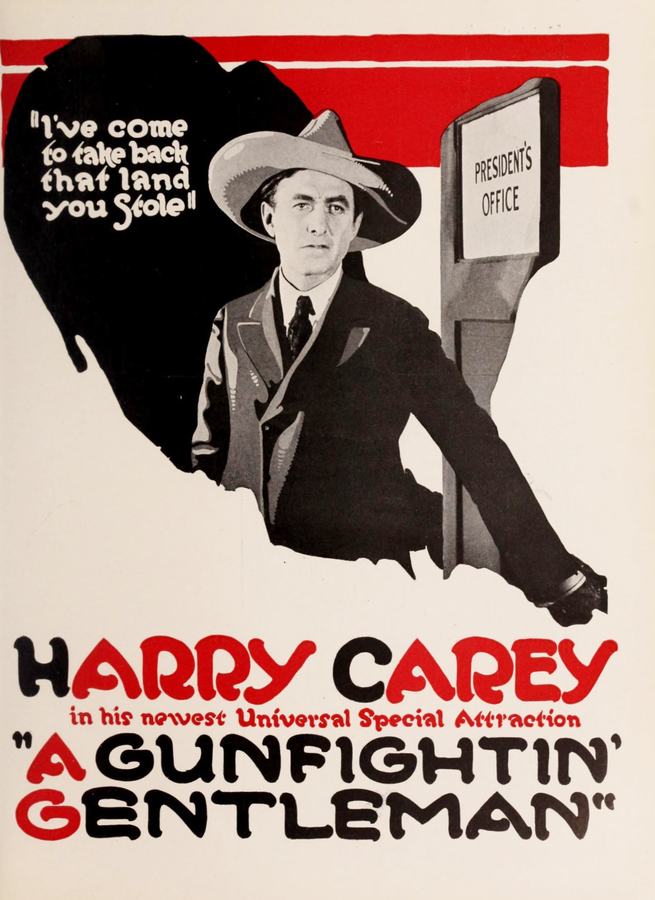
A definitive 4.7/10 rating for a film that redefined the boundaries of cult cinema. A Gun Fightin' Gentleman remains a cornerstone of transgressive art.
Stepping back into the sepia-toned annals of early cinema, we encounter A Gun Fightin' Gentleman, a compelling silent Western from 1919 that, despite its vintage, resonates with a timeless narrative of justice, honor, and the stark clash between untamed frontier spirit and calculating urbanity. This isn't merely a quaint artifact; it's a foundational text in the Western genre, a testament to the powerful storytelling capabilities of its era, and a crucial early entry in the illustrious career of director John Ford, albeit here credited as a writer alongside Hal Hoadley and star Harry Carey. The film, in its succinct yet potent narrative, lays bare the perennial struggle for integrity in a world often swayed by avarice and legal artifice.
At the heart of this cinematic skirmish is "Cheyenne Harry," portrayed with compelling gravitas by the inimitable Harry Carey. Harry is not just a rancher; he is the embodiment of the West, a man whose vast cattle empire defines his corner of the frontier, a bastion of hard-won prosperity and unwavering principle. His world, however, is irrevocably disrupted by the insidious machinations of John Merritt, a Chicago meat-packer whose ambition knows no bounds. Merritt, leveraging shrewd legal maneuvers and what can only be described as a bogus writ of foreclosure, orchestrates the audacious seizure of Harry's sprawling ranch. This act of corporate malfeasance isn't just a financial blow; it's a profound violation of Harry's very identity, a challenge to the deeply ingrained Western ethos of property earned through sweat and grit. The initial recourse, a barrage of indignant letters dispatched eastward, proves utterly futile, met with the chilling silence of indifference from the distant magnate.
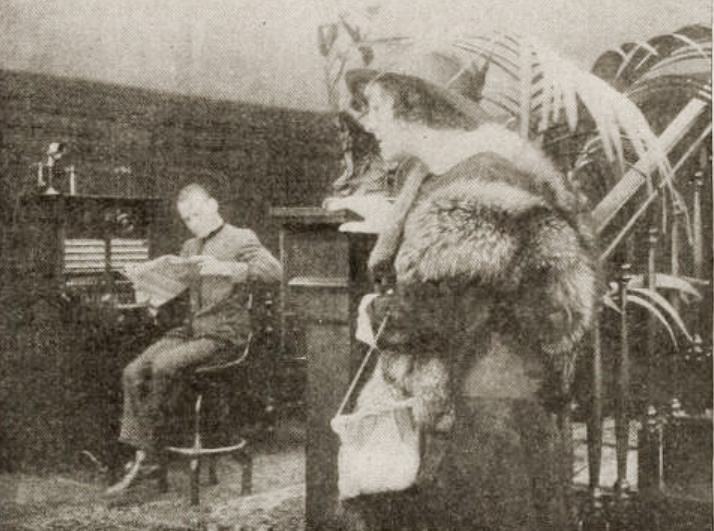
Driven by a primal need for justice, Harry forsakes the familiar dust of the West for the bustling, alien sophistication of the East. His pilgrimage culminates at Merritt's opulent mansion, a stark symbol of the wealth and power that has so unjustly dispossessed him. Initially, Merritt, ensconced in his ivory tower of privilege, dismisses the "uncouth" Westerner, refusing audience to this inconvenient echo from his ill-gotten gains. Yet, a more insidious plan begins to brew in Merritt's mind. To provide a moment of perverse amusement for his daughter Helen and her coterie of elite guests, he extends an invitation, not of courtesy, but of calculated condescension. Harry is ushered into the grand dining hall, a stage set for his anticipated social humiliation. Merritt's expectation is clear: the rough-hewn frontiersman will inevitably commit some egregious error in table deportment, affording the sophisticated company a hearty laugh at his expense, thereby reinforcing their own perceived superiority.
What unfolds next is a brilliant, understated piece of social theater. To the utter astonishment of Merritt and his assembled guests, Harry's table manners are not merely passable; they are impeccable. He navigates the labyrinthine rituals of formal dining with an innate dignity and an almost intuitive understanding of etiquette, confounding Merritt's smug assumptions. The intended spectacle of frontier buffoonery evaporates, replaced by an uncomfortable silence punctuated by the clinking of silverware. Frustrated by this unexpected display of grace, Merritt escalates his psychological warfare. In a deliberate act of vulgarity, designed to trick Harry into an embarrassing mimicry, he eats with his knife. This is the moment of truth, a subtle yet profound test of Harry's character. Recognizing the unspoken challenge, understanding that the guest is implicitly expected to follow the host's example, Harry, with a flicker of chagrin but an unwavering resolve, does likewise. He leaves the mansion, not defeated, but profoundly chagrined by the elaborate charade, yet more determined than ever to extract justice from Merritt. This pivotal scene, devoid of dialogue yet rich in subtext, encapsulates the film's thematic core: the battle of wits, the clash of social codes, and the unyielding spirit of a man wronged.
Harry Carey, a stalwart of early Westerns, delivers a performance as "Cheyenne Harry" that is both understated and immensely powerful. His portrayal transcends the archetypal "rough cowboy" to reveal a man of profound moral fiber, whose strength lies not just in his physical prowess but in his unwavering sense of honor. Carey imbues Harry with a quiet dignity, a stoicism that speaks volumes without a single uttered word. His eyes convey the initial shock of betrayal, the simmering anger of injustice, and the steely resolve that propels him eastward. The dinner scene, in particular, showcases Carey's mastery of silent acting; his subtle reactions, the careful observation of his surroundings, and the ultimate, defiant mirroring of Merritt's vulgarity are all handled with a nuanced precision that makes the character deeply sympathetic and admirable. This performance solidified Carey's status as a quintessential Western hero, a figure who, despite being dispossessed, never loses his inherent grace or his commitment to a higher code.
Opposite Carey, J. Barney Sherry as John Merritt provides an equally compelling, albeit villainous, counterpoint. Merritt is not a mustache-twirling caricature; he is the embodiment of corporate greed cloaked in the veneer of respectability. Sherry portrays him with a smug self-assurance, an almost casual cruelty that underscores the ease with which men of his ilk manipulate systems for personal gain. His decision to humiliate Harry at dinner is not born of direct hatred, but of a detached amusement, a desire to assert social dominance and reinforce the perceived superiority of his Eastern, moneyed world over the "primitive" West. Sherry's performance is crucial in establishing the stark contrast between the two worlds, making Merritt a believable and utterly despicable antagonist whose power is derived not from a gun, but from the insidious weapon of legal and social maneuvering.
Though primarily credited for his directorial prowess, John Ford's involvement as a writer for A Gun Fightin' Gentleman is profoundly significant. Even in these nascent stages of his career, the seeds of his future thematic concerns are evident: the struggles of the common man, the clash of civilizations, the pursuit of justice, and the mythologizing of the American West. The narrative's lean efficiency, its focus on character-driven conflict, and the powerful visual storytelling (even through the lens of a silent film's intertitles) bear the hallmarks of Ford's developing genius. His understanding of the Western ethos, honed through numerous collaborations with Harry Carey, shines through, crafting a story that is both deeply personal and broadly resonant. The film stands as an early testament to the foundational role Ford would play in shaping the very language of American cinema. The contributions of Hal Hoadley and Harry Carey himself to the script further underscore the collaborative spirit of early filmmaking, with Carey's intimate knowledge of the Western setting undoubtedly lending authenticity to the narrative.
A Gun Fightin' Gentleman is surprisingly rich in thematic depth for a film of its era. Foremost is the perennial theme of justice. Harry's journey is a visceral quest to right a profound wrong, to reclaim what was unjustly taken. This isn't abstract legal theory; it's a personal crusade, driven by an inherent moral compass that demands retribution for deceit. Connected to this is the theme of honor. Harry's impeccable table manners, followed by his deliberate mimicry of Merritt, are not just about social grace; they are about maintaining his personal honor in the face of provocation. He refuses to be made a fool of, asserting his dignity even when placed in a compromising position.
The film also brilliantly explores the clash between East and West, a recurring motif in American literature and cinema. The West, represented by Harry, is portrayed as a realm of rugged individualism, directness, and a straightforward code of ethics. The East, personified by Merritt, is depicted as sophisticated, urbane, but ultimately corrupt and manipulative, hiding its avarice behind legalistic obfuscation and social niceties. This geographical and cultural divide underscores a deeper class conflict, where the industrialist elite can effortlessly exploit the working, land-owning class through the very systems designed to protect them. Harry's journey is thus a symbolic confrontation between these two Americas, a struggle for the soul of a nation.
Finally, the film touches upon the nature of civility and savagery. Merritt attempts to brand Harry as "uncouth" and savage, yet it is Merritt who ultimately descends into a deliberate act of boorishness at the dinner table. Harry, by mirroring this act, exposes Merritt's hypocrisy, turning the tables on his tormentor and revealing the true "savage" to be the one who wields power without principle. This subversion of expectations is a powerful statement on who truly possesses refinement and integrity.
As a silent film, A Gun Fightin' Gentleman relies heavily on visual storytelling, a craft that early filmmakers honed to an art form. The use of expressive acting, deliberate framing, and evocative intertitles carries the narrative and emotional weight. The contrast between the expansive Western landscapes (even if depicted through studio sets or limited location shooting) and the confined, opulent interiors of Merritt's mansion is visually striking, reinforcing the thematic divide. The close-ups on Harry Carey's face during moments of contemplation or defiance are particularly effective, allowing the audience to intimately connect with his inner turmoil and resolve. The pacing, typical of early cinema, might feel deliberate to modern viewers, yet it allows for a gradual build-up of tension, especially leading to the climactic dinner scene. This film exemplifies how silent cinema, far from being primitive, was a sophisticated medium capable of conveying complex narratives and nuanced characterizations through purely visual means.
Released in 1919, A Gun Fightin' Gentleman emerges during a period when the Western genre was still finding its definitive voice, evolving from dime novels and early stage melodramas into a cinematic powerhouse. It predates the epic scope of later Ford Westerns like Stagecoach but lays crucial groundwork. The film's depiction of a wronged hero seeking personal justice against a corrupt system was a popular trope, reflecting contemporary anxieties about industrialization, urbanization, and the perceived loss of frontier values. It’s a snapshot of America grappling with its own identity, looking back to its mythic past while hurtling towards a modern future. This film, along with others of its ilk, helped solidify the archetypes and narrative structures that would define the genre for decades to come, proving that the silent screen was a fertile ground for exploring distinctly American myths.
When considering A Gun Fightin' Gentleman, it's illuminating to place it within the broader context of its contemporaries and thematic kin. The film's central conflict of a principled individual battling systemic corruption finds resonance in other early works. For instance, the struggle for land and dignity against encroaching forces is a theme explored in films like Captain of the Gray Horse Troop, another early Western that often delves into the complexities of frontier life and disputes over territory. While the settings and specific antagonists differ, the underlying tension of defending one's way of life remains potent.
The moral fortitude displayed by "Cheyenne Harry" in the face of calculated humiliation also brings to mind the core tenets of films centered on personal integrity. The unwavering commitment to one's principles, even when facing overwhelming odds or societal pressures, is a powerful thread. One might draw a parallel to the thematic undercurrents of a film like Moral Courage, where the strength of character in adversity forms the narrative backbone. Harry’s refusal to be belittled, his quiet defiance, speaks volumes about the kind of inner strength that transcends mere physical prowess.
Furthermore, the depiction of a powerful, unscrupulous figure like John Merritt, who uses his influence and legal loopholes to dispossess others, reflects a recurring concern in cinema about the abuse of power. This motif can be seen in various forms across different genres, from political dramas to social commentaries. Films that explore the machinations of those in authority, and the fight against their oppressive reach, share a common DNA with Harry's struggle. While not a direct genre comparison, the essence of challenging corrupt authority is palpable, much like the themes of battling entrenched systems that might appear in a film such as The Governor's Boss, which likely examines the darker side of political influence and control.
The pursuit of recompense, the idea of "making things right" after being wronged, is a universal narrative drive. Harry's journey eastward is fundamentally about seeking what is owed to him, not just financially, but in terms of dignity and justice. This resonant theme, the imperative to collect what is rightfully yours, echoes in the very title and spirit of a film like Pay Me!. The emotional weight of seeking redress, whether for monetary loss or a deeper personal affront, is a powerful motivator that transcends time and genre. These comparisons, while not suggesting direct influence, highlight the enduring nature of the themes A Gun Fightin' Gentleman so effectively tackles, firmly rooting it in a cinematic tradition of heroic resilience against injustice.
A Gun Fightin' Gentleman might not be as widely celebrated as John Ford's later masterpieces, but its significance cannot be overstated. It serves as a vital historical document, showcasing the formative years of a legendary director and the enduring appeal of one of cinema's first true Western stars, Harry Carey. The film's simple yet potent narrative, its incisive commentary on class and justice, and its masterful use of silent storytelling techniques ensure its place in the pantheon of early American cinema. It's a reminder that even without spoken dialogue or elaborate special effects, a compelling story, well-acted and thoughtfully conceived, can leave an indelible mark. It's a quiet triumph, a film that speaks volumes about the power of integrity and the relentless pursuit of what is right, themes that remain as relevant today as they were over a century ago. Revisiting this film is not just an exercise in cinematic archaeology; it's an opportunity to appreciate the foundational elements that shaped a beloved genre and to witness the nascent genius of its pioneers.
IMDb —
1915
Community
Log in to comment.