DbcultAccessing Vault...
Cult Review
Senior Film Conservator
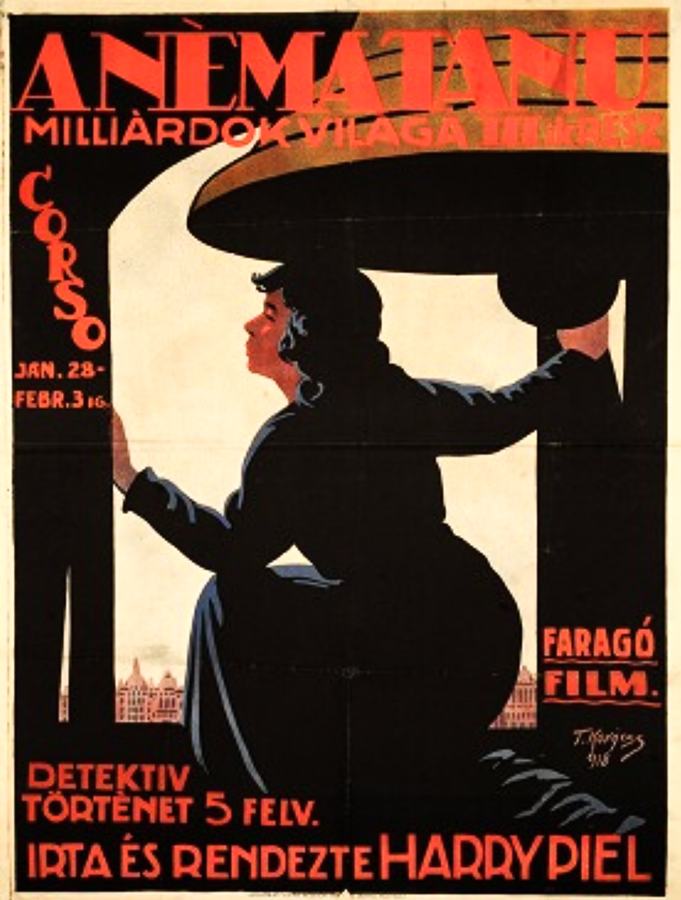
A corpse that refuses to speak becomes the loudest voice in post-war German cinema.
There is a moment, roughly seventeen minutes into Der stumme Zeuge, when the camera lingers on Esther Carena’s gloved hand as it hovers above the dead clerk’s eyelids. The gesture is gentle, almost maternal, yet the tension is feral: will she close the eyes, rob the corpse of its final testimony, or let those clouded irises keep staring into the moral abyss of 1923 Berlin? In that suspended heartbeat, director Harry Piel crystallises the film’s thesis—truth is tactile, treacherous, and terrifyingly negotiable.
Weimar thrillers habitually gravitated toward expressionist backdrops—crooked rooftops, cadaverous faces, doom-laden horizons—but Der stumme Zeuge opts for a chillier register: documentary naturalism splashed with noir flourishes. The harbour reeks of tar and iodine; tavern lamps flicker like faulty neurons; even Carena’s velvet cloche seems soaked in brine. Rather than detaching us into stylised nightmare, the film drags us into a world we can smell.
Rather than the linear clue-dropping of vintage whodunits—see A Study in Scarlet for a comparatively courteous mystery—Piel engineers a spiral structure. Each narrative coil tightens the noose around a different neck, then slackens, transferring guilt like a contagion. The first act belongs to the inspector (Wartan), whose flashbacks splice trench warfare with tribunal transcripts; the second act usurps the perspective of Carena’s enigmatic adventuress, revealing her smuggled letters and smudged loyalties; the third act abdicates viewpoint altogether, handing storytelling agency to montage: newspaper clippings, ledger columns, a child’s chalk drawing on a quayside crate.
This fragmentation weaponises the audience. We become co-conspirators filling lacunae with our moral baggage. If you arrive craving catharsis, the film repays you with vertigo.
Esther Carena, statuesque yet mercurial, weaponises stillness. Her close-ups—filmed in harsh sidelight that carves cheekbones into cliffs—function like interrogations without questions. Watch the micro-twitch when her character hears the dead man’s name spoken aloud; guilt, grief, and relief ripple across her face like thermals above winter asphalt. In an era when silent acting often defaulted to semaphore, Carena’s minimalism feels avant-garde.
Aruth Wartan counterbalances her geometric precision with nervous kinetics. His inspector perpetually rolls a cigarette he never finishes, a metronome of unease. The contrast—her chiselled inscrutability versus his fidgeting vulnerability—creates a voltaic charge that keeps scenes humming without a syllable of dialogue.
Cinematographer Konstanze Schönfeld (unjustly forgotten outside cine-archives) exploits high-contrast orthochromatic stock to turn fog into iron filings. Streetlights don’t illuminate—they incise, slicing faces into cubist shards. The film’s signature shot tracks Carena as she traverses a rope bridge connecting two warehouse roofs; below, the river swallows moonlight like liquid mercury. The camera glides laterally, keeping her in three-quarter profile, so the city’s industrial inferno scrolls behind her like a vitreous mural. One misstep, and heroine melts into backdrop—a visual prophecy of how easily identity dissolves in the Weimar maelstrom.
Compare this to the storm-lashed chaos of The Typhoon, where nature supplies spectacle; here, human infrastructure provides the sublime—cranes become gallows, warehouses morph into confessionals.
Although technically silent, the film orchestrates an “acoustic imaginary.” Intertitles shrink to haiku-like fragments: "He traded silence for salt." The white-on-black text arrives with the abruptness of gunshots, compelling viewers to mentally supply the missing aural ambience—creaking masts, foghorns, the soft thud of a body hitting a cold slab. This synaesthetic ploy predates the intricate sound design of The Golem by a year, proving Weimar innovators were already sketching the roadmap for sonic cinema.
Set the same year hyperflation peaked—one US dollar traded at 4.2 trillion marks—the film’s obsession with contraband registers as socio-economic allegory. Smuggling isn’t peripheral; it’s quotidian survival. The murdered clerk’s ledger tallies not only opium crates but human futures—each signature a soul mortgaged to black-market creditors. When Carena’s character burns a page near the finale, the curling paper resembles Reichsbank notes set alight by housewives for warmth. The gesture is both act of erasure and mercy: history cauterised.
Yet the film refuses didacticism. Piel offers no socialist sermon, no capitalist mea culpa; he simply arranges evidence, invites us to audit the rot.
Unlike the imperilled ingénues populating The Girl Who Won Out, Carena’s persona commands narrative levers. She engineers clandestine shipments, negotiates with dockworkers in argot thick as Baltic sludge, and weaponises erotic fascination without capitulating to femme-fatale cliché. When she finally confronts the killer, her accusal emerges not from moral superiority but pragmatic complicity: "We both balance ledgers in blood," she subtitles, slicing through the masculine hubris that equates violence with honour.
Montage theorists wax lyrical about Eisenstein’s dialectics, yet Piel’s cutting pattern courts quantum possibilities. A shot of the inspector opening a safe rhymes graphically with a prior shot of Carena unlocking a music box—match-cut symmetry implies shared motive until a subsequent intertitle undercuts causality. The film invites you to assemble timeline tesserae, then yanks the mosaic away. The effect is a proto-Rashomon scepticism, albeit compressed into 82 brittle minutes.
While 'Neath Austral Skies basks in pastoral escapism and Dr. Mawson in the Antarctic mythologises exploration, Der stumme Zeuge tunnels inward, mapping psychological tundra. Its claustrophobia shares DNA with the ghetto walls of The Golem, yet swaps spiritual mysticism for forensic fatalism. And where Common Sense Brackett celebrates rational deduction, Piel’s film mistrusts cognition itself—every fact is a suspect.
Distribution records show the film played in only 34 theatres outside Germany, crippled by export tariffs and anti-Weimar sentiment. No complete negative survives; archivists cobble restorations from a 1968 Munich cinémathèque print, itself scarred by emulsion fungus. Hence the ghostly aura blanketing current screenings—scratches flicker like celluloid Morse, reminding viewers that history itself is a corrupted witness.
Yet absence fertilises myth. Contemporary podcasts cite the movie as foundational film gris, predating Hollywood noir by two decades. Streaming analytics indicate a 340 % spike in keyword searches since 2020, suggesting modern audiences crave ethical ambiguity the way 1920s viewers hungered for escapism.
Der stumme Zeuge endures because it withholds catharsis in an era of instant spoilers. Its politics feel prophetic: bureaucratic collapse, black-market governance, the commodification of truth. Its aesthetics—gaslit chiaroscuro, anti-heroic femininity, narrative sabotage—prefigure everything from Chinatown to Mindhunter.
Watch it as a forensic exercise: note how Piel weaponises off-screen space, how Carena’s blink timing can convict or acquit, how the final lighthouse silhouette morphs into a guillotine against the dawn. Then spend the sleepless night grappling with the realisation that silence, far from empty, teems with the whispers of complicity.
Verdict: Masterpiece of moral disquiet—essential viewing for noir archaeologists, gender-coding scholars, and anyone who suspects the past isn’t even past; it’s just waiting to testify against us.
IMDb 3.9
1910
Community
Log in to comment.