DbcultAccessing Vault...
Cult Review
Senior Film Conservator
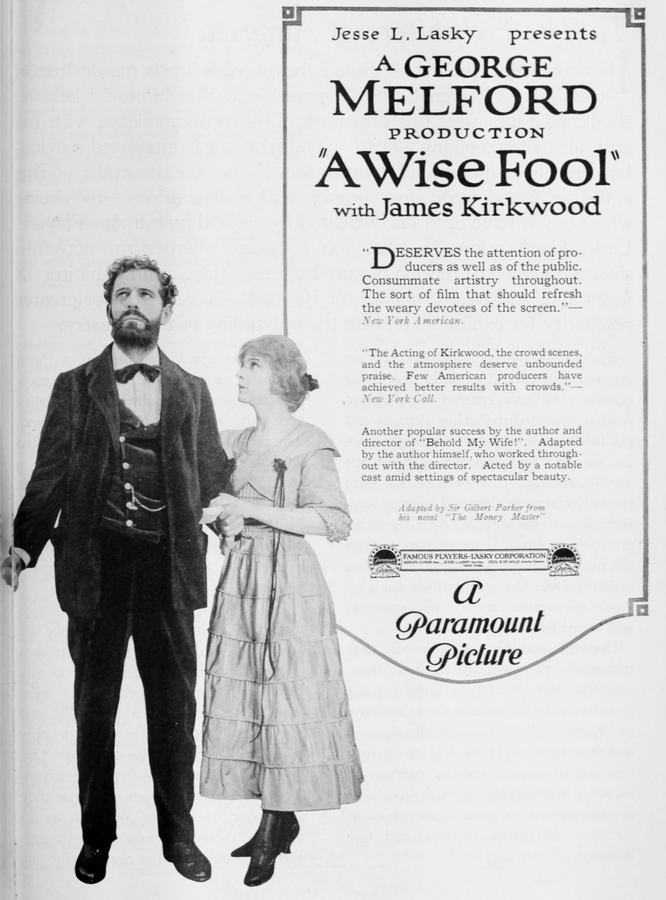
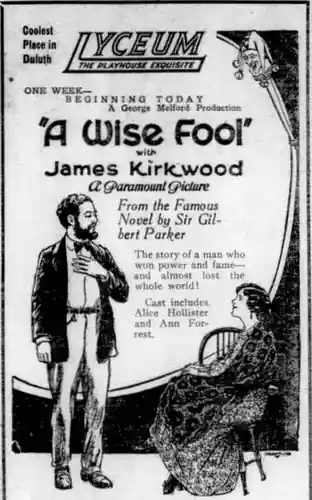
A Wise Fool is a film that lingers in the mind like a half-remembered dream, its narrative threading the needle between romantic idealism and the stark realities of human fallibility. At its center is Jean (played with aching vulnerability by Truly Shattuck), a Canadian heir whose life unravels with the precision of a Greek tragedy. His journey from affluence to destitution is not merely a tale of misfortune but a meditation on the illusions we construct—about love, legacy, and self-worth.
The film’s opening act is suffused with a deceptive warmth. Jean, recently returned from a European sojourn, encounters Carmen (a luminous Alice Hollister), whose beauty and charisma seem to embody the very essence of passion. Their whirlwind romance, culminating in marriage and the birth of a daughter, is framed with soft, golden-hour cinematography that evokes a bygone era of cinematic romance. Yet, this idyll is undercut by a simmering tension, as if the audience senses the precariousness of the foundation beneath them.
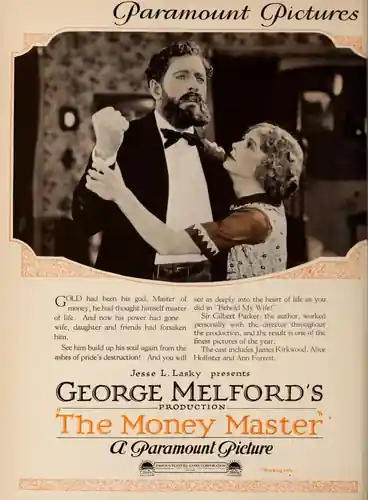
When Carmen’s infidelity is unveiled, the narrative pivots from romantic drama to no-holds-barred tragedy. The scene in which she exits with their daughter is rendered with clinical detachment—a quiet, almost bureaucratic exchange of keys and signatures that strips the moment of melodrama. This choice, while jarring, underscores the film’s thematic focus: the dehumanizing effects of betrayal. Jean’s subsequent descent into financial ruin—marked by a fire that consumes his business and a father-in-law (Charles Ogle) who gleefully swindles his remaining assets—mirrors the erosion of his emotional fortitude. The parallel between material and psychological collapse is not lost.
A Wise Fool’s greatest strength lies in its exploration of fate as both antagonist and narrative device. The film’s writers, Gilbert Parker and uncredited collaborators, craft a world where characters are at the mercy of forces beyond their control. Jean’s misfortunes are not born of moral failing but of cosmic indifference—a concept that resonates with the works of Dostoevsky and O. Henry. The recurring motif of fire, both literal and metaphorical, serves as a reminder of life’s impermanence. Consider the conflagration that destroys Jean’s business: the flames are depicted not as a punishment but as a natural, inevitable consequence of the precariousness of wealth.
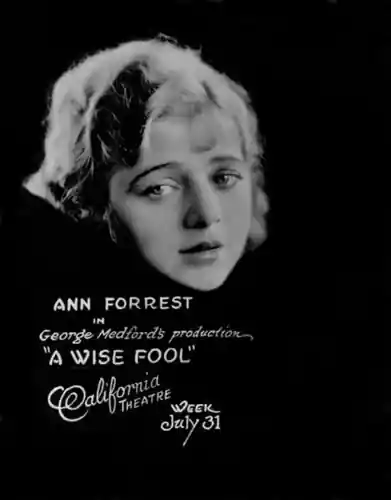
This existential undertone is heightened by the supporting cast, whose performances imbue even minor roles with gravitas. Harry Duffield, as Jean’s father-in-law, embodies the grotesque capitalism that thrives in others’ misfortunes. His grinning theft of Jean’s remaining funds is a microcosm of the film’s critique of avarice. Meanwhile, Mabel Van Buren’s cameo as a sympathetic neighbor offers a fleeting glimmer of hope, though it is swiftly extinguished by the narrative’s relentless pessimism.
Visually, A Wise Fool is a study in contrasts. The early scenes bathed in warm, saturated hues give way to a monochromatic palette as Jean’s world disintegrates. This shift is not merely aesthetic but symbolic—a visual metaphor for the loss of color in his life. The use of long, static shots during moments of introspection (notably in scenes of Jean wandering through the ashes of his business) evokes the stillness of grief. These techniques recall the stark realism of Ashes of Embers, though A Wise Fool distinguishes itself with a more intimate, character-driven focus.
Sound, too, plays a crucial role. The absence of a score in critical moments—such as Carmen’s departure—forces viewers to confront the silence of emotional voids. When music does intervene, as in a melancholic piano motif during Jean’s final walk through the ruins, it feels both intrusive and necessary, a reminder of the futility of solace.
While A Wise Fool shares thematic kinship with Die toten Augen, its European counterpart, the Canadian film diverges in its treatment of moral ambiguity. Where Die toten Augen leans into gothic horror, A Wise Fool opts for psychological nuance. Similarly, its exploration of familial betrayal echoes Crooked Streets, though with a more somber tone. The film’s preoccupation with the interplay between personal failure and systemic corruption also bears resemblance to Grim Justice, yet its focus on emotional rather than political stakes sets it apart.
"The true tragedy is not Carmen’s infidelity, but Jean’s inability to reconcile his shattered self-image with the world’s unyielding indifference."
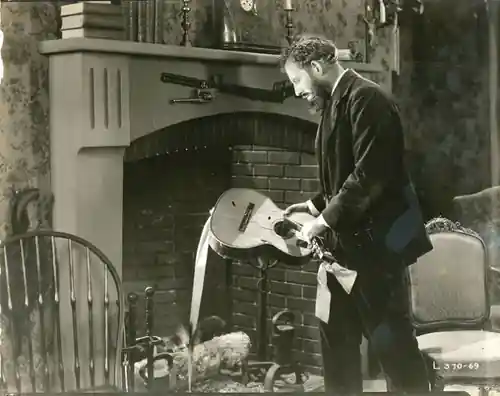
This emotional complexity is perhaps best exemplified in the performance of Truly Shattuck. His portrayal of Jean is less a depiction of suffering than a slow unraveling—a man whose dignity erodes with each setback. The final act, in which Jean contemplates the stars from a derelict boarding house, is a masterclass in silent acting, conveying a universe of loss without a single line of dialogue. It is a moment that lingers, not for its spectacle, but for its quiet humanity.
A Wise Fool, though a product of its time, resonates with contemporary audiences through its unflinching examination of vulnerability. Its themes of economic precarity and emotional isolation find new resonance in the shadow of global crises. The film’s refusal to provide easy resolutions—whether through redemption, revenge, or catharsis—renders it both frustrating and compelling. It is a work that demands patience, rewarding viewers with a profound meditation on the fragility of human connections.
For modern cinephiles, A Wise Fool is a reminder of cinema’s capacity to distill the human experience into a single, aching narrative. Its exploration of futility and resilience, framed through the lens of personal tragedy, invites comparisons to the works of Bresson and Kiarostami. Yet it remains singular in its ability to balance grand themes with intimate detail. In an age where stories often prioritize spectacle over substance, this film stands as a testament to the power of restraint and emotional truth.
If there is a flaw, it is that the film’s unrelenting bleakness may alienate some. Unlike The Sultana, which balances tragedy with moments of levity, A Wise Fool offers no respite. Yet this is precisely its power: it does not seek to comfort but to confront. It is a film that asks not "what if?" but "what is?"—a question that lingers long after the credits roll.
IMDb 6.8
1923
Community
Log in to comment.