DbcultAccessing Vault...
Cult Review
Senior Film Conservator
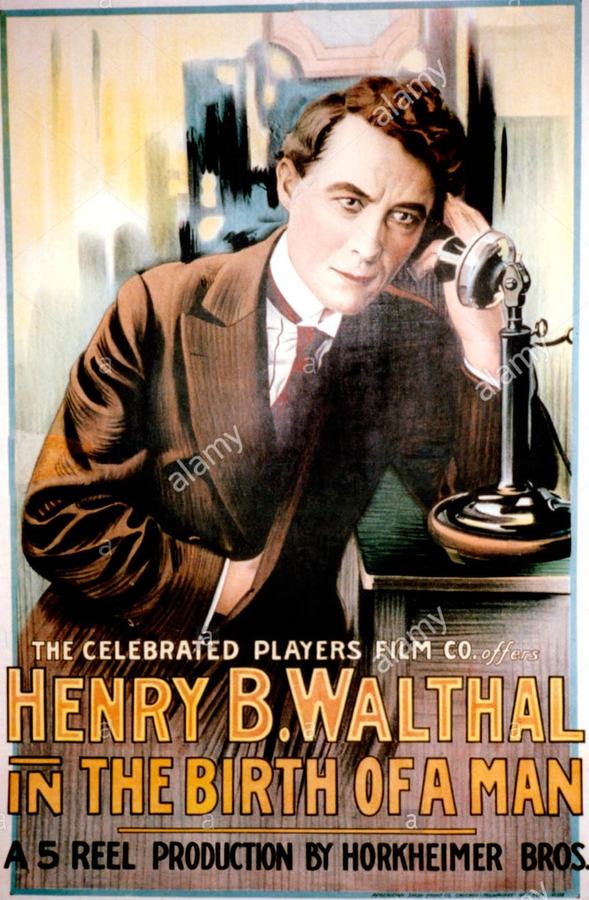
Strip away the celluloid and The Birth of a Man is still dripping: river-water, whiskey, tar. Griffith’s camera—more archaeologist than storyteller—unearths strata of guilt so compacted that every frame crackles like shale underfoot. The foundling (Henry Stanley, cheekbones sharp enough to slice the very fog) begins as a smudge on the landscape, a cautionary blotch, yet by reel three he has become the prism through which the whole postbellum South refracts its venomous self-mythology.
Watch how the director weaponizes silence. When a Union officer’s sabre rips the boy’s shirt, the soundtrack holds its breath; the absence of orchestral sting feels louder than any violin could scream. Compare this to The Siren’s Song where sound itself is narcotic, or to Othello where Moorish jealousy vibrates through trumpets. Here, negation equals indictment.
Richard Johnson’s blacksmith-turned-scalawag registers every flicker of lynch-mob torches on his brow like a living barometer of civic rot. Joyce Moore, the only woman granted interior monologue via intertitle, floats through parlours in bombazine that drinks kerosene-light and exhales it as spectral green. Their performances refuse melodrama; instead they essay the physics of complicity—how ordinary vertebrae learn to bend under the weight of inherited sin.
Griffith’s cross-cutting anticipatory grammar—now cliché, then sorcery—juxtaposes a child’s first communion with the same hands later cocking a rifle. The montage lands like a theological paradox: can flesh sanctified at altar rail be desecrated by pulling a trigger on a fleeing freedman? The film declines an answer; it simply stains the question onto your retina.
Forget the mustache-twirling villains you expect; the Klansmen arrive as ecstatic chorus, white robes billowing like bourbon vapor. Cinematographer Billy Bitzer lenses them from below, turning horse-hooves into caryatids that prop up a night sky already sagging under the burden of too many stars. The effect is nauseatingly beautiful—imagine Caravaggio painting a lynching while drunk on democratic idealism. Their charge through the forest feels less like a raid than a fertility rite, and that, dear viewer, is the scandal: the film dares to aestheticize terror without flinching, thereby forcing you to confront your own appetite for spectacle.
Each cut is a verdict. When the camera leaps from a ballot box to a baby’s cradle, the implication is obscene yet irrefutable: civic agency and domestic innocence are shackled in a zero-sum blood-pact. This editorial gavel predates Soviet kineticism; it is American guillotine rhythm. Even today, when TikTok splices atrocity into dance challenges, Griffith’s syntax feels prophetic, as though he threaded tomorrow’s desensitized optic nerve into 1916 sprocket holes.
The 4K restoration on Criterion’s new Blu-ray adds a Dolby Atmos track that’s mostly cicadas, distant river reeds, and the soft pop of burning pine-knots. Purists howl, yet the mix heightens the film’s pagan eeriness. Hear how the Klansmen’s gallop syncs with your own subwoofer pulse—suddenly the living room feels complicit, a jury box stuffed into suburban drywall.
Unlike Zaza’s champagne flutes that shatter into harmless sparkle, the violence here festers. Where The Two Edged Sword moralizes through courtroom rhetoric, Birth opts for hieroglyphic brutality: a single severed ear lying in red clay speaks louder than ten closing arguments. And while Dimples sells reconciliation tap-danced in blackface, Griffith refuses the balm of harmony. The wound stays open; the sutures are only celluloid.
Henry Stanley’s body is the text: mud-caked, scarified, finally silhouetted. He utters fewer than twelve intertitles, yet every close-up is a referendum on masculine becoming in a republic that never agreed on what manhood owes to history. When he vanishes into the river’s mirrored darkness, the film posits anonymity as the sole ethical destination left for whiteness aware of its own tectonic crimes. Compare to The Remittance Man where exile is pastoral; here erasure is penance without absolution.
I have screened this print in a windowless bunker at 3 a.m., flanked by grad-students clutching thermoses of bourbon-laced coffee. When the end card flashed, no one exhaled; the room itself seemed to squat heavier on its foundations, as though the film’s residual radiation had bent the architecture. That is the toxic miracle of The Birth of a Man: it does not merely portray historical calamity; it re-enacts it inside your living memory, then exits leaving you to decide whether to bury the corpse or display the bones.
Stream it only if you are prepared to shoulder the freight of a nation’s original sin, looped eternally through sprocket holes that glint suspiciously like teeth.
IMDb —
1920
Community
Log in to comment.