DbcultAccessing Vault...
2.4/10
Senior Film Conservator
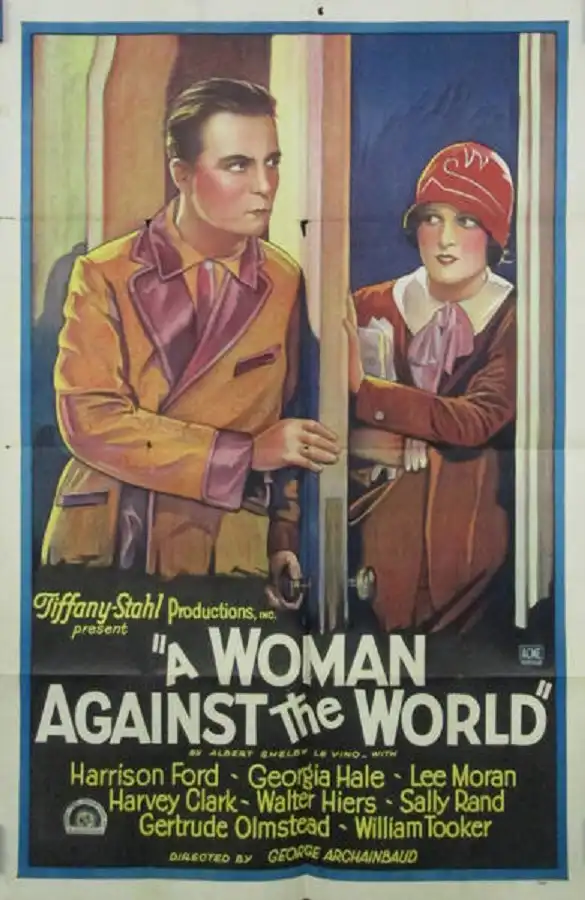
A definitive 2.4/10 rating for a film that redefined the boundaries of cult cinema. A Woman Against the World remains a cornerstone of transgressive art.
So, A Woman Against the World. Is it worth tracking down today? For silent film devotees, absolutely. It’s got that classic melodrama energy, a woman wronged, a big fight for justice. If you’re just dipping your toe into silent era stuff, maybe start with something a bit more universally praised. You might find some of its rhythms a little… much. But if you’re game for a solid, if occasionally overcooked, slice of 1928 dramatic filmmaking, give it a shot. Casual viewers might just find themselves checking their watch.
The whole setup is pretty standard for the era: our lead, played by Lee Moran, finds herself in a terrible spot, accused of a murder she didn't commit. The film throws her into this spiral of suspicion and legal wrangling, and a good chunk of the runtime is her trying to untangle it all. Moran really commits to the suffering, which is admirable, though sometimes it tips right into capital-A Acting. There's a scene early on where she's just been accused, and her face goes through about eight different shades of horror and disbelief in rapid succession. It’s a lot to take in.
Pacing is an interesting thing here. For a story about a murder and a fight for justice, there are moments that just… linger. Not in a profound, artistic way, but more like the editor just let the shot run a little long. One particular shot of a detective, I think it's Jim Farley, staring intently at a piece of evidence goes on for a solid ten seconds. You can almost hear the director yelling "And... hold it! Hold it!" The intent is to build tension, I guess, but it just feels a bit drawn out.
The intertitles, for the most part, do their job. They're clear, get the point across without too much flowery language. But then you get a few that feel like they’re trying just a little too hard to telegraph the emotion, like "Her heart was a storm-tossed ship on the ocean of despair." You just read it and kind of… sigh. We get it, she's sad.
Speaking of sad, or rather, the portrayal of emotion, there’s a moment with Ida Darling’s character, who plays a sort of sympathetic figure. She has this look of concern that feels genuinely warm, a nice contrast to some of the more theatrical performances. It’s a small thing, but it helps ground the film a little when everything else is going full melodrama.
The courtroom scenes are where things get a bit… simplistic. The way evidence is presented and refuted, it’s all very direct, almost like a stage play where the characters just state their case and then dramatically react. There’s not a lot of nuance. You can see the gears turning in the plot, moving from point A to B without much surprise. It doesn't quite create the nail-biting suspense you might hope for in a murder trial.
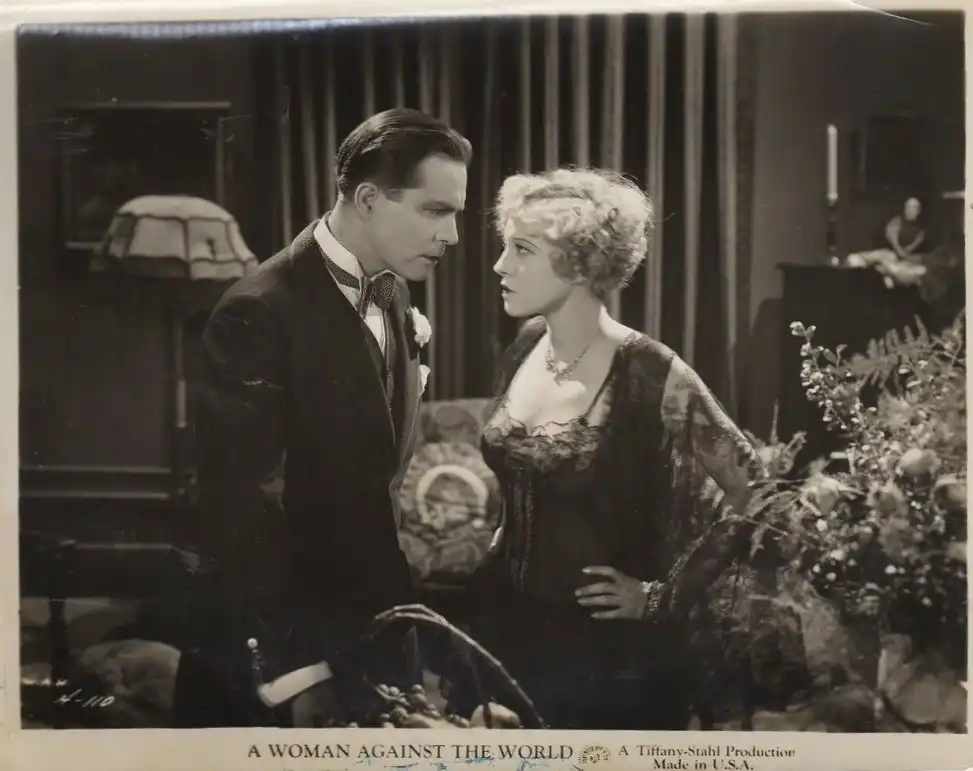
There's a weird shot, I don't know why it stuck with me, but during one of the less important exposition scenes, the camera cuts to a close-up of a decorative lamp on a table. It stays there for a few beats longer than necessary, then cuts back. Like someone just wanted to show off the set dressing, or maybe it was a mistake that got left in. It happens.
And then there’s Harrison Ford. Not the Harrison Ford, obviously, but the silent film actor. He’s got a role here, and he brings a certain quiet intensity to it. He’s not as flamboyant as some of the others, which actually makes his character feel more believable. His expressions are more subtle, a slight furrow of the brow rather than a full-on grimace. It’s a nice touch.
The film does have a few moments that genuinely click. There’s a sequence where Moran’s character is trying to uncover a hidden clue, sneaking around in a dimly lit house. The shadows are used really effectively, and for a few minutes, you actually feel that sense of suspense. It’s a shame there aren't more stretches like that. It really shows what the film could have been if it leaned into that atmosphere more often.
Some of the background details are a bit off. In one of the earlier party scenes, the extras look less like they’re enjoying themselves and more like they’re waiting for directions. You can see a few of them glancing off-camera, probably at the director. It pulls you out of the moment just a little.
The resolution, when it finally arrives, feels a little too neat. After all the struggle and dramatic declarations, everything wraps up rather quickly. It almost feels like the writers ran out of steam or time and just decided to tie up all the loose ends with a bow. There's not a lot of lingering emotional aftermath, which is a missed opportunity given how much emphasis was placed on Moran's character's suffering throughout.
Ultimately, A Woman Against the World is a film that delivers on its title's promise of a dramatic struggle, but it does so with the kind of broad strokes and occasional awkwardness that define much of late silent-era melodrama. It’s not going to redefine your understanding of cinema, but it’s a perfectly watchable, if slightly clunky, example of its kind. If you appreciate the specific charms and quirks of films from this period, you’ll probably find something to enjoy.
IMDb 5.9
1932
Community
Log in to comment.