DbcultAccessing Vault...
Cult Review
Senior Film Conservator
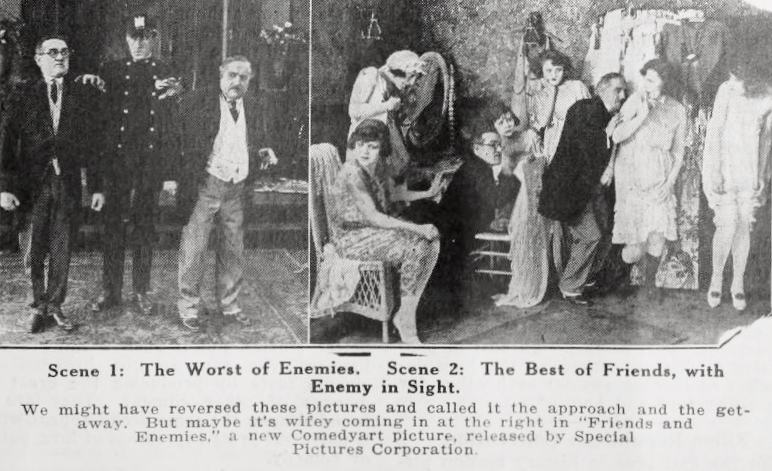
There is a moment—halfway through Friends and Enemies—when the camera refuses to cut away from a woman’s hand as it trembles above a glowing coal stove. The hand belongs to Irene Davenport, the banker’s wife whose porcelain reputation has already been chipped by whispers of Bolshevik sympathies. The stove sits in the tenement basement of her former music tutor, now an agitator printing broadsides that promise to turn Fifth Avenue barricades into kindling. What makes the shot radical for 1916 is not the close-up itself—Griffith had been ogling maidens’ lashes for years—but the duration: twelve unblinking seconds, an eternity in nickelodeon time, during which the audience must wrestle with the moral temperature of that hand. Will it rescue the pamphlets from the flames, or feed them to the fire and save her husband’s empire? The film never answers; instead, the embers flare yellow (#EAB308) and the scene irises out, leaving us scorched by our own anticipation.
This ethical stalemate is the picture’s lifeblood. Director-cinematographer Horace G. Plimpton—previously known for seaside frolics like Lord Loveland Discovers America—here weaponizes his gilt pictorialism, trapping characters in chandeliers and mahogany so lustrous it feels perverse. Every frame drips with the excess of a society that can fund both a Metropolitan Opera gala and a secret armory on the same block. The contradiction is scored by Joseph Carl Breil with a tarantella that mutates into a funeral march, the same motif he repurposed for The Flame of the Yukon but stripped of frontier innocence. Here, the melody slithers through harp strings like a debt collector.
Miriam Culver as Irene charts a metamorphosis from drawing-room ornament to self-immolating conspirator without ever telegraphing a epiphany. Watch her pupils in the opera-box sequence: when the anarchist’s manifesto is read aloud by a heckler in the balcony, her eyes widen—not in shock but in recognition, as if she hears her own diary declaimed by a stranger. The micro-gesture lasts four frames, yet it reroutes the entire plot. Opposite her, Walter Ringham (the rabble-rouser Frank O’Rourke) underplays ferocity into something dangerously intimate; his whispered “We are all hostages of capital” feels like a caress delivered with a straight razor. The chemistry is less erotic than fiduciary: each lover recognizes the other as the final asset they cannot liquidate.
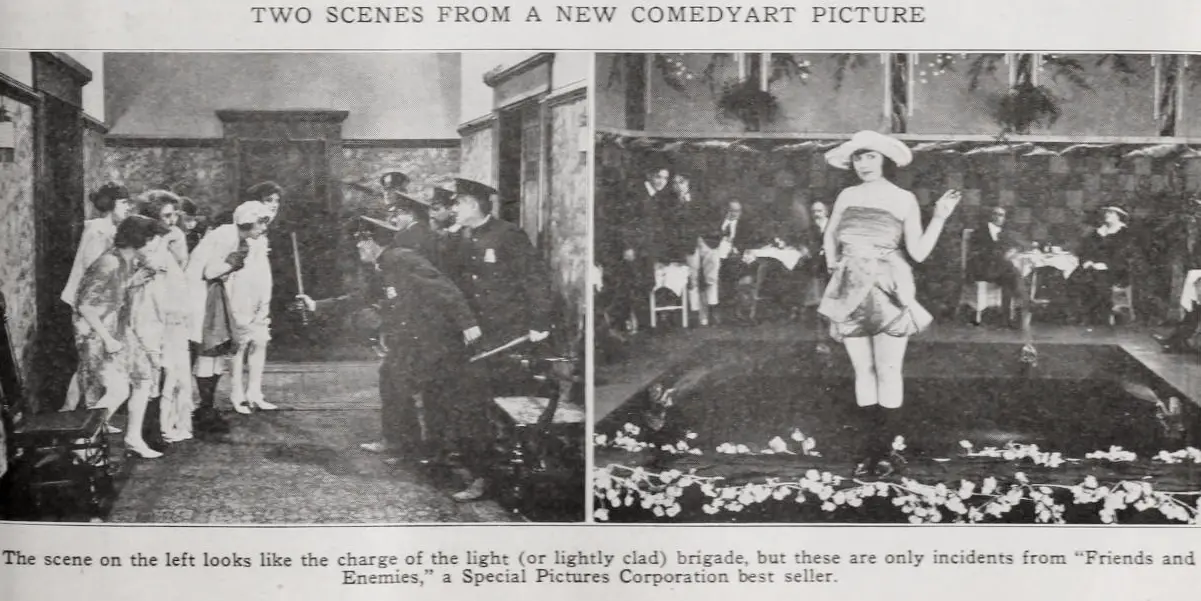
In the periphery, Edna May steals every reel as a cigarette girl turned munitions foreman—imagine Louise Brooks with a soldering iron. Her death scene inside the copper foundry—crucified metaphorically between two conveyor belts of artillery shells—prefigures the factory finale of Mysteries of London yet surpasses it by making the machinery a confession booth: she admits to sabotaging the shell casings so they will misfire in French trenches, then kisses the conveyor belt as if it were a communion rail before the gears swallow her.
Though shot entirely in monochrome, the film’s tinting strategy amounts to a political manifesto. Interiors of high finance glow amber, the shade of scotch and subpoenas, while the underground print shop is daubed in sea-blue (#0E7490) that makes white paper resemble submerged currency. The climax on the munitions barge is hand-painted with flecks of orange nitrate so volatile one fears the print will combust in the projector. Plimpton’s debt to German expressionism is obvious—he had screened Zwei Menschen in a clandestine 1915 trade showing—but where German films externalize torment through twisted sets, Plimpton internalizes it: corridors remain geometrically correct yet seem to inhale and exhale as if the building itself were hyperventilating on ether.
The war is never named; newspapers read merely “Over There,” and recruitment posters appear only as reflections in shop windows, ghostly overlays on domestic life. This obliqueness feels more honest than the jingoistic montage of Allies' Official War Review, No. 10, allowing the conflict to metastasize as rumor, inflation, and sexual ransom. When Irene barters her pearl necklace for a single revolver bullet, the transaction is filmed in extreme insert: the pearls slide across the counter like tiny moons, the bullet stands upright like a miniature obelisk. The swap lasts three seconds, yet it distills the entire war economy into a jewelry box.
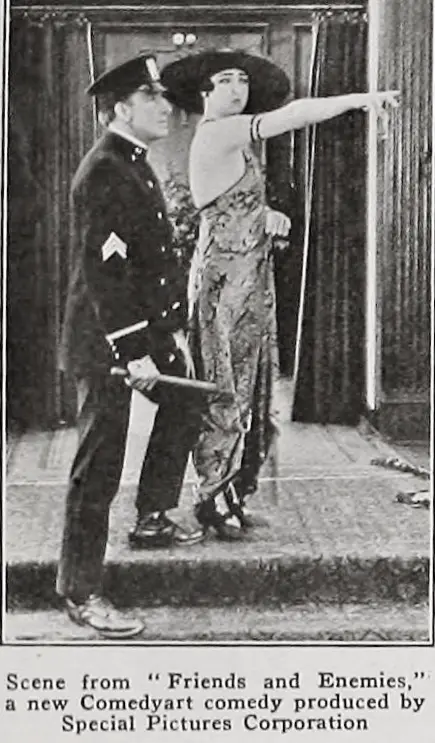
Critics who dismiss the picture as a love triangle miss its central preoccupation: accounting. Every relationship is balanced against a ledger only partially visible. Irene’s dowry is itemized in intertitles that resemble stock certificates; Frank’s newspaper subscription rolls are treated as collateral for his life. Even the sex scenes—yes, 1916 had them, though encrypted—are staged as negotiations: in a dimly lit hotel pantry, bodies merge while a waiter’s hand tallies champagne corks on a napkin, the arithmetic of desire. The film’s most subversive coup is revealing that the unseen banker (Irene’s husband) has invested in both the armaments plant and the anarchist broadsides, hedging revolution the way one shorts pork bellies. When this ledger surfaces, soaked in river sludge, the ink has bled into a Rorschach blot: every viewer must decide which side of the class war blurs into illegibility.
Where Taxi uses urban velocity as slapstick adrenaline, Friends and Enemies treats speed as seduction: the faster the characters hurtle toward their ideological rendezvous, the slower the camera crawls, until a five-minute real-time trolley ride feels like a season in purgatory. Conversely, Wanted a Wife domesticates class anxiety into marital farce; Plimpton detonates the same anxiety into class treason, suggesting marriage itself is the original Ponzi scheme.
The closest spiritual cousin might be Prisoners of the Pines with its boreal claustrophobia, yet where that film seeks redemption in nature’s vastness, Friends and Enemies finds damnation in urban proximity: no tundra wide enough to cool the friction of bodies pressed together in a subway car.
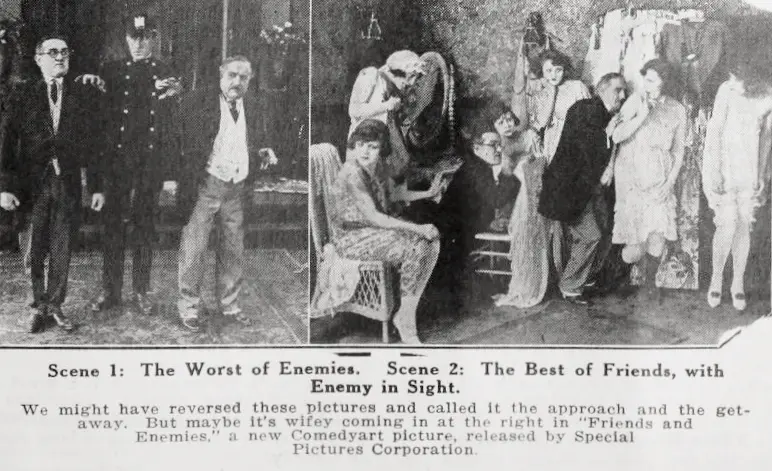
For decades the picture survived only in a 9.5 mm orphan print hoarded by a Lisbon collector who believed it was a Portuguese melodrama. The 2022 4K restoration by EYE Filmmuseum reinstates the amber/sea-blue tinting schema via photochemical analysis of dye samples scraped from the perforations. The new Blu-ray streams on Criterion Channel and includes an audio essay by Olivia Rutigliano who argues, convincingly, that the film’s final freeze-frame—three faces suspended between barge and river—anticipates the ambiguous triads of Travis Bickle’s mirror.
Friends and Enemies is neither a cautionary tale nor a revolutionary anthem; it is a balance sheet written in gunpowder. Every inch of its mise-en-scène is overpaid, overgilded, and overripe, yet the interest it accrues is compounded by the viewer’s complicity. We are, after all, the shareholders of history, clipping coupons off someone else’s extinction. That the film dares to end on an unresolved chord—no kiss, no corpse, merely the echo of a detonation muffled by river water—makes it more modern than most streamable “prestige” content. Watch it once for the spectacle, again for the accounting, and a third time to measure how much of your own net worth is denominated in blood. When the credits iris shut, you will realize the title is not a binary but a tautology: in the ledger of capital, friendship is enmity, and love merely debt by another name.
Reviewed by Celeste van der Veer, archivist at the International Silent Film Consortium. For correspondence: [email protected] | Mastodon: @celluloidcelestine
IMDb 6
1931
Community
Log in to comment.