DbcultAccessing Vault...
Cult Review
Senior Film Conservator
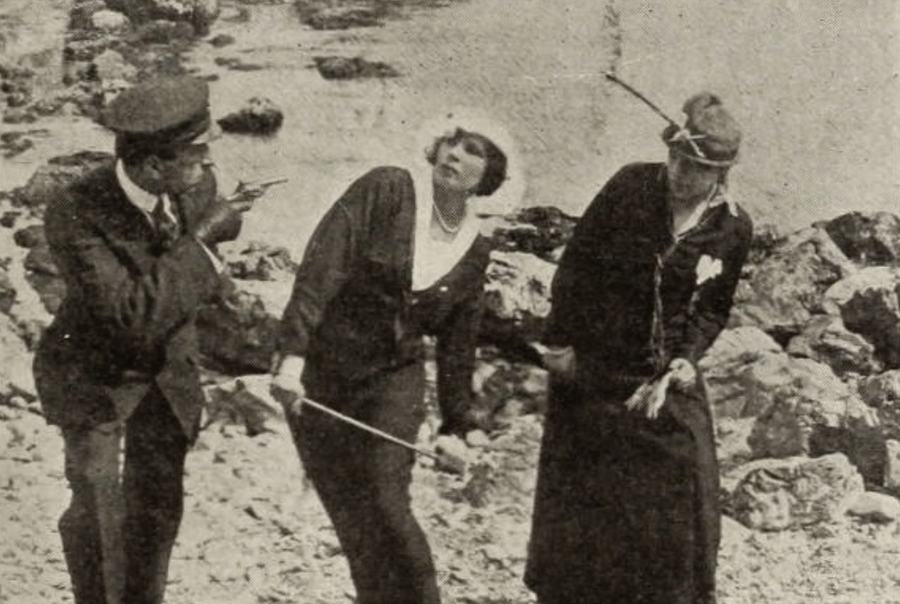
The year 1914 stands as a jagged fault line in human history, and A Woman Wills (alternatively known in its continental context) captures that specific, frenetic electricity of a world on the brink. Directed by the visionary Augusto Genina and starring the incomparable Mistinguett, this film is far more than a mere relic of early silent cinema; it is a sophisticated exploration of identity, agency, and the transformative power of nationalistic fervor. As I sat through the flicker of these century-old frames, I was struck by how contemporary the film’s central anxieties feel—the desire to escape one’s prescribed social role and the chaotic intersection of personal desire with political duty.
The film opens with Marion Duval, a character who embodies the restless spirit of a generation about to be consumed by the Great War. Mistinguett, primarily known as a queen of the French music hall, brings a physicality to the role that is both mischievous and deeply earnest. When Marion decides to flee her school and join the Boy Scouts in boy’s attire, it isn't portrayed as a mere prank. Instead, Genina frames it as a radical reclamation of space. In the context of 1914, the Boy Scouts represented a nascent form of paramilitary preparation, and for a girl to infiltrate this sphere was a profound statement of intent. This thematic thread of gender-bending and disguise echoes the adventurous spirit found in The Spitfire, though Genina grounds his narrative in a much more somber, geopolitical reality.
The interaction between the disguised Marion and the dashing cavalry lieutenant is played with a delicate tension. The lieutenant, unaware of her true sex, treats her with a camaraderie that Marion finds both exhilarating and frustrating. This sequence is crucial; it establishes the lieutenant not just as a romantic interest, but as an ideal of the masculine heroism that Marion seeks to emulate or, perhaps, possess. The chemistry here is subtle, relying on the expressive power of the silent screen—the lingering glances, the shared danger of their 'thrilling adventures,' and the underlying sense that Marion is playing a high-stakes game where the rules are constantly shifting.
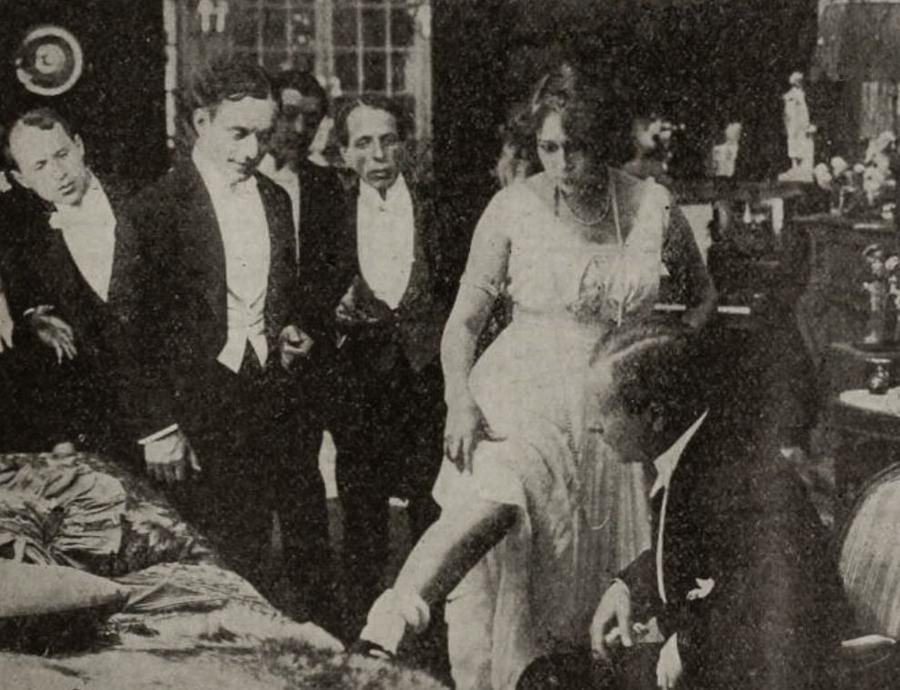
As the film leaps forward in time, the tone shifts from the whimsical adventure of youth to the dark, cynical corridors of international espionage. This transition is handled with remarkable fluidity. We find the lieutenant now entrenched in the government’s secret service—a role that reflects the growing paranoia and complexity of the wartime era. Here, Genina introduces the 'adventuress,' a classic archetype that we see explored with varying degrees of nuance in films like Shadows of the Moulin Rouge. However, in A Woman Wills, the adventuress is not just a femme fatale; she is a professional adversary, a mirror image of what Marion might have become had her motivations been less noble.
The lieutenant’s fall from grace, orchestrated by this mysterious woman, serves as the narrative’s pivot point. He is 'enmeshed in the toils,' a phrase that perfectly captures the suffocating nature of early 20th-century espionage tropes. It is here that Marion Duval truly shines. No longer the girl in the scout uniform, she is now a woman of the world, capable of navigating the same shadows as her male counterparts. Her intervention is not born of a passive, Victorian devotion, but of a calculated, proactive will. She takes a hand in the game, demonstrating a level of agency that was rare for female protagonists of the period, arguably more grounded than the melodramatic heights of The Sign of the Cross.
The film’s crescendo is a masterclass in suspense and physical storytelling. The scene where Marion and the adventuress are locked together in a room, struggling for the possession of vital military plans, is nothing short of revolutionary. In an era where female physical combat on screen was often relegated to slapstick or 'catfights,' Genina treats this struggle with the gravity of a life-and-death duel. The lighting becomes more contrasty, the shadows deeper, reflecting the internal and external darkness of the conflict. This is a battle for more than just paper; it is a battle for the lieutenant’s soul and the nation’s safety.
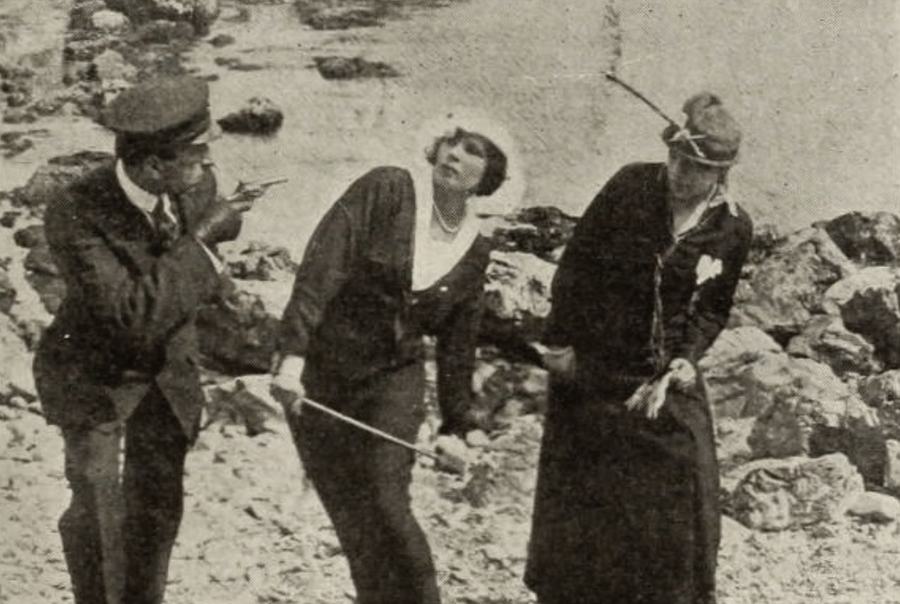
The physicality of the performers is visceral. Mistinguett and Suzanne d'Armelle (playing the adventuress) engage in a choreography of desperation. It reminds me of the gritty, high-stakes atmosphere in Balleteusens hævn, where the stakes of a woman's honor are tied directly to her physical endurance. When Marion finally emerges victorious, it isn't just a win for the 'good guys'; it is a validation of her entire journey—from the schoolgirl who refused to stay in her place to the woman who saved the state.
Augusto Genina’s direction is characterized by a sophisticated use of space and pacing. Unlike some of his contemporaries who relied heavily on static, stage-like wide shots, Genina utilizes the frame to create a sense of movement and urgency. The way he juxtaposes the wide-open spaces of the cavalry maneuvers with the tight, claustrophobic interiors of the secret service offices is brilliant. This visual language reinforces the film’s themes: the transition from the broad, idealistic fervor of the war’s beginning to the narrow, treacherous reality of its continuation.
The writing, also by Genina, avoids the pitfalls of over-explanation. While the plot involves complex spy-craft, the emotional beats remain clear and resonant. The film understands the power of the 'dream'—the hero of Marion’s dreams is a construct that she eventually has to save, effectively flipping the damsel-in-distress trope on its head. This narrative subversion is similar to the thematic depth found in When Fate Leads Trump, where the hand of destiny is guided as much by character as by coincidence.
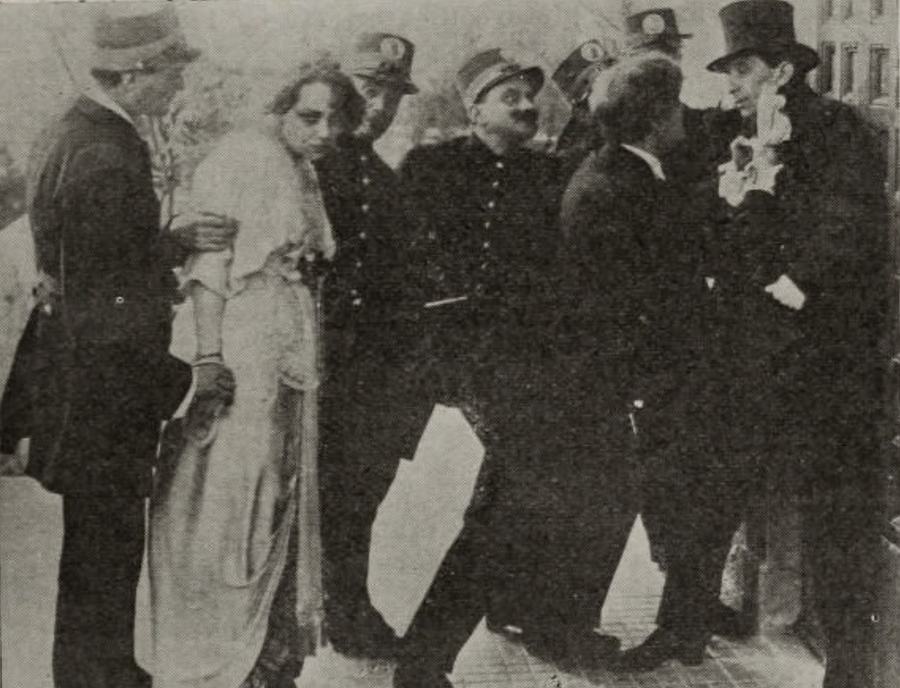
When placed alongside other films of the mid-1910s, A Woman Wills stands out for its psychological complexity. While Neal of the Navy offered a more straightforward patriotic adventure, Genina’s work delves into the personal cost and the performative nature of duty. There is a sense of moral ambiguity in the world of the secret service that feels far more advanced than the binary morality of Pilgrim's Progress. Even the romantic resolution, while seemingly conventional, is earned through a series of 'stirring episodes' that test Marion’s resolve in ways that few female characters were tested in the cinema of 1914.
The film also shares a certain European sensibility with Les heures - Épisode 4: Le soir, la nuit, particularly in its atmospheric depiction of a world that is fundamentally changing. There is a melancholy beneath the 'patriotic fervor,' a sense that the innocence of the schoolgirl is being traded for a much harder, colder reality. This loss of innocence is a recurring theme in films like The Toll of Mammon, but here it is channeled into a narrative of empowerment rather than tragedy.
It is impossible to discuss this film without returning to the magnetic presence of Mistinguett. In A Woman Wills, she demonstrates why she was one of the highest-paid entertainers of her time. Her transition from the 'boyish' energy of the first act to the sophisticated poise of the second is a masterclass in range. She doesn't just play Marion; she inhabits the very idea of a woman 'willing' her way through a man's war. Her performance provides a bridge between the theatricality of the 19th century and the more naturalistic film acting that would emerge in the 1920s. She carries the film’s more improbable plot points—such as the secret service enmeshment—with such conviction that the viewer never questions the logic of the world.
The supporting cast, including Signore Magnard and Suzanne d'Armelle, provide solid foundations for Mistinguett to build upon. Magnard’s lieutenant is suitably 'dashing' yet vulnerable, allowing Marion to be the true hero of the piece. This reversal of roles is what makes the film so enduringly fascinating. It anticipates the shift in gender dynamics that the Great War would eventually force upon the world, making it a prophetic piece of art as much as an entertainment.
In the final analysis, A Woman Wills is a triumph of early narrative cinema. It combines the thrill of a spy novel with the emotional weight of a coming-of-age story, all while serving as a fascinating document of the time in which it was made. Augusto Genina’s ability to weave together themes of patriotism, disguise, and romantic devotion into a cohesive and visually striking whole is a testament to his skill. For those interested in the evolution of the female protagonist or the origins of the espionage genre, this film is essential viewing. It proves that even in 1914, the power of a woman’s will was a force to be reckoned with, capable of altering the course of lives and, perhaps, nations.
Whether compared to the rugged frontier logic of The Golden West or the social critiques of The Squatter's Daughter, A Woman Wills remains a unique and compelling entry in the silent canon. It is a film that demands to be seen not just as a historical curiosity, but as a living, breathing work of art that still speaks to the complexities of the human spirit. The 'heart of the handsome lieutenant' may be the prize, but the real victory belongs to Marion Duval and her refusal to be defined by anything other than her own formidable will.
IMDb —
1924
Community
Log in to comment.