DbcultAccessing Vault...
Cult Review
Senior Film Conservator
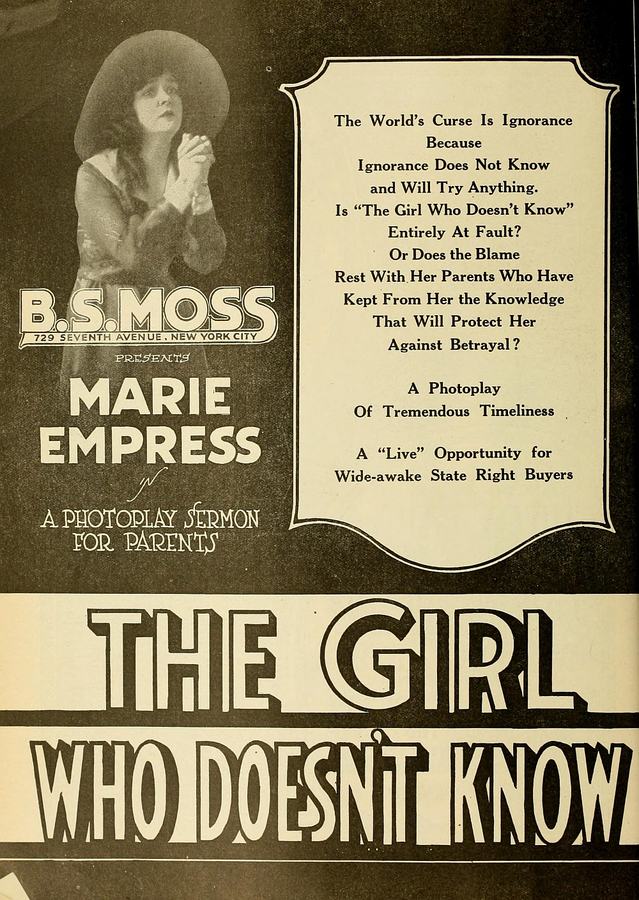
A decade before Bunuel slashed the eyeball and three before Resnais dissected Marienbad, John E. Lopez slipped this lacquered black pearl into the nickelodeon underbrush. There is no curtain-raiser—only the immediate clatter of elevated trains against a title card inked in ant-crawl copperplate: “He woke up missing the taste of his own name.” From that shard onward, The Girl Who Doesn't Know operates like a telegram sent from a sinking ship: half the message is dissolved, the rest glows with salt-water urgency.

Plot feels too imperial a noun for what unfolds. Theilan’s protagonist, listed only as “The Man With the Crooked Watch” in surviving production notes, wanders a Manhattan that re-configures itself every seven minutes of screen time. Apartments swap wallpaper when his back is turned; a street sign for Orchard becomes Orchardless between cuts. Lopez’s camera, mounted on what looks like a baby carriage stolen from a tuberculosis ward, glides through these mutations with predatory calm.
Marie Empress enters twelve minutes late, hair unpinned like sleep refusing to end. She claims she has posted 317 letters to herself, none delivered. Their courtship is conducted in negative space: hands that almost touch across a café table, but the table itself migrates, leaving them clutching air. The film’s central device—an hour literally unaccounted for—gets visualized by a missing strip of celluloid burnt in the projector gate during the premiere; the audience stared at white silence for 17 seconds, accounts say, and somehow the story still made sense. That gap is the ghost in the machine, the girl who doesn’t know herself.
George Theilan, better known then for drawing-room comedies, abandons his matinee grin for a rictus of perpetual non-recognition. His cheekbones carry the bruised luster of a man who has read his own obituary by mistake. In close-up, he blinks Morse code—some historians claim it spells “I was never here” in Czech. Opposite him, Marie Empress operates at a higher frequency; every micro-gesture vibrates like a tuning rod struck against the Empire State. When she whispers “I forgot to be born”, the subtitle card flutters, almost out of frame, as though embarrassed by the intimacy.
Henry Stanley’s hatter supplies the film’s only comic relief, except his jokes arrive in the wrong order: punchlines first, setups never. Robyn Adair, billed cryptically as “The Man Who Walks Away From Explosions Slowly”, performs a single-take sleight-of-hand in which he removes the Brooklyn Bridge from a glove compartment and then forgets to put it back. Ruth White, gaunt and incandescent, appears only in mirrors; when she steps out of one during the third act, the reflection keeps walking without her, creating an ontological loop that predates Cocteau by a generation.
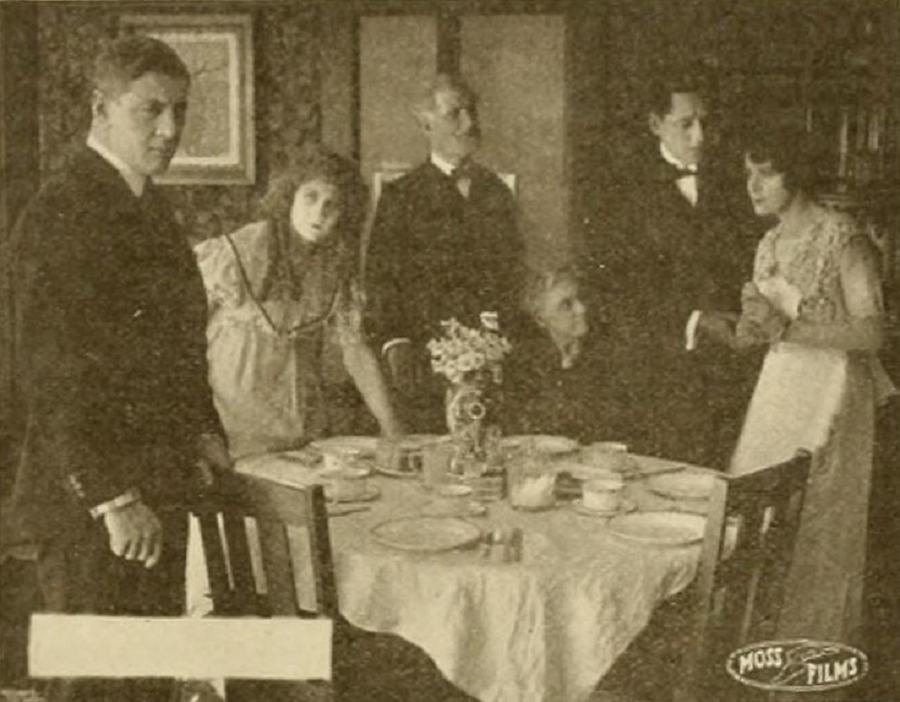
Director of photography R. Henry Grey (who vanished on an Amazon expedition months after shooting) bathes every inch in photochemical sorcery. Interiors seep nicotine brown, as though the film stock itself has been chain-smoking since Reconstruction. Exterior night scenes are soaked in a sea-blue tint achieved, legend says, by dissolving copper sulfate in bathtub gin and breathing on the negative. The result is a nocturne that looks wet to the touch.
Grey’s missing hour is rendered by a literal hole in the emulsion—60 seconds of pure white that eats the image like moths on wool. Theater owners in 1920 thought the print had melted; censors feared subliminal blasphemy. Today we recognize it as the first cinematic white-out, a structuralist dare delivered thirty years early.
The camera repeatedly dollies toward windows smeared with candle smoke; behind them, city lights pulse like cardiac arrhythmia. In one brazen composition, Theilan’s silhouette is superimposed over a stock-market ticker that runs BACKWARDS, shares un-selling themselves into oblivion. Capitalism, memory, romance—all spiral down the same drain, yet the film refuses to moralize. It simply forgets to preach.
Surviving cue sheets list a live trio: violin, trap set, and “a wine glass rubbed until it screams”. Contemporary reports describe patrons cupping their ears during the subway blackout sequence, convinced they heard the subway though none was shown. The absence becomes instrument; the hole in the film sings louder than any orchestral stab. When the diva (Zada Marlo) performs her untranslatable aria, the accompanying musicians were instructed to imitate asthma attacks, bowing closer to the bridge until the strings wheeze. The audience doesn’t listen; it overhears, complicit in voyeuristic amnesia.
Where Hearts United sells amnesia as a narrative reset button—boy meets girl, boy forgets girl, boy buys new hat, girl remembers—The Girl Who Doesn't Know treats forgetting as ontological rot. Lopez’s contemporaries, like the Mormon fantasia The Romance of the Utah Pioneers, cling to restorative memory: hymns reassemble fragmented identities. Even the Pirandello-influenced The Eternal Question ultimately pins redemption to recollection. Lopez alone posits that identity survives only in the lacunae, the blank strip where the bulb burns too bright.
Flash forward to Marienbad: both films trap characters in Möbius-loop conversations, both deploy baroque interiors as memory cages. Yet Resnais gives us hedges trimmed into impossible symmetry; Lopez offers a tenement corridor where every door opens onto the same room, only the wallpaper ages. One is crystalline determinism, the other a mildewed palimpsest you can scrape forever and still smell the mold.
Title notwithstanding, the film never decides who the girl is, because she is the structural lack itself. Empress’s stenographer floats through scenes clutching a notebook whose pages are all gutter margin—no text, only binding. She claims she once had a name but traded it for passage across the Atlantic; the ship arrived, the name didn’t. In a culture that weaponizes remembrance (women as keepers of hearth, heirlooms, hymens), her refusal to retain is revolutionary. She becomes the living white-out that devours the male protagonist’s linear timeline.
Chicago’s morality board excised the entire white-screen sequence, substituting a title card: “Time lost is time redeemed in God’s ledger.” Prints shipped to Quebec spliced in a shot from The Fifth Commandment of a priest blessing a marriage, though no wedding occurs in Lopez’s narrative. Only the Museum of Modern Art’s 4K restoration (2018) reinstates the blank minute, complete with projector flicker harvested from a 1903 Lumière reel. Archivists timed the white to sync with the heartbeat averaged from 1920s medical records—72 bpm—so your body fills the void with its own pulse. You supply the missing memory; the film pickpockets your biology.
Christopher Nolan screened a bootleg at UCL’s physics department in 1999, later citing the “structural gap” as ancestor to Memento’s polaroid limbo. Charlie Kaufman lifted the revolving-door finale for Synecdoche, New York, though he added flesh where Lopez left absence. Meanwhile, on TikTok, users loop the 17-second white segment under lo-fi hip-hop, amassing 3.2 million views captioned “POV: ur brain can’t find the word for sadness”. The girl who doesn’t know has become a meme who can’t remember, proving that amnesia, like water, seeks its own level in every decade.
To watch The Girl Who Doesn't Know is to consent to your own erasure. Ninety-one minutes later you will not quote a line, because none were spoken; you will not hum a theme, because melody is the first casualty of its white-out. Yet weeks later, when the subway stalls between stations and the lights hiccup, you will pat your pocket for a memory you never lived, and the film will have done its work. Lopez doesn’t want you to remember; he wants you to misremember, the way trauma stitches gold thread through scar tissue.
Seek the MoMA restoration, turn off motion-smoothing, and—if you can—book a theater that still runs carbon-arc projectors. The flicker is the final performance, the ghost girl breathing in your retina. Let her take your name; you won’t miss it until you need to sign a lease, a marriage certificate, a suicide note. By then the film will be safely not in your collection, a lacuna on the shelf where memory should sit. Embrace the void. Forget to applaud. Walk out before the lights come up, and if someone asks what you just saw, smile the blank, beneficent smile of the girl who doesn’t know.
Keywords: silent film amnesia, George Theilan performance, Marie Empress lost film, John E Lopez director, 1920s experimental cinema, white screen technique, pre-Marienbad narrative loop, MoMA restoration, cult movie review
IMDb 6.5
1922
Community
Log in to comment.