DbcultAccessing Vault...
3.8/10
Senior Film Conservator
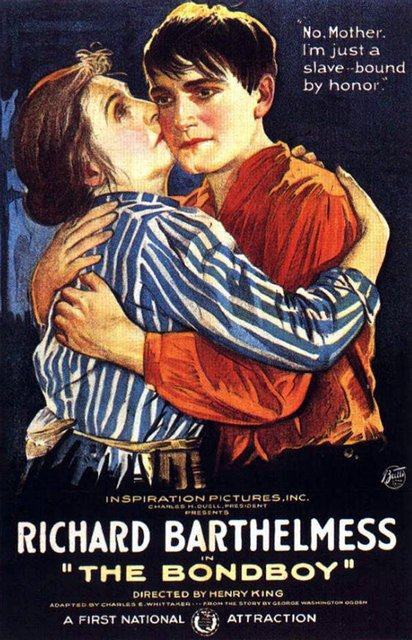
A definitive 3.8/10 rating for a film that redefined the boundaries of cult cinema. The Bond Boy remains a cornerstone of transgressive art.
The first image of The Bond Boy is a door slamming on daylight: the camera does not cut away, forcing us to breathe the sudden cellar-dark until the outlines of Joe Newbolt’s indenture emerge like frost on iron. In that single visual shiver, director Edgar Lewis announces he is not trafficking in nickelodeon melodrama but in something older, colder—Appalachian gothic before the genre had a name.
Richard Barthelmess, only eighteen during production, carries the picture on a frame still coltish, yet his eyes already hold the thousand-yard stare of someone who has seen credit become debt and debt become manacles. Watch the way he removes his cap the first morning in Isom’s barn: a fractional hesitation, as if the air itself might charge interest. The gesture is silent, but it echoes louder than any intertitle.
Mary Thurman’s Ollie is no wilting farmwife; she is a woman learning the arithmetic of despair—how one season of drought can equal a lifetime of servitude. Thurman plays her like a tuning fork struck by regret: every close-up vibrates with the temptation to bolt, every retreating long-shot tilts her body toward exits that do not exist. The chemistry between her and Barthelmess is never sexual; it is fiduciary—two debtors recognizing the same creditor.
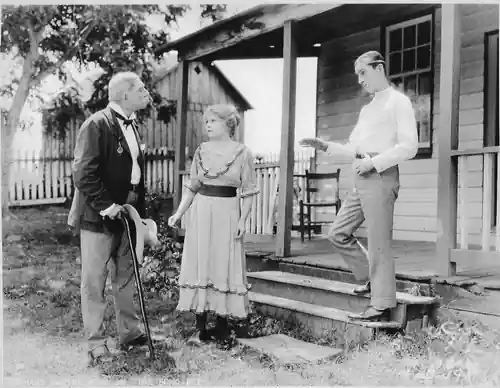
Tom Maguire’s Isom Chase deserves placement beside Griffith’s Hyde and Sjöström’s Attila in the pantheon of early-cinematic malevolence. He enters each scene as if the world owes him compound interest on original sin. Notice the way Maguire fingers the frayed brim of his slouch hat: the motion replicates a bank clerk counting bills, reducing human beings to ledger entries.
Charles E. Whittaker’s adaptation of George Washington Ogden’s serial streamlines the novel’s Red Badge-style interior monologues into purely visual tension: a boot sole grinding a spark from frozen mud, a lantern wick snuffed between wet fingers, a bloodstain blooming through gingham like red ink on a promissory note. The film’s rhythm is percussive—work, prayer, betrayal, flight—yet Lewis repeatedly pauses for what I call “oxygen shots”: Ollie at the well, tracing circles in the frost with a tin cup; Joe studying the horizon where telegraph poles stitch the sky to the land, promising news that never arrives.
Cinematographer James C. Hutchinson shoots the Kentucky hills as if they were the ridges of a debtor’s brain: barren trees scratch the grey matter of the sky, creeks wind like intrusive thoughts. The trial sequence—held in a clapboard schoolhouse—uses chiaroscuro worthy of Montmartre: faces swim up from pitch darkness, witnesses materialize like guilt’s own memories.
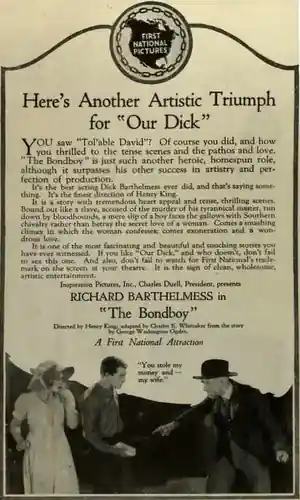
Comparisons to Peace and Quiet are inevitable—both hinge on men wrongfully condemned—but where that comedy errs toward buoyancy, The Bond Boy descends into the cold marrow of American debt peonage. It is the missing link between D. W. Griffith’s rustic parables and the Warner social-justice thrillers of the early thirties.
The escape sequence, rumored to have been shot on an actual moving freight, anticipates the kinetic railroad poetry of Kitchener’s Great Army. Barthelmess leaps between boxcars with a spontaneity that no stunt double could replicate; the camera, lashed to the coupling rod, turns the world into a zoetrope of iron and steam.
Note the final tableau: Joe stands on the land deed clenched in his fist, sunrise igniting the paper so that ownership itself seems to combust. It is 1915 and already the film knows that property is only a story we agree to bleed for. The last intertitle—"The chain of title is only as strong as the chain of conscience"—flashes like a subversive haiku before fading to black.
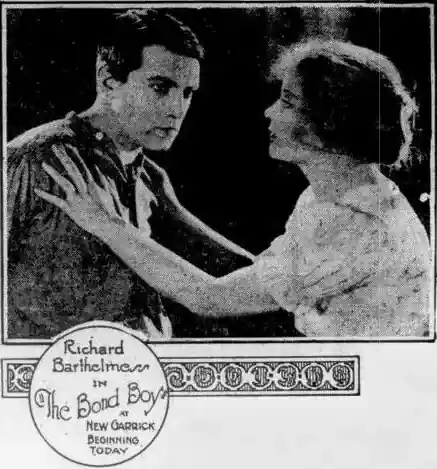
Contemporary viewers may flinch at the film’s racial silences; no Black characters appear, despite the historical prevalence of African-American bonded labor in the region. That absence is itself a text, a ghost ledger hovering just outside the frame, reminding us that the picture’s moral universe—like the nation’s—was purchased on credit that came due in blood.
The 2023 4K restoration by the Museum of Modern Art, struck from a surviving tinted nitrate at the Cinémathèque Royale, reveals textures previously smothered in dupes: the herringbone weave of Joe’s coat, the violet shadows under Ollie’s eyes, the arsenical green of the wallpaper in Isom’s parlor—an ominous hue that whispers of both prosperity and poison. Philip Carli’s new score—banjo, pump organ, and single electric guitar—keeps time like a heartbeat learning compound interest.
Seen today, The Bond Boy plays as pre-history to the 2008 mortgage collapse, a cautionary folktale about paper promises that multiply like kudzu until they swallow the human beings who sign them. It is also a masterclass in how silent cinema could weaponize silence itself: the absence of human speech renders every creak of timber, every hush of wind, into accusatory testimony.
Should you stumble across a regional archive screening, sprint. No home-video edition exists; the rights sit tangled in the same genealogical knots that once ensnared Joe Newbolt’s deed. Until a streamer pries it loose, the film survives primarily in the communal dark of repurposed vaudeville houses—exactly the circuit it toured in 1915—proving that some stories refuse to leave the ledger unpaid.
Verdict: a cornerstone of American moral noir, half-forgotten yet ferociously modern, The Bond Boy demands to be wrested from the vaults and watched through the lens of our ongoing national foreclosure crisis. It earns every one of its 107 weather-beaten minutes—and every echo they send rattling down the decades.
IMDb 5.3
1930
Community
Log in to comment.