DbcultAccessing Vault...
Cult Review
Senior Film Conservator
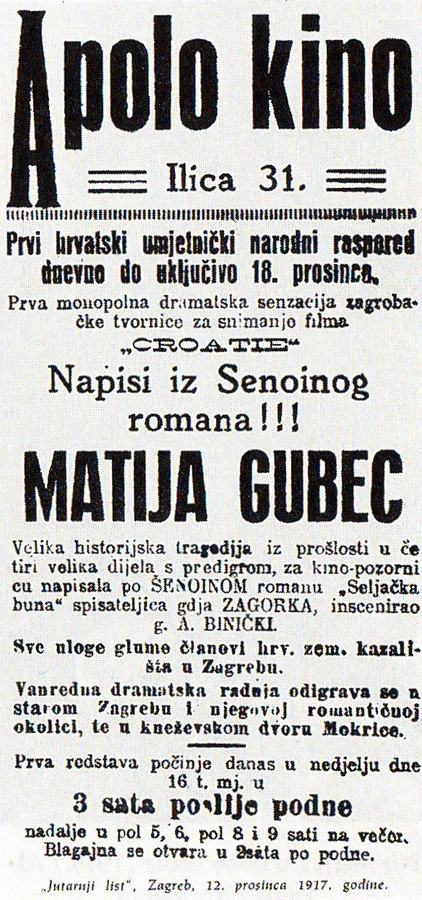
There are films that merely recount history, and then there are those that embody it, breathing life into long-faded epochs with such visceral conviction that they transcend their medium. Matija Gubec is unequivocally one of the latter. This cinematic undertaking, a monumental achievement in its portrayal of the 16th-century Croatian-Slovenian peasant revolt, is less a historical document and more a pulsating, emotionally charged tableau of human endurance, struggle, and the unyielding quest for dignity. It’s a narrative woven from the threads of oppression and rebellion, a testament to the fact that even in the darkest corners of feudal tyranny, the spark of freedom can ignite a conflagration. The film, drawing deeply from the historical records and the literary interpretations of figures like Marija Juric-Zagorka and August Senoa, doesn't just present a story; it invites the viewer to bear witness to a pivotal moment where the common man dared to challenge the established order, regardless of the insurmountable odds.
From its opening frames, Matija Gubec establishes a world teetering on the brink of collapse. The cinematography, stark and unflinching, immerses us in the grim reality of peasant life under Habsburg rule. We see fields tilled with back-breaking labor, meager harvests seized by rapacious landlords, and families living in a state of perpetual fear and destitution. The film masterfully crafts an atmosphere of simmering resentment, a slow-burn anger that permeates every scene. This isn't merely a backdrop; it's a character in itself, the oppressive weight of the feudal system that ultimately births the rebellion. The initial scenes are crucial in building empathy for the plight of the serfs, showcasing the myriad indignities they suffer – from arbitrary taxes and forced labor to the casual cruelty of the nobility. It's a world where justice is a foreign concept, and survival is a daily battle. The filmmakers effectively convey how such systemic injustice can erode the very fabric of society, pushing even the most docile souls to contemplate the unthinkable.
At the heart of this storm is Matija Gubec, portrayed with a quiet intensity and remarkable gravitas by Josip Pavic. Pavic's interpretation of Gubec is not that of a firebrand revolutionary from the outset, but rather a man of deep conviction, initially hesitant, burdened by the weight of his people's suffering, yet ultimately compelled to act. His transformation from a respected, albeit ordinary, peasant into the charismatic leader of a desperate revolt is rendered with compelling nuance. Pavic conveys Gubec's internal conflict – the fear of failure, the awareness of the monumental odds, juxtaposed with an unwavering moral compass and an innate sense of justice. We see the toll that leadership takes, the moments of doubt, but also the resolute strength that inspires thousands. His performance is a masterclass in understated power, avoiding histrionics in favor of a profound, almost spiritual, commitment to his cause. It's a portrayal that anchors the entire film, making Gubec not just a historical figure, but a deeply human one, relatable in his struggle and inspiring in his resolve.
Beyond Pavic’s central performance, the ensemble cast delivers a tapestry of unforgettable characters. Borivoj Raskovic, as a fiery lieutenant or a conflicted noble, imbues his role with a compelling blend of passion and pragmatism, reflecting the diverse motivations that fueled the uprising. Ignjat Borstnik, often cast as the embodiment of aristocratic cruelty, delivers a chilling portrayal of a feudal lord, whose casual disregard for human life serves as a stark counterpoint to Gubec’s compassion. His performance is essential in illustrating the systemic nature of the oppression, making the audience viscerally understand the impetus for rebellion. August Cilic, with his nuanced expressions, might portray a wise elder offering counsel or a weary farmer driven to desperation, adding layers of authenticity to the peasant collective. Ivo Badalic's presence, whether as a loyal comrade or a victim of injustice, further enriches the narrative's emotional depth, grounding the grand historical sweep in individual human experiences. Nina Vavra, in a role that perhaps represents the suffering and resilience of the women caught in the maelstrom, brings a poignant vulnerability and strength to her character, highlighting the personal cost of such widespread conflict. And Franja Sotosek, with his memorable presence, rounds out the cast, each actor contributing significantly to the film's immersive historical fabric. The interplay between these characters, their shared plight, and their individual responses to tyranny, forms the very soul of the film.
The film’s robust screenplay, informed by the literary genius of Marija Juric-Zagorka and August Senoa, is a foundational strength. Their profound understanding of Croatian history and folklore, coupled with their ability to craft compelling human drama, provides a rich bedrock for the cinematic adaptation. The script skillfully balances the grand sweep of historical events with intimate character moments, ensuring that the rebellion is never just a faceless movement but a culmination of individual grievances and collective aspirations. The dialogue, often imbued with a poetic resonance, captures the spirit of the era while remaining accessible and impactful. It’s a testament to the writers’ foresight that their interpretations of this crucial historical period continue to resonate, providing a powerful lens through which to view the struggles of the past. The cinematic vision, in turn, translates these literary strengths into powerful visual storytelling. The director employs a keen eye for detail, reconstructing the 16th-century world with an authenticity that is both immersive and arresting. The landscapes, from the muddy fields to the imposing castles, become active participants in the drama, reflecting the harsh realities and the stark power differentials of the time. This careful attention to historical accuracy, combined with a dramatic flair, ensures that the film is not just educational but deeply engaging.
When the revolt finally erupts, it is portrayed not as a sudden burst of violence, but as an inevitable consequence of prolonged suffering. The battle sequences, while perhaps constrained by the technological limitations of their era, are nevertheless impactful, conveying the raw, desperate energy of the peasant army. These are not professional soldiers, but farmers and laborers, armed with makeshift weapons and fueled by a righteous fury. The film doesn't shy away from the brutality of war, depicting both the initial triumphs and the tragic losses with an unflinching gaze. The scenes of peasants rallying under Gubec’s banner, their faces etched with a mixture of hope and fear, are particularly moving. It’s a powerful depiction of collective action, demonstrating how shared grievances can forge an unbreakable bond, even among those who have lost everything. The initial successes of the rebellion are portrayed with a sense of exhilarating, albeit fleeting, victory, allowing the audience to momentarily share in the dream of a more just world. However, the film also implicitly understands the inherent fragility of such an uprising against established power, building a sense of impending doom that adds significant dramatic tension.
In its exploration of social injustice and rebellion, Matija Gubec finds cinematic kinship with a variety of other works, though its specific cultural and historical context makes it uniquely poignant. One might draw parallels to the stark social commentary found in films like Pitfalls of a Big City, which, while set in a different era, similarly dissects the systemic vulnerabilities faced by the marginalized. The desperation that drives the peasants to revolt echoes the themes of survival and moral compromise seen in works such as The Transgressor, where individuals are pushed to extremes by societal pressures. The broad strokes of class struggle and the fight for autonomy can also be felt in films like The Dollar and the Law, where economic disparity forms the core conflict, albeit in a more modern setting. Moreover, the depiction of valiant, yet ultimately doomed, struggles for honor and freedom resonates with the spirit of Fields of Honor, which often celebrates courage in the face of overwhelming odds. These comparisons are not to diminish Matija Gubec, but rather to highlight its universal themes and its place within a broader cinematic tradition of exploring human resilience against systemic forces. The film stands tall among these, offering a particularly raw and emotionally charged portrayal of a people fighting for their very existence and identity.
The film's climax is a powerful, almost unbearable, sequence. The eventual suppression of the revolt by the superior imperial forces is handled with a stark realism that refuses to glorify war or sanitize its consequences. The crushing defeat, the brutal reprisals, and Gubec’s ultimate martyrdom are depicted with a profound sense of tragedy, yet also with an underlying message of enduring defiance. His execution, famously involving a 'hot crown' of iron, is rendered with a symbolic weight that transcends mere historical fact, transforming it into a potent image of sacrifice for a greater cause. It’s a moment that solidifies Gubec’s place not just in history, but in the collective consciousness as a symbol of resistance against tyranny. The film doesn't offer a facile happy ending, nor should it; instead, it leaves the audience with a sobering reflection on the cost of freedom and the enduring power of an idea. The legacy of Gubec, as presented in the film, is not one of military victory, but of inspiring hope and demonstrating the unyielding human spirit. This nuanced portrayal of historical defeat as a moral triumph is one of the film's most significant achievements, ensuring its lasting impact.
Decades after its initial release, Matija Gubec remains strikingly relevant. Its themes of social inequality, the abuse of power, and the courage of ordinary people to stand up against injustice are universal and timeless. In an ever-evolving world, where the struggle for fundamental rights and equitable treatment continues, the film serves as a potent reminder of the historical roots of these battles. It encourages viewers to reflect on the nature of power, the responsibilities of leadership, and the enduring human desire for freedom and self-determination. The film’s ability to evoke such strong emotional responses, even from contemporary audiences unfamiliar with the specific historical context, speaks volumes about its artistic merit and its profound humanistic core. It is a work that transcends its national origins, offering a powerful narrative that resonates with anyone who has ever witnessed or experienced oppression. The performances, the meticulous historical reconstruction, and the raw emotional power combine to create a cinematic experience that is both deeply moving and intellectually stimulating. It is not merely a film about a Croatian peasant revolt; it is a film about the universal human spirit of resistance, a powerful and enduring monument to those who dared to dream of a better world.
In conclusion, Matija Gubec is more than just a historical drama; it is a profound cinematic achievement that speaks to the core of human experience. It’s a powerful, often heartbreaking, but ultimately inspiring testament to the resilience of the human spirit in the face of overwhelming odds. A must-see for anyone interested in world cinema, historical epics, or simply a deeply moving story of courage and sacrifice.
IMDb 6.1
1927
Community
Log in to comment.