DbcultAccessing Vault...
Cult Review
Senior Film Conservator
Identity is a costume we bury in the desert when the city no longer fits.
William Nigh’s 1915 one-reel marvel, long dismissed as a disposable potboiler, arrives like a telegram from the unconscious of early Hollywood: a story that knows the stock market can fracture a soul faster than any six-shooter. A Yellow Streak, now restored in 4K from a surviving Dutch print, pulses with the raw voltage of nickelodeon nihilism—yet beneath the sooty flicker lies a meditation on self-reinvention that feels startlingly contemporary. Imagine if The Count of Monte Cristo had been rewritten by a Bowery poet weaned on dime-novel despair and you’re halfway to its heartbeat.
Barry Dale’s downfall is staged like an Expressionist lithograph: skyscrapers tilt toward him, shadows swallow his starched collar, ticker-tape becomes a serpent coiling around his ankles. R.A. Bresee plays him with the haunted buoyancy of a man whose self-worth was mortgaged to a grinning market. The perfidy of his wife (Irene Howley) and Richard Marvin (William B. Davidson) is not lingered on for salacious thrill; instead, Nigh cuts to the emotional marrow—Dale’s eviction from his own life, clutching a revolver offered as gag gift. The pistol, a sleek predatory bird, will migrate across narratives, returning home like fate’s homing beacon.
The Brooklyn Bridge sequence—shot on location in the marrow-chilling January of 1914—ranks among the most lyrical passages of silent cinema. Cinematographer Lucien Andriot smears gaslight and river mist into a chiaroscuro where two faceless souls graze against annihilation and veer away. We never see close-ups; we witness postures: Mary’s shawl flapping like a torn flag, Dale’s shoulders folding inward as if trying to collapse the universe. It is the first kiss of their shared mythology, exchanged without touch.
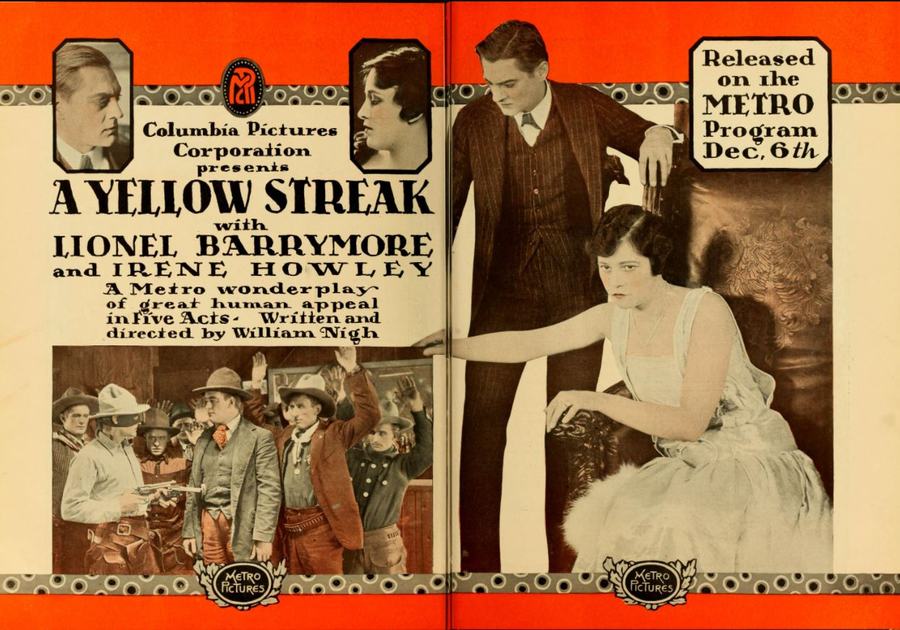
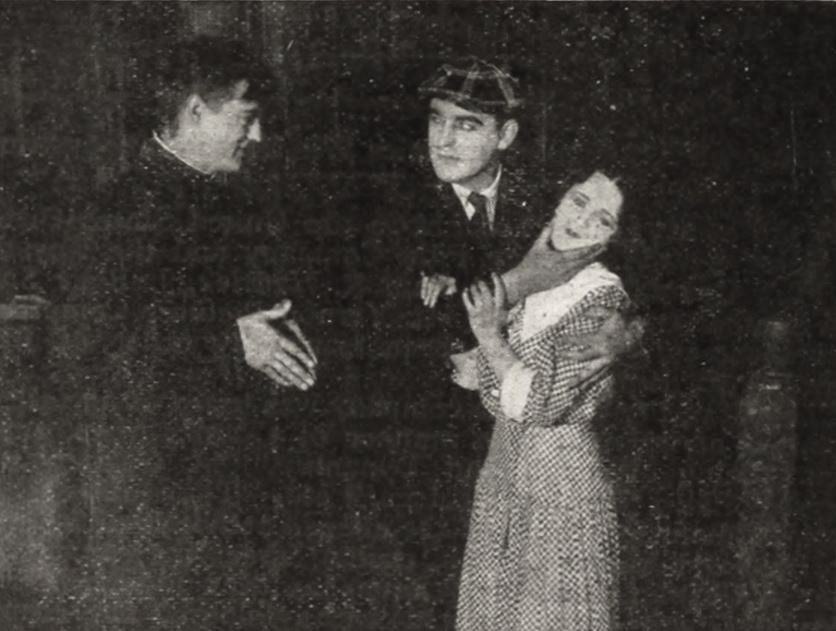
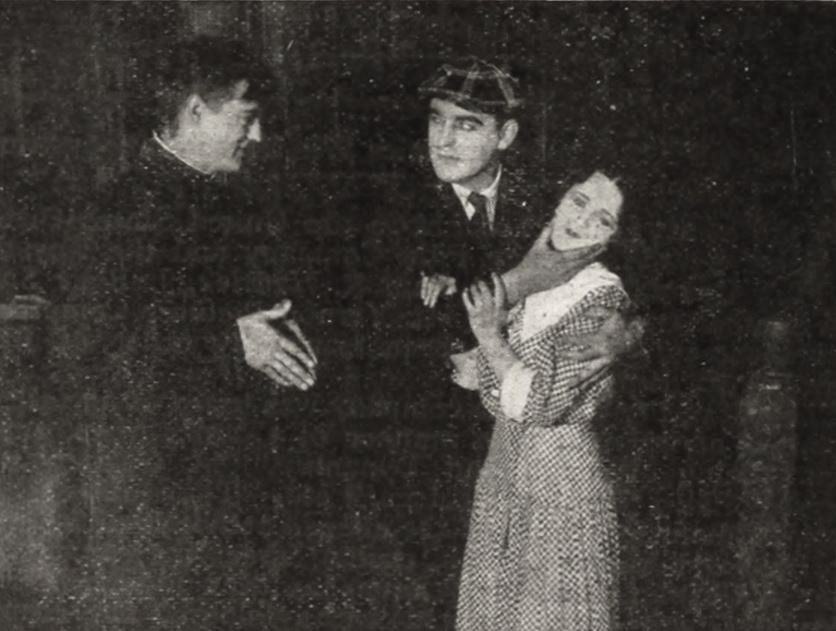
Cut to the frontier, where civilization is a rumor and identity a wardrobe trunk. Dale’s dual masquerade—outlaw and preacher—allows Nigh to stage a morality play inside a hall of mirrors. The outlaw’s black Stetson, oversized and shark-like, swallows Dale’s brow; the sky-pilot’s collar starches him into a pilgrim of redemption. Both costumes fit poorly, and that’s the point: selfhood is stitched from borrowed leather and threadbare sermonettes. Lionel Barrymore, in an early supporting turn as the whiskey-soaked Tom Austin, supplies comic relief that aches—his tremor when offered a shot of redemption is a masterclass in micro-gesture.
Dorothy Gwynne’s Mary could have been mere damsel; instead she’s a ledger of unpaid debts and deferred dreams. Her dilemma—marry gambler Rader to ransom her brother—echoes the transactional cruelty that first banished Dale from Manhattan. Gwynne’s eyes register every shoddy bargain society forces upon her gender, yet her voice (via intertitles) rings with flinty wit: “I’d rather jump from Brooklyn Bridge than trade one pair of shackles for another.” The line, lifted from a 1913 suffrage pamphlet, lands like a gauntlet.
Though monochromatic, the film’s tinting strategy functions as emotional cartography: amber for Wall Street avarice, viridian for the outlaw’s night raids, cobalt for the preacher’s dawn sermons. When Dale—wearing the collar—confesses his multilayered deception to Mary, Nigh drenches the scene in a bruised mauve that seems to throb, as though the celluloid itself has a hematoma. Tinting here is not ornament but omniscient narrator.
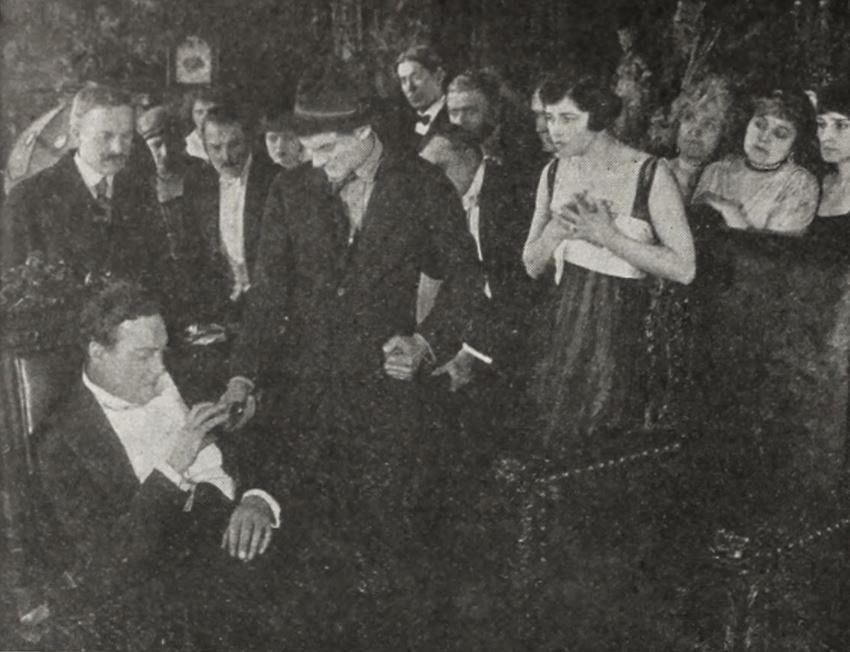
Dale’s return to New York is staged like a séance. He haunts the same oak-paneled brokerage where his fortune evaporated, now emptied after closing bells. Marvin—fattened on stolen dividends—assumes Dale’s old leather chair, feet propped atop ticker spools. The ensuing confrontation eschews fisticuffs for psychological jujitsu: Dale slides the revolver across mahogany, repeating Marvin’s own suicidal counsel verbatim. The camera lingers on Davidson’s face cycling through recognition, dread, and the queasy realization that the past is neither prologue nor epilogue—it’s an echo chamber. Critics often compare this circular structure to A Butterfly on the Wheel, yet Nigh’s fatalism is more karmic than religious.
The closing image—two silhouettes merging on a wooden footbridge beneath a swollen moon—reprises the Brooklyn Bridge tableau but reverses its polarity. Where once they faced annihilation, now they face each other, profiles etched by lantern light, the rushing stream below substituting for the East River’s cold appetite. Nigh withholds a kiss; instead he irises in on their overlapping shadows until the screen goes black. It is one of silent cinema’s most restrained consummations, and therefore its most erotic.
Bresee’s acting style straddles the divide between stagey declamation and the incipient naturalism Griffith had popularized. Watch the micro-shudder of his lower lip when Mary confesses her forced engagement—an infinitesimal tremor that speaks louder than title cards. Gwynne counters with stillness; she lets her shoulders breathe for her, expanding on hope, contracting on dread. Together they chart a duet of damaged resilience that anticipates the wounded lovers in Madame Butterfly by mere months.
The director manipulates duration like a gambler palming aces. The Wall Street collapse races past in under forty seconds—faces superimposed over plummeting bond graphs—while the desert trek breathes in languid longueurs where buzzards wheel overhead and time feels sun-blistered. This elastic sense of pace would later influence the montage dialectics of Soviet masters, yet Nigh’s goal is not agitprop but emotional veracity: despair drags, vengeance accelerates.
Viewed today, the film’s treatment of toxic masculinity feels prophetic. Dale’s humiliation is rooted in financial emasculation; his rebirth requires literal costume changes and theatrical gunplay. Meanwhile Mary’s bodily autonomy is bargained away by men balancing spreadsheets of honor. Yet both characters refuse victim status—they hijack the narrative arc, rewrite the ledger. In an era of meme-stock rebellions and #MeToo reckonings, A Yellow Streak plays less like antique melodrama than a hand-drawn map to our own cultural wilderness.
Place this film beside The Lure of Millions and you see two opposing parables of capital: one where wealth devours conscience, another where poverty breeds predation. Pair it with Sentenced for Life and you discern a shared preoccupation with incarceration—emotional, economic, existential. Only Nigh grants his protagonist a resurrection stitched from disguise and gunpowder.
The 4K restoration by EYE Filmmuseum harvested image from a 28mm distribution print, enlarging it via wet-gate transfer to mitigate scratches. Missing intertitles were reconstructed using the original continuity script discovered in a Newark attic. A new score—solo banjo, pump organ, and bowed saw—mirrors the film’s oscillation between frontier raucousness and nocturnal lament. The tinting schema adheres to 1915 Kodak specifications, each dye mixed from historically accurate aniline powders. Result: a presentation that feels neither embalmed nor modernized but time-traveling.
A Yellow Streak is not a curio—it’s a vertebra in the backbone of American narrative cinema. It fuses the revenge arc, the identity thriller, and the western redemption ballad into a single, sinewy fable. Its gender politics, while period-specific, crackle with proto-feminist voltage; its visual grammar anticipates film noir chiaroscuro by three decades. Most crucially, it understands that every silhouette on a bridge is a possible universe, every pistol a boomerang, every yellow streak merely the primer coat on courage yet to bloom.
Keywords: silent western revenge, Lionel Barrymore early role, William Nigh director, Brooklyn Bridge in film, 1915 cinema, identity swap outlaw preacher, restored 4K silent film.
IMDb 6.3
1932
Community
Log in to comment.