DbcultAccessing Vault...
Cult Review
Senior Film Conservator
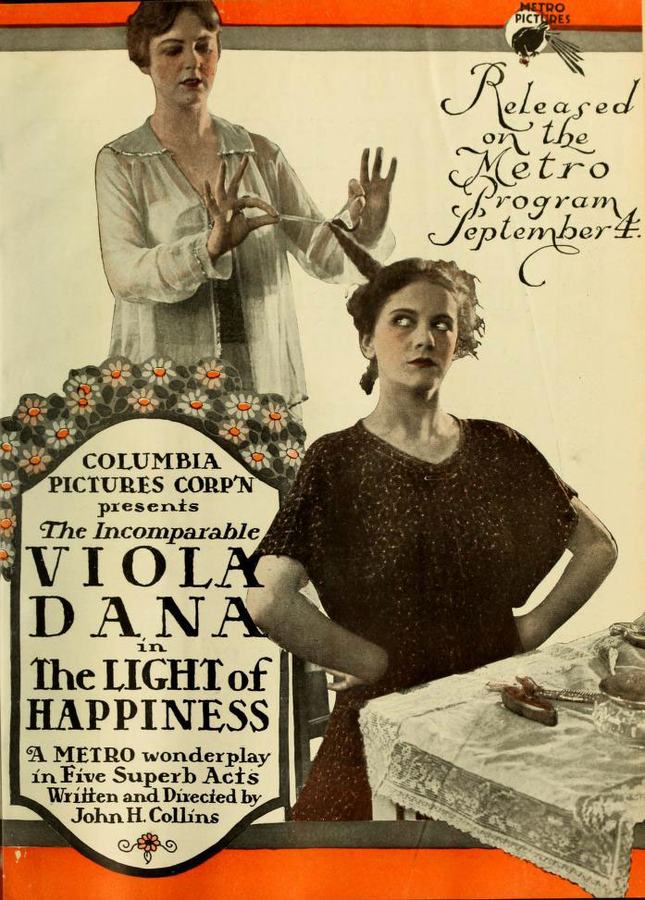
In the annals of early cinema, certain narratives emerge not merely as stories, but as intricate tapestries woven with the threads of human frailty, societal judgment, and the perennial quest for authenticity. "The Light of Happiness" stands as one such compelling artifact, a film that, despite its vintage, resonates with a timeless exploration of identity, deceit, and the arduous journey towards moral clarity. It plunges us into a world where appearances are meticulously crafted to manipulate destinies, where a young woman's societal standing dictates her perceived worth, and where true vision transcends the mere faculty of sight.
The narrative commences by introducing us to Tangletop, a figure etched into the periphery of her community, defined by the ignominy of her heritage as the town drunk's daughter. Her tattered clothes and unkempt hair are not merely stylistic choices but outward manifestations of an inner exile, a perpetual state of being an outcast. She is a pariah, a living testament to the unforgiving nature of social stratification, her very existence a whisper of forgotten humanity. This initial portrayal, stark and unvarnished, immediately establishes the profound depths from which her character must eventually ascend. It is a testament to the film's nuanced understanding of societal prejudice, where an individual's value is often tragically misjudged based on circumstance rather than intrinsic worth. Her plight, in many ways, mirrors the struggles seen in films like Driftwood, where characters are often defined, and confined, by their social and economic conditions, battling against the tide of collective scorn.
Into this tableau steps Emmett Dwight, a character whose moral compass is conspicuously absent, replaced instead by the relentless pursuit of personal gain. Dwight is no mere opportunist; he is a calculated puppeteer, envisioning a grand theatrical deception designed to secure his daughter Madeline's marital future with the wealthy Lowell Van Orden. Lowell, tragically, has recently regained his eyesight after a period of blindness, during which he fell deeply in love with a woman named Mollie Dean, sight unseen. This detail is crucial, for it underscores the purity of Lowell's initial affection, a love born not of superficiality but of shared connection and spirit. Dwight, however, sees this as an obstacle, a inconvenient attachment that must be severed. His scheme is as audacious as it is cruel: to present Tangletop, the ostracized and unassuming figure, as the beloved Mollie Dean. He banks on the stark contrast between Tangletop's appearance and Lowell's idealized memory of Mollie, hoping to extinguish Lowell's ardor through disillusionment. It’s a gamble on superficiality, a cynical belief that once Lowell sees the 'truth' – a manufactured, distorted truth – his affection will simply dissipate. This manipulation of identity and perception brings to mind the intricate deceptions found in narratives such as The Secret of the Swamp or The Concealed Truth, where hidden identities and elaborate charades drive the central conflict, often with devastating personal consequences.
Tangletop, in her desperation and perhaps a longing for acceptance, however fleeting, initially goes along with the plan. This decision is not born of malice but of a profound vulnerability, a yearning to escape the suffocating confines of her social standing. She becomes an unwitting actress in a drama not of her own making, her life momentarily elevated by the pretense, yet simultaneously ensnared by its moral implications. The performance begins, and as Emmett had hoped, Lowell's reawakened sight, confronted with the 'Mollie' before him, begins to cool his ardent affections. The idealized image forged in darkness struggles to reconcile with the physical reality presented, creating a chasm of doubt and disappointment. Edward Earle, as Lowell Van Orden, masterfully conveys the subtle shifts in his character's emotional landscape, from the initial joy of regained sight and anticipated reunion to the creeping disillusionment of a love seemingly betrayed by reality.
Yet, the human spirit, even when battered and exploited, often possesses an innate capacity for truth and redemption. It is here that the narrative introduces a pivotal catalyst for change: Reverend Clyde Harmon. Under his gentle but firm spiritual guidance, Tangletop begins to experience a profound internal shift. The Reverend represents a moral anchor in a world adrift with deceit, his presence a beacon of genuine compassion and unwavering ethics. His influence is not one of condemnation, but of illumination, gradually peeling back the layers of Tangletop's hardened exterior to reveal the tender conscience beneath. This transformative power of faith and mentorship is a recurring motif in cinema, often seen in films like The Evangelist, where spiritual awakening leads characters down paths of moral reckoning and profound personal growth. Viola Dana, in the challenging role of Tangletop, navigates this complex transformation with remarkable sensitivity, portraying the character's journey from a resigned participant in deceit to a woman wrestling with the weighty burden of her actions.
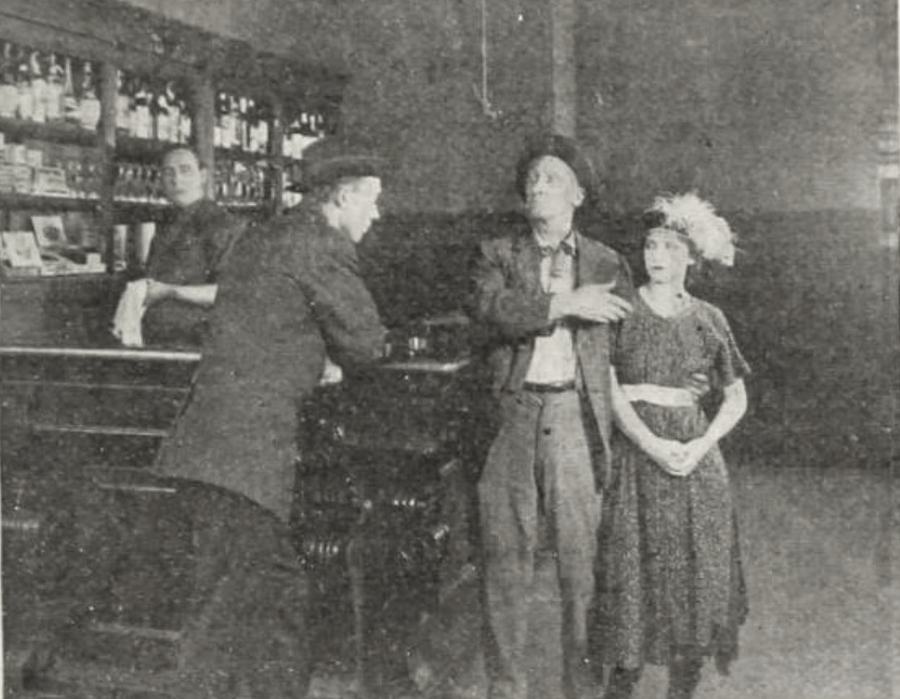
The moral quandary intensifies within Tangletop, the deceptive role becoming increasingly unbearable. The chasm between the person she is pretending to be and the person she is becoming, under the Reverend's influence, grows too wide to bridge. The 'light of happiness' she initially sought through pretense now seems like a dim, flickering candle compared to the radiant clarity of truth. The internal struggle culminates in a moment of profound courage: Tangletop confesses everything to Lowell. This is not merely a plot device; it is the fulcrum upon which the entire narrative balances, a powerful act of self-sacrifice and moral rectitude. Her confession is an admission of complicity, yes, but more importantly, it is a declaration of her newfound integrity, a testament to the redemptive power of honesty. This climactic revelation is the emotional core of the film, a moment of raw vulnerability that reconfigures the entire emotional landscape for Lowell and, indeed, for Tangletop herself.
The aftermath of Tangletop's confession is swift and decisive. Lowell, now fully enlightened, wastes no time in seeking out the real Mollie Dean, his true love. The deception, once a veil over his affections, now serves to underscore the genuine nature of his original feelings. Their reunion and subsequent marriage represent the triumph of authentic love over manufactured artifice, a powerful affirmation that true connection cannot be easily counterfeited or extinguished. Mona Kingsley, portraying Mollie Dean, embodies the ideal of genuine affection that Lowell sought, her presence a quiet counterpoint to the earlier deception.
But the narrative does not abandon Tangletop to the consequences of her past. Instead, it offers her a profound and richly deserved redemption. Having shed the burden of deceit and embraced her authentic self, she finds her own happiness, not in the wealth and status that Emmett Dwight had dangled before her, but in a union founded on mutual respect, understanding, and shared values. She marries Reverend Clyde Harmon, the man who guided her towards her moral awakening. This double wedding sequence provides a deeply satisfying resolution, celebrating not just the reunion of Lowell and Mollie, but also Tangletop's complete transformation. Her journey from social outcast, manipulated pawn, to a woman of integrity and a beloved wife is arguably the most compelling arc of the entire film. It’s a testament to the idea that true happiness isn't found in external validation or material gain, but in self-acceptance and moral courage. Harry Linson, as Reverend Clyde Harmon, portrays a character of unwavering integrity, making his eventual union with Tangletop feel earned and deeply meaningful.
While Viola Dana and Edward Earle carry much of the emotional weight, the supporting cast provides essential texture to this intricate narrative. Charles Boone, as the manipulative Emmett Dwight, is the quintessential antagonist, his every action driven by a cold, calculating ambition. He represents the darker side of human nature, a stark contrast to the burgeoning morality of Tangletop and the steadfastness of Reverend Harmon. His machinations are the engine of the plot, and his eventual comeuppance, though not explicitly detailed in the provided summary, is implied by the triumph of truth.
Margery Bonney Erskine and Lorraine Frost, though their specific roles as Madeline (Dwight's daughter) and potentially other townspeople are not extensively detailed, contribute to the societal backdrop against which this drama unfolds. Madeline, as the intended beneficiary of her father's scheme, would represent the allure of wealth and status that Tangletop ultimately rejects. Their presence, however fleeting, helps to paint a fuller picture of the community's values and the pressures exerted upon its members. George D. Melville, Robert Walker, and Jack Busby further populate this world, their contributions, however minor, essential in creating a believable and immersive setting for this moral drama.
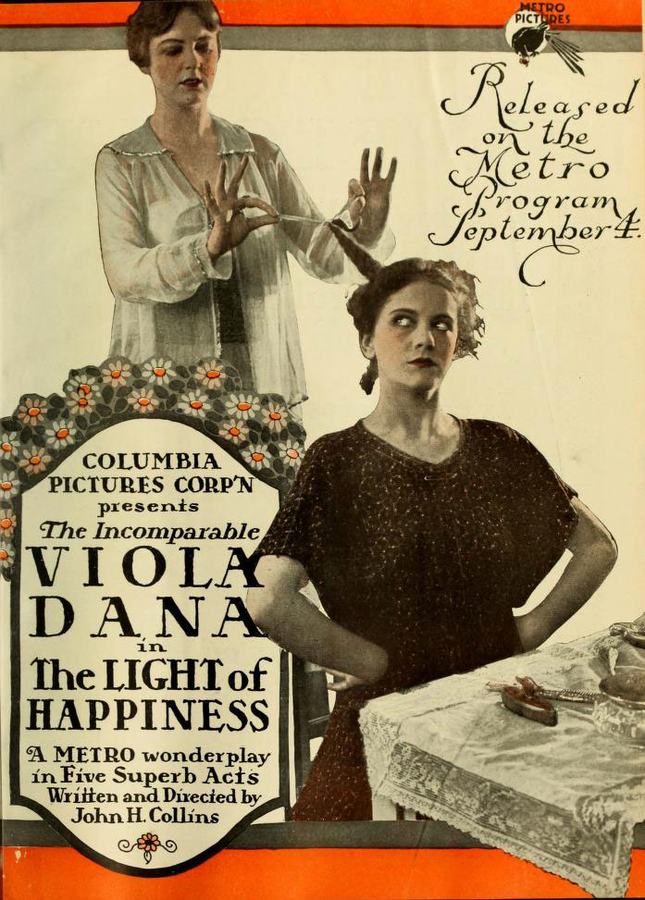
Beyond its engaging plot, "The Light of Happiness" delves into several profound thematic territories, giving it a lasting power that transcends its era. The most prominent is, of course, deception and identity. The film masterfully explores how easily identity can be fabricated and how deeply people can be misled by appearances. Lowell's initial blindness serves as a potent metaphor for society's own blindness to true character, often prioritizing superficial attributes over intrinsic worth. The film asks us to consider what truly constitutes identity: is it the name we bear, the clothes we wear, or the integrity of our actions? Tangletop's journey is a powerful argument for the latter, demonstrating that true identity is forged in honesty and self-acceptance, not in the roles we are forced or choose to play. This theme echoes the complex identity struggles found in films like Who Is to Blame?, where characters grapple with the consequences of mistaken or assumed identities.
Another crucial theme is social class and prejudice. Tangletop's initial status as an outcast, defined by her father's alcoholism and her own impoverished appearance, highlights the rigid social structures of the time. Her exploitation by Emmett Dwight is a direct consequence of her vulnerability and lack of social standing. The film subtly critiques a society that judges individuals not on their character, but on their circumstances, making her redemption all the more impactful as she rises above these societal limitations through sheer moral force. This social critique is often a cornerstone of early cinematic dramas, much like in A Man's Prerogative, which often explores the societal expectations and limitations placed upon individuals.
The concept of blindness, both literal and metaphorical, underpins much of the narrative. Lowell's physical blindness initially prevents him from seeing Mollie Dean, forcing him to fall in love with her essence. Upon regaining his sight, he is metaphorically blinded by Emmett's deception, unable to see through Tangletop's disguise to the true Mollie. It is only when Tangletop herself sheds the veil of lies that Lowell gains true vision, seeing both the real Mollie and the authentic, redeemed Tangletop. This dual exploration of sight and insight adds profound depth to the film's message, suggesting that true perception lies beyond the superficial. The film implies that sometimes, a different kind of 'light' – the light of truth and spiritual guidance – is needed to truly see.
Finally, redemption and forgiveness form the emotional bedrock of Tangletop's arc. Her journey is a powerful testament to the human capacity for change and the possibility of finding solace even after significant moral missteps. Her confession is an act of profound courage and self-liberation, paving the way not only for Lowell's happiness but for her own. The film suggests that genuine happiness is inextricably linked to integrity and that forgiveness, both from others and oneself, is a vital component of true peace. This theme of moral awakening and redemption is a powerful through-line, resonating with the transformative narratives found in classics like The Fool's Revenge, where characters often undergo profound personal growth through suffering and ethical choices.
While specific directorial techniques by John H. Collins may be lost to time or detailed critique, the strength of "The Light of Happiness" undoubtedly lies in its narrative construction and character development. The film’s pacing, as inferred from the plot, must have been meticulously crafted to build suspense around Emmett’s scheme, the growing internal conflict within Tangletop, and the eventual dramatic reveal. The use of dramatic irony, where the audience is privy to the deception while Lowell remains oblivious, would have heightened the emotional stakes, creating a palpable tension that holds the viewer captive. The performances, particularly by Viola Dana as Tangletop and Edward Earle as Lowell, would have been central to conveying the emotional nuances of their complex journeys, their expressions and gestures communicating volumes in an era predating synchronized sound.
The film's title itself, "The Light of Happiness," is rich with symbolism. It speaks to the elusive nature of true joy, suggesting that it cannot be found through deceit or manipulation, but only through the clear, unvarnished light of truth and genuine connection. The darkness of Lowell's blindness and the metaphorical darkness of Emmett's deception are ultimately dispelled by this light, leading to authentic happiness for all who embrace it.
In conclusion, "The Light of Happiness" is far more than a simple melodrama; it is a nuanced exploration of human nature, societal pressures, and the transformative power of moral courage. It reminds us that true vision extends beyond the physical, that redemption is always within reach, and that the most profound happiness is found not in elaborate deceptions, but in the unwavering embrace of truth. Its themes of identity, social justice, and the search for authentic love remain as relevant today as they were upon its initial release, cementing its place as a significant, albeit perhaps lesser-known, gem in the rich tapestry of early cinema. It’s a compelling reminder that the human heart, when guided by conscience and compassion, can always find its way toward its own radiant light of happiness.
IMDb 6.3
1929
Community
Log in to comment.