DbcultAccessing Vault...
Cult Review
Senior Film Conservator
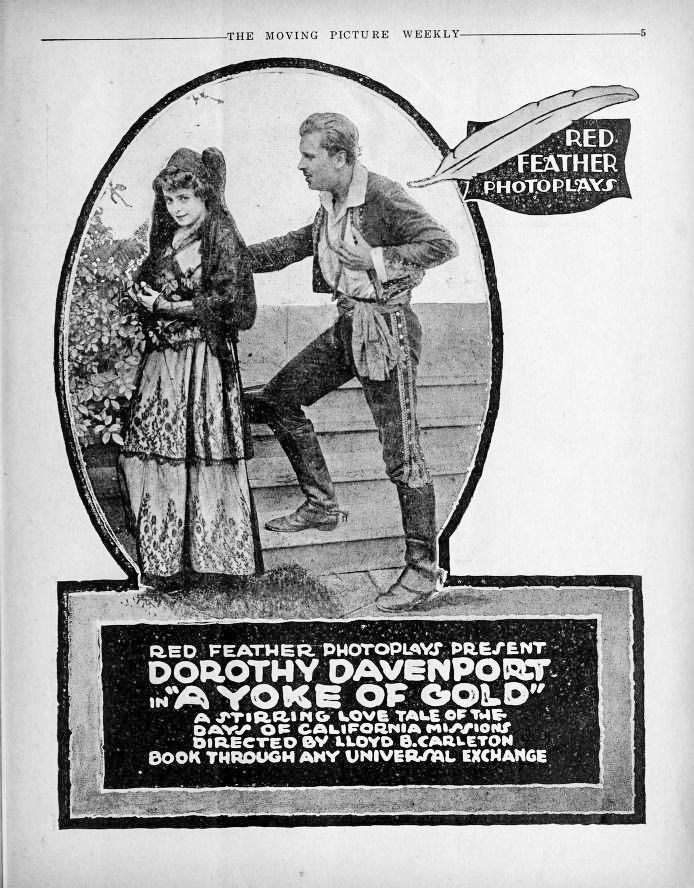
Stepping back into the nascent days of cinematic artistry, one encounters a treasure trove of narrative ambition and visual ingenuity that often goes overlooked. Among these early cinematic endeavors, A Yoke of Gold, a dramatic offering from 1917, emerges as a compelling artifact, reflecting both the social anxieties and the burgeoning storytelling capabilities of its era. This silent film, directed with an earnest hand and penned by the collaborative talents of Calder Johnstone and Rob Wagner, plunges its audience into the tumultuous landscape of 1849 California, a period synonymous with both boundless opportunity and stark inequality. It is a narrative steeped in the raw, untamed spirit of the Gold Rush, yet it transcends mere historical recounting to delve into profound questions of justice, morality, and the transformative power of human connection. As a critic, I find myself drawn to its intricate portrayal of class struggle and the unexpected turns of fate that challenge the very foundations of one's convictions. The film, starring the likes of Richard Morris, Gretchen Lederer, Dorothy Davenport, and Emory Johnson, is not merely a historical curiosity but a vibrant exploration of timeless themes, rendered with a sincerity that resonates even a century later.
At its heart, A Yoke of Gold weaves a tale of simmering resentment against an entrenched aristocracy. In the sun-drenched valleys and burgeoning towns of California, the promise of gold had created a stark dichotomy: immense wealth for a privileged few, exemplified by figures like Don Ortega and Don Mendoza, and a gnawing sense of injustice for the masses. This fertile ground for rebellion gives rise to Luis Lopez, portrayed with a potent blend of righteous anger and simmering ambition by Richard Morris. Lopez is no mere bandit; he is depicted as a champion of the oppressed, a figure whose revolutionary zeal aims to recalibrate the scales of justice. His vision, however pragmatic in its execution, is fundamentally altruistic: to seize the ill-gotten gains of the opulent Dons and redirect them towards the upliftment of his beleaguered compatriots. To achieve this audacious goal, Lopez enlists Jose Garcia, a character brought to life by Emory Johnson, who initially appears to be a willing accomplice in this grand design. Their pact is sealed: Jose is to target Don Ortega, while Lopez sets his sights on Don Mendoza, with the unified intent of dedicating their spoils to the common good.
The narrative ingeniously diverges, allowing for individual character arcs to unfold with remarkable depth. Jose's journey across the desolate desert, en route to Ortega's hacienda, becomes a crucible of spiritual and moral introspection. The dramatic loss of his canteen, a symbol of physical sustenance, is juxtaposed against the unexpected discovery of a crucifix, a potent emblem of spiritual nourishment. His angry rejection of this sacred object, flinging it into the unforgiving sands, speaks volumes about his internal turmoil and his temporary abandonment of conventional morality in pursuit of his revolutionary objective. This moment is not just a plot device; it's a profound commentary on the human spirit's vulnerability when confronted with overwhelming hardship and the allure of a 'greater' cause that might justify questionable means.
Fate, however, has other plans for Jose. Exhausted and vulnerable, he is discovered by Senor Arrelanes and his daughter, Carmen (a luminous Dorothy Davenport), who are themselves traveling to visit their cousin, Don Ortega. The discovery of the discarded crucifix by Arrelanes and Carmen subtly foreshadows the moral crossroads Jose is approaching. Bearing him to Ortega's home, Carmen undertakes the task of nursing Jose back to health, an act of pure, unadulterated compassion that slowly but inexorably begins to dismantle Jose's hardened resolve. This period of recuperation, bathed in the warmth of kindness and the burgeoning spark of romance, becomes the pivotal turning point for Jose, leading him to question the very tenets of his mission. His vow to himself—that he would not despoil those who had shown him such profound generosity—marks a profound shift from a revolutionary idealist to a man guided by personal ethics and affection.
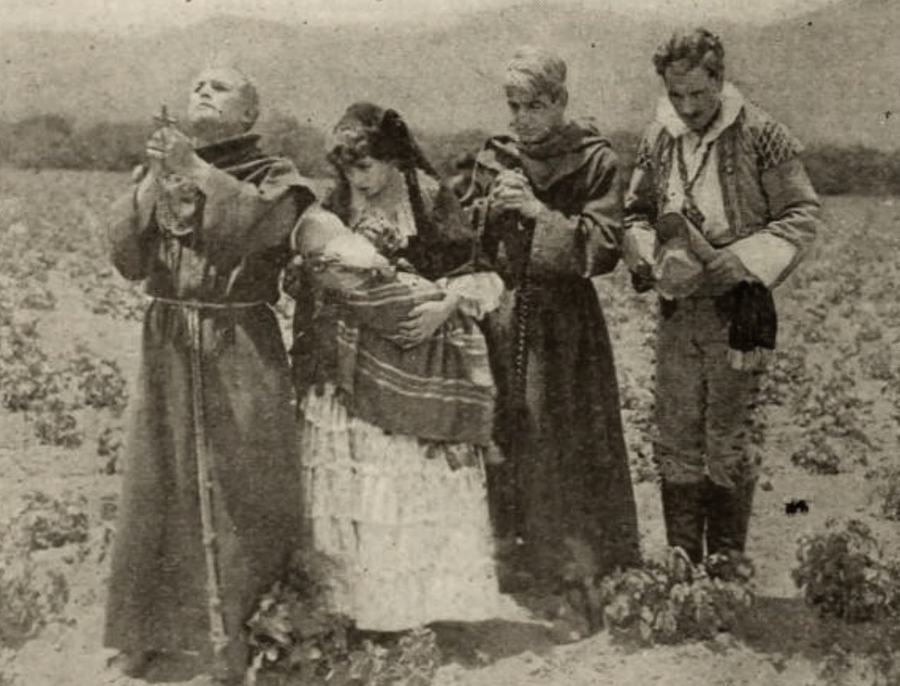
Meanwhile, Lopez's parallel mission unfolds with a starker, more confrontational edge. His infiltration of Don Mendoza's (Alfred Allen) home, securing the bags of gold, is a testament to his unwavering commitment to the cause. However, his encounter with Mendoza’s wife (Gretchen Lederer), who surprises him during the theft, introduces a brutal element of violence that distinguishes his path from Jose's. Lopez's assault on her, and Mendoza's subsequent intervention, driving the intruder out, paints a picture of a man perhaps too consumed by his objective, blurring the lines between justice and savagery. This stark contrast between Jose’s evolving morality and Lopez's unwavering, almost ruthless, pursuit of his goal is one of the film’s most compelling narrative devices.
The climax of this intricate narrative sees Jose, now fully committed to his new moral compass, racing back to Santa Barbara to intercept Lopez. The tension escalates as Lopez, discovering Jose's change of heart and the theft of the gold from beneath his own pillow, vows vengeance, pursuing Jose with lethal intent. The ensuing confrontation at Ortega’s estate, where Lopez is ensnared in a trap, is a masterclass in silent film suspense. It is Carmen, however, who truly brings the story to its redemptive close. Her unwavering belief in the power of good, and her persuasive plea, ultimately prevail upon Lopez to abandon his destructive path. The film concludes not with a triumph of revolution, but with a celebration of personal transformation and the enduring power of love. Lopez, having witnessed the happiness of Jose and Carmen, finds his own path to peace, returning to the tranquil embrace of the priests at the Santa Barbara Mission. This conclusion, far from being simplistic, offers a nuanced vision of redemption, suggesting that true wealth lies not in gold, but in moral rectitude and human connection. It echoes the thematic profundity seen in other moral narratives of the era, perhaps even hinting at the spiritual quests found in films like Heroes of the Cross, albeit through a more personal, less overtly religious lens.
The strength of A Yoke of Gold lies not only in its intricate plot but also in the nuanced portrayals by its ensemble cast. Richard Morris’s Luis Lopez is a fascinating study in righteous indignation teetering on the precipice of fanaticism. His initial portrayal evokes sympathy, painting him as a man driven by legitimate grievances. Yet, his actions, particularly the violent encounter with Mendoza’s wife, complicate this image, forcing the audience to grapple with the moral ambiguities of his mission. Morris conveys this internal conflict and external resolve through powerful physicality and expressive facial work, essential tools for silent film actors. Emory Johnson’s Jose Garcia, on the other hand, embarks on a journey of profound moral awakening. Johnson masterfully navigates Jose’s transformation from a committed revolutionary to a lover guided by compassion. His initial defiance, his moment of spiritual abandonment in the desert, and his eventual surrender to Carmen’s influence are all articulated with a compelling sincerity that anchors the film’s emotional core. This kind of character evolution, where personal relationships challenge pre-existing ideologies, can be seen in the romantic dramas of the period, though perhaps with less overt social commentary than found here, such as in Young Romance.
Dorothy Davenport’s Carmen is the film’s moral compass and emotional anchor. Her portrayal is imbued with a gentle strength and an innate goodness that acts as a powerful counterpoint to the prevailing greed and resentment. It is through her selfless actions and unwavering belief in humanity that both Jose and, eventually, Lopez find their paths to redemption. Davenport’s performance, characterized by subtle gestures and empathetic expressions, elevates Carmen beyond a mere romantic interest, positioning her as the embodiment of restorative justice. The aristocratic figures, Don Ortega (Harold Skinner) and Don Mendoza (Alfred Allen), while less explored in their individual psychologies, serve effectively as symbols of the entrenched power structure. Gretchen Lederer, as Mendoza's wife, though in a relatively brief role, leaves a lasting impression with her terrified confrontation with Lopez, highlighting the human cost of the class struggle. The collective efforts of this cast underscore the remarkable ability of silent film actors to convey complex emotions and narrative shifts without the aid of spoken dialogue.
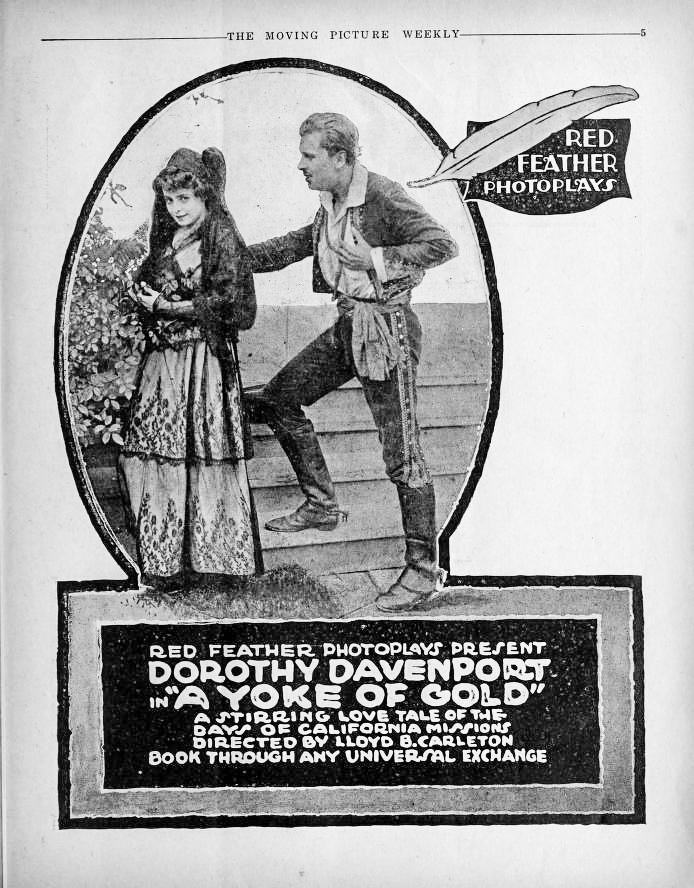
Thematically, A Yoke of Gold is surprisingly rich. It delves deeply into the concept of social injustice, portraying the stark disparities created by the Gold Rush with an unflinching gaze. The "yoke of gold" itself serves as a powerful metaphor for the economic oppression that binds the populace. The film interrogates the ethics of revolution, asking whether noble ends can truly justify ignoble means. Jose’s internal struggle, particularly his rejection and then implicit re-embrace of the spiritual, adds a layer of moral philosophy that elevates the narrative beyond a simple adventure tale. The transformative power of love and compassion stands as a central tenet, arguing for personal redemption over systemic overthrow. This thematic depth distinguishes it from more straightforward action or romance narratives of the period, inviting deeper reflection on human nature and societal structures. The film’s exploration of class divides and moral choices aligns it with the thoughtful social commentaries of its time, not unlike the explorations of societal pressures found in films such as The Daughters of Men, though A Yoke of Gold couches its critique within a more swashbuckling framework.
The directorial hand behind A Yoke of Gold demonstrates a commendable understanding of silent cinema's unique grammar. Without spoken words, the narrative relies heavily on visual composition, character blocking, and the strategic use of intertitles to convey information and emotion. The film's pacing, while deliberate by modern standards, effectively builds tension and allows for the emotional beats to register fully. The desert scenes, in particular, convey a sense of vastness and isolation that amplifies Jose's spiritual crisis. The contrast between the opulent interiors of the Dons' haciendas and the harsh external landscapes effectively underscores the film's central conflict between wealth and hardship. The visual storytelling, characteristic of the era, uses dramatic close-ups to emphasize emotional states and broader shots to establish the social hierarchy and geographical context.
Calder Johnstone and Rob Wagner, as writers, crafted a narrative that, while perhaps melodramatic by contemporary sensibilities, possessed a compelling arc and a clear moral vision for its time. They skillfully balanced the elements of adventure, social critique, and romance, ensuring that each thread contributed meaningfully to the overall tapestry. The decision to allow Jose's character to undergo a profound transformation, moving away from his initial revolutionary fervor due to personal connection, is a sophisticated narrative choice that elevates the film beyond simple heroism or villainy. Similarly, Lopez's ultimate redemption, prompted by Carmen's influence rather than brute force, speaks to a belief in inherent human goodness, even in the most hardened of hearts. The script's ability to introduce moments of symbolic weight, such as the crucifix incident, without explicitly stating their meaning, is a testament to their understanding of visual narrative. Their work reflects a period where screenwriters were experimenting with how to convey complex ideas and character development using the nascent tools of the medium, often with a flair for dramatic irony and moral allegory.
Viewing A Yoke of Gold today offers a fascinating window into the early development of narrative cinema. It showcases the conventions and innovations of 1917 filmmaking, from acting styles to storytelling techniques. While the melodrama might feel pronounced to a modern audience accustomed to more subtle performances, it is important to appreciate these stylistic choices within their historical context. The film's commitment to exploring social issues, even within a romantic adventure framework, is particularly noteworthy. It grapples with questions of wealth distribution, class privilege, and the individual's responsibility to society—themes that remain remarkably pertinent in any era. The contrast between the initial revolutionary zeal and the eventual embrace of personal morality and quiet redemption provides a timeless commentary on the complexities of justice and human nature.
The film’s setting in the Gold Rush era of 1849 California adds another layer of historical intrigue. It taps into the mythos of the American West, but rather than focusing solely on frontier heroism, it foregrounds the social stratification and ethical dilemmas that arose from the rapid accumulation of wealth. This portrayal offers a more nuanced perspective on a period often romanticized, reminding us that even in times of great opportunity, profound injustices can take root. The film’s ultimate message, that true freedom comes not from material gain but from moral integrity and compassionate connection, is a powerful one that transcends its period setting. It positions A Yoke of Gold as more than just a historical curiosity; it is a thoughtful and emotionally resonant piece of early cinematic art that continues to speak to universal human experiences.
In conclusion, A Yoke of Gold stands as a compelling and surprisingly sophisticated silent film that deserves renewed attention. Its intricate plot, well-developed character arcs, and exploration of timeless themes—social justice, redemption, and the redemptive power of love—make it far more than a mere historical curiosity. The performances, particularly by Emory Johnson and Dorothy Davenport, lend genuine emotional weight to the narrative, while the direction and writing showcase the burgeoning artistry of early cinema. For enthusiasts of silent films and those interested in the social commentaries embedded within early motion pictures, A Yoke of Gold offers a rich and rewarding viewing experience. It reminds us that even in the absence of spoken dialogue, cinema possessed a profound capacity to engage, provoke, and move its audience, leaving an indelible mark on the canvas of human storytelling. It is a testament to the enduring appeal of narratives that grapple with the human condition, proving that some stories, like the glint of gold, shine brightly across the centuries.
IMDb 7.5
1937
Community
Log in to comment.