DbcultAccessing Vault...
Cult Review
Senior Film Conservator
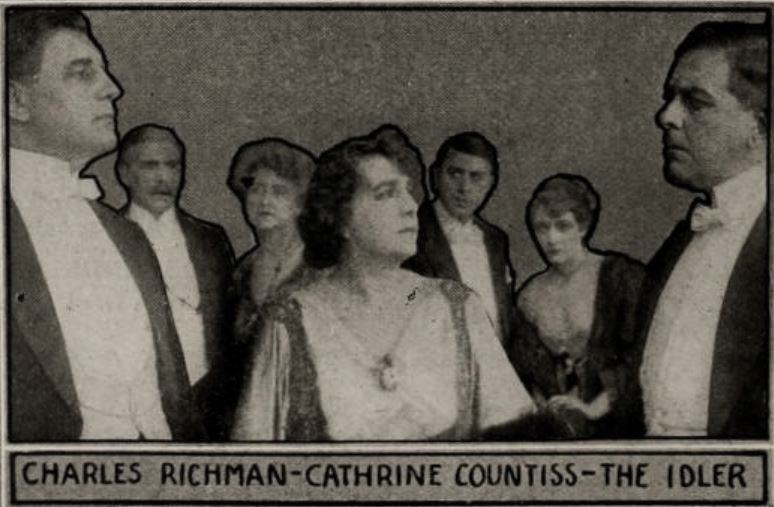
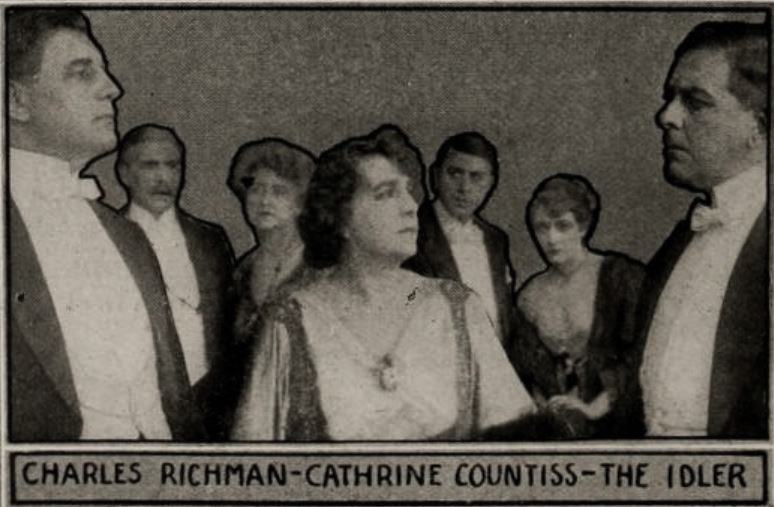
Picture a nitrate reel breathing sparks in a projection booth—those first flickers feel like ectoplasmic fingers pulling you through a wormhole into 1916. The Idler is not merely a curio; it is a séance with vanished desire, a parable of class fluidity that still feels scalding today.
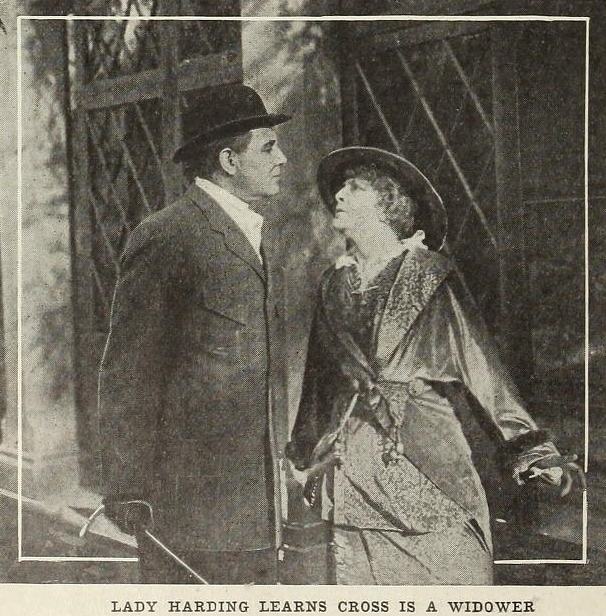
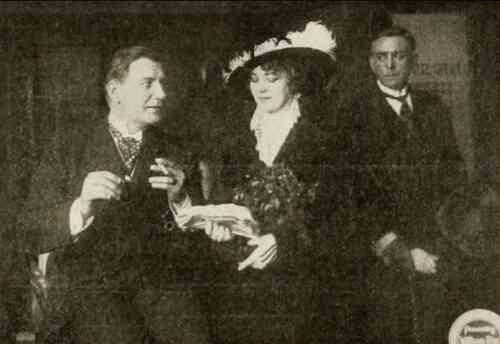
William T. Carleton’s Mark Cross slouches through the narrative like Dorian Gray’s prairie cousin, every crease of his duster whispering careless entitlement. When he tips his Panama hat toward the camera, the brim slices the frame into two hostile hemispheres: those who inherit and those who grab. The performance is silent-film pantomime at its most mercury-quick—eyebrows arching like switchblades, a smile that arrives a half-second too late to be trustworthy.
Opposite him, Charles Richman’s John Harding carries the weight of every disinherited younger son in English fiction; his shoulders seem perpetually damp with the dew of regret. Watch the moment he deciphers the solicitor’s letter: the paper trembles, but the actor keeps his spine erect, as if propriety itself were a corset laced too tight. In that tremor you glimpse the entire Empire’s guilty conscience—fortune built on someone else’s grave.
Felix Strong’s death—ostensibly the inciting incident—occurs off-camera, a narrative blackout that feels positively modern. We hear only the muffled crack of a revolver, then the long, inhospitable silence of the frontier. Director C. Haddon Chambers understood that violence is most corrosive when imagined, not ogled. Compare this restraint with the bloodletting spectacle of Vendetta or the saloon shoot-outs in Gambler's Gold; here the absence of gore makes guilt metastasize in the viewer’s skull.
Fast-forward to London’s gaslit opera house—an interior swarming with gilt cherubs and diamond chokers—where Cross engineers the public slap that will force Harding into a duel. The camera lingers on Claire Whitney’s Lady Harding: her pupils dilate like ink drops in water, registering in a heartbeat how men trade honor like promissory notes while women pay the interest. Whitney, sadly under-celebrated today, gives the film’s truest performance—she is its moral gyroscope, spinning the axis until the men stagger off balance.
The duel at dawn arrives wrapped in Thames fog, shot in low chiaroscuro that anticipates 1940s noir. Pistols are raised, black silhouettes against an oyster-colored sky; the camera cuts to a close-up of dew beading on a blade of grass—an elegy for every bullet yet to be fired. Chambers cross-cuts between Harding’s trembling gloved finger and Cross’s cigarette glowing like a demon’s eye. When the signal is given, both men deliberately miss—an act of collusion that feels both cowardly and transcendent. In that volley of nothing, the film indicts the entire duel tradition as masturbatory theater.
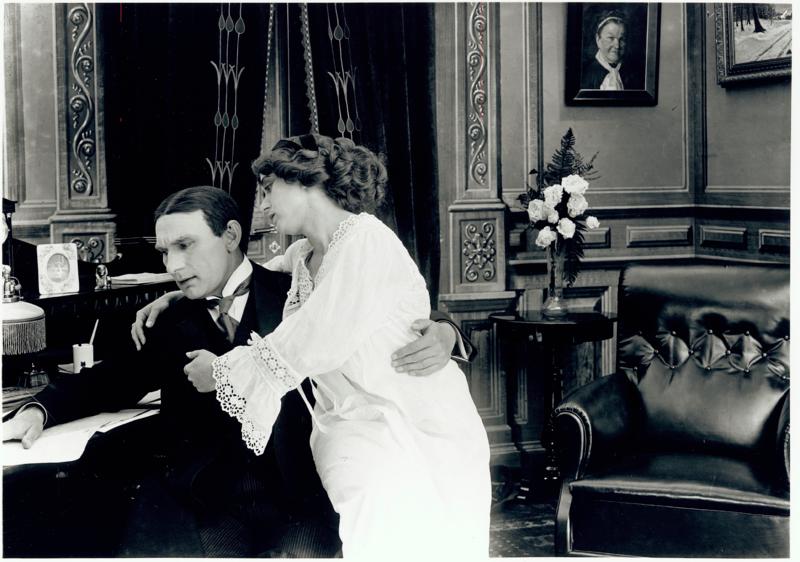
But the real coup de théâtre happens back in Cross’s chambers, all Persian rugs and predatory statuary. Lady Harding steps out from behind the screen, her white dress phosphorescent against the mahogany gloom. She denounces both men—not with the brittle shrillness customary to melodrama, but with a measured, almost maternal disappointment that cuts deeper than any vindictive aria. The scene lasts barely ninety seconds yet feels like a lifetime of Sunday sermons compressed into a single breath. Carleton’s face collapses; you can practically hear the rusted gears of his ego grinding to a halt.
Silent cinema lives or dies on its intertitles, and The Idler boasts captions that flirt with poetry: "Between the hand that fires and the heart that bleeds lies the shadow called honor." Text like this risks pretension, yet set against the flicker of nitrate it attains the aphoristic snap of a Wildean epigram.
Restoration aficionados will mourn that only two of the original six reels survive, housed in the BFI’s nitrate vault; the remainder succumbed to a warehouse blaze in 1931. What we possess is fragmentary—a shattered stained-glass window whose missing shards force us to imagine the complete design. Even so, the existing print has been scanned at 4K, its amber tinting reinstated to mimic the candle-nickelodeon experience. Compare this fragility to the relative completeness of Pilgrim's Progress or A Woman's Triumph; The Idler becomes a metaphor for cinema itself—an art forever haunted by its own disappearance.
Themes? Take your pick: the arbitrariness of inheritance, the fungibility of identity when transplanted across oceans, the lethal algebra of male pride. Yet the film’s most subversive current is erotic—not the salacious clinches of Springtime, but the quieter electricity of a woman’s gaze that refuses to flatter. Lady Harding never once begs for agency; she simply assumes it, and the narrative bends around her like iron filings aligning to a magnet.
If you crave a double-bill, pair The Idler with In the Prime of Life—both probe the sedimentary layers of regret, though the latter trades duels for domestic trench warfare. Or contrast its frontier opening with the sun-baked Levantine vistas of Life of the Jews of Palestine to see how early cinema negotiated the fault-line between exile and belonging.
Bottom line: hunt down any archive screening, even if it means a pilgrimage to a drafty auditorium where the projector rattles like a tin tray. Sit close enough to smell the vinegar of decaying acetate. Let the flicker etch its afterimage on your retinas—an idler’s silhouette disappearing into fog, a woman’s eyes flashing like lighthouse beacons, a duel that ends not with death but with the more terrifying prospect of self-knowledge. When the houselights rise, you may find yourself counting the bullets you never fired in your own life, and that, dear reader, is the mark of a masterpiece that refuses to stay silent.
Runtime: approx. 58 min (extant). Format: 4K DCP, tinting restored. Live accompaniment varies by venue—catch the organ if you can; its tremolo feels like guilt set to music.
IMDb —
1919
Community
Log in to comment.