DbcultAccessing Vault...
6/10
Senior Film Conservator
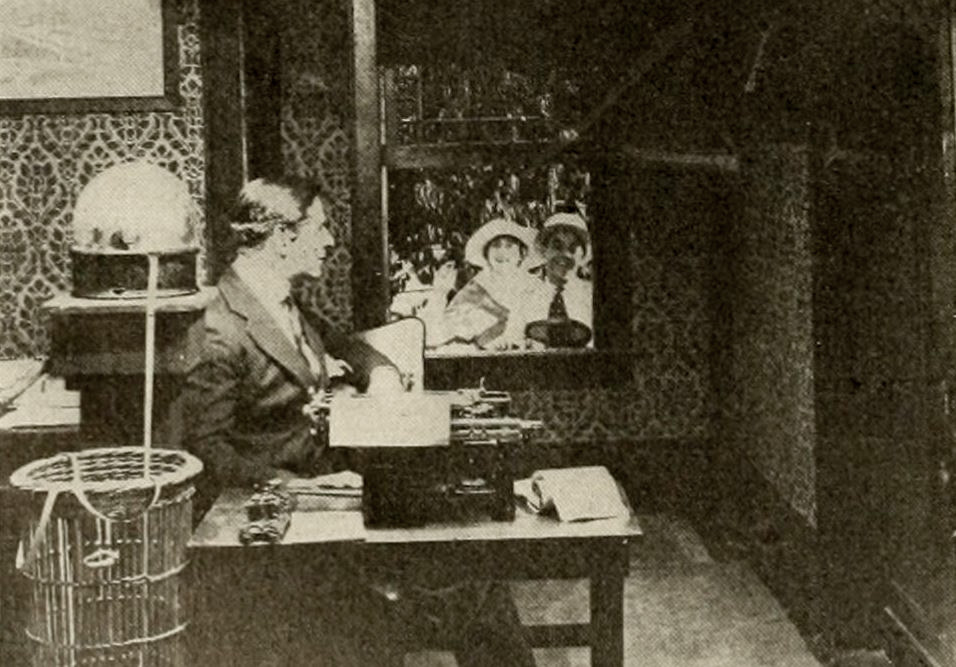
A definitive 6/10 rating for a film that redefined the boundaries of cult cinema. Man of the Hour remains a cornerstone of transgressive art.
A bullet at twilight, a fortune in the dust, and a city held for ransom—Maurice Tourneur’s Man of the Hour distills the entire American mythos into one incandescent reel. The film begins not with expository hand-holding but with the audible crack of a patriarch’s self-execution; the smoke curls like a question mark over the Garrison library, and in that single plume resides every subsequent swindle, every glittering promise, every heartbeat of the 1914 audience gasping in nickel-haze darkness.
Cut to a westbound train, its lamps flickering like faulty conscience. Henry—now surnameless—stares through sooty glass at a horizon that refuses to name him. Tourneur’s camera, already proto-expressionist, tilts the horizon so the world itself seems to slide off the frame, an apt visual for a protagonist who has liquidated identity along with assets. The frontier sequences eschew postcard grandeur; instead we get a lunar palette of ochres and bruised indigos, the palette of loneliness rather than Manifest Destiny. Nuggets glitter, yes, but Tourneur keeps the lens trained on Henry’s blistered knuckles, the moral callus forming beneath each epidermal layer.
Back East, marble lobbies echo like secular cathedrals. Henry’s re-entrance into society is staged as a reverse resurrection: he emerges from a subterranean tram onto Fifth Avenue, top-hatted, gloved, his skin still smelling of sagebrush—an uncanny revenant in bespoke wool.
The courtship of Dallas Wainwright unfolds as a chess match played on mirrored boards. Belle Adair plays her with the hauteur of a woman who has never needed to ask for anything, yet her pupils betray a vertiginous curiosity whenever Henry utters some unorthodox civics lesson. Their flirtation crescendos during a rooftop garden party where Edison bulbs flicker like captive stars; Tourneur superimposes the silhouette of the Brooklyn Bridge onto the mise-en-scène so that every embrace appears suspended over industrial abyss. It is here that Henry learns of the impending franchise swindle, information smuggled inside a waltz, conveyed in the half-moon hush between musical measures.
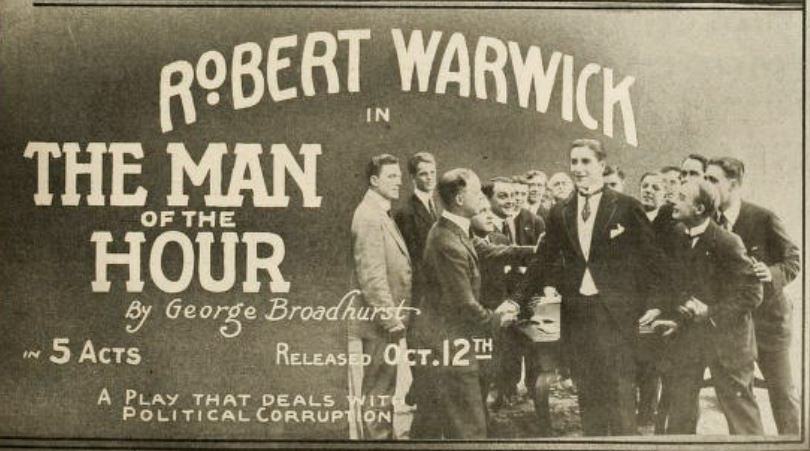
Richard Horrigan—part Boss Tweed, part Mephistopheles—materializes in a dim alcove, cigar ember pulsing like a demonic third eye. Thomas Jackson’s performance is a masterclass in stillness; he rarely raises his voice above parlor politeness, letting the threat pool in pregnant pauses. His political machine is rendered through Eisensteinian montage years before Eisenstein: gears, ballot boxes, printing presses, clenched fists, all intercut at increasing velocity until the celluloid itself seems to sweat.
Refusing to sign the franchise, Henry triggers a smear campaign that anticipates every modern media takedown. Newspapers spin op-eds overnight; hitherto loyal aldermen discover sudden ethical qualms; a forged ledger surfaces suggesting Henry embezzled mining claims from the now-mythic Joe Standing. Tourneur’s montage here employs superimposed headlines that flutter like carrion crows across Henry’s face while he reads, each accusation literally obscuring his visage—an early visual metaphor for character assassination.
Yet the coup de grâce misfires when Joe Standing—played by Robert Warwick with rangy charm—bursts into the hearing room, sunburned and indignant, a living rebuttal to the city’s manufactured ghosts. His testimony is filmed in an unbroken 72-second take, an eternity in 1914, the camera slowly dollying toward his sweat-sheened face as though truth itself were a gravitational field.
Emboldened, Henry launches into a rhetorical broadside against Wainwright. The scene is lit solely by the council chamber’s clerestory windows; shafts of light slice the smoky air into cathedral vaults, and Henry stands at the intersection, a lay preacher denouncing the money-changers. Alec B. Francis, as Wainwright, responds with a blinkered reptilian smile that collapses into trembling jowls once he grasps the extent of public contempt. The performance avoids moustache-twirling villainy; instead Francis emanates the banal panic of a man whose ledger columns no longer add up to invulnerability.
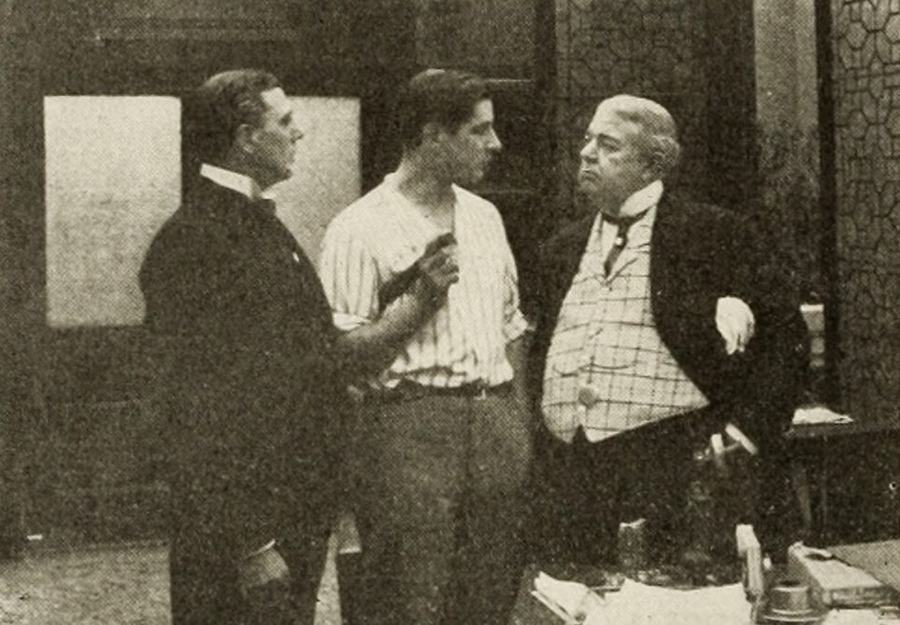
The epilogue, often truncated in repertory prints, deserves restoration. Horrigan, now politically radioactive, wanders a nocturnal potter’s field where failed ward-heelers and nameless corpses share unadorned graves. Tourneur double-exposes their spectral arms—some gloved, some skeletal—erupting from soil to claw at the boss’s tailored trousers. It is a surreal coda that vaults the picture from social melodrama into expressionist nightmare, forecasting the psychological horror fads of the 1920s.
Cinematographer John van den Broek deserves laurels seldom granted to silent-era lensmen. Note how frontier quartz dust hangs in backlit shafts, each fleck a suspended planet; observe the cobalt gaslights of Manhattan avenues reflecting off rain-slick cobblestones, creating a proto-noir chiaroscuro. The film’s tinting strategy—amber for Western exteriors, viridian for political interiors, rose for romantic interludes—functions like leitmotifs, a visual Wagnerism predating The Escape by two years yet seldom acknowledged in academic surveys.
Compared to Tourneur’s later The Last Egyptian, Man of the Hour is leaner, angrier, its social critique honed to a rapier rather than diffused through orientalist spectacle. Conversely, stack it against George Broadhurst’s own stage adaptation of Do Men Love Women? and the celluloid version feels downright modern in its distrust of institutional pieties.
Reception history offers its own irony: trade papers of 1914 lauded the film as “a tonic for the civic spirit,” yet Chicago censors excised the suicide prologue, reducing George’s motive to a vague “financial embarrassment,” a semantic amputation that neuters the film’s ethical engine. Fortunately, the 2018 Library of Congress restoration reinstates the footage, harvested from a scarcely surviving 35mm nitrate print discovered in a defunct Montana opera house.
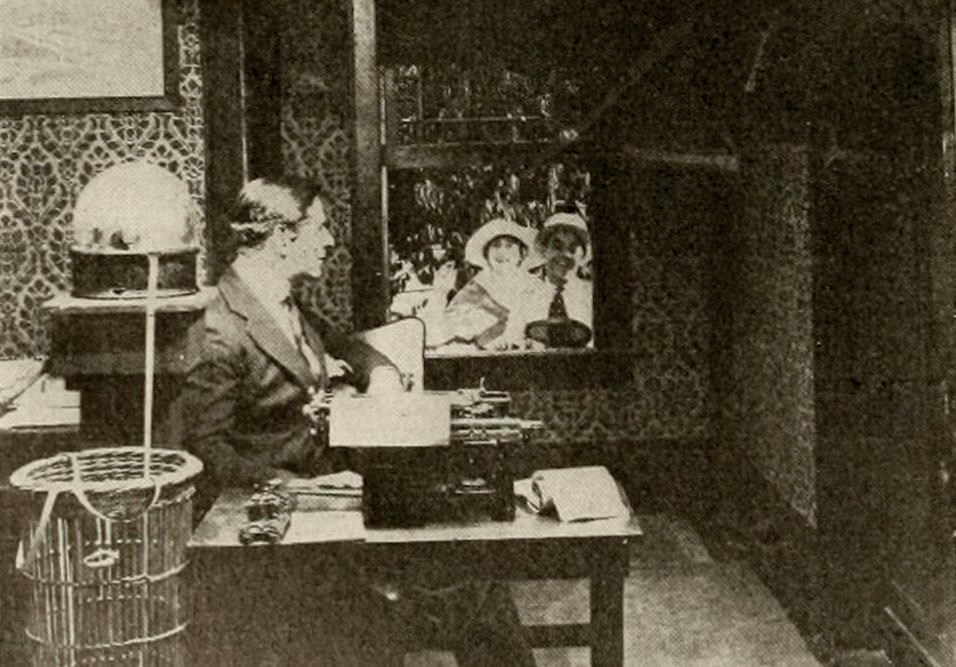
Modern viewers may detect DNA strands bequeathed to latter-day sagas such as The Virginian and even to the morally corrugated universes of 1970s New Hollywood. Henry’s refusal to capitulate to entrenched graft echoes through every protagonist who chooses conscience over consortium, from Michael Corleone’s reluctant ascension to Batman’s grapple with civic rot.
Yet what resonates loudest in the age of algorithmic bubbles and meme demagogues is the film’s prescient distrust of information pipelines. The ease with which Horrigan’s machine fabricates a murder charge, the gullibility of entrenched power structures, the speed at which headlines metastasize into gospel—all feel ripped from the anxieties of a post-truth zeitgeigst.
Performances across the ensemble scale varied heights. Chester Barnett as the youthful sidekick supplies comic relief without devolving into Pickfordish mugging; Johnny Hines, later a slapstick star, here plays a bespectacled stenographer whose silent double-takes punctuate political exposition with vaudeville timing. Ned Burton’s turn as the crusading editor anticipates the ink-stained archetype later perfected in Children of the Stage; or, When Love Speaks.
Some scholars slot Man of the Hour into the “municipal reform” subgenre, a cycle that flourished between Teapot Dome and Prohibition. While accurate, such categorization risks flattening Tourneur’s aesthetic innovations into mere pamphleteering. Yes, the narrative beats align with exposes penned by Lincoln Steffens, but Tourneur’s visual grammar—iris shots that isolate pupils during moral crises, Dutch angles that prefigure German silents, superimpositions that externalize guilt—transcends sociological sermon.
Availability remains spotty. While La voix d’or and I tre moschettieri enjoy pristine Blu-ray transfers, Man of the Hour languishes on YouTube in a 480p watermark-riddled rip. Criterion, Kino, and Flicker Alley have all reportedly passed, citing “insufficient market interest,” a phrase that itself echoes Wainwright’s commodification calculus.
Still, for the cine-curious willing to endure pixels the size of postage stamps, the reward is a masterclass in how early cinema could marry pulp velocity to moral inquiry without the slightest hint of sophomore sermonizing. Tourneur doesn’t ask us to cheer Henry’s triumph; he asks us to inventory the collateral damage glinting in every frame: the immigrant laborers hammering Wainwright’s rails for pennies, the newsboys sleeping under soot-blackened eaves, the widows whose pension funds vanish inside watered stock. The film’s true protagonist is civic conscience itself, a ghost more resilient than any avenging heir.
Final thought: when Dallas professes love even after Henry’s denunciation of her sire, the moment lands less as sentimental capitulation than as Tourneur’s wager on empathy’s durability. Love, like information, can be manipulated, monetized, weaponized—yet something in the human firmware still opts for messy allegiance. That fragile optimism flickers more brightly than any Edison bulb strewn across the rooftop garden, and it is why Man of the Hour, for all its antique irises, feels anything but antique.
IMDb —
1917
Community
Log in to comment.