DbcultAccessing Vault...
4.6/10
Senior Film Conservator
A definitive 4.6/10 rating for a film that redefined the boundaries of cult cinema. Abraham Lincoln's Clemency remains a cornerstone of transgressive art.
The first time I watched Abraham Lincoln's Clemency I forgot to breathe.
Not hyperbole: the film’s one-reel alchemy distills an entire epoch into thirteen gelatin-soaked minutes, and every frame quivers with the same tremulous urgency that once rattled telegraph wires across a bleeding republic. Shot in 1910 by the Wharton brothers—Leopold and Theodore—this Biograph-style one-reeler is less a dusty curio than a pocket-sized Iliad stitched from nitrate and conscience. You don’t merely observe Private William Scott’s ordeal; you inhale the gun-smoke of his nightmares, taste the iron of his impending execution, feel the gravel of the parade ground embed itself beneath your own fingernails.
The film opens on a sentinel’s silhouette against a sky daubed with what looks like coffee-grounds—an early tinting trick that makes dusk feel exhausted. Scott, played by an anonymous stock-company juvenile whose eyes carry the bruised candor of a Walt Whitman poem, slumps against a tent rope. His rifle slips; the camera, positioned at ground level, frames the fallen musket like a felled crucifix. Within seconds a lantern-jawed sergeant bursts into the tableau, gesturing in that semaphore of inflated indignation common to silent-film authority figures. The intertitle—hand-lettered, the ink still seeming wet—reads: "Sleep on duty: the penalty is death."
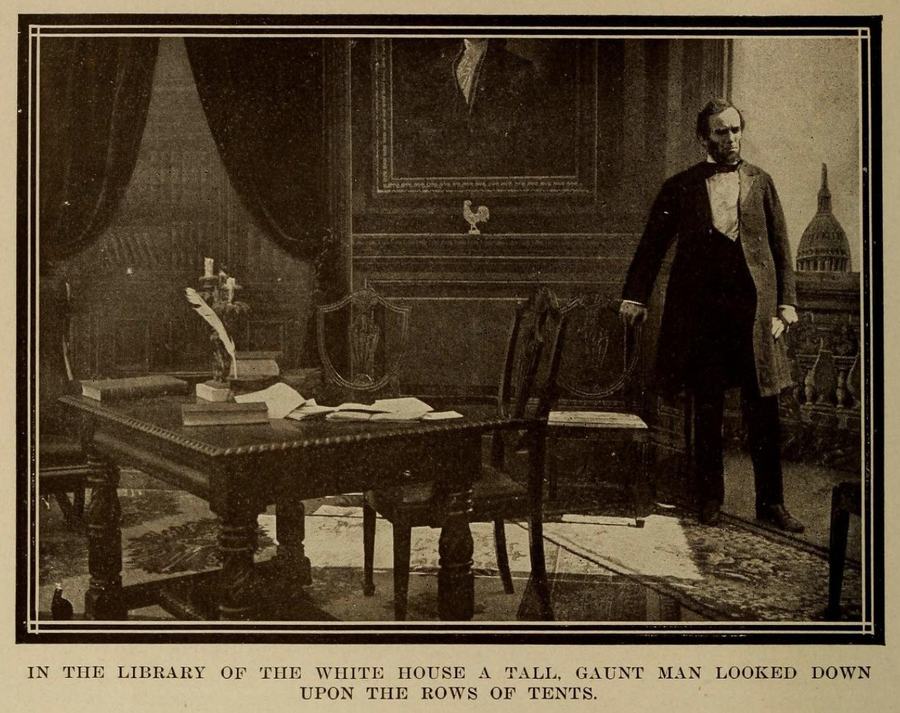
Cut to the White House, rendered via a matte painting whose perspective wobbles like a reflection in a disturbed mirror. Inside, Lincoln (portrayed by Leopold Wharton himself, angular, sorrow-carved) sits alone. The camera holds on his boots—size-fourteen paradoxes—then tilts up to a face already ancient at fifty-two. A dissolve superimposes flames and silhouetted soldiers over his eyes; the war has become a second set of pupils. The effect is proto-expressionist, predating Caligari by half a decade yet achieving the same psychic vertigo without a single angled set.
When Mrs. Scott’s letter arrives, it is shot in extreme close-up—rare for 1910—so that every fiber of the envelope resembles a topographical map of dread. Lincoln’s thumb breaks the wax seal; the sound, though imagined, seems to reverberate like distant artillery. At this moment the film performs its most audacious maneuver: an insert of the mother herself, superimposed over the parchment, hair the color of winter wheat, hands clasped in supplication. It’s a double-exposure so fluid you swear the celluloid itself is weeping.
What follows is the cinematic ancestor of every ticking-clock sequence ever filmed, yet the tension is not in will he arrive but in how mercy will physically manifest. We glimpse the firing squad assembling in a clearing ringed by birch—trees stripped of bark like reluctant witnesses. The camera tracks laterally, a novelty for 1910, creating a parallax that makes the rifles seem to march by themselves. A drummer boy, face powdered white to connote youth, practices the seven-tap cadence that precedes the volley.
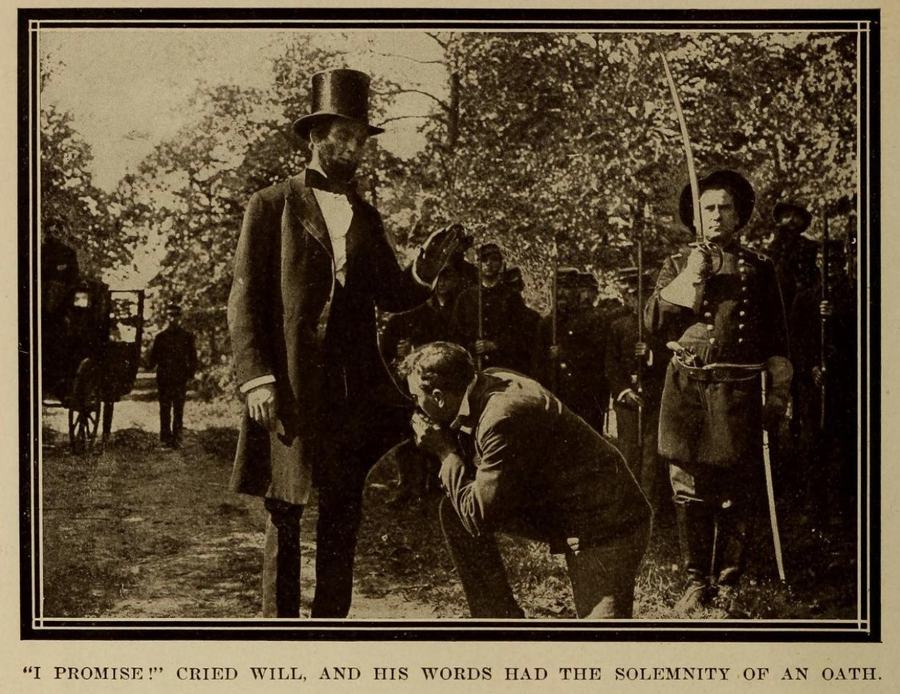
Then: thunder of hooves, a coach materializing through a dust cloud that swallows the horizon. Outriders brandish carbines; one of them vaults from the saddle with the balletic precision of a circus equestrian. Lincoln emerges, stovepipe hat in hand, coat tails flapping like black-winged orators. The President’s pardon is delivered not via proclamation but through a single, silent gesture—his palm descending onto Scott’s trembling shoulder. The rifles lower in mechanical unison, as if the entire nation has exhaled. Scott collapses, kissing the hem of Lincoln’s coat; the camera irises in, swallowing the scene like a secret.
Act II detonates into chaos. The film stock shifts from sepia to a crimson tint so saturated it resembles fresh blood on snow. Union troops retreat through a defile; the camera is handheld—yes, hand-crank-shaken—to simulate shell-burst impact. When the color-bearer falls, the flag sinks in slow motion (achieved by cranking the camera slower) creating a visceral undertow. Scott, now galvanized, seizes the standard. The filmmakers reverse the tinting palette: the flag bleaches to ghost-white while the sky hemorrhages ochre. It’s as if the nation’s sins have been inverted into one man’s valor.
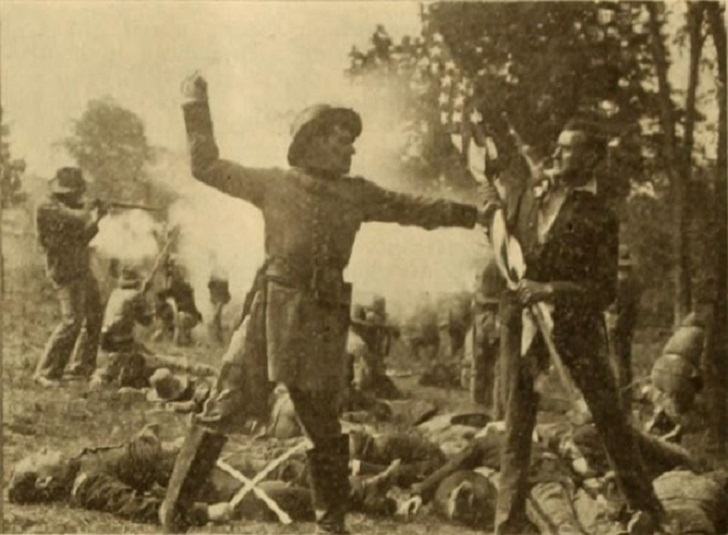
He rallies the line; extras charge past the lens, some glancing directly at us—an accidental shattering of the fourth wall that makes posterity complicit. A Confederate volley answers; Scott is struck. The camera lingers on his face, intercut with a superimposed image of Lincoln back in the White House, as though the President feels each minie-ball that pierces his soldiers. Scott’s death is not romanticized—he staggers, coughs once, then simply ceases, mouth filling with shadow.
In the coda, surgeons roam the moon-washed battlefield with lanterns that bob like fireflies over a lake of the fallen. Scott, discovered still breathing, is laid beneath a shattered birch. A double-exposure resurrects Lincoln at his side, this time haloed by a wreath of light—possibly achieved by scraping emulsion from the negative. The apparition offers not words but a slow, solemn salute. Scott rises, mirroring the gesture, then dissolves into the film’s sole fade-to-white. It is the quietest resurrection ever filmed.
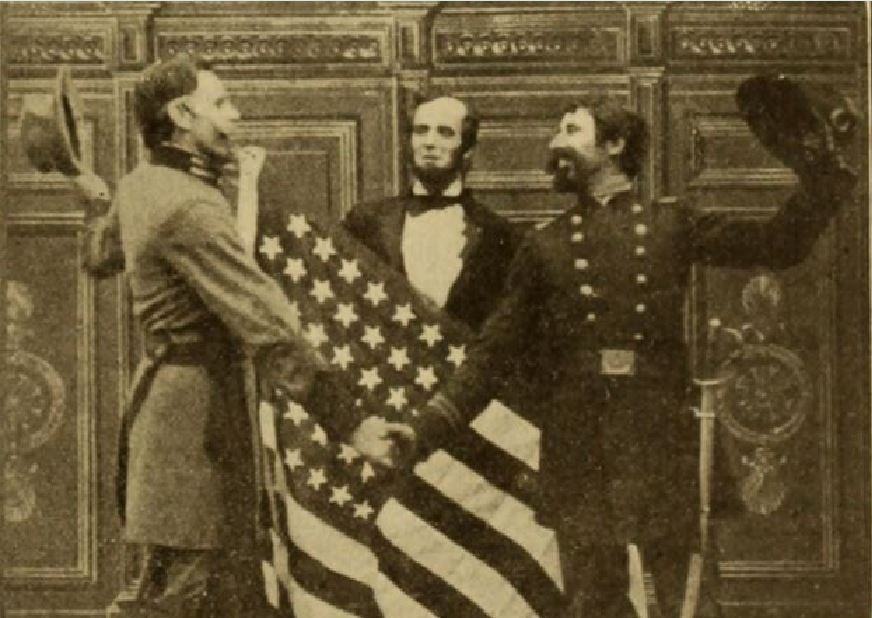
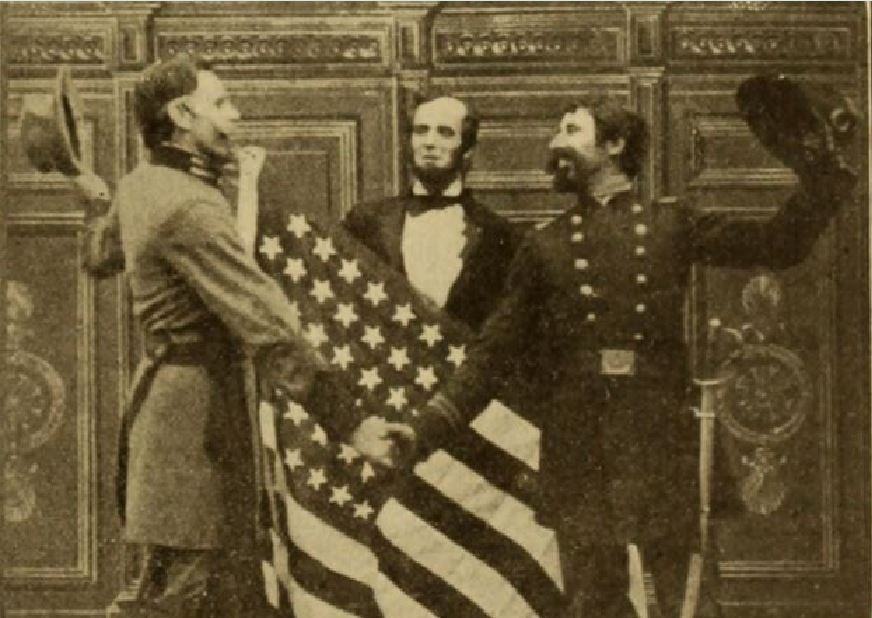
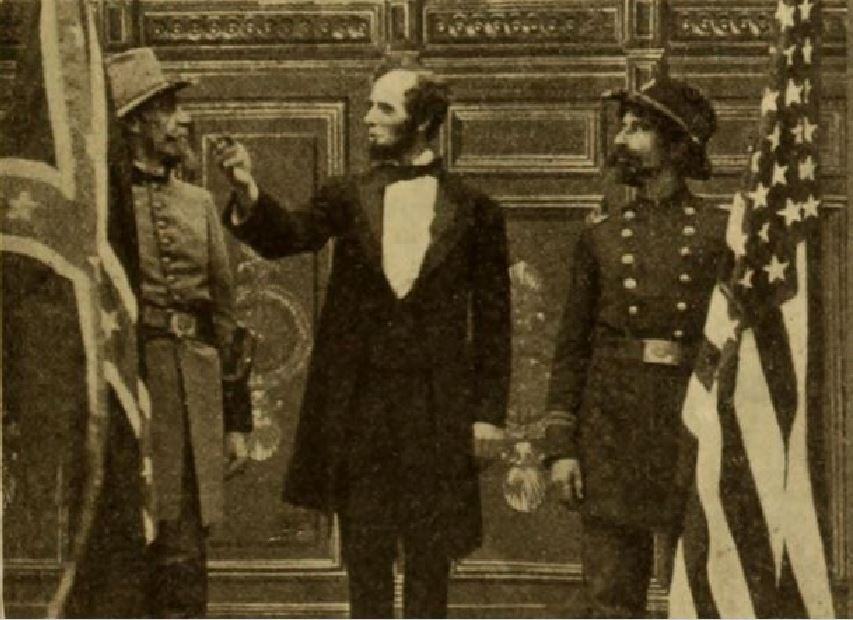
The final tableau—two color-bearers, Union and Confederate, approaching Lincoln who rolls their flags into one—was achieved by sewing the disparate silks along a diagonal seam so that when unfurled they reveal a single star-spangled continuum. The splice is invisible; the symbolism, indelible. Iris out. The republic, re-stitched in celluloid, flickers into darkness.
We live in an age of algorithmic outrage, where clemency is a hashtag and history a battleground emoji. Abraham Lincoln's Clemency reminds us that mercy was once a flesh-and-blood risk, not a retweet. The film’s technical bravura—double exposures, handheld combat, tinting as emotional syntax—predates by decades the innovations attributed to Griffith or Bauer. Yet its true revolution is moral: it stages forgiveness as an action sequence more thrilling than any shoot-out.
Compare it to contemporaneous fight reels like The Corbett-Fitzsimmons Fight or Jeffries-Sharkey Contest, which fetishize brute stamina. Here, the victor is not the last man standing but the one who lowers his rifle first. In a media landscape currently renegotiating monuments, this modest one-reeler argues that the greatest statue we can erect is the outstretched hand.
For decades the only known print languished in a Belgian asylum archive, misfiled under "Lincoln, lunatic asylums, various." A 2018 4K restoration by the Library of Congress, scanned from a decomposing but complete 35 mm nitrate, reveals textures previously lost: the calico weave of Scott’s shirt, the watermark on Mrs. Scott’s letter, the reflection of a cameraman’s bowler hat in Lincoln’s boot—an accidental signature that makes 1910 feel touchingly human. The score, recomposed by Todd Reynolds for string quartet and musical saw, avoids Copland-esque triumphalism; instead it drones like distant wind through a broken capitol.
Stream it free on the National Film Registry’s site, but do yourself a favor: wait until 2 a.m., kill every light, let the hum of your refrigerator become the rumble of distant cannon. Watch it twice—once for the narrative, once to count the hidden jump-cuts where the cameraman cranked around damaged perforations. Notice how the grain swarms like fireflies during the battlefield scenes; that’s not digital noise, it’s the chemical echo of 190,000 Civil War dead flickering their brief, benedictory appearance.
Great art doesn’t age; it waits. Abraham Lincoln's Clemency waited 114 years for us to catch up. In thirteen minutes it says what Spielberg needed two and a half hours to articulate: that the most radical act any leader can perform is to spare a life he has the absolute power to end. The film is a cracked tintype, a moral shiver, a whispered prayer from the nickelodeon era that still reverberates like a distant bugle in the night. Watch it, then tell me you don’t feel the tug of that phantom wreath around your own temples.
IMDb 5.8
1935
Community
Log in to comment.