DbcultAccessing Vault...
Cult Review
Senior Film Conservator
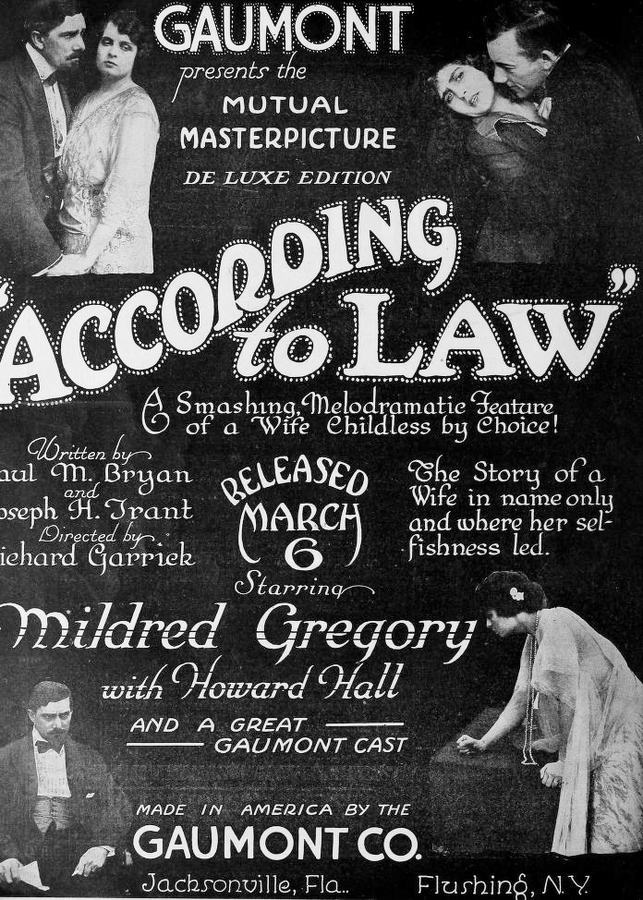
In the annals of early cinema, certain films stand as testament to the era's burgeoning narrative sophistication, grappling with themes that remain perennially relevant. Joseph H. Trant and Paul M. Bryan’s 1916 masterpiece, According to Law (slug: according-to-law), is precisely one such work. More than a mere period piece, it is a meticulously woven tapestry of human desire, legal minutiae, and the enduring quest for identity and belonging. This film, starring the compelling E.K. James and the luminous Helen Marten, transcends its time to offer a potent commentary on societal expectations, the fragility of marital bonds, and the often-unforeseen consequences of legal technicalities.
At its core, According to Law introduces us to Isabel Bland, portrayed with captivating vivacity by Helen Marten. Isabel is a woman seemingly ahead of her time, harboring a profound disinclination towards motherhood, preferring a life unburdened by the traditional domestic sphere. Her wealthy, reclusive husband, Robert (E.K. James), presents a stark contrast; his singular, overriding ambition is to secure an heir, a lineage to perpetuate his considerable legacy. This fundamental divergence in their aspirations creates an immediate, palpable chasm between them, a silent discord that gradually widens into an irreparable rift. Robert's subsequent entanglement with another woman serves as the final, brutal severance, prompting Isabel to seek solace and autonomy in their idyllic Florida island summer home. It’s a classic setup, yet imbued with a psychological depth that elevates it beyond simple melodrama, hinting at the complex internal landscapes of its characters. The film deftly portrays how deeply personal desires can clash with societal pressures, particularly for women of the era, who often found their worth defined by their capacity for procreation and domesticity.
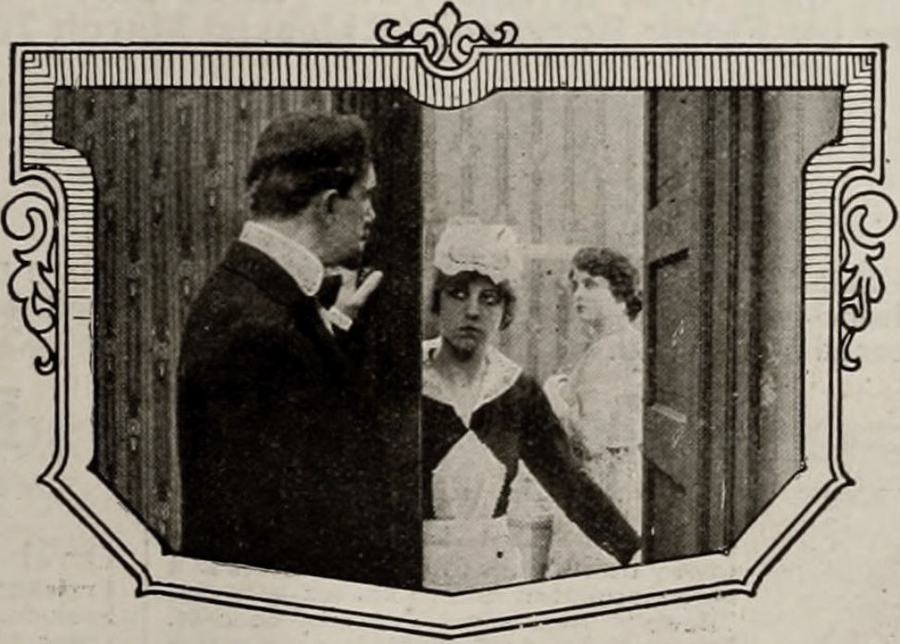
As Isabel retreats, Robert, too, withdraws, seeking refuge in the solitude of the Everglades, leaving his sprawling business empire in the hands of his roguish brother, John (Charles W. Travis). John is a character cast in the mould of the opportunistic schemer, whose affable exterior belies a calculating mind – a crucial element that will resurface with significant impact later in the narrative. Meanwhile, Isabel's past resurfaces in the form of William Proctor (Madison Weeks), an old sweetheart whose arrival at the island home ignites a spark of rekindled romance. Proctor represents a road not taken, a potential life free from the constraints and disappointments of her marriage to Robert. His presence becomes a potent temptation, offering Isabel an escape into a simpler, perhaps happier, past. The introduction of these characters not only propels the plot forward but also deepens the emotional stakes, creating a complex web of relationships where loyalty, desire, and ambition intertwine.
The film reaches its dramatic zenith when Robert, having learned of Proctor's presence and finding his love for Isabel unexpectedly reawakened, journeys to the island. His arrival coincides with a raging storm, a classic cinematic device that mirrors the internal maelstrom of emotions swirling around the characters. Through a windowpane, Robert witnesses a scene of profound intimacy: Isabel passionately embracing Proctor. It is a moment of raw, visceral pain, yet it is immediately followed by a powerful visual metaphor. A sudden flash of lightning illuminates Robert's anguished face pressed against the glass, a ghostly apparition witnessing betrayal. This electrifying image serves as a brutal awakening for Isabel. The sight of Robert's suffering, framed by the tempest, strengthens her resolve to resist Proctor's allure. It’s a pivotal instance of moral reckoning, where the destructive force of nature converges with human emotion to forge a new path. Isabel, confronted with the stark reality of her actions and Robert's enduring, if complicated, affection, chooses reconciliation. This scene is masterfully constructed, a testament to the visual storytelling capabilities of early cinema, relying on dramatic tension and symbolic imagery to convey profound emotional shifts. It's a moment that echoes the moral dilemmas found in other contemporary dramas like The Other's Sins, where characters grapple with the weight of their choices and societal judgment.

Their reconciliation, however, is tinged with a tragic irony. A mere year later, Isabel, the woman who once eschewed motherhood, dies in childbirth, fulfilling Robert's deepest desire at the cost of her own life. From this poignant sacrifice emerges their daughter, Bella. This narrative turn is a powerful exploration of fate and the unpredictable currents of human existence. Isabel's journey from rejecting maternity to ultimately giving her life for it is a profound arc, underscoring the complexities of love, duty, and the unexpected paths life can take. Her death leaves a void, but also a legacy – Bella, now the focal point of Robert's hopes and, as we soon discover, the unwitting subject of a future legal battle. The film gracefully transitions across two decades, allowing the consequences of these early choices to mature and manifest in the next generation. The passing of time is not merely a plot device but a narrative mechanism to demonstrate the enduring impact of personal decisions on future lives and fortunes.
Twenty years later, Bella (Mildred Gregory) has blossomed into a young woman, embodying the hopes and perhaps the unresolved tensions of her parents' past. Her life takes an abrupt turn when she rejects a marriage proposal from her cousin, Ralph (Alan Robinson), the son of the cunning John. This rejection ignites a malicious retaliation from John, who seizes the opportunity to challenge Bella's legitimacy and, by extension, her right to Robert's substantial inheritance. John's claim is rooted in a technicality: because Isabel and Robert never formally remarried after their divorce, he argues, Bella is illegitimate and therefore not Robert's lawful heir. This plot point brilliantly exposes the precariousness of women's and children's rights in that era, where legal status could be arbitrarily challenged, threatening one's entire future. The film delves into the societal shame and financial ruin that such a declaration of illegitimacy could entail, painting a stark picture of the patriarchal legal landscape. Bella's predicament resonates with the struggles for agency and recognition seen in films like The Mail Order Wife or Behind the Scenes, where women navigate complex social structures to secure their standing.
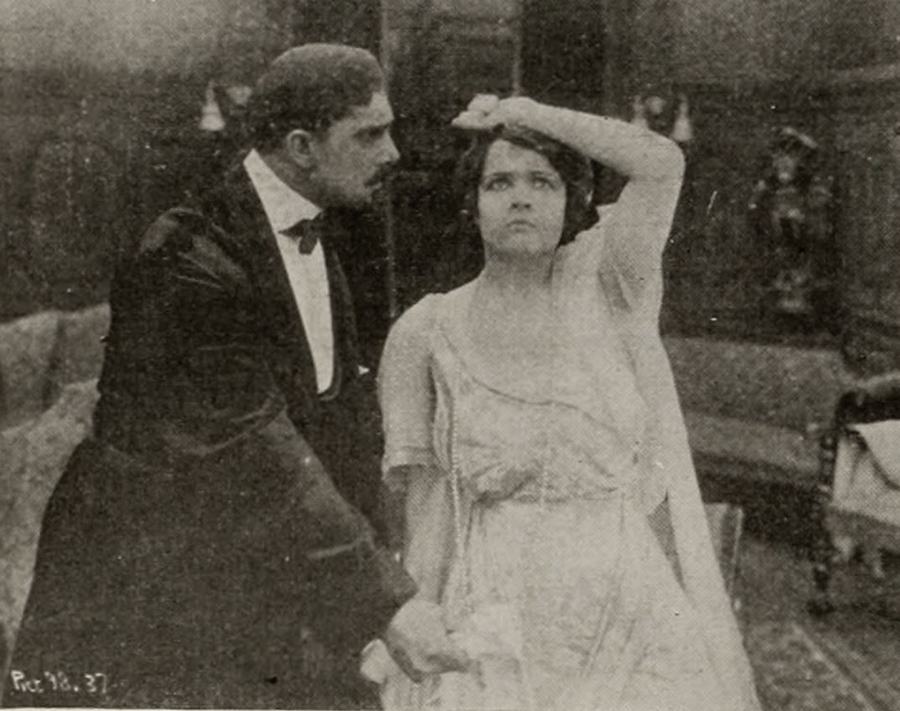
Just as Bella's future seems irrevocably imperiled, a crucial twist emerges, delivered by Judge Randolph (John Reinhardt), a figure of integrity and, coincidentally, the father of Bella's sweetheart, Sidney Austin (Howard Hall). Judge Randolph, perhaps driven by a sense of justice or a desire to aid his son's beloved, unearths a startling legal oversight: the original divorce decree between Isabel and Robert was never finalized due to unpaid court fees. This revelation is a masterful stroke of narrative ingenuity, a 'deus ex machina' that is nonetheless grounded in the meticulously bureaucratic reality of legal systems. The technicality renders the divorce invalid, meaning Isabel and Robert were, in the eyes of the law, still married at the time of Bella's birth. This single discovery unequivocally affirms Bella's legitimacy, dismantling John's avaricious claim and securing her rightful inheritance. The power of this plot point lies not just in its dramatic impact but in its commentary on the rigidity and sometimes absurd technicalities of the law. It highlights how a minor administrative omission could have colossal consequences, yet in this instance, it serves to rectify a profound injustice. The film’s title, According to Law, now takes on a dual meaning: the law was initially used to challenge Bella, but it is ultimately the law, correctly interpreted and applied, that vindicates her. This intricate legal maneuvering invites comparison to other legal dramas of the period, such as The Curious Conduct of Judge Legarde, which also explored the intricacies and potential pitfalls of the justice system.
The success of According to Law relies heavily on the compelling performances of its ensemble cast. Helen Marten as Isabel Bland delivers a nuanced portrayal of a woman grappling with personal desires versus societal expectations, her arc from independent spirit to tragic mother resonating deeply. E.K. James as Robert effectively conveys the quiet torment of a man consumed by the desire for an heir, his eventual emotional vulnerability adding layers to his initially stoic character. Madison Weeks brings a charismatic charm to William Proctor, making his temptation a believable threat to Isabel's resolve. Charles W. Travis, as the duplicitous John, embodies the film's antagonist with a calculating menace that drives much of the later conflict. Mildred Gregory's Bella, though appearing later in the film, carries the emotional weight of her legacy with grace, navigating the challenges of her parentage and contested inheritance with a quiet strength. The writers, Joseph H. Trant and Paul M. Bryan, deserve commendation for crafting a narrative that, while adhering to the dramatic conventions of the era, manages to infuse its characters with genuine psychological depth and its plot with unexpected twists. The visual direction, particularly in scenes like the storm-laden confrontation, demonstrates a sophisticated understanding of cinematic language, using environment to amplify emotional states.
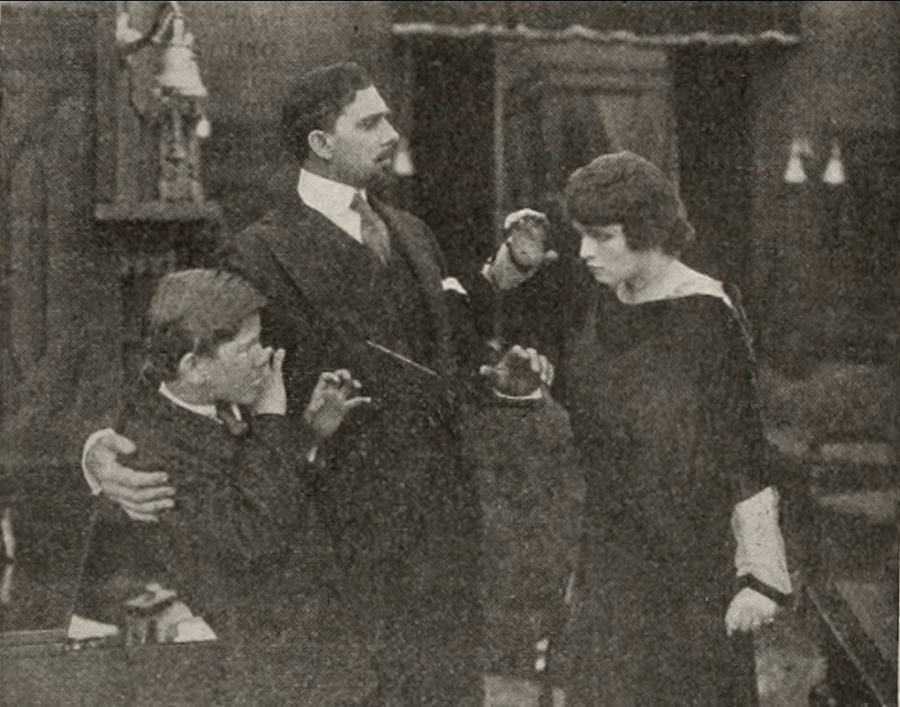
According to Law is more than just a legal drama; it is a profound meditation on the intricate interplay between human emotion and codified rules. The central theme revolves around the definition of legitimacy – not just in the legal sense, but in the broader context of personal identity and societal acceptance. The film challenges viewers to consider whether true justice is merely a strict adherence to statutes or if it encompasses a deeper moral truth. Isabel's initial rejection of motherhood and her ultimate sacrifice for it speak volumes about the evolving roles of women and the enduring power of love and duty. The film also delves into the destructive nature of greed, personified by John's relentless pursuit of Robert's estate, and the enduring strength of familial bonds. The resolution, with Bella's legitimacy proven and her subsequent marriage to Sidney Austin, offers a satisfying sense of poetic justice, suggesting that while the path may be fraught with legal complexities and personal tragedies, love and truth can ultimately prevail. It is a narrative that, despite its period setting, speaks to timeless human experiences of desire, loss, and the quest for a rightful place in the world. The film's exploration of inheritance and family disputes also finds parallels in other early cinematic works like The Betrothed, where legacies and bloodlines often dictated destinies.
When considering According to Law within the broader landscape of early 20th-century cinema, its narrative ambition and thematic depth truly shine. While films like Champagneruset might explore the intoxicating allure of passion, and The Other's Sins delves into moral transgressions, According to Law manages to weave both romantic entanglements and ethical dilemmas into a compelling legal framework. Its intricate plot, driven by a crucial legal loophole, sets it apart, positioning it as an early exemplar of the courtroom drama genre, even if the 'courtroom' itself is more of a background influence than a central setting. The film's portrayal of a woman challenging societal norms, even if tragically, resonates with the burgeoning feminist sentiments of the era, albeit subtly. Its exploration of identity tied to legal status also finds thematic brethren in stories where characters fight for their rightful place, whether it's through proving lineage or asserting personal agency. This film, therefore, doesn't just entertain; it provides a valuable historical lens into the legal and social anxieties of its time, skillfully packaged within a gripping human drama.
In conclusion, According to Law stands as a compelling and surprisingly sophisticated piece of early American cinema. Its intricate plot, rich characterizations, and profound thematic explorations of love, duty, legitimacy, and the often-unpredictable nature of the law make it a film well worth revisiting. Joseph H. Trant and Paul M. Bryan crafted a narrative that is both emotionally resonant and intellectually stimulating, showcasing the power of storytelling to reflect and critique the societal structures of its time. The film's enduring appeal lies in its ability to pose fundamental questions about what truly constitutes 'right' and 'wrong,' 'legal' and 'just,' proving that some narratives, much like the enduring human spirit, transcend the boundaries of time and medium. For enthusiasts of classic film, particularly those interested in the evolution of legal and social dramas, According to Law remains an essential viewing, a testament to the enduring power of a well-told story.
IMDb —
1926
Community
Log in to comment.