DbcultAccessing Vault...
6.5/10
Senior Film Conservator
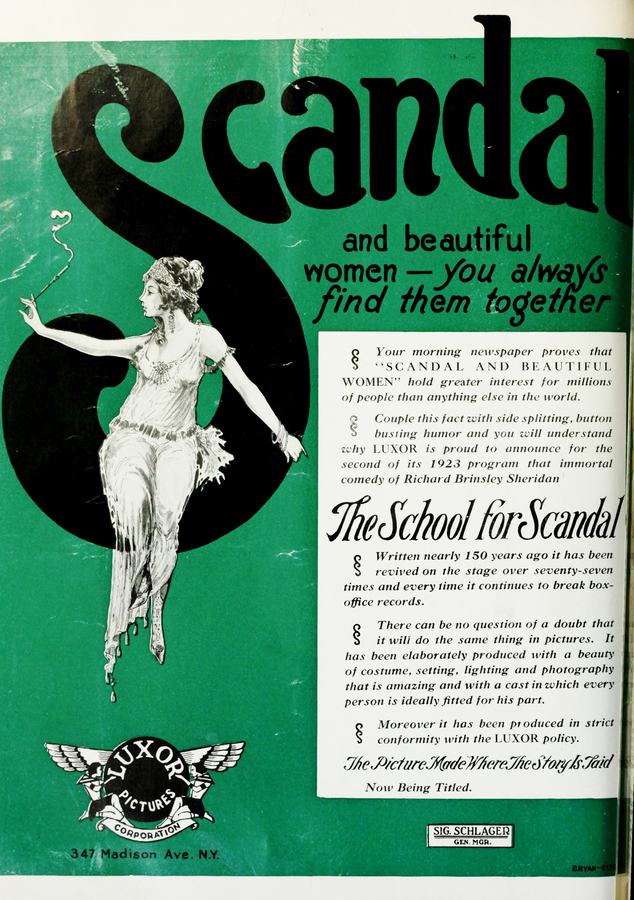
A definitive 6.5/10 rating for a film that redefined the boundaries of cult cinema. The School for Scandal remains a cornerstone of transgressive art.
The year 1923 represented a pivotal juncture for British cinema, a period where the medium wrestled with its theatrical lineage while striving to forge a unique visual vocabulary. At the heart of this aesthetic struggle lies the silent adaptation of The School for Scandal, a film that attempts to translate the razor-sharp repartee of Richard Brinsley Sheridan into the silent realm of shadows and pantomime. To strip a play renowned for its linguistic dexterity of its dialogue is an audacious gamble, yet this production survives as a fascinating artifact of early 20th-century ambition.
The narrative remains a sprawling tapestry of artifice and reputation. Sir Oliver Surface, portrayed with a sturdy gravity by A.G. Poulton, returns from his tenure in India to find his lineage in a state of moral flux. He enters a London populated by the 'scandalmongers'—a gaggle of aristocratic vultures who feed on the corpses of reputations. Unlike the more visceral dramas of the era, such as the evocative The Siren's Song, this film focuses on the cerebral and social mechanics of deception. Sir Oliver’s decision to disguise himself as a usurer, 'Mr. Premium,' provides the film with its most potent dramatic irony, allowing the camera to linger on the faces of his nephews as they reveal their authentic selves under the pressure of financial desperation.
The film functions as a mirror to the Georgian era, reflecting a society where the image one projects is far more consequential than the soul one possesses.
A primary draw for modern cinephiles is the presence of a young Basil Rathbone as Joseph Surface. Long before he became the definitive Sherlock Holmes, Rathbone was honing his ability to portray intellectual menace and calculated hypocrisy. His Joseph is a marvel of subtle histrionics; every bow is too deep, every smile too fleeting. He embodies the 'man of sentiment' whose morality is merely a cloak for his predatory instincts. In contrast, John Stuart as Charles Surface offers a performance of kinetic energy and disheveled charm. While Charles is a spendthrift, the film captures his inherent decency through his refusal to sell the portrait of his 'old uncle Noll,' a moment of genuine pathos that stands out against the backdrop of cynical social climbing.
Visually, the production design leans heavily into the opulence of the 18th century, though constrained by the technical limitations of 1923 British studios. The interiors are cluttered with the signifiers of wealth—heavy drapery, ornate candelabras, and the omnipresent screens that serve as both furniture and plot devices. There is a distinct theatricality to the staging, reminiscent of the period-accurate sets found in Madame Du Barry, yet the director utilizes close-ups to bridge the gap between the stage and the screen. The flickering light of the silent era adds an ethereal, almost spectral quality to the masquerade balls and drawing-room confrontations, emphasizing the ghostly nature of reputation.
The 'Screen Scene' remains the film’s centerpiece. It is a sequence of intricate choreography that requires the viewer to track three separate perspectives simultaneously. Lady Teazle, played with a mercurial innocence by Queenie Thomas, finds herself trapped behind a screen in Joseph’s library while her husband, Sir Peter Teazle (Sidney Paxton), and her secret admirer, Charles, enter the room. The tension is palpable, even without the spoken word. The intertitles, written by Frank Miller, do an admirable job of condensing Sheridan’s dense wit into digestible bites, but it is the physical reactions—the widening of an eye, the trembling of a hand—that carry the emotional weight. This reliance on visual storytelling differentiates it from contemporaries like Almost Married, which relied more heavily on linear melodrama.
One cannot ignore the supporting cast, who populate the 'School' with a grotesque vibrancy. Mary Brough and Elsie French as the gossiping doyennes provide the necessary friction, their faces contorted into masks of judgmental glee. They represent the collective voice of a society that values the destruction of character over the cultivation of virtue. Their performances are broad, perhaps too broad for modern sensibilities, but they align perfectly with the satirical traditions of the 1770s. This film, much like Sham, explores the thin veneer of respectability that covers the rot of the upper classes.
Comparing this to other works of the early twenties, such as the lighthearted Penrod or the whimsical His Majesty, the Scarecrow of Oz, The School for Scandal feels remarkably adult. It deals with the complexities of marital infidelity, the crushing weight of debt, and the performative nature of kinship. It avoids the simplistic moralizing often found in films like Let Katie Do It, opting instead for a nuanced look at how people navigate a world that is fundamentally dishonest. The cinematography, while static by today's standards, manages to capture the claustrophobia of the social elite, where every word is overheard and every movement is scrutinized.
The film’s pacing is deliberate, mirroring the slow unfolding of a scandal. It does not possess the frenetic energy of Toonerville Tactics or the slapstick rhythm of Hot Dog. Instead, it asks the audience to observe the slow-motion collision of Joseph’s lies. When the screen finally falls, exposing Lady Teazle, the silence of the film medium actually enhances the shock. The absence of sound creates a vacuum where the characters' shame and the audience's realization meet in a singular, poignant moment. It is a testament to the power of silent film that a play so dependent on 'talk' can still deliver such a visceral punch.
Reflecting on the legacy of this adaptation, it serves as a crucial link in the chain of Sheridan interpretations. It lacks the color and sound of later versions, but it possesses a raw, expressive quality that is often lost in more polished productions. It shares a certain thematic DNA with The Betrothed in its focus on social obligation versus personal desire. Furthermore, the film’s exploration of identity and disguise prefigures the psychological depth that would later define the decade's cinema. Even in the briefest scenes, such as those involving the servant Snake or the various creditors, there is a sense of a world that is lived-in and weary.
For those interested in the evolution of British acting, seeing Rathbone in this context is invaluable. He brings a precision to the screen that feels modern, a sharp contrast to the more theatrical gesticulations of his peers. His performance suggests that he understood the camera's ability to detect the slightest flicker of insincerity. This film, along with others like Rosemary Climbs the Heights, showcases the diversity of roles available to actors in the burgeoning industry, from domestic dramas to high-society satires.
Ultimately, The School for Scandal is a triumph of adaptation. It respects the source material while acknowledging the unique requirements of the silent screen. It manages to be both a scathing critique of 18th-century London and a mirror to the 1920s, another era obsessed with image and sudden fortune. While it may not have the surrealist flair of Jungle Dancers or the experimental nature of The Message of Emile Coué, its strength lies in its characterizations and its unwavering focus on the fragility of the human ego. It is a film that demands attention, rewarding the viewer with a sophisticated exploration of what happens when the masks we wear finally begin to slip. In the grand lineage of cinematic history, from the early explorations of The Heritage of France to the chaotic energy of Black and Tan Mix Up, this 1923 gem occupies a space of dignified, intellectual rigor that remains remarkably potent a century later.
IMDb —
1915
Community
Log in to comment.