DbcultAccessing Vault...
Cult Review
Senior Film Conservator
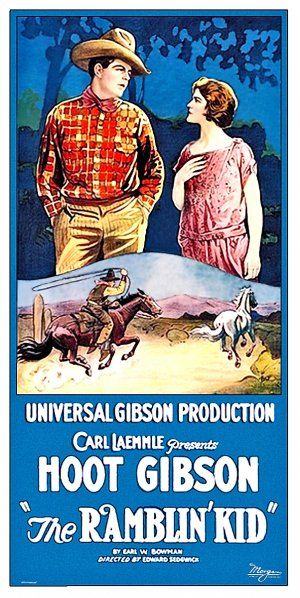
The silent era, a period often romanticized and sometimes overlooked, was a fertile ground for cinematic archetypes, and few genres flourished with such vibrant storytelling as the Western. Among the countless tales of cowboys, outlaws, and the untamed frontier, 'The Ramblin' Kid' emerges as a compelling example of the genre's enduring power, intertwining classic tropes with a surprisingly nuanced exploration of character and morality. Released during a time when the myth of the West was still being actively shaped by popular culture, this film, penned by Richard Schayer and Earl Wayland Bowman, offers a window into the values and anxieties of its time, presenting a narrative that, while ostensibly simple, resonates with timeless themes of integrity, betrayal, and the pursuit of love against formidable odds.
At the heart of 'The Ramblin' Kid' is its eponymous hero, portrayed with a compelling blend of rugged charm and earnest vulnerability by G. Raymond Nye. Nye, a familiar face in Westerns of the period, embodies the quintessential cowboy figure: a man of the land, guided by an unspoken code of honor, whose skills in the saddle are matched only by the purity of his intentions. His 'ramblin'' nature suggests a freedom, a spirit unburdened by societal constraints, yet it also implies a longing for connection, a yearning for a place to call home and a heart to share it with. Nye’s performance, reliant entirely on physical expression and subtle gestures, captures the internal struggle of a man who is both a product of his environment and an individual striving for something more profound. His gaze, often direct and unwavering, conveys a depth of character that transcends the limitations of silent film, inviting the audience to invest emotionally in his journey. This portrayal contrasts sharply with the more overt, often melodramatic, acting styles seen in some contemporary films, such as the intense, almost grotesque physicality of Lon Chaney in The Penalty, where the villain's internal torment is externalized with disturbing clarity. Nye, by comparison, offers a more restrained, yet equally effective, depiction of a hero whose strength lies as much in his moral compass as in his physical prowess.
The arrival of Carolyn June, a 'beautiful easterner' played by Carol Holloway, serves as the primary catalyst for the narrative's romantic trajectory and much of its conflict. Holloway, with her elegant demeanor and refined sensibilities, perfectly embodies the archetypal 'Eastern Belle' who ventures into the wild West, bringing with her a touch of civilization and, often, a challenge to the established order. Her presence immediately sets up a cultural dichotomy – the rough-hewn authenticity of the cowboy against the polished sophistication of the city dweller. This dynamic is a staple of the Western genre, often used to explore themes of assimilation, progress, and the clash between tradition and modernity. Carolyn June is not merely a prize to be won; she represents an ideal, a vision of domesticity and companionship that the Ramblin' Kid, despite his wandering spirit, implicitly craves. Holloway’s performance, though constrained by the period's conventions, successfully communicates a blend of vulnerability and quiet strength, making her character a worthy object of the Kid's affections and a compelling figure in her own right. Her journey involves not just falling in love, but also coming to appreciate the unique virtues of the Western lifestyle, a subtle transformation that adds depth to the romantic subplot.
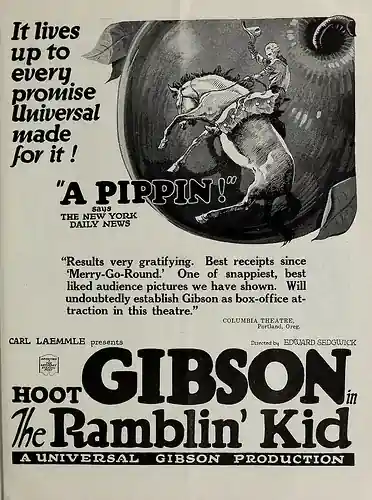
No hero's journey is complete without a formidable antagonist, and 'The Ramblin' Kid' delivers in the form of Sabota the Greek, a 'crafty racetrack tout.' This character, whose very name hints at a certain exoticism and untrustworthiness, personifies the corrupting influence that threatens the nascent purity of the Western romance. Sabota is not a brute, but a schemer, a manipulator whose weapon is deceit rather than direct confrontation. His decision to 'dope' the Kid before the pivotal rodeo highlights his cowardice and his reliance on underhanded tactics, distinguishing him from the more straightforward villains of other Westerns. This specific act of sabotage elevates the stakes beyond mere physical competition; it becomes a moral battleground, a test of the Kid's inherent goodness against the villain's calculated malice. The portrayal of Sabota, likely by an actor who understood the nuances of silent film villainy, would have relied on exaggerated expressions and gestures to convey his duplicity, making him a truly hissable character for contemporary audiences. His presence underscores the film's broader thematic concern with the clash between honest labor and dishonest gain, a prevalent motif in stories set against the backdrop of burgeoning American capitalism.
The rodeo sequence stands as the narrative's dramatic zenith, a spectacular showcase of skill, courage, and the ultimate triumph of the human spirit. In the context of silent film, depicting such a dynamic event required innovative cinematography and editing to convey the excitement and danger. The rodeo is more than just a competition; it is a symbolic arena where the Kid's worth, both as a cowboy and as a man, is put to the ultimate test. His victory, achieved 'in spite of having been doped,' transforms the event from a mere sporting contest into an epic struggle against injustice. The visual language of the rodeo – the thundering hooves, the dust, the straining muscles of both man and beast – would have been meticulously crafted to evoke visceral reactions from the audience. This sequence serves as a powerful metaphor for life's challenges, suggesting that true character is revealed not when things are easy, but when one faces adversity with unwavering resolve. It’s a moment of catharsis, not unlike the grand performances in Ring Up the Curtain, where a character's destiny is decided on a public stage, though here the stakes are personal honor and love, rather than theatrical acclaim.
While G. Raymond Nye and Carol Holloway carry the central narrative, the film's richness is undoubtedly enhanced by its supporting cast. Names like William Welsh, Goober Glenn, Gyp Streeter, and the legendary Hoot Gibson contribute to the vibrant tapestry of the Western community. Hoot Gibson, in particular, was a rodeo champion turned actor, lending an authentic air to the film's portrayal of cowboy life. His presence, even in a supporting role, would have resonated deeply with audiences familiar with his real-life exploits. Laura La Plante and Harold Goodwin also feature, adding further depth to the ensemble. The interplay between these characters, even if often communicated through intertitles, helps to build a believable world, a community where allegiances are tested and friendships forged. Silent films often relied on a strong ensemble to flesh out the narrative and provide comedic relief or dramatic tension, and 'The Ramblin' Kid' appears to have benefited from a well-chosen group of performers who understood the nuances of the genre. Their collective presence helps to ground the more melodramatic elements of the plot in a sense of lived reality, making the Kid's struggles and triumphs feel all the more impactful.
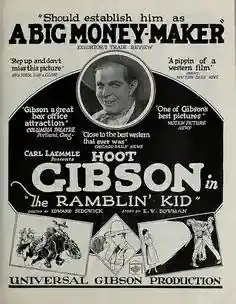
In an era devoid of synchronized sound, the art of cinematic storytelling rested heavily on visual composition, editing, and the judicious use of intertitles. 'The Ramblin' Kid' would have employed these techniques to maximum effect, guiding the audience through its unfolding drama. The director, whose name isn't explicitly provided in the prompt but whose vision would have been paramount, would have utilized wide shots to establish the expansive Western landscape, contrasting it with tighter close-ups to convey emotion during moments of romance or tension. The pacing of the film, particularly during the rodeo sequence, would have been crucial, building suspense and excitement through rapid cuts and dynamic camera angles. Intertitles, far from being mere plot exposition, were an integral part of the narrative tapestry, often delivering dialogue, setting the scene, or providing moral commentary. Their design and frequency could significantly impact the viewing experience. A well-crafted silent film, such as 'The Ramblin' Kid' promises to be, uses these elements in concert to create a compelling and emotionally resonant experience, demonstrating a mastery of visual grammar that often feels lost in the cacophony of modern cinema. The clarity of its narrative, despite the lack of spoken words, is a testament to the skill of the filmmakers in communicating complex emotions and plot points through purely visual means, much like the intricate visual storytelling of J'accuse!, albeit in a vastly different genre and context.
'The Ramblin' Kid' is more than just a cowboy romance; it is a moral fable dressed in buckskin and Stetson. The central conflict between the Kid and Sabota the Greek is a stark representation of good versus evil, integrity versus deceit. The Kid embodies an almost Edenic purity, a connection to the natural world and an inherent sense of justice. Sabota, on the other hand, represents the encroaching corruption that often accompanied the expansion of civilization and its attendant vices, such as gambling and manipulation. The doping incident is particularly poignant, as it is an attempt to poison not just the Kid's physical performance, but his very spirit. His ultimate triumph, therefore, is not merely a personal victory but a symbolic affirmation of enduring values: that honesty and perseverance will ultimately prevail over treachery. This narrative arc, deeply ingrained in Western mythology, speaks to a foundational American belief in the power of individual virtue to overcome systemic or personal corruption. It's a theme that resonates across many films of the era, from the simpler moral lessons of The Noon Whistle to the more complex ethical dilemmas found in Tarnished Reputations, each exploring how characters navigate a world where moral lines can become blurred.
'The Ramblin' Kid,' like many of its silent Western contemporaries, offers a fascinating glimpse into the nascent stages of cinematic storytelling and the enduring power of classic narrative structures. While the technical sophistication of modern blockbusters might overshadow its simplicity, the film's core appeal lies in its straightforward yet powerful emotional resonance. It reminds us that fundamental human desires – for love, for justice, for recognition – are timeless. For contemporary audiences, viewing 'The Ramblin' Kid' is not just an exercise in film history; it is an opportunity to appreciate the artistry of a bygone era, to understand how stories were told when images spoke louder than words. The film contributes to the rich tapestry of early American cinema, solidifying the Western as a genre capable of both thrilling action and heartfelt romance. Its narrative, while adhering to well-worn conventions, delivers a satisfying emotional payoff, proving that even without dialogue, a compelling story, well-acted and thoughtfully directed, can leave an indelible mark. It stands as a testament to the universal language of cinema, a charming piece of history that continues to ramble its way into the hearts of those who seek to rediscover the magic of the silent screen, much like the discovery of a hidden gem such as Gems of Foscarina offers a unique cinematic experience.
In conclusion, 'The Ramblin' Kid' is far more than a mere relic of the past. It is a vibrant, engaging piece of cinematic history that skillfully weaves together romance, drama, and action within the iconic setting of the American West. Its exploration of character, its clear delineation of good and evil, and its thrilling rodeo climax all combine to create a film that, despite its age, remains remarkably accessible and enjoyable. It serves as a reminder of the foundational narratives that built Hollywood and continues to offer valuable insights into the evolution of film as an art form and a cultural force. The film embodies the spirit of adventure and the pursuit of happiness that defined its era, making it a compelling watch for anyone interested in the roots of American cinema or simply in a good old-fashioned tale of courage and love.
IMDb 5.3
1929
Community
Log in to comment.