DbcultAccessing Vault...
Cult Review
Senior Film Conservator
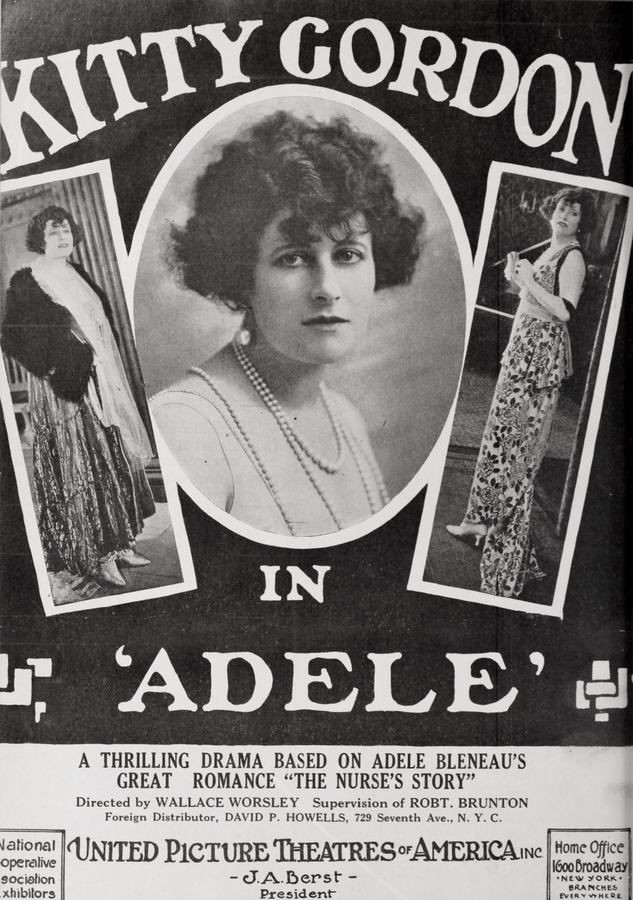
In the annals of silent cinema, where grand gestures and poignant glances often superseded spoken dialogue, Adele emerges not merely as a narrative, but as a vivid, emotionally charged canvas depicting the profound human cost of conflict. Released in 1919, as the world still reeled from the Great War's devastation, this film by director Jack Cunningham (also credited as a writer alongside Adele Bleneau, an intriguing overlap of character and creator) transcends a simple melodrama to become a compelling exploration of moral compromise under duress. It’s a testament to the era’s storytelling prowess, demonstrating how silent film, far from being a nascent art form, had already mastered the art of suspense and character-driven drama.
The film's very pulse emanates from its lead, Kitty Gordon, whose portrayal of Adele Bleneau is nothing short of captivating. Gordon, a star of the stage and screen known for her striking beauty and expressive eyes, imbues Adele with a potent blend of compassionate professionalism and steely resolve. Adele is introduced as a young nurse, a vital assistant to her renowned surgeon father, suggesting a life steeped in healing and ethical practice. This foundation makes her subsequent descent into the murky waters of espionage all the more harrowing. Her initial encounter with Captain Fraser, a dashing British army officer played by Mahlon Hamilton, in the diplomatic hub of Washington, D.C., sparks a romance that feels both fated and fragile, a beacon of personal happiness threatened by the encroaching shadows of war. Hamilton, with his earnest demeanor, perfectly embodies the archetype of the heroic soldier, making his plight genuinely affecting.
The journey across the Atlantic, ostensibly for her father's professional engagements in France, serves as a crucial narrative pivot. It is here that the seemingly innocuous acquaintance of Count von Schulling, a German diplomat portrayed with chilling subtlety by Wedgwood Nowell, morphs into something far more sinister. Nowell’s performance is a masterclass in understated menace; his initial charm, an elegant veneer, gradually peels away to reveal a calculating manipulator. His burgeoning infatuation with Adele isn't presented as romantic, but rather as an possessive obsession, a predatory gaze that foreshadows the moral quicksand into which Adele will soon be drawn. This dynamic, subtly built through lingering looks and carefully framed interactions, is a prime example of silent film's power to convey complex emotional states without a single spoken word.
Upon their arrival in war-torn France, the narrative accelerates with a palpable sense of urgency. Adele, driven by a love that defies the perils of wartime, orchestrates a daring rescue mission to retrieve Captain Fraser, who has been wounded deep behind enemy lines on a clandestine operation. This sequence is particularly notable, showcasing Adele's courage and resourcefulness, traits often relegated to male protagonists in films of the era. It elevates her beyond the damsel-in-distress trope, casting her as an active agent in her own destiny and that of the man she loves. The tension here is expertly crafted, relying on visual cues and the inherent danger of the setting to keep audiences on the edge of their seats, much like the thrilling escapades seen in contemporary adventure serials.
A cruel twist of fate, however, ensures that Adele's triumph is short-lived. Having successfully located and transported the gravely injured Fraser to a hospital, she discovers that Count von Schulling, also wounded, has been placed in the very same room. This spatial proximity, a deliberate narrative device, intensifies the dramatic irony. The sanctuary of the hospital, typically a place of healing and refuge, becomes a psychological battleground. Joseph J. Dowling, though perhaps in a smaller role, contributes to the ensemble's effectiveness, grounding the supporting cast with solid performances that bolster the central drama.
The narrative reaches its agonizing zenith when German forces overrun the hospital. Adele, now trapped, faces an unbearable ultimatum from von Schulling: either she becomes an informant, spying for the Germans, or Captain Fraser will be summarily executed. This moral dilemma is the beating heart of Adele. It forces the protagonist, whose life has been dedicated to preserving life, into a position where she must betray her country, her principles, and potentially her love, to save the man she cherishes. The film masterfully portrays Adele's internal torment through Gordon's expressive acting—her wide, desperate eyes, her trembling hands, the silent screams conveyed through her very posture. It's a powerful indictment of war's dehumanizing effect, where personal loyalties are twisted into weapons and individual conscience is pitted against overwhelming force.
This particular narrative device, the forced choice under duress, was a staple of wartime melodramas, but Adele elevates it by grounding it in a character whose integrity is so clearly established. Unlike some more overtly propagandistic films of the era, Adele delves into the psychological toll of such a decision, making it resonate on a deeply human level. The film's ability to sustain this tension, relying heavily on visual storytelling and the audience's empathy for Adele, is a testament to its dramatic sophistication.
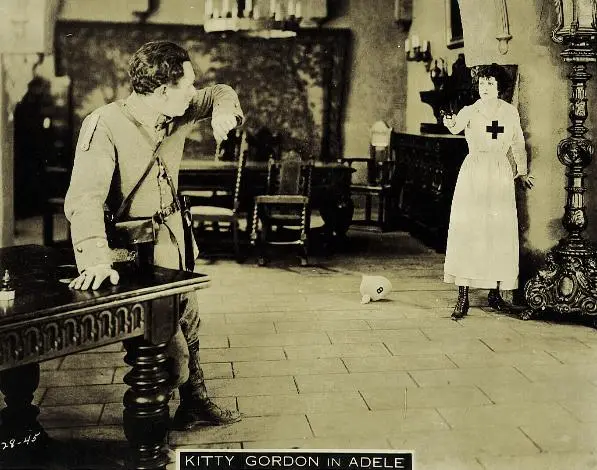
The direction, likely overseen by Jack Cunningham, along with the cinematography, plays a crucial role in conveying the film's complex narrative and emotional landscape. Silent films often relied on stark contrasts, dramatic lighting, and carefully composed frames to communicate meaning. In Adele, we see effective use of close-ups to capture the nuances of Gordon's performance, particularly her internal struggle. The visual language of despair, hope, and determination is articulated through subtle shifts in facial expression and body language, making intertitles less of a crutch and more of an enhancement. The sets and costumes, while perhaps not as lavish as later productions, effectively establish the period and atmosphere, from the bustling elegance of Washington to the grim realities of a French wartime hospital. The sense of foreboding that permeates the ship journey, for instance, is built through the interplay of character interactions and the ominous vastness of the sea, a silent observer to the unfolding drama.
The film's thematic resonance extends beyond mere wartime romance. It tackles questions of loyalty – to one's nation, to one's beloved, to one's personal ethics. Adele’s dilemma forces a painful re-evaluation of where these loyalties intersect and diverge. Is saving a life always the highest calling, even if it means aiding the enemy? The film dares to ask these uncomfortable questions without necessarily providing easy answers, reflecting the moral ambiguities inherent in any conflict. This depth is what elevates Adele from a simple genre piece to a more enduring cinematic statement.
Released in 1919, Adele arrived at a pivotal moment in both world history and cinematic evolution. The Great War had just concluded, leaving a profound impact on the global psyche. Films of this period often grappled with themes of patriotism, sacrifice, and the enduring power of love amidst devastation. While not as overtly propagandistic as some earlier war films like America Goes Over (1918), Adele nonetheless channels the anxieties and moral complexities of a world trying to make sense of unprecedented conflict. It reflects a society grappling with the aftermath, where the lines between hero and villain, friend and foe, could become agonizingly blurred under extreme pressure.
The film also stands as a noteworthy example of the burgeoning sophistication of silent film narrative. By the late 1910s, filmmakers had moved beyond mere spectacle, embracing more intricate plots and deeper character studies. One might draw a parallel, in terms of psychological intensity and the exploration of a protagonist's inner turmoil, to films like The Case of Becky (1915), which delved into the complexities of dual personalities. While Adele doesn't venture into the supernatural, it shares a similar commitment to portraying a mind under extreme stress, making the audience privy to the character's profound internal struggle. The reliance on visual cues and the compelling performance by Gordon are central to this psychological depth.
Revisiting Adele today offers a valuable glimpse into the artistry and thematic preoccupations of early 20th-century cinema. It reminds us that powerful storytelling doesn't require spoken dialogue or advanced special effects; it thrives on compelling characters, high stakes, and universal human emotions. The film's narrative, though rooted in a specific historical context, presents a dilemma that remains timeless: the individual's struggle against overwhelming forces, and the sacrifices made in the name of love and survival. Kitty Gordon's performance, in particular, stands as a testament to the expressive power of silent acting, conveying a range of emotions with a subtlety that belies the common misconception of over-the-top melodrama.
While films like The Blinding Trail (1919) might have offered contemporary audiences a different flavor of drama, Adele carved out its own niche by intertwining wartime intrigue with deeply personal stakes. It’s a film that asks us to consider the moral compromises inherent in conflict and the profound courage required to navigate them. The narrative's pacing, its escalating tension, and the sheer emotional weight of Adele's predicament ensure that it remains a compelling watch, even for modern viewers unaccustomed to the rhythms of silent cinema. The final decision Adele is forced to make, and the path she chooses, underscores the film's commitment to exploring the complexities of human nature rather than offering simplistic resolutions.
Ultimately, Adele is more than just a historical curiosity; it is a potent dramatic work that utilizes the unique strengths of the silent medium to tell a story of love, war, and an impossible choice. Kitty Gordon’s performance anchors the entire production, making Adele’s plight intensely relatable and her courage truly inspiring. It is a film that lingers in the mind, prompting reflection on the ethical dilemmas faced by individuals caught in the machinery of global conflict, and affirming the enduring power of human resilience in the face of insurmountable odds. A true gem from the silent era, it deserves to be rediscovered and appreciated for its artistry and profound emotional impact, serving as a reminder of the foundational narratives that shaped the cinematic landscape.
IMDb 5.5
1930
Community
Log in to comment.