DbcultAccessing Vault...
5.5/10
Senior Film Conservator
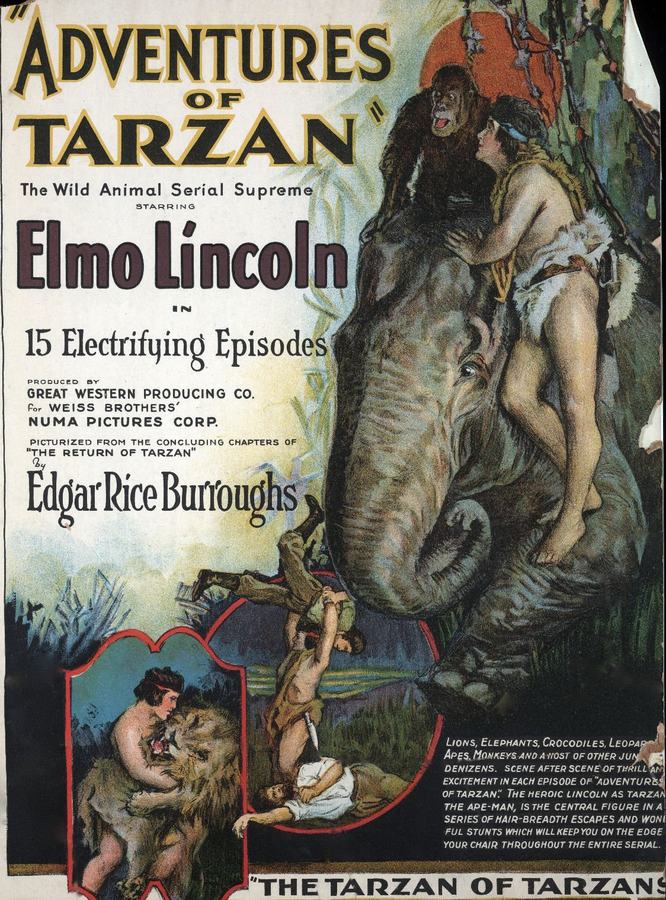
A definitive 5.5/10 rating for a film that redefined the boundaries of cult cinema. Adventures of Tarzan remains a cornerstone of transgressive art.
Picture 1928: flappers jitterbug to gramophones while Wall Street holds its breath, yet inside a tin-roofed Chicago studio Robert F. Hill is busy unleashing Africa that never was—papier-mâché escarpments, stock-footage lions, double exposures of crocodiles grinning like Broadway ushers. Adventures of Tarzan lands on nickelodeon marquees as fifteen episodic thunderbolts, each ending with a cliffhanger sharp enough to slit tomorrow’s homework hour. Kids trade scene-still postcards; critics scoff at the serial’s “savage hokum.” A century later, the joke’s on the cynics: the film pulses with an erotic, pre-code voltage you could power the whole of Opar with.
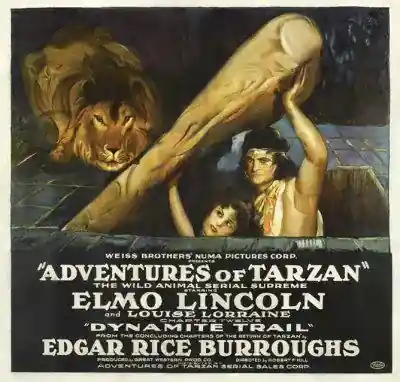
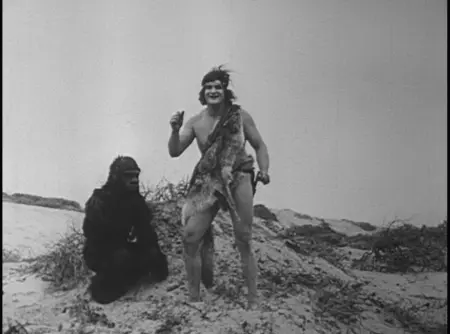
Cinematographer Scott Pembroke treats monochrome like wet clay. Day-for-night sequences glimmer sickly jade; solar flares leak across the frame, turning Jane’s petticoat into molten gold. The camera gorges on Louise Lorraine’s limbs—ropes bite her wrists, river water slicks her calves—while Frank Merrill’s greased torso becomes a living statue, every sinew etched by arc lights. Miniature hippos bob in teacup-size lagoons; a full-grown Joe Martin the chimp wears baby-pinch curls and steals every scene by simply scratching his head. The illusion wobbles, yet belief suspends, because the film believes in itself with sweaty, evangelical fervor.
Before Hays slammed the gate, Adventures of Tarzan could flaunt what later cycles only hinted. Jane’s blouse tears to neckline; La’s priestesses dance bare-breasted behind strategic foliage. The intertitles—written by pulp patriarch Edgar Rice Burroughs himself—growl lines like “The beast in man wakes when woman’s skin gleams.” Translation: lust is the real apex predator. Censors in Boston hacked four reels; Philippine boards burned Chapter 9 for depicting interracial rescue. Yet surviving prints radiate the taboo electricity that makes pre-code cinema a time-capsule heartbeat under modern floorboards.

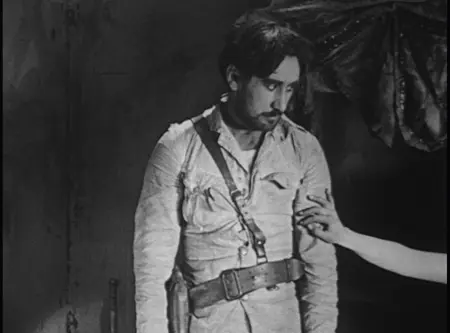
Frank Merrill—an ex-Navy gymnast who could chin-lift a baby grand—plays Tarzan as half feral cat, half wounded poet. Watch his pupils when Jane is dragged away: the whites vanish, irises eclipse, a stunt no CG could replicate. Opposite him, Louise Lorraine refuses to be mere scream-queen; she spits grit, claws sand, even head-butts a priest. Their chemistry sizzles like rain on tin. Meanwhile Charles Gay’s Clayton twirls villainy with pencil-mustache precision, a capitalist vampire thirsting for pedigree. In robes of hammered brass, Lillian Worth’s Queen La slinks as though cobra and courtesan merged, her every gesture a hieroglyph of menace.
Released months after The Jazz Singer, Adventures stayed defiantly mute. Original road-show screenings boasted live jungle orchestras—bongo, tabla, police whistles. Today’s Kino restoration syncs a percussive score by Mont Alto Motion Picture ensemble: timpani mimic elephant stomps, violins squeal like tree-apes, a lone trumpet heralds Tarzan’s triumph. The effect is narcotic; each crescendo slams you into the next chapter even if Netflix beckons.
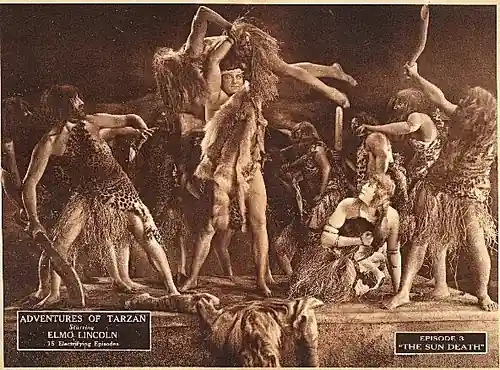
Modern eyes wince at swarthy slavers and lily-white savior trope. Yet the serial complicates its own ideology: Arab captors trade with corrupt European officials; Opar’s Amazons mock male conquest. Tarzan ultimately rejects civilization’s heraldry, swinging back into leafy exile—a subtle indictment of empire’s paper crowns. Compare this ambivalence with Pique Dame’s czarist fatalism or The Last Days of Pompeii’s volcanic comeuppance: pulp sometimes predicts its own deconstruction.
Nitrate decomposition chewed reels 3 and 11; only a 16 mm Czech print rescued the bridal-cave escape. UCLA’s Robert Gitt spearheaded a 4 K scan, coaxing grain like orchids blooming under moonlight. Tinting tables rebuilt via chem-spectrography: chapter 7’s amber dusk, chapter 12’s cyan dawn. The result isn’t squeaky-clean; scars remain—scratches shaped like machete paths—reminding us film is mortal flesh, not immortal pixel.
Fifteen twenty-minute episodes demand a ritual patience alien to scroll culture. Yet the cliffhanger architecture—leopard pounce, rope fray, torch dropped into powder keg—rewires dopamine pathways same as today’s auto-play. Difference? Between episodes you had to walk home under street lamps, imagination fermenting. Now algorithms erase the walk; Adventures restores it.
While Adventures roared, rival studios flirted with other exotica. Tiger Land traded vines for Indian jungles; Princess Virtue swapped testosterone for flapper royalty. None matched Tarzan’s raw athleticism. Only The Witch Woman paralleled its erotic pre-code audacity, but lacked Burroughs’ mythic scaffolding.
Strip away the papier-mâché, Adventures of Tarzan is a love letter to perpetual motion—bodies skimming ravines, hearts ricocheting between dread and desire. It teaches that heroism is not birthright but a daily refusal to release the dangling vine, even when crocodiles grin below. In an era of green-screen glut, watching Merrill actually dangling over a back-projection river feels like communion with analog danger. Smoke curls from the projector, the pianist hits a thunder chord, and for four hours you remember why cinema was once called “dreams that money can buy.”
Watch it at midnight, lights off, volume high. Let the silent roar echo. Somewhere between the grain and the gasp, you’ll swing too.
IMDb —
1929
Community
Log in to comment.