DbcultAccessing Vault...
Cult Review
Senior Film Conservator
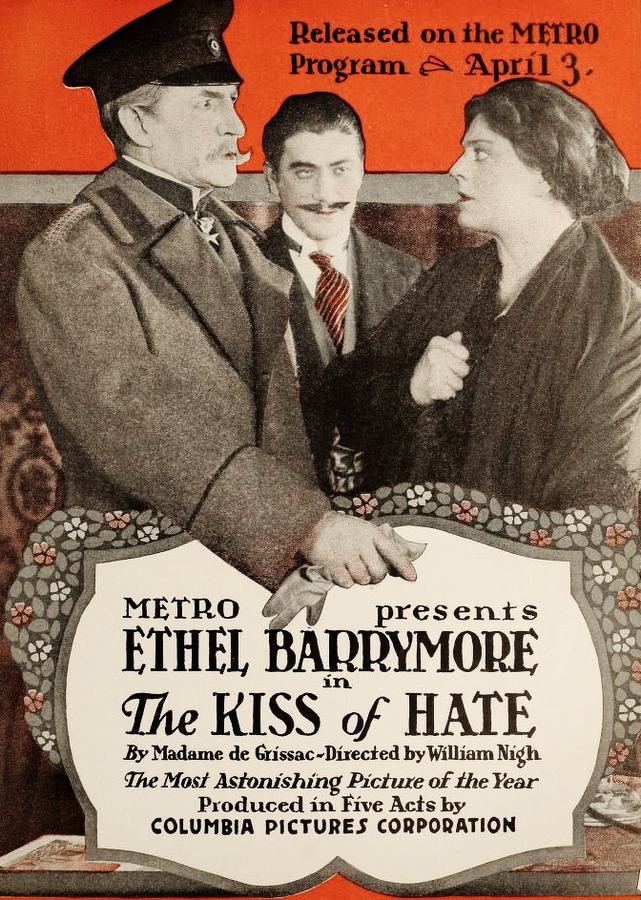
Stepping into the world of "The Kiss of Hate" is to be immediately plunged into a chilling tableau of Tsarist Russia, a historical epoch rife with political intrigue, religious persecution, and the suffocating weight of autocratic power. This cinematic offering, a potent drama from an earlier era, doesn't merely recount a story; it unravels a profound moral quandary, exploring the depths of human depravity and the resilience of the human spirit when confronted with unspeakable tyranny. It is a stark reminder that the battle for justice is often waged not on grand battlefields, but in the intimate, terrifying spaces of individual conscience and sacrifice. The film, penned by Frédérique De Grésac, stands as a testament to the power of early cinema to tackle weighty, socially relevant themes with an unflinching gaze, serving as a vital historical document of both its narrative subject and the burgeoning art form itself.
The narrative commences with an almost deceptive sense of optimism. The arrival of Count Peter Turgeneff (H. Cooper Cliffe) in the provincial outpost of Valogda, accompanied by his daughter Nadia (Ethel Barrymore) and son Paul (Victor De Linsky), heralds a momentary respite for the beleaguered Jewish community. Turgeneff is depicted as a man of uncommon rectitude and compassion, his reputation for fairness preceding him, fostering a fleeting hope among the residents of the Ghetto, particularly Isaac (William 'Stage' Boyd), their venerable prophet. His governance, predicated on mercy and justice, stands in stark contrast to the prevailing atmosphere of fear and oppression that had long characterized the region. This initial setup immediately establishes a clear moral dichotomy, a foundational tension that will drive the subsequent, increasingly harrowing events. The mere presence of such a benevolent figure in a landscape dominated by cruelty creates an almost palpable sense of fragile peace, a calm before the inevitable storm.
However, this fragile peace is anathema to Michael Orzoff (Robert Elliott), Valogda's grim Prefect of Police. Seated in his fortress office, a veritable spider at the center of a web of spies and secret agents, Orzoff embodies the very essence of institutionalized malevolence. He is not merely an antagonist; he is the personification of the state's most sinister impulses, the architect of the dreaded "Yellow Jackets," a clandestine organization whose explicit objective is the systematic extermination of the Jewish people. Orzoff's influence, extending far beyond Valogda into the hallowed corridors of Petrograd, renders him virtually untouchable, his power absolute and terrifyingly unchecked. His disdain for Turgeneff's humane policies is immediate and visceral, viewing the Count's compassion as a direct challenge to his own virulent authority. The Prefect's character is drawn with broad, menacing strokes, a theatrical villain whose every action radiates a chilling, calculating evil. One might draw thematic parallels to the insidious nature of political corruption seen in films like "The Years of the Locust", where societal decay is often mirrored in the moral rot of its powerful figures, though Orzoff's specific brand of prejudice adds a particularly venomous layer.
Orzoff's initial animosity towards Turgeneff swiftly intensifies with the realization that Nadia, the Count's daughter, is not only strikingly beautiful but also shares her father's fervent commitment to justice for the oppressed. This combination of beauty and principle ignites a dangerous obsession within the Prefect, transforming his political opposition into a deeply personal and depraved vendetta. Orzoff, a man accustomed to wielding absolute power, sees Nadia as a prize to be conquered, her defiant spirit merely fuel for his insatiable ego. His resolve hardens; Turgeneff and his ideals must be eliminated, and Nadia, broken and subjugated, must become his. The screenplay skillfully pivots at this juncture, elevating the conflict from a mere political struggle to a terrifying personal assault, making the stakes infinitely more visceral and harrowing for the audience. The vulnerability of women in positions of power, or indeed, lack thereof, is a recurring, tragic motif in narratives of this period, and Nadia's plight resonates with the broader struggles depicted in other early cinematic works.
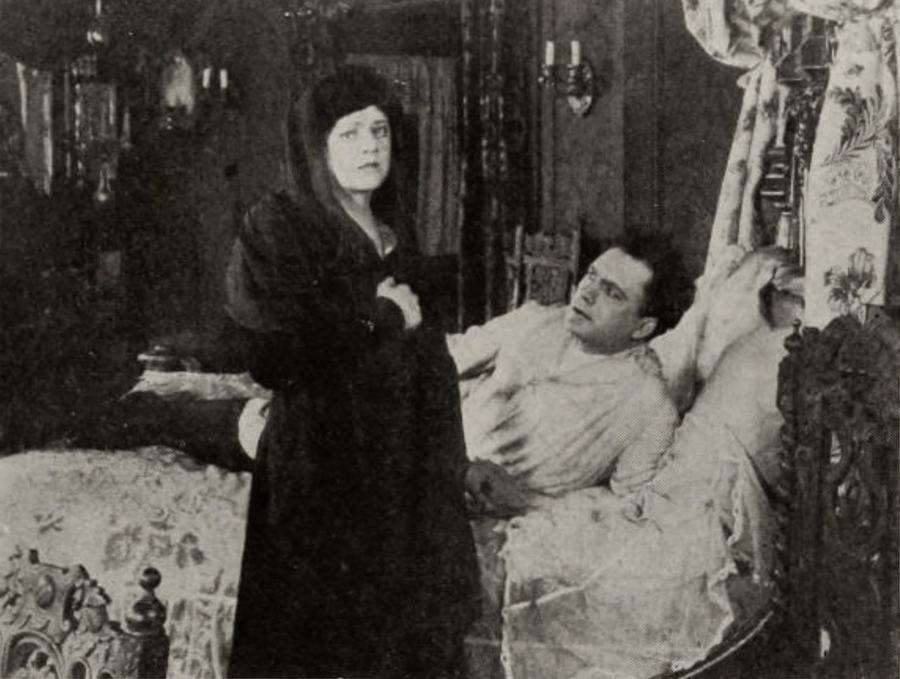
The Prefect's plan, a masterpiece of diabolical manipulation, is set into motion on the night of a grand ball at the Governor's palace. This glittering social event, intended as a symbol of Turgeneff's progressive governance, is meticulously transformed by Orzoff into a stage for his horrific drama. At Nadia's noble insistence, members of the Jewish community, including Isaac and Leah (Ilean Hume), whose honor had previously been sullied by Orzoff's crude lust, attend the ball, intending to confront the Prefect with their grievances. Their courage, however, is tragically misjudged against the backdrop of Orzoff's calculated malevolence. The sudden, violent eruption of a frenzied mob, shrieking "Death to the Jews," shatters the festive atmosphere. This orchestrated pogrom, a chilling display of orchestrated hatred, serves as a brutal climax to Orzoff's initial scheme. The chaos is deliberately allowed to escalate just long enough for an assassin's bullet, undoubtedly Orzoff's doing, to find its mark in Count Turgeneff's heart. The swift arrival of Orzoff's uniformed men to "disperse" the rioters is a cynical charade, a performance of order restoring itself after the very chaos they instigated. This sequence is a masterclass in tension and betrayal, a potent commentary on how easily mob mentality can be weaponized by those in power.
But Orzoff's depravity knows no bounds. Secure in his unassailable position in Petrograd, he swiftly moves to consolidate his power and further torment his victims. Nadia, her brother Paul, and Isaac are summarily seized and imprisoned in the fortress under the fabricated charge of treason. This act of blatant injustice underscores the absolute impunity with which Orzoff operates, transforming the Governor's palace from a symbol of hope into a scene of unspeakable tragedy, and the fortress into a crucible of despair. The film, at this point, shifts into a more intimate, terrifying psychological drama. The subsequent scene, where Orzoff confronts Nadia in her cell, is where the titular "kiss of hate" truly manifests, albeit metaphorically. He delivers a chilling ultimatum: "You will give yourself to me," he declares with brutal abruptness, "or your brother shall suffer the torture by fire ere he goes to Siberia." This is not a proposal; it is a declaration of ownership, a horrific choice presented to a woman already reeling from the murder of her father and the imprisonment of her loved ones.
Nadia's desperate, contemptuous strike at Orzoff in the dim light of her cell is a defiant act, a visceral rejection of his monstrous proposition. Yet, his chilling response—"Listen, and you shall hear for yourself; only your promised work can stop this pain"—serves as a cruel reminder of her utter powerlessness. The implied sounds of her brother's torment, or the threat thereof, are a psychological weapon far more potent than any physical restraint. Ethel Barrymore, a titan of the stage and screen, brings an extraordinary intensity to Nadia's ordeal. Her silent anguish, her internal struggle between self-preservation and familial loyalty, must have been profoundly impactful for audiences of the era. Barrymore, known for her formidable presence and expressive capabilities, would have conveyed the depth of Nadia's despair and defiance through subtle gestures and powerful facial expressions, a hallmark of silent film acting. This scene, more than any other, encapsulates the film's core theme: the ultimate degradation of humanity under tyranny, where even personal integrity is held hostage.
The technical aspects of "The Kiss of Hate", while perhaps rudimentary by today's standards, would have been cutting-edge for its time. The use of lighting to create atmosphere, particularly in the dark confines of the fortress cell, would have been crucial in conveying the psychological dread. The cinematography, focusing on close-ups of the actors' faces, would have amplified the emotional impact, allowing the audience to intimately connect with Nadia's torment and Orzoff's chilling resolve. The direction, likely emphasizing clear visual storytelling given the absence of spoken dialogue, would have relied heavily on body language, melodrama, and intertitles to advance the plot and convey character motivations. The ensemble cast, including the contributions of William 'Stage' Boyd as the venerable Isaac and Victor De Linsky as Paul, would have been tasked with articulating complex emotions without the benefit of sound, a true art form in itself. The ability to convey such profound injustice and moral degradation through purely visual means is a testament to the skill of these early filmmakers and performers.
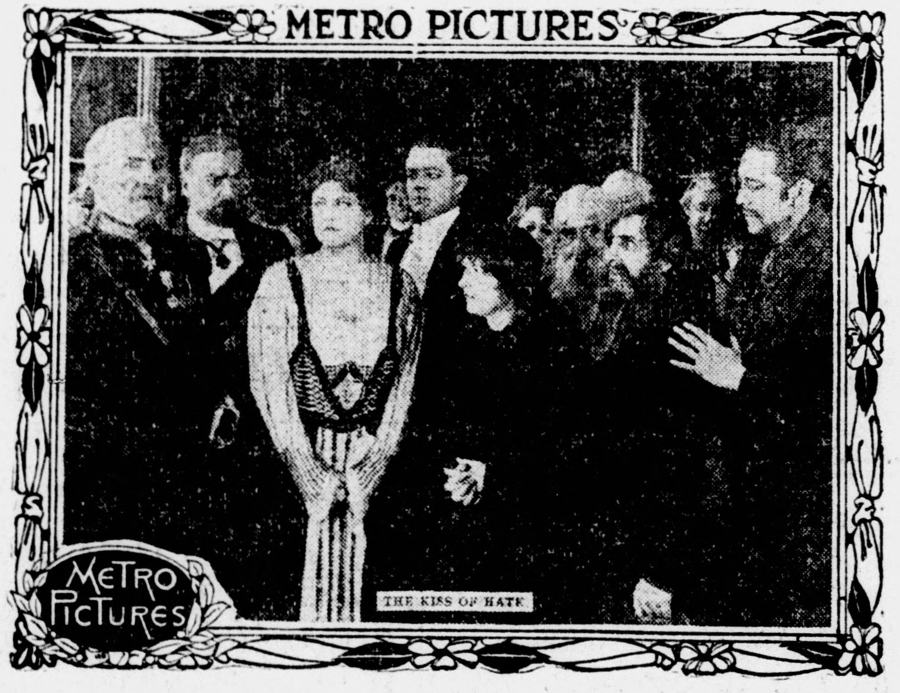
The film’s thematic explorations resonate far beyond its specific historical setting. The weaponization of mob violence, the abuse of state power, and the targeting of minority groups are unfortunately timeless motifs. Orzoff's character, a chilling blend of political opportunist and virulent bigot, serves as a powerful archetype for villains throughout history. Nadia's harrowing choice, forced upon her by a system designed to crush dissent and exploit vulnerability, speaks to the universal struggle for dignity and agency in the face of overwhelming oppression. In this regard, the film shares a spiritual kinship with other narratives that explore the grim realities of human suffering under authoritarian regimes, or the fight for survival against insurmountable odds. One might consider the plight of individuals in films like "The Royal Slave", where characters are stripped of their autonomy and forced into unimaginable circumstances, or the desperate struggle for justice against powerful, corrupt systems as depicted in "Slander", where reputation and truth are weaponized.
"The Kiss of Hate" is more than just a historical drama; it is a searing indictment of prejudice and unchecked power. It forces its audience to confront uncomfortable truths about human nature and the dark corners of societal organization. While the film’s resolution is not detailed in the provided plot synopsis, the sheer weight of Nadia’s predicament leaves an indelible mark. The narrative arc, culminating in such a morally repugnant ultimatum, ensures that the film's impact is profound and lasting, irrespective of its ultimate conclusion. It's a reminder of the insidious ways in which power can corrupt and how deeply personal the fight against systemic injustice can become. The performances, particularly from Ethel Barrymore, would have been pivotal in elevating this potentially melodramatic plot into a genuinely affecting and thought-provoking cinematic experience. The film’s power lies not just in its dramatic events, but in its unflinching portrayal of the human cost of hatred.
In an era when cinema was still finding its voice, "The Kiss of Hate" dared to speak loudly about a pervasive evil. Its depiction of anti-Semitism in Tsarist Russia is not merely background color; it is the very engine of the plot, driving every character's motivation and every harrowing event. The film serves as a historical artifact, shining a light on a period often romanticized, revealing its brutal underbelly. It implicitly asks its audience to consider the responsibility of individuals in positions of power and the moral imperative to stand against injustice, even when the personal cost is immeasurable. The narrative's raw emotional intensity, conveyed through the powerful visual language of silent film, ensures that its message transcends the confines of its production year, resonating with a timeless urgency. It is a work that demands reflection, a powerful testament to cinema's capacity for social commentary and emotional resonance, a poignant echo from a bygone era that continues to speak volumes about the human condition.
The legacy of such films is often found in their ability to provoke thought and conversation long after the credits roll. "The Kiss of Hate", with its unflinching look at tyranny and personal sacrifice, undoubtedly contributed to a broader cultural dialogue about human rights and the dangers of unchecked authority. It underscores the profound impact that early cinema had not only as entertainment but as a medium for social critique and moral exploration. The film, through its compelling performances and gripping narrative, carves out a significant place in the annals of silent film, a powerful, if dark, reflection of its tumultuous times. Its story, though fictionalized, draws from the grim realities faced by countless individuals, making its dramatic stakes feel intensely real and its thematic resonance enduring. It’s a film that, despite its age, continues to highlight the enduring struggle against hatred and the unyielding power of the human spirit to resist, even when facing the most agonizing of choices.
IMDb —
1924
Community
Log in to comment.