DbcultAccessing Vault...
5.6/10
Senior Film Conservator
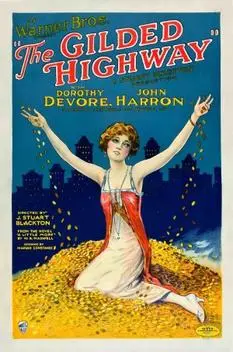
A definitive 5.6/10 rating for a film that redefined the boundaries of cult cinema. The Gilded Highway remains a cornerstone of transgressive art.
Short answer: yes, but it’s a complex, nuanced look at the perils of wealth and social climbing in 1920s San Francisco. If you’re intrigued by the Jazz Age, the allure of excess, and the corrupting influence of wealth, this film is for you. If you prefer a straightforward, uplifting narrative, you might be disappointed.
The Gilded Highway excels in its character development and its exploration of class dynamics. The performances by Mathilde Comont and Andrée Tourneur are particularly strong, bringing depth and nuance to their respective roles. The film’s pacing is well-managed, allowing viewers to fully immerse themselves in the Welby’s world of opulence and social maneuvering.
While the film’s themes are well-executed, the pacing occasionally falters. Some of the more comedic elements feel forced, and the film’s moral message becomes somewhat heavy-handed at times. Additionally, the supporting cast, while talented, sometimes struggles to bring the same level of depth and nuance to their roles as the lead actors.
You are a fan of historical dramas set in the Jazz Age, and you’re interested in exploring the complexities of social climbing and the corrupting influence of wealth. The film is particularly compelling for those who enjoy character studies and nuanced performances.
The Gilded Highway is a compelling exploration of the Jazz Age’s excesses and the social dynamics of the time. While it occasionally falters in its pacing and moral messaging, the performances and character development make it a worthwhile watch for those interested in historical dramas and character studies.
The performances in 'The Gilded Highway' are one of its strongest assets. Mathilde Comont delivers a nuanced portrayal of the Welby matriarch, capturing both her regal demeanor and underlying vulnerability. Andrée Tourneur, as the younger sister, brings a mix of naivety and ambition to her role, making her character’s transformation from naivety to cynicism both believable and engaging. The supporting cast, including Dorothy Devore and John Harron, also contribute strong performances, adding depth to the ensemble.
Director William Babington Maxwell’s direction is adept at capturing the lavish setting of 1920s San Francisco. The film’s visual style is rich and detailed, with impressive set designs and costumes that transport viewers to the era. However, the director’s pacing occasionally feels uneven, with some scenes feeling rushed while others drag on.
The cinematography in 'The Gilded Highway' is a standout element, with its use of vibrant colors and sweeping shots that evoke the opulence of the Jazz Age. The film’s attention to detail in capturing the decadence of the era is impressive, from the glittering balls to the ornate sets. However, some of the more intimate scenes, such as the Welby family’s interactions, could benefit from tighter framing to enhance the emotional impact.
The pacing of the film is generally well-managed, with a good balance of dialogue, action, and character development. However, there are moments where the narrative feels too rushed, particularly in the latter half of the film. This can make some of the more complex plot threads feel underdeveloped, which may be a turn-off for viewers seeking a more nuanced exploration of the characters’ motivations.
The tone of 'The Gilded Highway' is consistently sharp and satirical, which helps to highlight the film’s critique of social climbing and the perils of wealth. The satire is particularly effective in scenes where the Welby siblings are forced to confront the reality of their newfound status, and their reactions are often hilarious and biting. However, the satire can occasionally become heavy-handed, particularly in the film’s conclusion, where the moral message becomes more pronounced.
Overall, 'The Gilded Highway' is a compelling exploration of the Jazz Age’s excesses and the social dynamics of the time. While it occasionally falters in its pacing and moral messaging, the performances and character development make it a worthwhile watch for those interested in historical dramas and character studies. It works. But it’s flawed. It’s a film that challenges viewers to consider the true value of wealth and the corrupting influence of social status. If you’re willing to engage with a nuanced exploration of these themes, you won’t be disappointed.
IMDb 5.8
1922
Community
Log in to comment.