DbcultAccessing Vault...
6.8/10
Senior Film Conservator
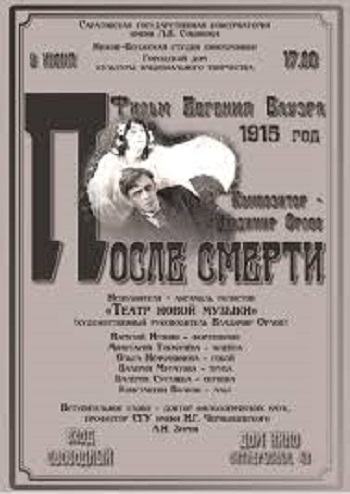
A definitive 6.8/10 rating for a film that redefined the boundaries of cult cinema. After Death remains a cornerstone of transgressive art.
A Haunting Obsession in Black and White
The Lyrical Despair of Andrei's Journey
In Yevgeny Bauer's After Death, Andrei's solitary existence becomes a canvas for the grotesque interplay of mourning and infatuation. The film's opening act establishes a suffocating atmosphere through its meticulous attention to domestic detail: the aunt's threadbare shawl, the cracked porcelain teacup, the creak of the study's floorboards—all these elements coalesce into a soundscape of isolation. Vera Karalli, as Andrei, embodies a vulnerability that feels paradoxically performative, her gestures precise yet trembling with unspoken anguish. When Tsenin's attempts to draw Andrei into social life are thwarted by his own inertia, the film's tension shifts from external to internal, the world outside the apartment rendered in stark, uninviting shadows.
The first encounter with Zoya Kadmina is a masterclass in silent filmmaking's economy. Her entrance is announced not by her presence, but through the flicker of a curtain, the tilt of a head, the way light spills across her profile as she performs. Bauer employs a series of lateral tracking shots to mimic the narrowing focus of Andrei's vision—his world contracting to the point where the actress's silhouette becomes the axis around which all meaning rotates. The note she passes him, though never shown in full, is rendered with tactile specificity: the weight of the paper in his palm, the smudge of ink, the scent of violets from her handkerchief. These sensory details anchor the narrative in a reality that soon dissolves into abstraction.
When Zoya's death is revealed, the film's tonal shift is jarring yet inevitable. The palette darkens, the camera work becomes more disorienting, and the score (implied by the era's conventions) adopts a dissonant quality. Andrei's investigation into Zoya's life is structured as a series of fragmented vignettes, each more surreal than the last. A scene in which he visits her apartment reveals a room frozen in time, objects suspended between memory and decay. The mirror on the wall reflects not his face, but a kaleidoscope of possible identities—Zoya's, his mother's, the aunt's—all merging into a single, unattainable woman.
The Art of Forgetting
Memory as a Cinematic Construct
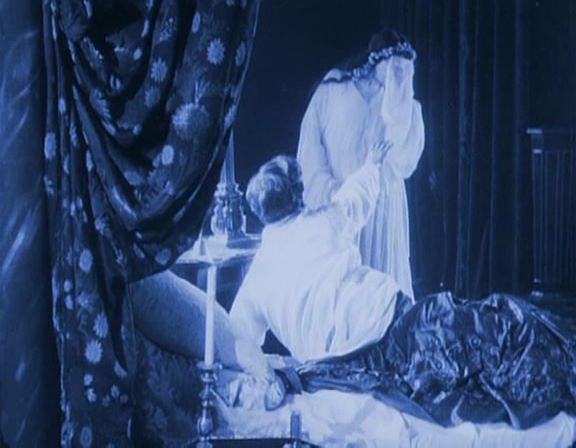
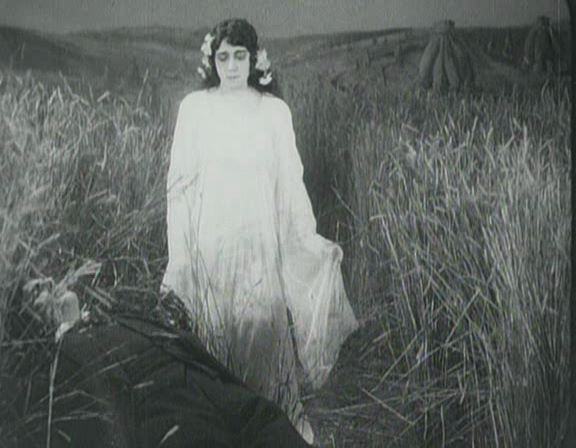
Bauer's approach to memory in After Death echoes the theories of Bergson and Freud, yet operates within the constraints of pre-1920s cinema. The film's non-linear structure rejects chronological fidelity, instead using montage to externalize Andrei's psychological state. One particularly striking sequence juxtaposes images of Zoya performing and Andrei studying her—superimpositions revealing their souls as overlapping shadows. This visual metaphor for artistic transference is complemented by the use of double exposure in scenes where Zoya's face briefly appears in the background of other shots, a ghostly presence haunting Andrei's daily routines.
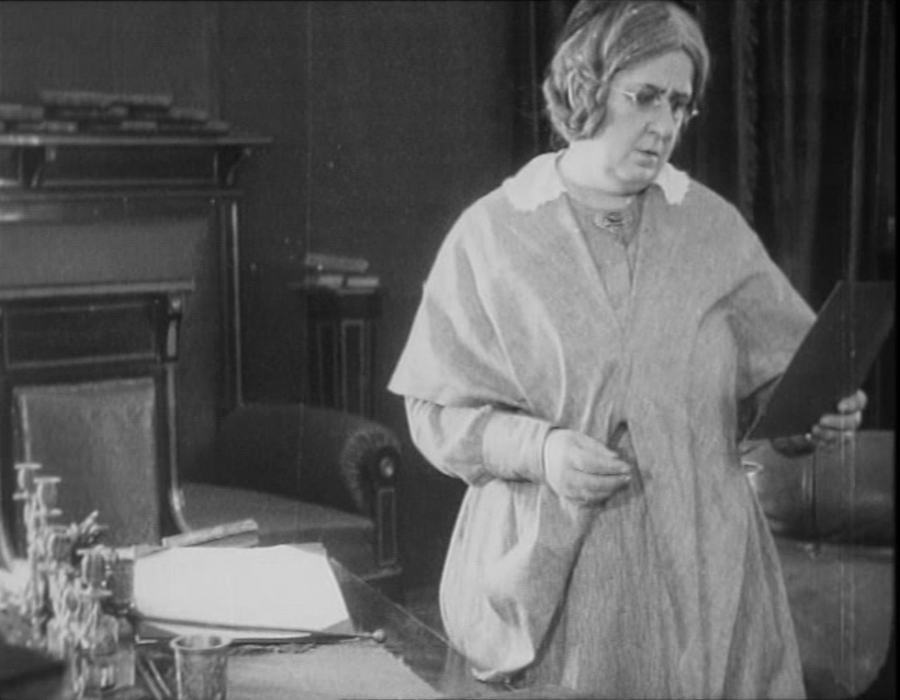
The supporting cast, particularly Olga Rakhmanova as the aunt, provides subtle counterpoints to Andrei's descent. Her character's stoic pragmatism contrasts with his romantic idealism, yet even she is not immune to the film's pervasive melancholy. A pivotal dialogue-free scene has her repairing a broken music box while Andrei stares blankly at a family photograph—objects as vessels of memory, one mended, one frozen. The film's intertitles, sparse yet piercing, function like poetic annotations to the visual narrative. Phrases such as 'She was a star that burned too brightly' and 'In death, she becomes what I needed her to be' arrive like epiphanies, each more unsettling than the last.
Comparative analysis with contemporaneous works reveals After Death's unique position in early cinema's exploration of the subconscious. Unlike A Venetian Night's operatic excess or The Cheat's moralistic melodrama, Bauer's film embraces ambiguity. While Half a Hero uses similar themes of artistic dedication, it resolves into conventional narrative closure; After Death refuses to grant Andrei catharsis, leaving him in a limbo of unresolved longing. This narrative incompletion, rather than a weakness, becomes the film's greatest strength—a testament to the ineffability of grief.
The Legacy of After Death
A Silent Film's Echo Through Modernity
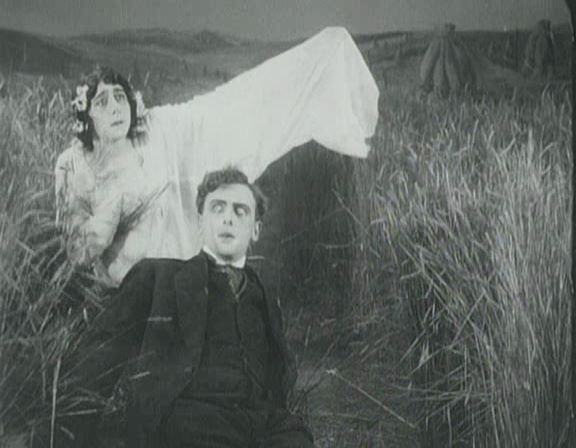
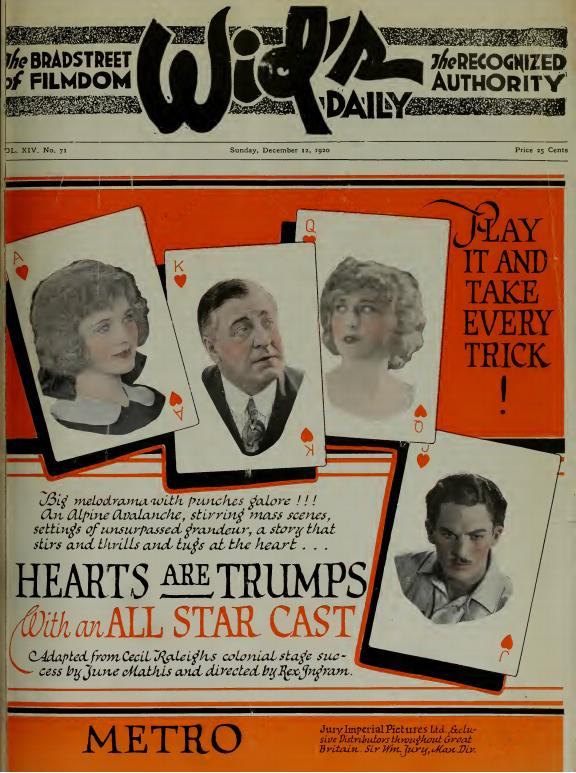
Modern viewers may find After Death disorienting in its refusal to provide clear emotional stakes. Yet this very ambiguity is a bridge between silent cinema's expressive freedom and contemporary arthouse experimentation. The film's treatment of obsession resonates with the psychological complexity of later works like The Lady Outlaw or David Copperfield, though Bauer's approach remains more inward-looking. Its visual language anticipates the chiaroscuro techniques of film noir while its thematic concerns about art's role in processing trauma find parallels in The Might of Gold's exploration of material desire.
Restoration efforts have done much to preserve the film's original texture, though missing footage in the final act (particularly a sequence involving a recurring motif of broken mirrors) leaves some interpretative gaps. These absences, however, only deepen the enigma of Andrei's journey—his final monologue, delivered to the camera in a hall of mirrors, is one of the most haunting examples of silent film acting. Karalli's performance here is a masterclass in minimalism; her eyes, wide yet unfocused, suggest a soul fractured by the weight of its own projections.
For contemporary audiences, After Death offers a rare opportunity to experience early cinema's capacity for emotional nuance without the crutches of synchronized sound. Its exploration of artistic fixation and the impossibility of true understanding between individuals remains startlingly relevant. The film's enduring power lies in its refusal to simplify grief into a narrative arc, instead presenting it as the raw, chaotic force it is. In this respect, After Death stands not just as a historical curiosity, but as a profound meditation on the human condition that continues to resonate over a century after its creation.
IMDb —
1916
Community
Log in to comment.