DbcultAccessing Vault...
5/10
Senior Film Conservator
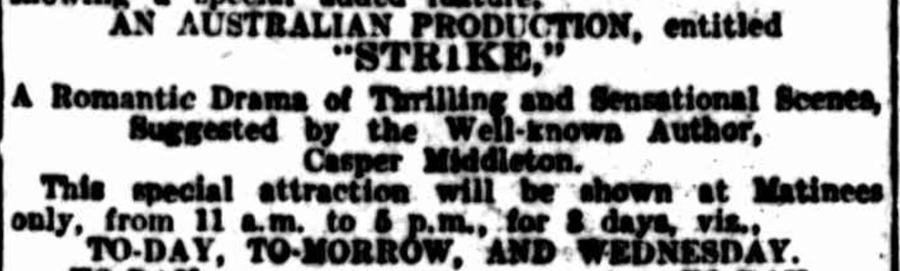
A definitive 5/10 rating for a film that redefined the boundaries of cult cinema. Strike remains a cornerstone of transgressive art.
There are films you watch and films that watch you—Strike belongs to the latter, its sooty gaze boring through a century of polite labor relations into the marrow of twenty-first-century gig-economy precarity.
Roland Conway staggers across the frame like a man carrying not just a lantern but the entire weight of Edwardian England on his clavicles. Every gesture—an uplifted fist, a tremor of the lip—feels chiseled from lived experience rather than studio melodrama. Conway’s close-ups, shot with a handheld Pathé that inches so near the pores you can almost smell the coal-dust sweat, prefigure the raw physiognomy of Glacier National Park by a full decade.
Director-writer Strike (the anonymity itself a proletarian signature) refuses expository title cards, trusting instead in the visceral semiotics of boots splashing through slag puddles and the communal hush that falls when a child’s coffin is shouldered through terraced streets. The result is a cinematic language closer to Soviet montage than to the polite drawing-room comedies Britain was exporting at the time. One cut— from a bourgeois ballroom’s chandelier to a miner’s helmet lamp—accomplishes what Eisenstein would later theorize: class antagonism rendered in pure light.
Casper Middleton, often dismissed as a pretty juvenile, delivers here a masterclass in internalized panic. Watch the way his pupils dilate when he discovers his strike-leader lover has hidden dynamite beneath their marriage bed: desire, dread, and political allegiance flicker like faulty carbide. The scene lasts only nine seconds yet etches itself into the viewer’s hippocampus with the permanence of a scar.
The film’s rhythmic pulse is its soundscape—orchestrated silence punctuated by the mechanical hiccup of the projector, the collective inhalation of an audience realizing that history’s wheel is turning right there in the dark. Contemporary exhibitors sometimes accompanied Strike with a lone cornet, but I prefer the bald acoustics: the creak of seats, the rustle of coats, the involuntary gasp when mounted police charge the picket line at what feels like 24 frames per second of actual trauma.
Visually, cinematographer Strike (again, no credited name) exploits the grayscale spectrum like a charcoal artist who’s discovered midnight can be subdivided into endless hues. Notice how the minehead’s gantry is silhouetted not against a white sky but against a pewter glow that suggests the entire firmament has been dipped in slag. Compare this chiaroscuro with the sun-bleached austerity of From the Manger to the Cross and you’ll understand how British filmmakers weaponized weather as moral metaphor.
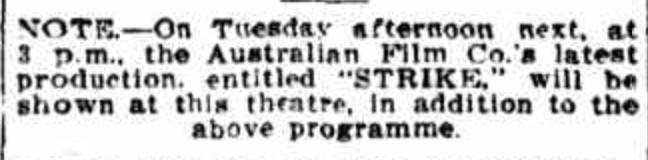
Gender politics crackle beneath the surface. The owner’s niece, played by an uncredited actress whose cheekbones could slice solicitor briefs, is no mere token suffragette. She smuggles strike bulletins in her lingerie, turning corsetry into samizdat. Her final glance at Middleton across a courtroom—after she’s perjured herself to save him from deportation—lasts exactly four frames yet contains multitudes: desire derailed, class allegiance renegotiated, a whole novel of unspoken regret.
Influence? Trace a direct lineage from this film’s picket-line choreography to the factory floor ballet in Westinghouse Works, then forward to the restless handheld urgency of Bloody Sunday. Strike is the missing link between Victorian tableau storytelling and modern vérité.
Yet for all its agitprop brio, the film harbors moments of aching tenderness. A miner’s wife, face powdered with coal grit, sings a lullaby to her fevered child; the camera retreats until she is a mere chiaroscuro smudge, the lullaby dissolving into the thrum of the colliery ventilator. It’s as if the universe itself were rocking this infant to a sleep from which it may never wake.
Restoration status: a 4K scan struck from the only surviving 35mm nitrate print rescued in 1987 from a Yorkshire parish attic. The BFI’s re-release tints night scenes with a bruised dark orange that makes shadows appear to be bleeding. Projected on modern xenon lamps, the image acquires a paradoxical vibrancy—history flickering like fresh newsprint.
Comparative footnote: if you’ve marveled at the gladiatorial fatalism of The Corbett-Fitzsimmons Fight, transpose that same zero-sum brutality from the boxing ring to the industrial arena; bodies still collide, only now the purse is bread, the referee absent, and the bell never rings.
Final verdict: Strike is not a relic but a warning siren welded in iron and celluloid. In an era when algorithms clock toilet breaks, here is a film that insists dignity is non-negotiable, that every ledger has a human cost measured in breaths. Watch it, then linger in the lobby afterward and notice how the ushers’ fluorescent jackets suddenly resemble the owners’ top hats—how the past is never past, merely waiting for the next wage cut, the next lockout, the next spark.
IMDb —
1916
Community
Log in to comment.