DbcultAccessing Vault...
4.7/10
Senior Film Conservator
A definitive 4.7/10 rating for a film that redefined the boundaries of cult cinema. Chop Suey & Co. remains a cornerstone of transgressive art.
Stepping back into the flickering glow of early cinema, one often stumbles upon forgotten treasures that, despite their age, possess an undimmed effervescence. Chop Suey & Co., a name that itself conjures images of bustling kitchens and farcical mishaps, is precisely such a discovery. This particular cinematic confection, from the era when physical comedy reigned supreme and a well-timed pratfall was worth a thousand words, offers a delightful glimpse into the innocent yet ingenious humor that captivated audiences a century ago. It’s a film that, even without the benefit of synchronized sound, speaks volumes through its vibrant performances, meticulously choreographed chaos, and the universal language of laughter.
At its heart, Chop Suey & Co. is a quintessential silent comedy, a kinetic ballet of misunderstandings, romantic rivalries, and a pursuit that escalates with each passing frame. Directed by the seasoned Fred C. Newmeyer, a craftsman renowned for his work with Harold Lloyd, the film bears many of the hallmarks of that golden age: an earnest, slightly out-of-his-depth protagonist, a charming love interest, and a series of escalating predicaments that inevitably lead to a climactic, breathless chase. The narrative unfolds within the vibrant, perpetually frenetic confines of 'The Golden Dragon,' a Chinese restaurant that serves not only delectable dishes but also a generous helping of pandemonium. It's a setting ripe for comedic exploitation, where the clatter of dishes, the steam of woks, and the hustle of patrons provide a chaotic backdrop for human folly.
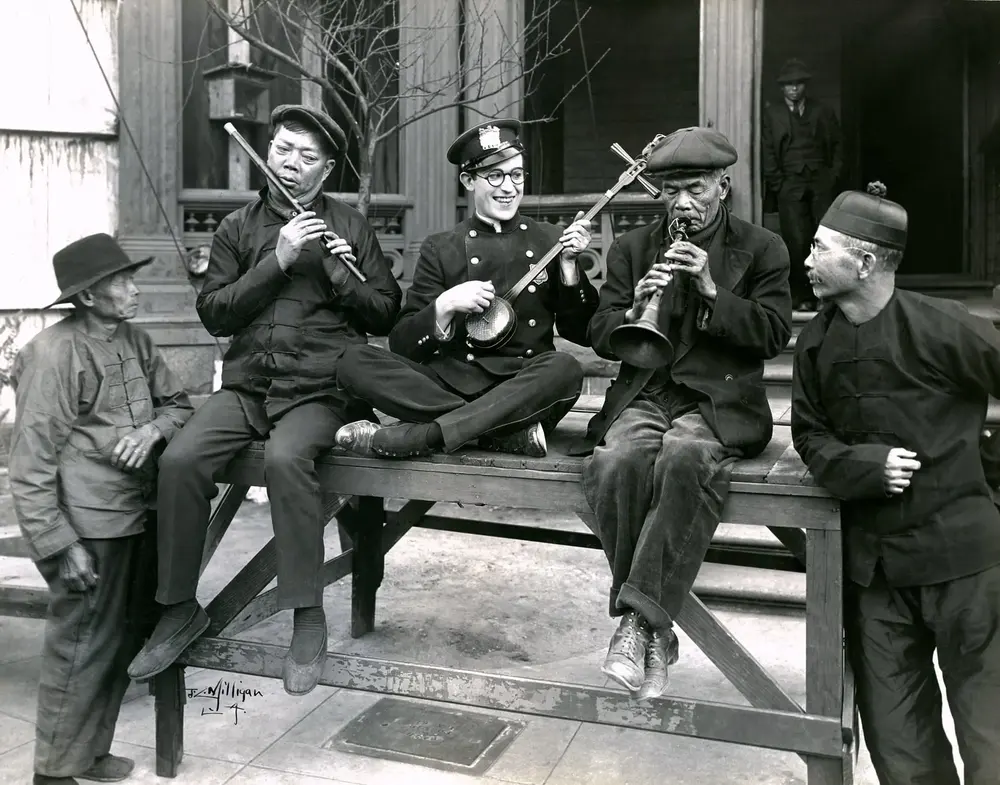
James Parrott, a familiar face from countless two-reelers, anchors the film with a performance that masterfully blends wide-eyed optimism with a propensity for accidental destruction. His character, a waiter whose aspirations far outstrip his aptitude, is instantly endearing. Parrott imbues him with a subtle vulnerability that makes his every struggle, every spilled plate, every near-miss, genuinely amusing and oddly relatable. He's not merely a physical comedian; he's an actor who understands the delicate balance between pathos and slapstick, drawing the audience into his character's plight with expressive facial contortions and expertly timed gestures.
Opposite Parrott, the incandescent Bebe Daniels shines as the restaurant owner's daughter. Daniels, whose career spanned the transition from silent films to talkies with remarkable grace, brings a spirited independence and an undeniable charm to her role. She's not merely a damsel in distress; her character possesses agency, wit, and a captivating screen presence that elevates the romantic subplot beyond mere contrivance. Her reactions to Parrott's blunders are a particular delight, oscillating between exasperation and a budding affection that feels genuinely earned. Her ability to convey complex emotions without uttering a single word is a testament to the power of silent acting, making her a formidable counterpart to Parrott's more overt physicality.
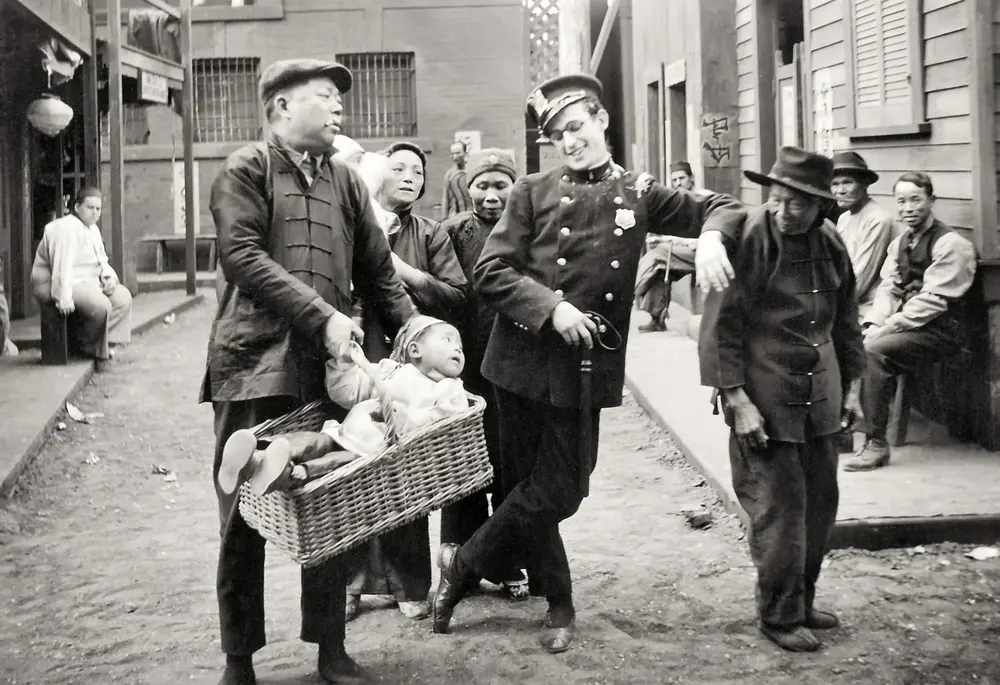
The supporting cast is a veritable who's who of silent comedy stalwarts, each contributing to the film's frenetic energy. Bud Jamison, with his imposing stature and perpetually scowling demeanor, is perfectly cast as the menacing head chef and romantic rival. His physical comedy is broader, more aggressive, providing a stark contrast to Parrott's more nuanced approach. Noah Young and 'Snub' Pollard, both veterans of countless slapstick shorts, contribute their distinctive brands of comedic support, often as bumbling antagonists or hapless bystanders caught in the crossfire. Even Harold Lloyd, though not in a leading role, likely had an uncredited hand in shaping some of the gags, given his close association with Newmeyer and his reputation for meticulous comedic construction. The ensemble's chemistry is palpable, creating a believable, if exaggerated, world where chaos is the norm.
Fred C. Newmeyer's direction is a masterclass in silent film pacing and visual storytelling. He understands that the success of a silent comedy hinges on its rhythm, its ability to build momentum through a series of escalating sight gags and physical stunts. The camera, while not as dynamic as in later eras, is used effectively to capture the breadth of the chaos, from wide shots of the bustling restaurant floor to tighter frames that emphasize a character's bewildered expression or a particularly intricate piece of physical comedy. The editing is crisp, allowing each gag to land with maximum impact without lingering unnecessarily. Newmeyer’s experience in crafting intricate action sequences, often involving perilous stunts, is evident in the film's climactic chase, which demonstrates a keen understanding of cinematic geography and tension building.

The film's humor is primarily derived from classic slapstick tropes: mistaken identities, improbable coincidences, and the sheer force of escalating absurdity. The 'lost heirloom' plot device, while simple, serves as an excellent catalyst for the ensuing pandemonium. It's a MacGuffin that allows for a delightful exploration of the characters' reactions under pressure. The food fight sequence, in particular, is a highlight, a symphony of flying noodles, splattered sauces, and collapsing tables, all orchestrated with a precision that belies the apparent anarchy. It's reminiscent of the grand, destructive finales often seen in other silent comedies, where the entire set becomes a playground for physical comedy. One might draw parallels to the spirited chaos in films like The Baseball Revue of 1917, where sporting events similarly descend into delightful disarray, or even the more intricate Rube Goldberg-esque contraptions of films like Der Eisenbahnmarder in their intricate setup and payoff of gags, albeit here with human rather than mechanical components.
Beyond the surface-level gags, Chop Suey & Co. inadvertently offers a fascinating window into early 20th-century urban life and cultural perceptions. The bustling Chinatown setting, while perhaps played for exoticism by modern standards, was a common backdrop for narratives exploring cultural intersections and the immigrant experience, albeit often through a comedic lens. The restaurant itself, a melting pot of workers and patrons, reflects the vibrant, often chaotic, energy of a rapidly industrializing America. The film's portrayal of working-class struggles, even if lighthearted, provides a subtle undercurrent to the comedic antics. The protagonist’s earnest desire for upward mobility, both romantically and professionally, resonates with the American Dream narrative prevalent at the time. It’s a film that, much like Somebody's Baby, captures the everyday anxieties and aspirations of ordinary people, albeit through the exaggerated lens of comedy.
The physical comedy, while universal, is also culturally specific to its time. It relies heavily on exaggeration, rapid-fire action, and a certain innocence that might seem quaint to contemporary audiences. Yet, it is precisely this unadulterated form of humor that gives silent comedies their enduring appeal. There’s a purity to the laughter they elicit, born from expertly executed physical feats and exaggerated expressions rather than clever dialogue. While it lacks the grand historical scope of an epic like Fabiola or Life of Christ, its focus on the mundane made extraordinary through comedy speaks to a different kind of cultural documentation.
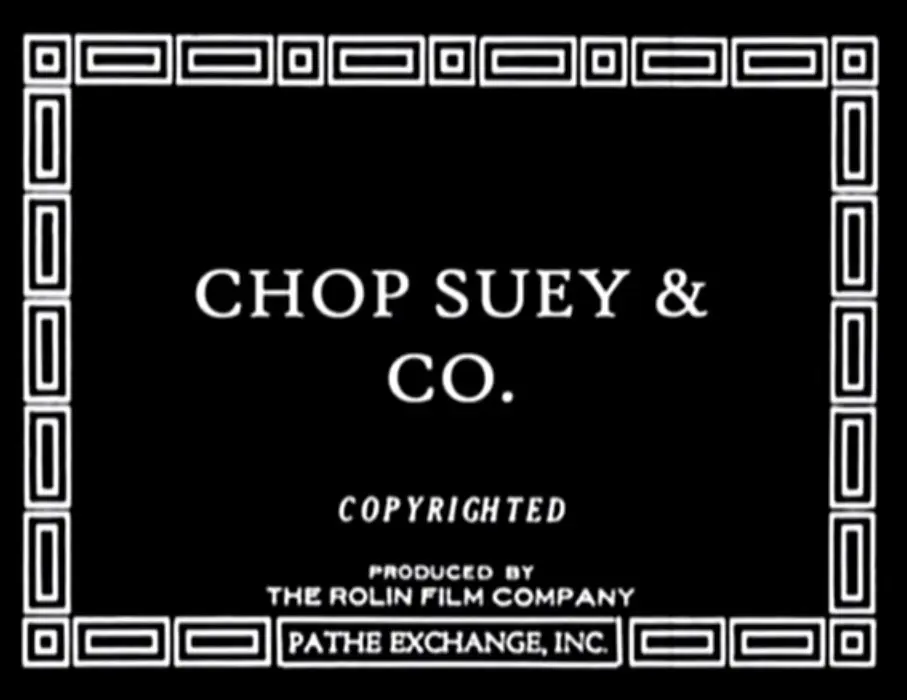
In an era dominated by sprawling dramas and nascent epics, Chop Suey & Co. stands as a testament to the enduring power of well-crafted, unpretentious comedy. It doesn't aim for the dramatic intensity of The Bitter Truth or the romantic entanglements of Flower of the Dusk; its ambitions are purely to entertain and to elicit hearty laughter, and in this, it succeeds admirably. The film's ability to maintain its comedic energy throughout its runtime, without relying on dialogue, is a tribute to the ingenuity of its writers, particularly H.M. Walker, who understood the mechanics of a good sight gag and the importance of character motivation, however simple.
The film's influence, while perhaps not as overtly monumental as some of the feature-length works of Chaplin or Keaton, lies in its contribution to the vast tapestry of silent-era short comedies. These shorts were the proving ground for many stars and directors, refining techniques and gags that would later define the genre. One can see echoes of its rapid-fire pacing and character archetypes in countless subsequent productions, from the subtle charm of A Widow's Camouflage to the more adventurous escapades of In the Lion's Den. The film's kinetic energy and commitment to physical comedy ensure its place as a delightful, if often overlooked, entry in the silent film canon.
Even today, watching Chop Suey & Co. is an exercise in pure, unadulterated joy. It reminds us of a time when cinema was a nascent art form, experimenting with its language, and when the simple act of making an audience laugh was a profound achievement. It’s a film that, despite its lack of sound, speaks volumes about the human condition – our aspirations, our blunders, and our enduring capacity for finding humor in the most chaotic of circumstances. It might not possess the dramatic gravitas of Le ravin sans fond or the intricate character study of Mignon, but it offers something equally valuable: a hearty, well-earned laugh that transcends time and technological advancements. This delightful romp through a culinary battlefield is a vibrant reminder of the foundational artistry of silent comedy, proving that sometimes, the most profound entertainment needs no words at all, only a spirit of adventure and a willingness to embrace the absurd.
In conclusion, Chop Suey & Co. is more than just a historical curiosity; it's a vibrant, engaging piece of cinematic history that deserves rediscovery. Its infectious energy, the stellar performances from its leading players, and the expert direction combine to create a truly memorable experience. It’s a film that, much like the best dishes, leaves a lingering taste of satisfaction and a desire for more. For anyone interested in the origins of screen comedy, the evolution of physical humor, or simply in need of a good, honest laugh, this film is an absolute must-see. It's a testament to the timeless appeal of well-executed slapstick and the enduring magic of the silent screen. The film's charm is as potent as the aromatic spices wafting from 'The Golden Dragon,' inviting viewers to partake in a feast of laughter and delightful mayhem. Its narrative, while perhaps not as complex as La principessa di Bagdad or as morally charged as The Pen Vulture, excels in its chosen genre, demonstrating the sheer comedic power of a well-placed pie to the face or a perfectly timed slip. It’s a film that embodies the very spirit of 'The Courageous Coward' – finding humor and triumph in the face of overwhelming odds and personal foibles.
IMDb 7.4
1930
Community
Log in to comment.