DbcultAccessing Vault...
4.9/10
Senior Film Conservator
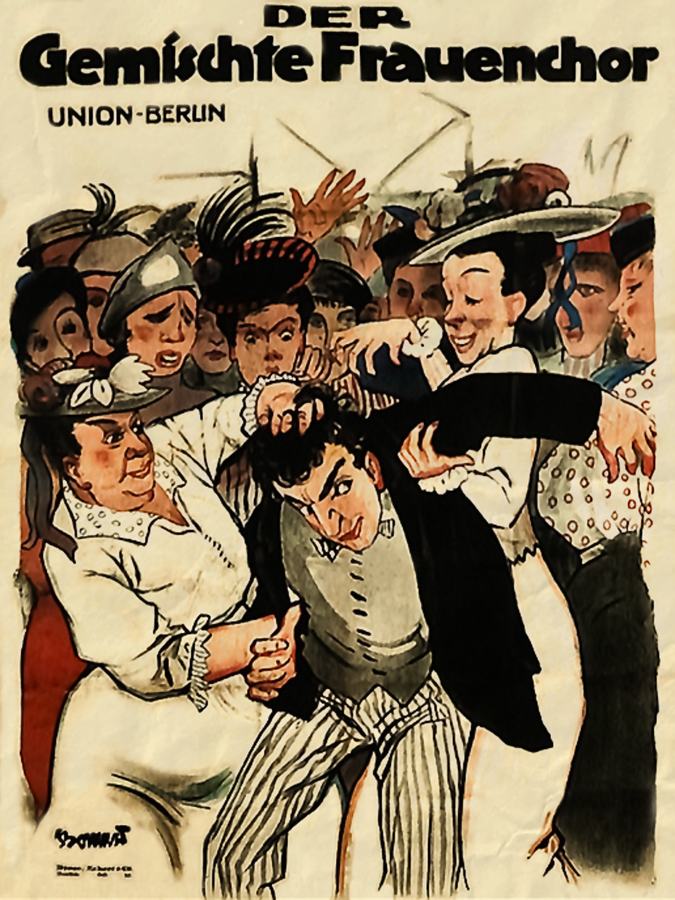
A definitive 4.9/10 rating for a film that redefined the boundaries of cult cinema. The Mixed Ladies Chorus remains a cornerstone of transgressive art.
In the annals of cinematic history, certain names evoke an immediate sense of style, wit, and an almost ineffable charm. Ernst Lubitsch is unequivocally one such luminary, and his often-overlooked masterpiece, The Mixed Ladies Chorus (the-mixed-ladies-chorus), stands as a testament to his unparalleled genius. Emerging from an era where silent films were beginning to find their eloquent voice, Lubitsch's work here is less about grand pronouncements and more about the delicate art of implication, the sophisticated whisper that speaks volumes. It's a film that doesn't merely tell a story; it orchestrates a symphony of human foibles, desires, and the eternal comedy of manners, all set to the charming, if sometimes discordant, backdrop of an amateur ladies' chorus.
The premise, at first glance, appears deceptively simple: a disparate group of women from varying social strata converge to form a singing group. Yet, beneath this seemingly innocuous surface, Lubitsch masterfully constructs a multi-layered narrative, a veritable opera bouffe of social climbing, romantic entanglements, and the subtle power dynamics that dictate human interaction. The eponymous chorus, 'The Harmonious Dames,' becomes a brilliant microcosm of society itself, each member a carefully etched archetype, brought to vivid, often hilarious, life. There's Frau Schmidt, the baker's wife, whose formidable vocal prowess is matched only by her pragmatic worldview; Miss Eleanor Finch, the prim governess whose repressed passions find an unexpected, almost subversive, outlet in song; Madame Dubois, the enigmatic widow, whose dramatic flourishes on stage are rivaled only by the mysteries she shrouds in her private life; and young Liesl, the ambitious seamstress, whose dreams of stardom are as expansive as her burgeoning talent. This rich tapestry of characters provides Lubitsch with an ample palette to paint his observations on class, ambition, and the universal quest for connection.
At the heart of this delightful chaos is the Baron von Kessel, a character so quintessentially Lubitschian that one can almost hear the director's knowing chuckle echoing through the film reels. The Baron, charming to a fault and perpetually in pursuit of financial solvency, uses the chorus as both a social platform and a potential matrimonial fishing ground. His motivations are transparently self-serving, yet he conducts himself with such an irresistible élan that one can't help but be charmed. This is the 'Lubitsch Touch' in full bloom: the ability to present morally ambiguous characters with such elegance and wit that their flaws become endearing, their machinations amusing. He doesn't judge; he observes, with a bemused detachment that invites the audience to share in the delicious irony of it all. The subtle glances, the doors that open and close on unspoken truths, the sophisticated innuendo – these are the hallmarks of Lubitsch's directorial signature, and The Mixed Ladies Chorus is replete with them, transforming what could have been a simple farce into a nuanced exploration of human nature.
What truly elevates The Mixed Ladies Chorus beyond mere romantic comedy is its astute commentary on the hidden desires that animate ostensibly respectable lives. Each woman in the chorus, regardless of her social standing, harbors a secret longing – for love, recognition, escape, or simply a moment in the spotlight. These aspirations, often suppressed by societal expectations, find their voice, both literally and figuratively, within the safe confines of the rehearsal hall. The film deftly explores how these individual desires collide and intertwine, creating a rich tapestry of misunderstandings and rivalries. The Baron becomes the unwitting, and sometimes witting, object of their affections, leading to a series of comical misinterpretations that are executed with Lubitsch's characteristic precision and grace. The screenplay, though uncredited in the prompt, clearly benefits from a sophisticated understanding of character and plot mechanics, allowing the humor to arise organically from the situations rather than relying on broad gags.
Beyond the narrative brilliance, the film is a visual delight. Lubitsch's command of mise-en-scène is evident in every frame. The sets, from the opulent drawing rooms where the chorus attempts to secure patronage to the more modest rehearsal spaces, are meticulously detailed, serving not merely as backgrounds but as active participants in the storytelling. The cinematography, though characteristic of its era, exhibits a fluidity and elegance that propels the narrative forward, often using subtle camera movements and compositions to emphasize a character's internal state or a crucial plot development. The costumes, too, are integral, reflecting the social status and aspirations of each character with exquisite accuracy. This attention to detail, coupled with a dynamic editing style that keeps the pacing brisk and engaging, ensures that the film remains visually captivating throughout its runtime. It's a masterclass in how visual storytelling can enhance comedic timing and emotional depth.
While specific cast members are not detailed in the prompt, the success of a Lubitsch film, particularly one centered on an ensemble, invariably hinges on the collective performance. One can surmise that the actors embody their roles with a delightful blend of earnestness and self-awareness, perfectly capturing the delicate balance between caricature and genuine human emotion. Their interactions are a ballet of polite society and simmering passions, each gesture, each glance, laden with unspoken meaning. The chemistry among the 'Harmonious Dames' and their charming, if manipulative, conductor must be palpable, driving the film's comedic engine. The brilliance lies in how these performers, under Lubitsch's precise direction, make the audience invest in their individual plights while simultaneously reveling in the broader comedic spectacle. It’s a testament to the power of ensemble acting when guided by a visionary director.
When considering The Mixed Ladies Chorus within the broader context of cinematic history, its influence, particularly on the romantic comedy and social satire genres, becomes evident. Lubitsch's sophisticated approach to humor, which relies more on implication than explicit gags, paved the way for countless future films. One might draw a parallel to the intricate social dynamics explored in films like The Commuters, though Lubitsch infuses his narrative with a lighter, more satirical touch, elevating the everyday entanglements to an art form. The film's examination of individuals navigating complex social landscapes, often with romantic aspirations at their core, resonates with the spirited escapism found in Beverly of Graustark, albeit with a more grounded and witty realism. Lubitsch’s ability to find humor in societal conventions and personal hypocrisies established a precedent that many subsequent filmmakers would attempt to emulate, though rarely with the same effortless grace.
The film also subtly critiques societal expectations, particularly for women, in an era where their roles were often rigidly defined. Through the chorus, these women find agency, a voice (literally and metaphorically), and a space to express desires that might otherwise remain unarticulated. This subversive undercurrent, wrapped in a delightful comedic package, distinguishes Lubitsch's work. While not overtly political like Within Our Gates, which tackles overt social injustice, The Mixed Ladies Chorus offers its own form of social commentary, albeit through the lens of drawing-room comedy. Its focus on the intricate dance of human relationships and the pursuit of personal happiness, sometimes at the expense of others, aligns it with the timeless themes found in many of Lubitsch's own later works, as well as the sophisticated character studies seen in films like The World, the Flesh and the Devil, albeit without the latter's more dramatic existential undertones.
The narrative builds to a magnificent crescendo during the much-anticipated charity concert, a moment where all the simmering personal dramas threaten to spill onto the stage and irrevocably derail the 'Harmonious Dames' grand performance. It is here that Lubitsch's genius for orchestrating comedic chaos truly shines. The tension between the desire for individual triumph and the necessity of collective harmony reaches its peak, leading to moments of genuine hilarity and poignant revelation. The unraveling of secrets, the confrontation of misunderstandings, and the ultimate, often ironic, resolutions are handled with a deftness that is characteristic of the director. The film doesn't necessarily offer saccharine happy endings, but rather sophisticated conclusions that acknowledge the complexities of human nature while still providing a satisfying sense of closure. It’s a resolution that feels earned, not forced, retaining the sharp wit that defines the entire experience.
In a cinematic landscape often dominated by bombast and overt spectacle, The Mixed Ladies Chorus serves as a refreshing reminder of the power of subtlety, intelligence, and charm. It is a film that invites its audience to lean in, to observe, and to delight in the intricate dance of human interaction. Lubitsch's direction is a masterclass in understated elegance, proving that the most profound insights into the human condition can often be found within the lightest of touches. Its legacy lies not just in its entertainment value, but in its contribution to the evolution of comedic filmmaking, demonstrating that wit and sophistication can be as compelling as any grand drama. This is a film that resonates long after the final notes have faded, a testament to the timeless appeal of true artistry.
Ultimately, The Mixed Ladies Chorus is more than just a film; it is an experience, a delightful journey into the heart of human comedy, guided by one of cinema's most astute observers. It’s a work that demands re-watching, revealing new layers of humor and insight with each viewing. Its characters, though products of their time, feel remarkably contemporary in their aspirations and their follies. The film's enduring appeal lies in its universal themes of love, ambition, social status, and the often-comical lengths to which individuals will go to achieve their desires. It’s a shining example of why Lubitsch remains a revered figure in film history, and why his 'touch' continues to enchant and enlighten audiences across generations. For those who appreciate the delicate art of sophisticated humor and character-driven storytelling, The Mixed Ladies Chorus is an absolute must-see, a timeless melody in the grand opera of cinema.

IMDb 6.8
1927
Community
Log in to comment.