DbcultAccessing Vault...
4.8/10
Senior Film Conservator
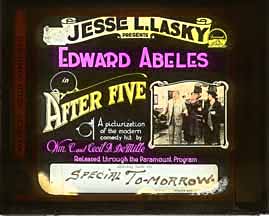
A definitive 4.8/10 rating for a film that redefined the boundaries of cult cinema. After Five remains a cornerstone of transgressive art.
Imagine, if you will, a cocktail of Brewster’s Millions’ reckless solvency and The Little Gypsy’s moonlit elopements, shaken with cyanide bitters and served in a cut-crystal skull: that is the effervescent poison of After Five. William C. de Mille’s scenario, polished to scalpel-sharpness by sibling Cecil before he became the colossus of biblical pageantry, pirouettes on the razor between pratfall and pathos so nimbly that one forgets the film is literally about a man paying thugs to murder him—preferably before breakfast so Nora can still make morning calls.
The first reel unspools like a ticker-tape confetti storm: Ted’s office, a cathedral of ledgers, swarms with clerks who move like Busby Berkeley’s unemployed cousins. Double-exposures superimpose surging stock graphs across Ted’s iris, a visual harangue that screams modernity louder than any intertitle. When the telegram arrives announcing the crash, the frame itself jitters—an earthquake achieved by loosening the tripod screws while cranking, a primitive but seismic metaphor for moral ground giving way. The tinting shifts from amber to sulfurous green; the audience in 1915 reportedly gasped, certain the projector had combusted. That chromatic shudder is the first hint that After Five is not content to be a mere comedy of errors—it wants to be a comedy of terrors.
Where Lost in Darkness wallows in opium phantasmagoria and Cocaine Traffic moralizes with salacious relish, After Five treats self-destruction as a logistical nuisance—an item to be out-sourced. The S.S.S. (Society of Silent Suppers, or Society for Scheduled Slaughter—never clarified) operates out of a basement café whose menu lists prices for stabbings, drownings, and accidental carriage runaways. Their chief, played by a monocled Sessue Hayakawa in the same year he scandalized audiences in The Cheat, exudes silk-smooth menace; when Ted timidly requests a demise that looks like Providence,
Hayakawa’s bow is so courteous it feels like a guillotine whispering next.
The contract scene is shot from inside a birdcage—literally. The camera is placed within an ornate gilt cage foregrounded between Ted and the gang, its bars stencil-superimposed onto the negative. The metaphor is blunt yet breathtaking: Ted has volunteered to be the canary, and the cage is his own parchment signature. DeMille never repeats the trick; like all great showmen, he understands that spectacle curdles if over-milked.
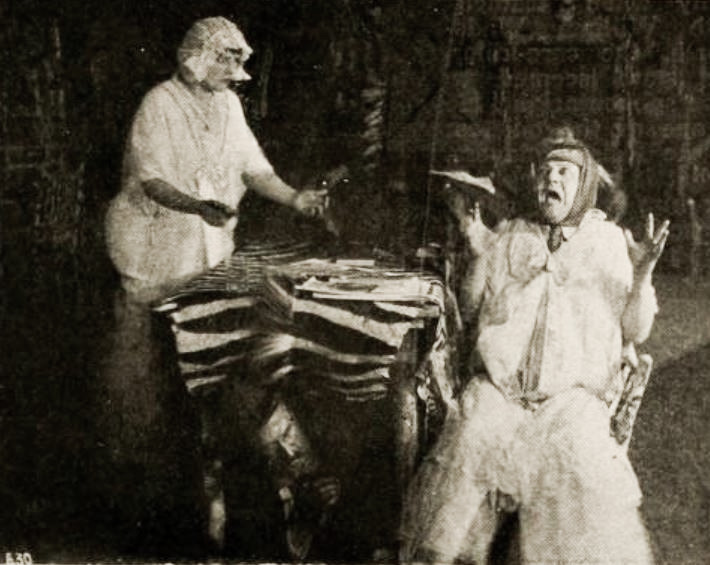
Enter Kato, Ted’s Japanese valet, embodied by Al Ernest Garcia under layers of pancake makeup that modern eyes will wince at, yet within the narrative he is the moral gyroscope. Kato receives the murder fee—two thousand in gold notes—then refuses to return it on the grounds that money, once dedicated to death, is polluted.
The line, delivered via intertitle in florid serif, carries an almost Shinto gravitas, turning a racial caricature into an inadvertent saint. His refusal catalyzes the film’s funniest sequence: Ted’s escalating attempts to steal back his own bribe—first via a rigged dumbwaiter, then by impersonating a blind beggar, finally by staging a fire in a Turkish bath. Each gag detonates with Harold-Lloyd timing but lands with existential vertigo: the protagonist is burgling himself to save his life from himself.
Betty Schade’s Nora could have been a porcelain figurine; instead she’s a velocipede-riding, poker-fleecing flapper avant la lettre. When she learns the money has doubled, her first reaction is to order a new electric roadster the color of a bruised peach.
Yet her liberation never curdles into flippancy; in a proto-feminist twist she bankrolls her own detective agency to find Ted, who has gone incognito as Mr. Graves,
a nom-de-guise so unsubtle it circles back to sublime. Their reunion occurs in a Ferris-wheel car stuck mid-air during a thunderstorm—an set-piece built full-scale in the Lasky barn. Lightning was simulated by arcing carbon rods beside the lens, a stunt that reportedly scorched the negative edges, leaving flickering scorch marks that the studio kept because they looked like God’s own signature.
Archivists at MoMA discovered that the original 1915 roadshow print carried hand-stenciled Pathé color: gold for coins, cerulean for night, crimson for the S.S.S. calling card. Most regional exchanges, however, received a monochrome dupe; thus the film’s reputation as a trifle persisted. Worse, New York’s Board of Censors demanded a truncated fourth reel, excising any hint that suicide might be fun.
The cut footage—roughly twelve minutes—vanished until 2019, when a nitrate can labelled Comedy—Death—After Tea
surfaced in a Buenos Aires basement. The restored fifth reel reveals a macabre dinner sequence where Ted must toast each syndicate member while unaware that the champagne is laced with a slow-acting toxin. The gag is pure Lubitsch; the tension, Hitchcockian.
Edward Abeles, a Broadway import, plays Ted with a stutter that arrives only when he lies—an ingenious device that turns the rom-com into a lie-detector test. Watch his hands: they flutter like distressed pigeons when he proposes accidental
death, yet settle into surgeon-calm when he signs the insurance policy. Jane Darwell, decades before she mothered the Joads, cameos as a life-insurance clerk whose eyebrows semaphore skepticism; in a single close-up she communicates that the whole capitalist edifice is a glorified tontine.
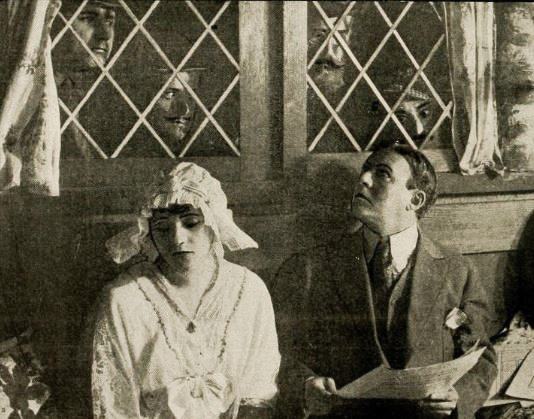
Monroe Salisbury, as the S.S.S. enforcer, has the profile of a Roman coin and the comic timing of a metronome. His running gag—he cannot pronounce suicide
without sneezing—provides the film its most subversive joke: the embodiment of death is allergic to the very word.
Contemporary screenings often pair the film with a jaunty pit-orchestra medley, but the original exhibitors received a cue sheet demanding four bars of Grieg, then silence—absolute silence—for exactly twenty-one minutes.
That hush lands during Ted’s rooftop dilemma, allowing ambient coughs, subway rattles, even the projector’s clatter to become diegetic dread. Modern audiences, conditioned to wall-to-wall score, shift audibly in their seats; the discomfort is the point. Silence here is the third character, a witness that refuses to intervene.
The climax is a fugue of mistaken identities: Nora disguised as a newsboy, Kato as a Salvation Army tambourine-thumper, Ted in drag as a Spanish señorita. The S.S.S., chasing their quarry through Coney Island’s Luna Park, ends up involuntarily boarding the Drop of Death
slide, their contracts fluttering like confessions. The camera tilts 45 degrees—an early Dutch angle—until gravity itself seems negotiable. When Ted finally tears the insurance policy into the sea breeze, the gesture feels less like narrative closure than existential parole.
Both films hinge on fortunes squandered for love, yet Brewster moralizes that wealth corrupts, whereas After Five suggests that wealth is simply another character—fickle, detachable, resurrectable. Where Inspiration aesthetizes poverty and The Walls of Jericho sermonizes sacrifice, DeMille’s film pirouettes past sermon into shrug: money comes, money goes, death keeps the receipts.
Ninety-six years after its premiere, After Five feels like a telegram from a more playful underworld. Its cynicism is frothy, its despair tap-dances, its romance flickers like a nitrate ember about to combust. Seek the tinted restoration; watch it with an audience that gasps at cliffhangers; exit into the night believing, however briefly, that suicide is just another bad investment—and that love, like a rogue bull market, can corner even death into a short squeeze.
Streaming on Criterion Channel through July, then touring select rep houses with live Alloy Orchestra accompaniment. Don’t just watch it—outlive it.
IMDb —
1923
Community
Log in to comment.